What Happened
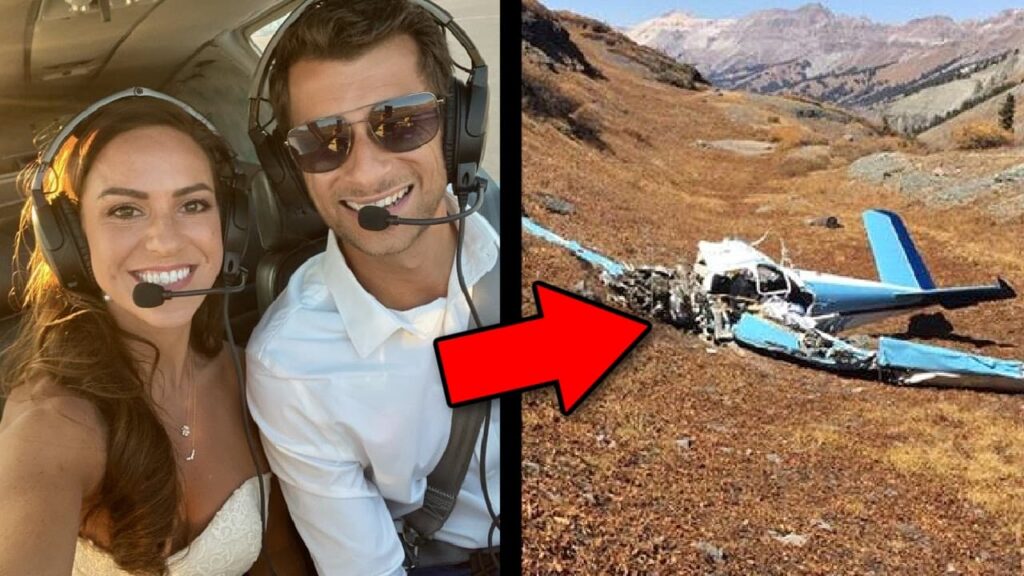
On October 5, 2020, at approximately 1304 mountain daylight time, a Beech S35 Bonanza, registered N4444K, departed runway 27 at Telluride Regional Airport (TEX) in Telluride, Colorado, on a visual flight rules cross-country flight. The pilot and his passenger were both killed when the airplane flew into terrain about 8 miles east of the airport. The airplane was substantially damaged. It was a personal flight under 14 CFR Part 91.
Telluride Regional Airport sits at 9,078 feet mean sea level. That elevation alone puts it among the highest commercial service airports in the contiguous United States, and the terrain surrounding it rises dramatically in every direction. To the east, the terrain funnels into a box canyon system backed by peaks ranging from 12,000 to 14,000 feet. To the west, the terrain drops. That asymmetry matters enormously to what came next.
ADS-B data captured the entire flight. The airplane had a normal takeoff roll and climbed away from runway 27. After departure, it made a left turn toward the east. Not toward the lower terrain to the west. East, into the rising canyon. For the next 8 miles, the data showed the airplane in a gradual climb as it tracked deeper into the box canyon. The airplane was climbing, but the terrain was climbing faster. Before entering the canyon, there was an opportunity to turn toward the west, where the ground fell away and the escape route was open. The airplane did not take it.
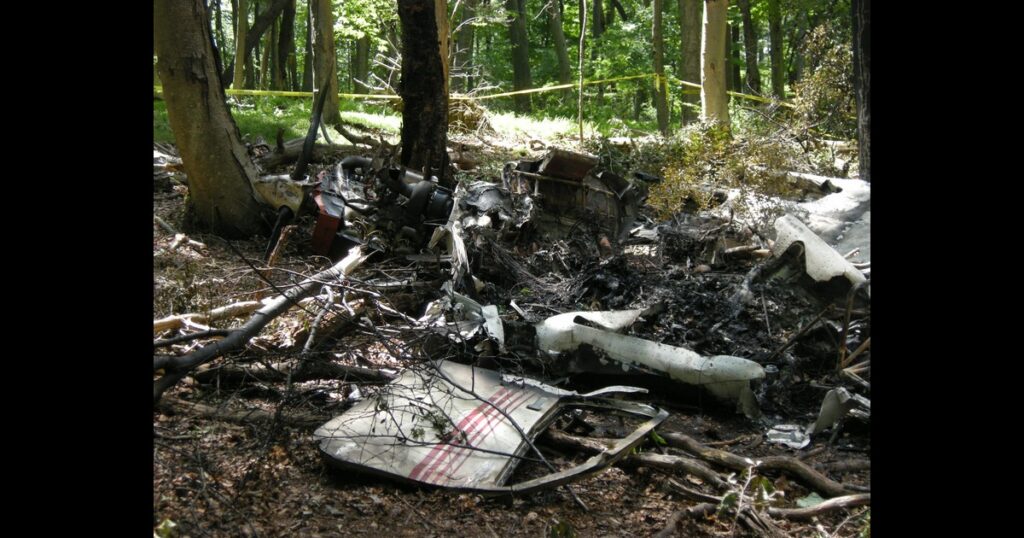
About 8 miles from the airport, the airplane made a right turn to the south. The impact with terrain followed immediately. The accident site elevation was 11,823 feet msl. To the north, east, and south, the surrounding peaks ran to 14,000 feet. No radio distress calls were received from the pilot at any point after takeoff. The wreckage showed evidence of a nearly vertical impact, with the forward fuselage crushed and impact damage across the leading edges of both wings.
Investigation Findings
Postaccident examination of the airframe, engine, flight controls, and propeller found no preimpact anomalies of any kind. Flight control continuity was confirmed from the cockpit all the way through to every control surface. The engine confirmed continuity as well. Torsional break of the propeller flange was consistent with the engine producing power at the moment of impact, and damage to the two recovered propeller blades was consistent with rotation at ground contact. The third blade had separated at the hub attachment due to impact forces, but the hub itself showed no evidence of a preimpact failure. Every piece of structural damage on the airplane was consistent with ground impact, not with any in-flight breakup or mechanical event before the terrain strike.
The pilot held a commercial airline transport certificate and was described as a professional commercial air carrier pilot. What the investigation could not establish was how much high-altitude mountain flying experience he had accumulated specifically in single-engine airplanes. That distinction is significant. Flying scheduled operations in jet or turboprop equipment at altitude is a fundamentally different skill set from navigating a normally-aspirated piston single through the terrain traps of the Colorado Rockies at low altitude. The airplane was about 300 pounds under maximum gross takeoff weight with full fuel, two occupants, and all baggage aboard. Weight was not the constraint here.
The calculated density altitude at the accident site was approximately 13,747 feet. Put that number in context: a Beech S35 is powered by a Continental IO-520 producing 285 horsepower at sea level. At a density altitude of nearly 14,000 feet, the normally-aspirated engine was breathing roughly half the air it would at sea level, and the propeller was biting into air that was correspondingly thin. The airplane’s climb performance at that density altitude would have been a fraction of what the pilot may have expected from experience at lower elevations. The airplane was climbing, but its climb rate was severely degraded by the environment it was operating in, and the terrain was not waiting.
NTSB Probable Cause
The pilot’s loss of control during the climb to cruise flight resulting in the airplane’s impact with terrain. Contributing to the accident was the pilot’s decision to not climb to a higher altitude before proceeding over high terrain.
Safety Lessons
Two experienced aviators died 8 miles from a runway they had just departed. The airplane was mechanically sound, the weather was not extreme, and the pilot was professionally credentialed. The accident came down to a mismatch between the terrain, the airplane’s actual capability in that environment, and the route chosen. There are three things every pilot planning a departure from a high-elevation mountain airport should carry into the preflight.
- Density altitude degrades climb performance in ways that are easy to underestimate. At 13,747 feet density altitude, the IO-520 in the S35 was producing roughly half its rated horsepower. Best rate of climb at that density altitude for a normally-aspirated piston single is a fraction of the sea-level number. The terrain was rising faster than the airplane could climb. Before departing any high-elevation airport, calculate your actual climb performance at the departure density altitude and compare it against the terrain profile along your intended route. Not the advertised climb rate at sea level. The actual number for the conditions that day.
- Route selection from high-elevation airports demands an escape route analysis before engine start. Telluride’s terrain funnels sharply upward to the east and drops to the west. That asymmetry should have been the first thing on the departure briefing. ADS-B data showed the airplane turned east when the terrain required west. A mountain departure briefing should identify the low-terrain escape route and build the initial turn into the plan before the throttle goes forward. Once you are in a box canyon with rising terrain on three sides and a density altitude above 13,000 feet, the options narrow fast.
- Professional experience in one category of aircraft does not transfer directly to high-altitude mountain flying in another. Airline experience in pressurized, turbine-powered equipment at altitude is valuable, but it does not replicate the performance margins and decision environment of a normally-aspirated piston single navigating low-altitude mountain terrain. High-altitude mountain checkout programs and flying with experienced mountain guides exist precisely to bridge that gap. If your mountain flying experience in a given type is limited, seek specific instruction in that type before planning routes through terrain like the San Juan Mountains.
Frequently Asked Questions
Q: What is the density altitude at Telluride Regional Airport, and how does it affect takeoff performance?
A: Telluride Regional Airport (TEX) sits at 9,078 feet msl. On a warm day, the density altitude at field elevation can push well above 10,000 feet before the airplane ever leaves the ground. In this accident, the calculated density altitude at the accident site was approximately 13,747 feet, meaning the airplane’s engine and propeller were operating as if they were at nearly 14,000 feet. Climb rates for normally-aspirated piston aircraft at that density altitude are dramatically reduced compared to sea-level performance numbers. Pilots departing TEX should compute density altitude and cross-check climb performance against their route terrain profile during preflight planning.
Q: What is a box canyon and why is it dangerous for pilots?
A: A box canyon is a canyon that has a wide opening at one end but closes off into rising terrain or walls at the other end and along the sides. For a pilot who enters one at low altitude, it creates a trap: terrain on three sides with no room to turn around or climb over the surrounding ridgelines. In this accident, the airplane tracked 8 miles east from Telluride into a box canyon with peaks ranging from 12,000 to 14,000 feet on the north, east, and south. With the airplane’s climb performance degraded by high density altitude, there was not enough performance remaining to escape the rising terrain once the canyon walls began to close in.
Q: Why does mountain flying in a piston single require different training than airline experience?
A: Airline operations are conducted in pressurized turbine aircraft with significantly higher power-to-weight ratios, sophisticated avionics, and crew resource management. Piston singles like the Beech S35 operate at lower altitudes, without pressurization, and with normally-aspirated engines whose performance degrades sharply with altitude. Mountain flying in a piston single demands specific knowledge of terrain escape routes, density altitude performance calculations, canyon entry rules, and go/no-go decision criteria that simply do not come up in airline operations. The NTSB noted that the available evidence did not show how much high-altitude mountain flying experience in single-engine airplanes the pilot had, which highlights why type-specific mountain checkout programs are important regardless of total experience level.
Q: Could the Beech S35 have climbed over the terrain east of Telluride with better route planning?
A: Possibly, but not by flying directly into the box canyon at the density altitudes present that day. The peaks east of the accident site ranged from 12,000 to 14,000 feet, and the airplane’s climb performance at a density altitude approaching 14,000 feet was severely degraded. The NTSB noted that the pilot could have turned west from the departure, where terrain was lower, built altitude in lower-threat airspace, and then approached the high terrain from a position of altitude advantage. The contributing cause cited in the probable cause specifically calls out the decision to not climb to a higher altitude before proceeding over high terrain.
Q: What departure planning resources are available for high-elevation mountain airports like Telluride?
A: Several resources apply. AOPA’s Air Safety Institute offers mountain flying courses specifically covering terrain escape planning, density altitude performance, and canyon entry decision-making. The FAA’s Aeronautical Information Manual includes guidance on mountain flying and density altitude. Local flight schools and charter operators based at high-elevation airports such as TEX often offer mountain flying checkouts with pilots who fly those specific terrain environments regularly. ForeFlight and similar EFB applications allow pilots to overlay their planned route against terrain profiles and calculate density altitude at departure. There is no substitute for flying the specific terrain with an experienced local guide before doing it solo.