What Happened
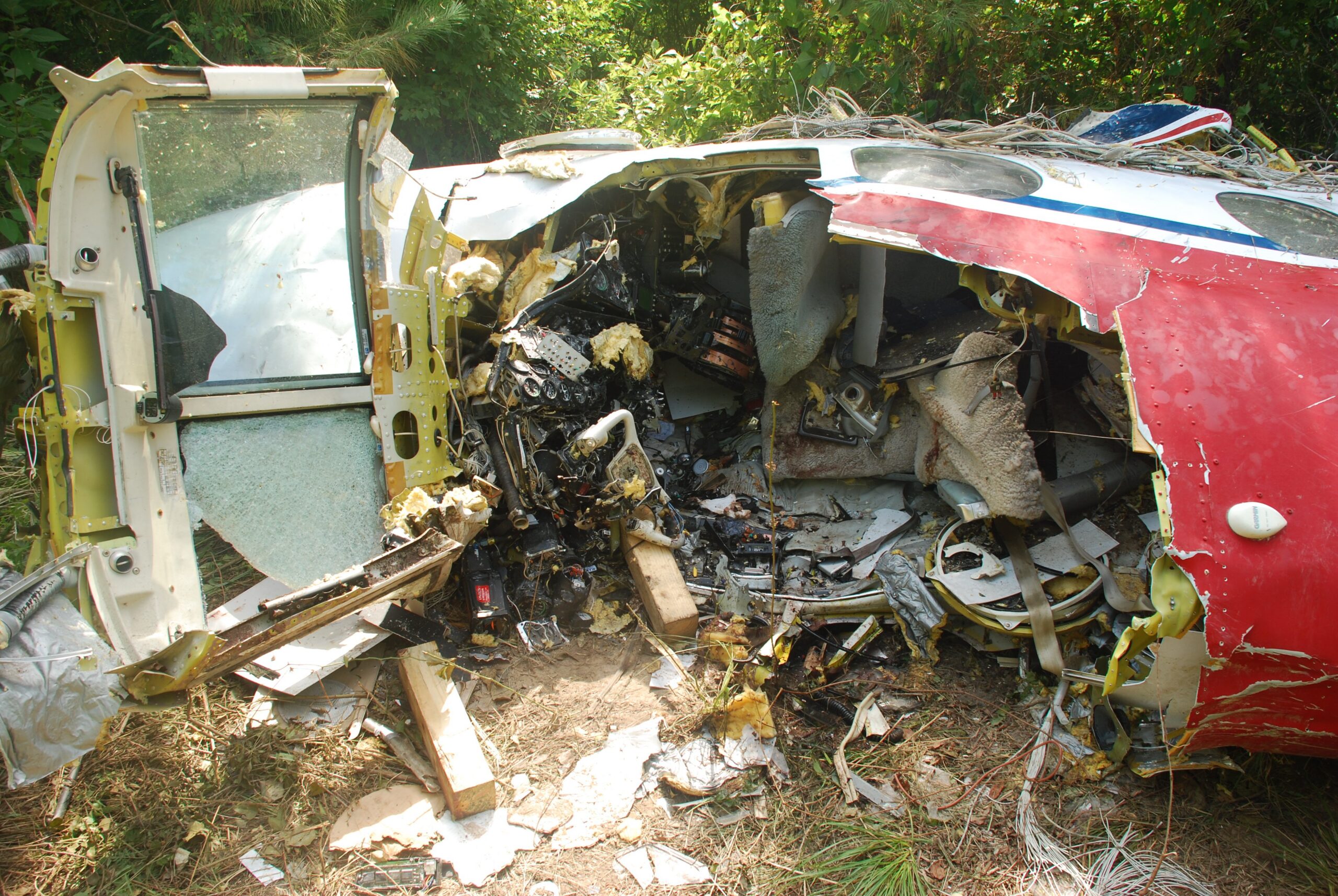
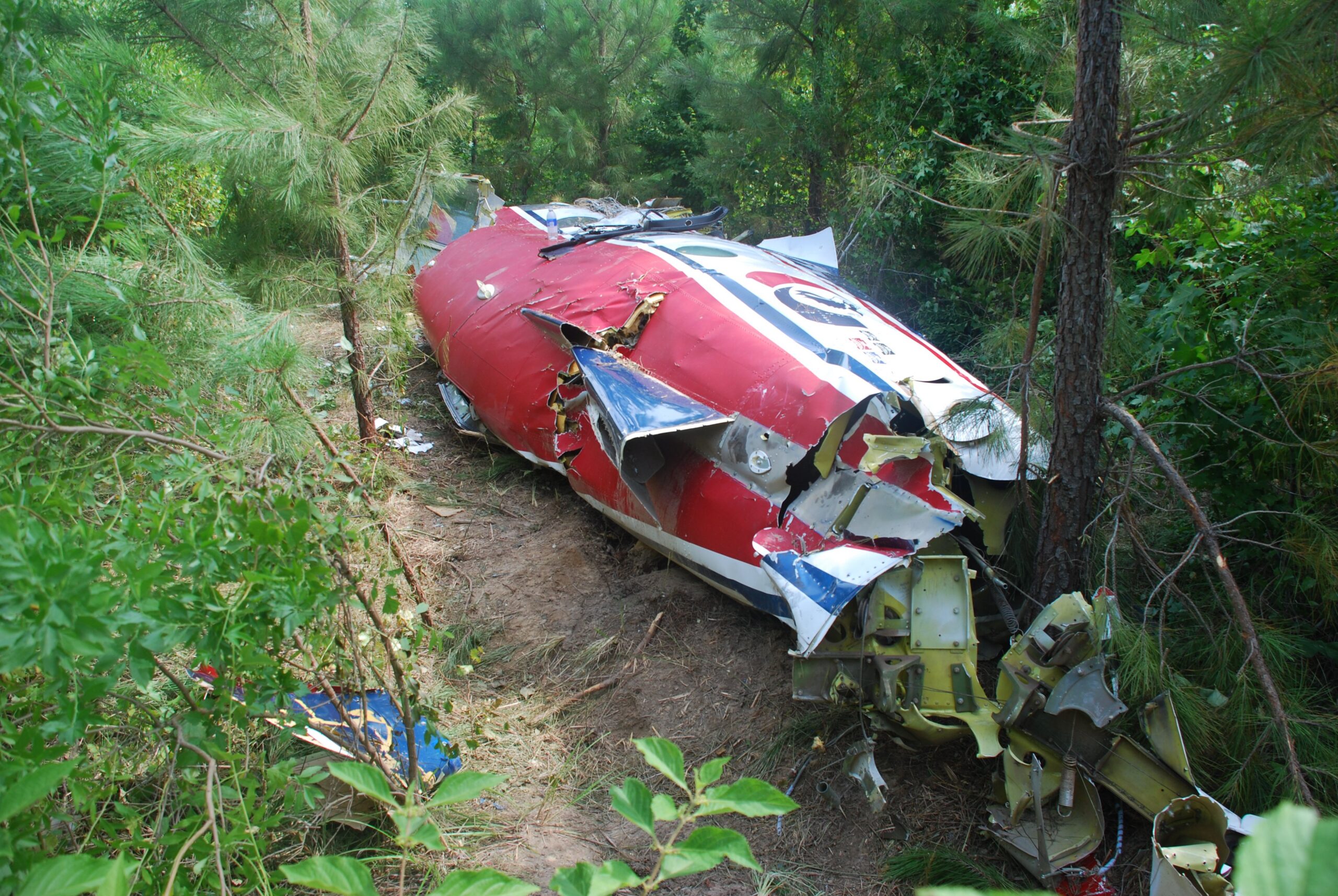
At 4:04 in the morning on July 7, 2012, a Beech E90 King Air, N987GM, operating as a positioning flight for Win Win Aviation of DeKalb, Illinois, broke apart in flight and impacted terrain near Karnack, Texas. The commercial pilot was the sole occupant and was fatally injured. The wreckage was scattered across a one-mile diameter in a wooded area and wasn’t located until around 11:00 that morning by Civil Air Patrol and a Texas Department of Public Safety officer.
The story of how that airplane ended up in those East Texas woods at 4 in the morning starts the afternoon before. The pilot arrived at the DeKalb facility around 1430 on July 6th, ready to fly N987GM south to Brownsville and eventually into Mexico to deliver aircraft parts and turn the airplane over to a skydiving company. The King Air had recently come out of an air medical operation and was being refurbished. The propellers had just been replaced, and the chief mechanic needed to inspect that work before the airplane could go back into service. But the mechanic was out of town. So the pilot checked into a hotel and waited.
The mechanic came back around 0010 on July 7th. He called the owner, said he was too tired to do the inspection, and before leaving the facility he ran into the pilot and told him to come back in the morning. The pilot acknowledged that. Then, sometime around 0230, N987GM departed DeKalb Taylor Municipal Airport anyway. No flight plan was filed. No weather briefing was obtained. The mechanic’s inspection hadn’t happened. The pilot was flying an airplane he’d never flown before, in the dark, headed southwest toward Texas, and he was doing it without an instrument rating. His commercial certificate carried an explicit limitation: not valid for carriage of persons for hire in airplanes on cross-country flights of more than 50 nautical miles or at night. This wasn’t a cargo or passenger flight, so that restriction didn’t technically apply here. But it points to something worth holding onto.
He climbed to 14,500 feet and picked up VFR flight following from Dallas-Fort Worth Air Route Traffic Control Center. At 0336, he checked in with ZFW Sector 27 and reported level at 14,500. Things were quiet for about 22 minutes. Then at 0359, the Sector 27 controller told him there was an area of moderate precipitation 15 miles ahead at his 12 o’clock. The pilot acknowledged, and the controller immediately handed him off to Sector 52. That handoff happened at 0359:28. The pilot checked in with Sector 52 at 0359:57.
Now here’s where the timeline gets tight. At 0401:11, a United Airlines A320 checked into Sector 52 at flight level 350. At 0402:37, the United crew asked for a left deviation for weather and got it. One minute and 18 seconds after that United pilot asked to turn away from those storms, the Sector 52 controller came back to N987GM. The time was 0402:55. The controller told the pilot there was moderate, heavy, and extreme precipitation at 12 o’clock and two miles and that it had just become extreme. Two miles. The pilot was already nearly inside it.
The pilot responded that he could see some weather and asked the controller for a recommendation, left or right. The controller said he didn’t really have one but that the heavier stuff appeared to be east, so going west, a right turn, might be better. At 0403:27 the pilot said he’d make a 25-degree right turn. Twenty-eight seconds later he transmitted again: “Fort Worth Center, I’m gonna keep it going right here.” The controller acknowledged and said whichever way he needed to go was fine. That was the last communication from N987GM. At 0405:08, the controller asked if the pilot was through the weather. No response. Three more attempts to raise him followed, the last at 0407:15. Radar contact had already been lost. The last recorded radar plot had N987GM at 14,600 feet at 0403:54, in a right turn, pointing directly into the storm.
Witnesses on the ground near Karnack reported a severe thunderstorm passing through around 0400. Lightning, thunder, heavy rain. The WSR-88D radar out of Shreveport was painting that area in VIP levels 4 through 6 — very strong to extreme intensity — at the exact time N987GM was flying into it. Lightning flash data showed strikes near the accident site and directly along the flight track starting at least five minutes before the airplane went down.
Investigation Findings
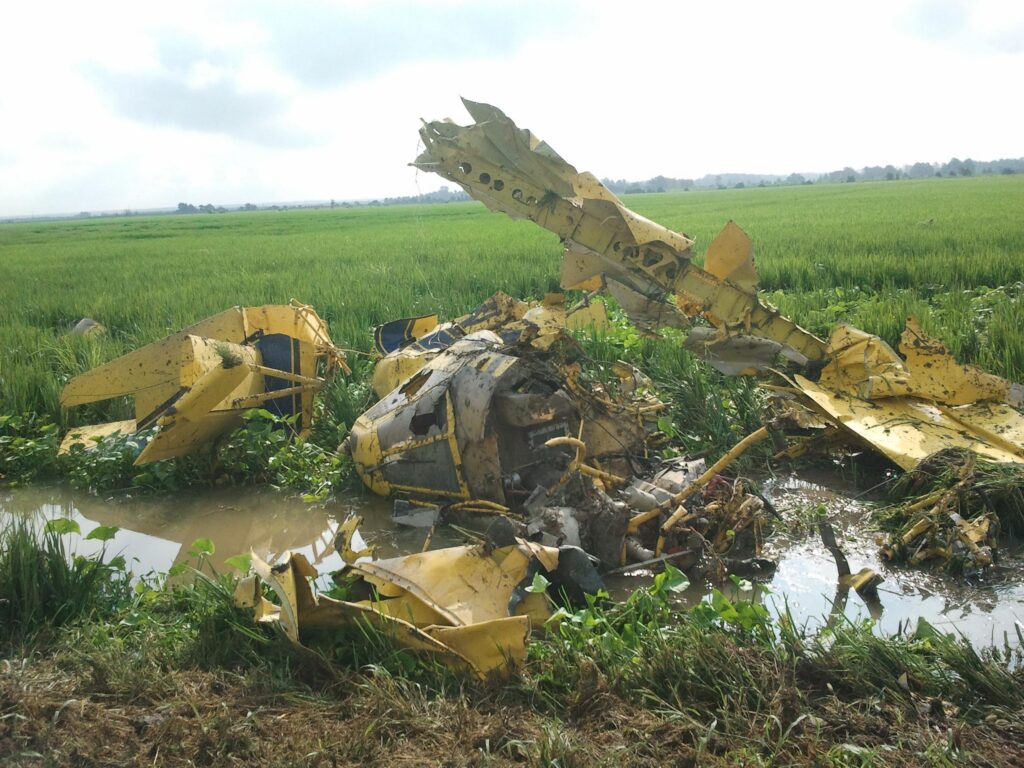
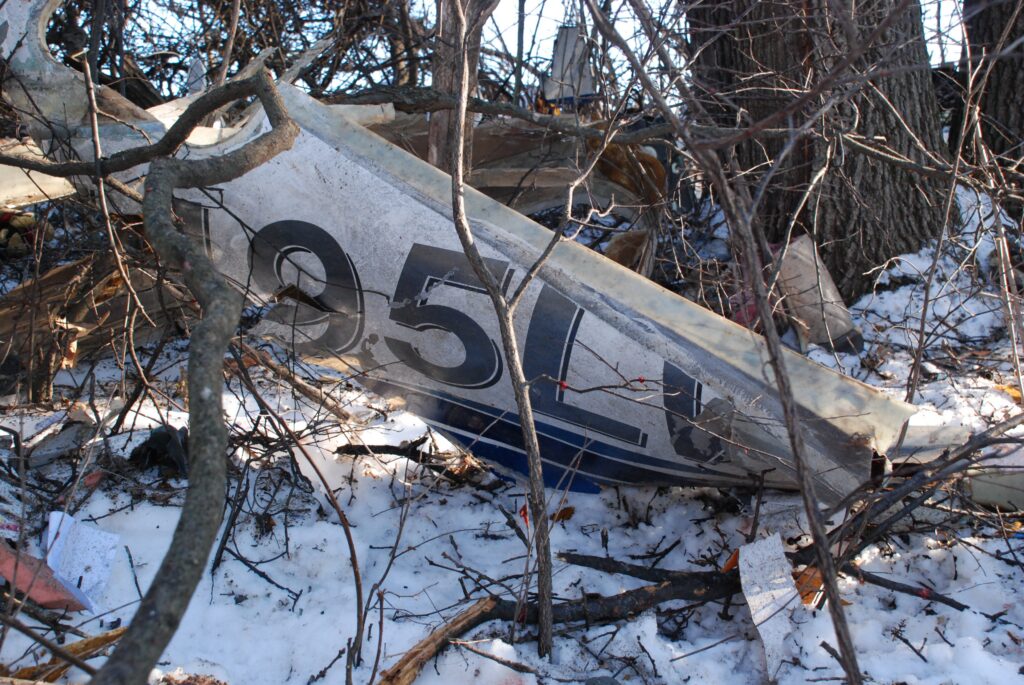
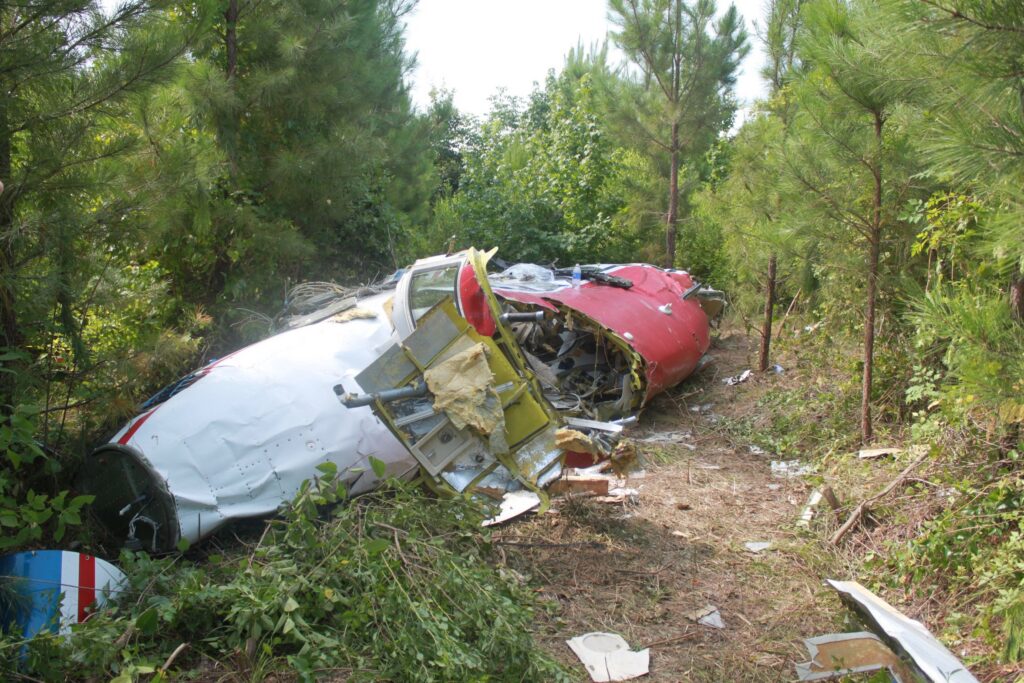
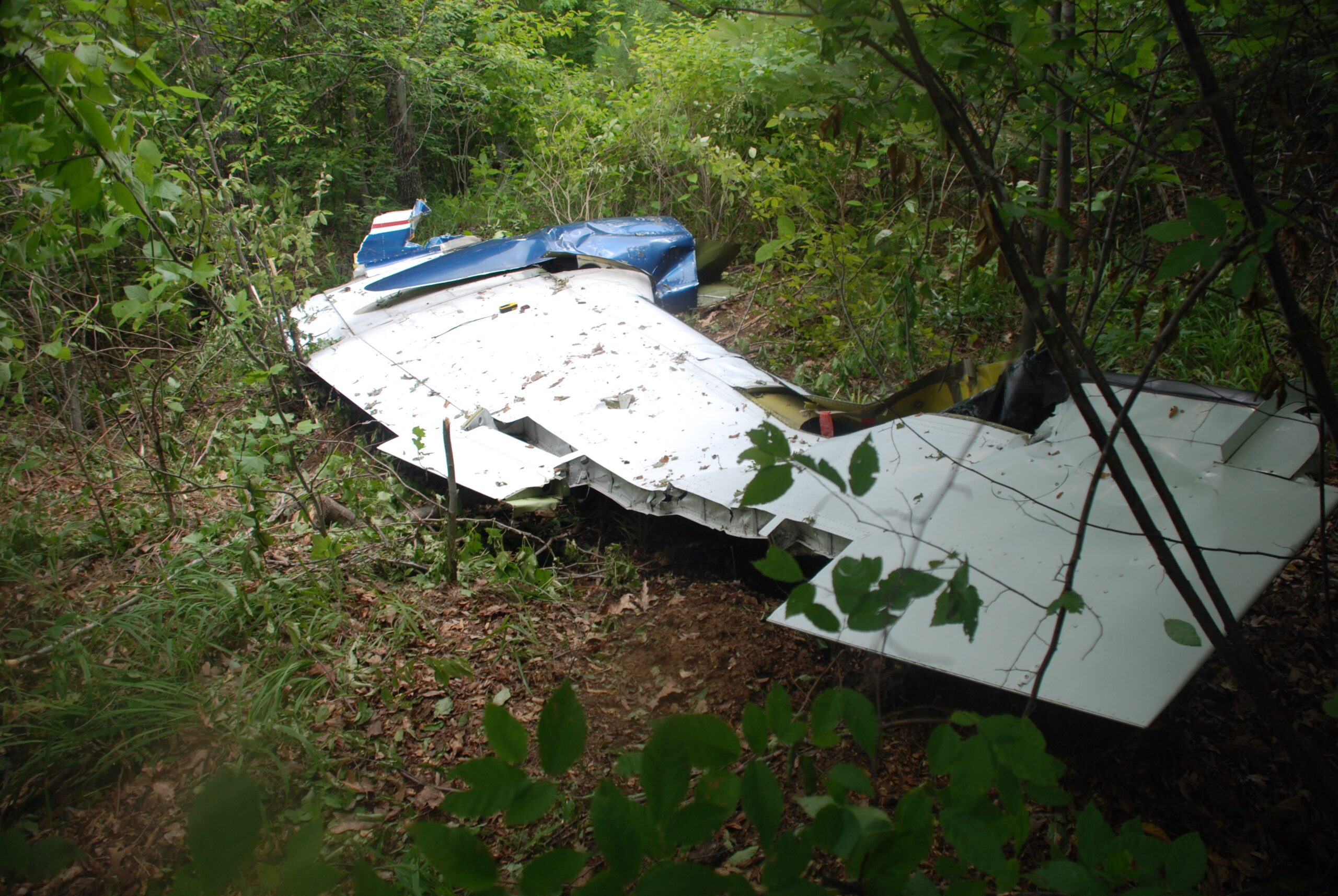
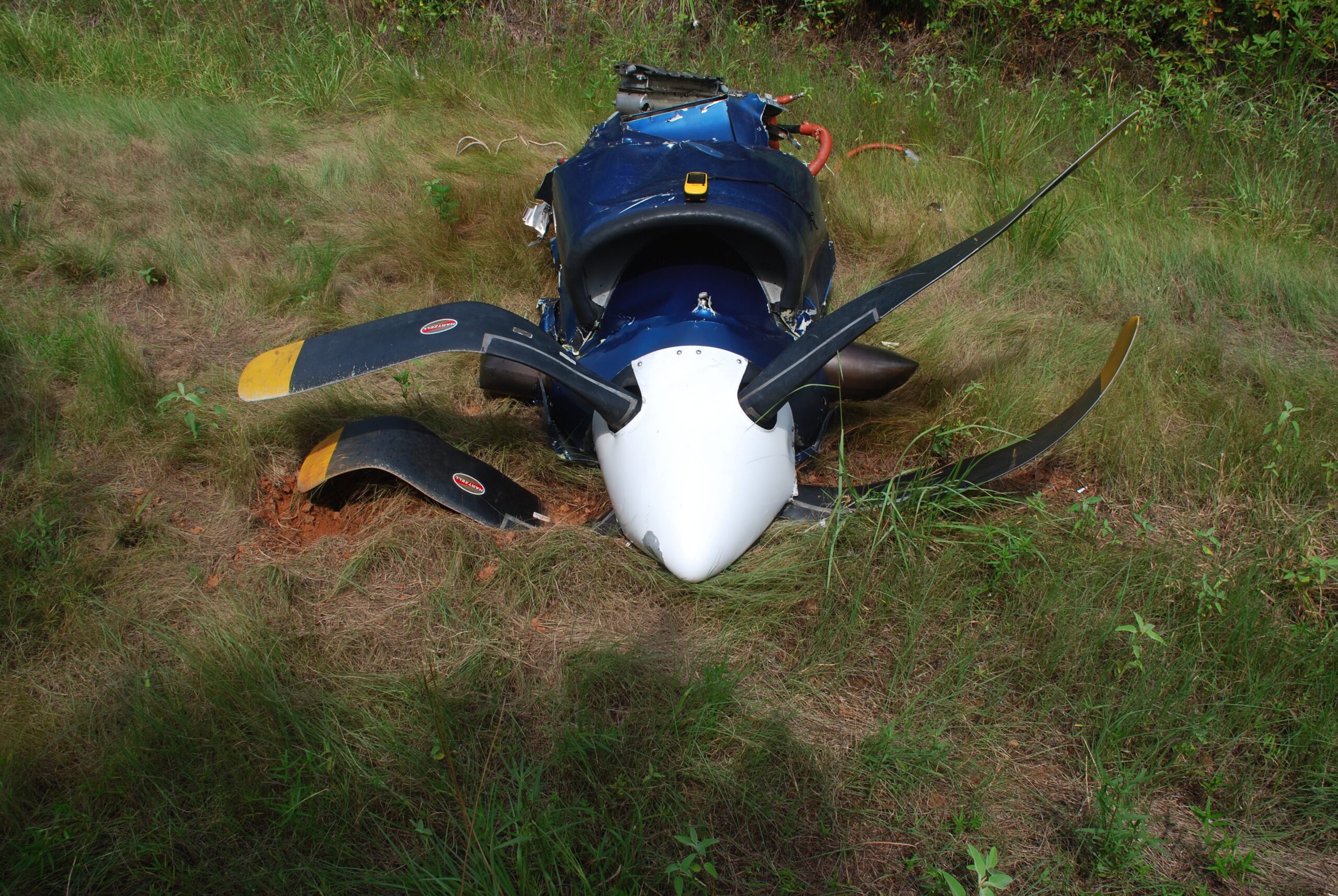
The wreckage told a clear story about what happened inside that thunderstorm. The wings separated from the fuselage at the wing-to-fuselage intersection. The spar caps and stringers on both wings bent upward, consistent with an upward bending load, meaning the airplane experienced extreme positive g-forces before the structure gave way. The left wing fractured in two separate places. The vertical stabilizer separated at its attachment points. Both horizontal stabilizers departed the airframe. The rudder separated. The elevators were not recovered. Every examined fracture surface showed features consistent with overstress failure. There was no fatigue cracking anywhere. The airplane didn’t fail because something was worn out. It failed because the loads placed on it exceeded what the structure was designed to handle.
Post-accident examination of the airframe and both PT6A-28 engines revealed no mechanical malfunctions or anomalies that would have precluded normal operation before the breakup. The airplane was not the problem. The toxicology report introduced another layer of concern. Ethanol was detected in the pilot’s brain tissue at 12 mg/dL, though not in muscle tissue. Temazepam, a prescription benzodiazepine sleep medication marketed as Restoril, was detected in urine at 2,460 ng/mL. Oxazepam, a metabolite of temazepam, was also present in urine. The pilot had not reported any medication use on his most recent FAA medical application. Investigators noted that putrefaction was present in the samples, which can affect ethanol results. A medical kit found in the wreckage contained equipment and medications typically associated with diabetes treatment, though the pilot had denied having diabetes on his medical application.
The investigation also focused heavily on the ATC picture. The WARP weather data available to the Sector 52 controller showed moderate and heavy precipitation from 0354:41 onward. At 0358:55, four minutes before the controller finally warned the accident pilot, the display updated to show extreme intensity precipitation in the flight path. The controller’s attention had been on the United A320 requesting its deviation. The WARP data available to controllers along the pilot’s route showed the storm building well before the two-mile call. FAA Order 7110.65 requires controllers to issue pertinent weather information to pilots and to plan ahead and be prepared to suggest alternate routes or altitudes in areas of significant weather. The investigation concluded those obligations weren’t met in a timely way. The airplane also had both a Bendix/King RDS-82 weather radar and a BFGoodrich WX-900 stormscope installed. The operator noted the pilot was probably not familiar with how to use the weather avionics on that airplane. This was the first flight the pilot had ever made in N987GM.
NTSB Probable Cause
The pilot’s inadvertent flight into thunderstorm activity, which resulted in the loss of airplane control and the subsequent exceedance of the airplane’s design limits and in-flight breakup. Contributing to the accident was the failure of air traffic control personnel to use available radar information to provide the pilot with a timely warning that he was about to encounter extreme precipitation and weather along his route of flight or to provide alternative routing to the pilot.
Safety Lessons
This accident assembled itself from several independent decisions, each of which might have looked manageable in isolation. Together they produced an outcome the airplane’s structure couldn’t survive.
- No weather briefing means no situational awareness before the first radio call. The pilot departed into a summer night over the central United States without any official or unofficial weather briefing. There were convective cells building along his route that were visible on radar from the ground. He had no picture of what was ahead until a controller told him about moderate precipitation 15 miles out, and then a different controller told him the same weather had become extreme at 2 miles. That’s not a planning margin. A standard weather briefing, or even a look at radar imagery before engine start, would have shown convective activity along the route and given the pilot time to make real decisions on the ground rather than at 14,500 feet in the dark at 200 knots.
- Unfamiliarity with installed avionics is a capability gap, not a minor inconvenience. N987GM had both a multifunction weather radar and a stormscope installed. If the pilot had known how to operate either system, he would have had independent, real-time weather information in the cockpit throughout the flight. The operator noted he probably wasn’t familiar with those systems. That gap meant the pilot was flying with less information than his airplane was equipped to provide. Before flying an unfamiliar aircraft at night into an area of known convective activity, understanding the avionics isn’t optional.
- ATC weather calls are advisory, not a complete picture, and the timing matters. The Sector 52 controller’s two-mile call was not a failure of technology. The WARP display was showing extreme intensity in the flight path starting at 0358:55. The warning came four minutes later, when the airplane was already inside the threat envelope. FAA directives require controllers to plan ahead in areas of significant weather and issue that information proactively. But a pilot operating VFR at night in an area with convective activity cannot count on ATC as his primary weather avoidance tool. The responsibility for remaining clear of thunderstorms belongs to the pilot. ATC is one layer of information, not the only layer.
Frequently Asked Questions
Q: Can a thunderstorm really break up an airplane like a King Air in flight?
A: Yes. The Beech E90 is a certificated, structurally sound airplane, but every airframe has design limit loads it cannot exceed. Inside a severe thunderstorm, updrafts and downdrafts can impose g-forces far beyond what any general aviation or light turbine aircraft is certified to withstand. The wreckage of N987GM showed overstress failures at multiple attachment points simultaneously. No fatigue, no prior damage. The structure simply encountered loads it wasn’t built to survive.
Q: Was the pilot legal to make this flight without an instrument rating?
A: The FAA records and NTSB analysis noted the pilot did not hold an instrument rating, but the flight was a VFR positioning flight, not a commercial passenger or cargo operation. The specific limitation on his commercial certificate about night cross-country flights applied to carriage of persons for hire, which this was not. That said, flying VFR at 14,500 feet in the dark with convective activity in the area without an instrument rating or current instrument proficiency created a situation with essentially no recovery option once the airplane entered IMC inside the storm.
Q: What does ATC actually owe a VFR pilot in terms of weather information?
A: FAA Order 7110.65 requires controllers to issue pertinent information on observed or reported weather to pilots under their control, provide radar navigational guidance when requested, and plan ahead to suggest alternate routes or altitudes in areas of significant weather. The NTSB found the Sector 52 controller had WARP data showing extreme precipitation in the flight path for approximately four minutes before issuing the warning to N987GM. The delay contributed to the accident. But the order also makes clear this is workload permitting, and the pilot flying VFR retains ultimate responsibility for remaining clear of clouds and thunderstorms.
Q: What are “popcorn storms” and why are they particularly dangerous?
A: The term describes isolated convective cells that build and dissipate rapidly, often in areas without a clear frontal boundary or squall line. The ZFW OMIC on duty that night described them as more dangerous than a line of thunderstorms precisely because their rapid development makes them hard to anticipate. A cell that shows moderate precipitation on radar can escalate to extreme intensity within minutes, as happened here. The WARP data went from moderate/heavy to extreme in under four minutes. A pilot navigating between isolated cells has less margin than one who can see and track a defined weather system.
Q: What was the significance of the temazepam found in the toxicology report?
A: Temazepam is a benzodiazepine prescribed for short-term treatment of insomnia. It produces sedation and can impair cognitive function and motor performance. The pilot had not disclosed its use on his medical application. Investigators noted putrefaction in the samples, which complicates interpretation of the ethanol finding, but the presence of temazepam and its metabolite oxazepam in urine at the time of the accident raised questions about the pilot’s fitness for flight. The NTSB did not identify impairment as a probable cause or contributing factor, but the medication was documented in the final report as part of the overall picture of the pilot’s condition and decision-making that night.