What Happened
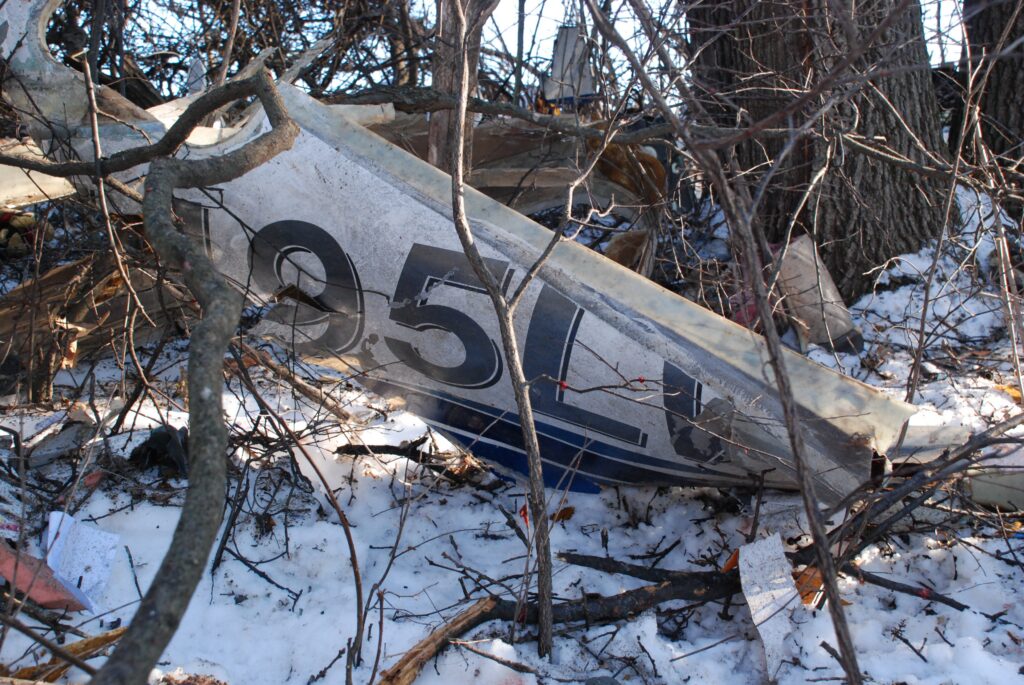
On the night of January 30, 2009, a Cirrus SR20, N495LV, departed Sheboygan County Memorial Airport in Sheboygan, Wisconsin, at approximately 2005 central standard time. The 51-year-old private pilot had two passengers aboard, along with a dog. None of them would survive. The airplane impacted terrain about 5 miles north of Menomonie, Wisconsin, at 2144, and all three occupants received fatal injuries.
The flight was a return leg. Earlier that evening, the pilot had flown from New Richmond Regional Airport (RNH) in New Richmond, Wisconsin, to Sheboygan County Memorial Airport (SBM), arriving around 1930. The airplane was refueled with 18.7 gallons at SBM. He had filed an IFR flight plan for the return trip, with a planned departure time of 2000. But the weather conversation he had with the Lansing Automated Flight Service Station earlier that afternoon, between 1641 and 1655, was worth revisiting. The briefer had flagged it directly: the return trip might be more conducive for icing, as cloud cover was expected to lower with the evening. The pilot acknowledged that and said he would check the weather before heading back. There is no record of a second weather check before departure.
The pilot had 440 total flight hours. He had received his instrument rating on December 20, 2008, roughly 41 days before the accident. His total actual instrument time was about 19 hours, and he had logged approximately 16 hours of night flight, all accumulated since late November. He had 22 hours in the accident airplane specifically, all of it logged since January 1, 2009. This was not his first time making this particular round trip at night. He had flown the RNH-to-SBM-and-back route twice earlier in January, both return legs at night, and both uneventful. That familiarity almost certainly shaped how he evaluated the risk on flight number three.
N495LV climbed to the cleared altitude of 6,000 feet msl after departure. For about an hour, things appeared routine. Then at 2109, the pilot requested a climb to 7,000 feet to get above the clouds. ATC cleared the climb. At 2134, he requested direct routing to TADPE, the initial approach fix for the RNAV (GPS) Runway 32 approach at RNH. He was cleared direct. Three minutes later, at 2137, he was cleared to descend to 4,000 feet at his discretion. The descent had begun.
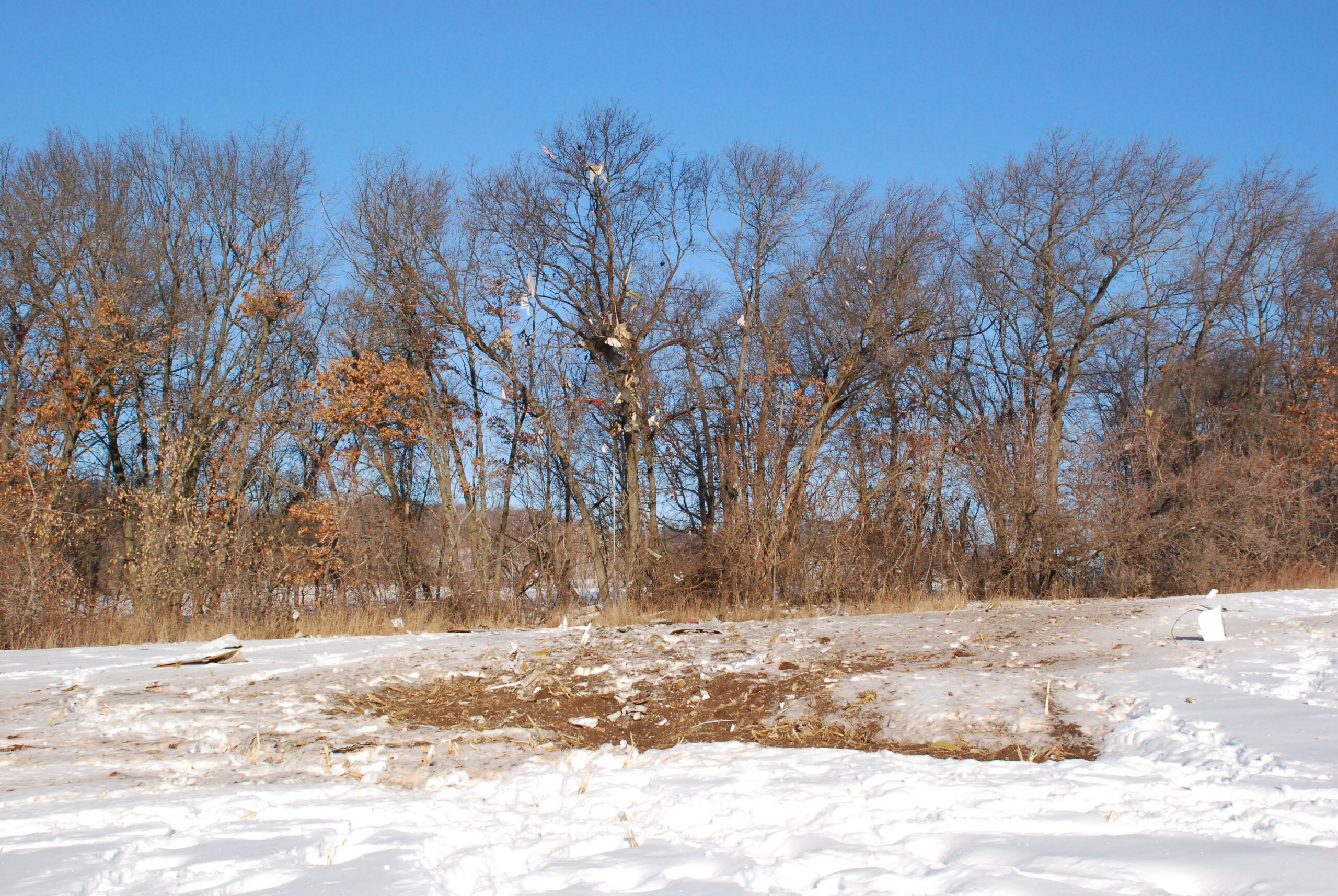
At 2138, ATC noticed a problem: they were not receiving the airplane’s transponder code and asked the pilot to recycle the transponder. At 2141, ATC reported they had radar contact about 3 miles northeast of Menomonie Airport, but Mode C altitude was still not coming through. The pilot self-reported: descending through 4,500 feet msl. At 2142, ATC asked whether the airplane was picking up any ice. The pilot replied that N495LV was not picking up any ice at that point. ATC passed along a PIREP: moderate icing between 3,000 and 4,000 feet msl, about 30 to 40 miles north of Minneapolis. At 2143, the pilot acknowledged: “Okay, we’ll keep our eyes open. Thanks.” That was the last radio transmission from N495LV.
Radar track data showed the airplane flying in a north-northwest direction at 2143, crossing the Red Cedar River about a half mile south of where it would come down. The track then showed the airplane entering a right turn. The last radar return, at 2144, placed the airplane approximately a half mile northwest of the impact site. Without Mode C, there were no altitude readouts during any of this. The airplane hit a frozen, snow-covered field. It traveled about 100 feet before entering a tree-filled ravine. Three witnesses in the area described the engine sounding like it was at high RPM, running at full power. One saw the beacon lights traveling at what he described as “impossibly fast” before a fireball appeared behind the white pines on the opposite shore. Another said the engine noise was at full power just before the flash and a thump loud enough to shake his house. A third watched the red and green navigation lights, parallel to the horizon, for about 2 seconds before they disappeared behind the tree line and a fireball lit up the sky.
Investigation Findings
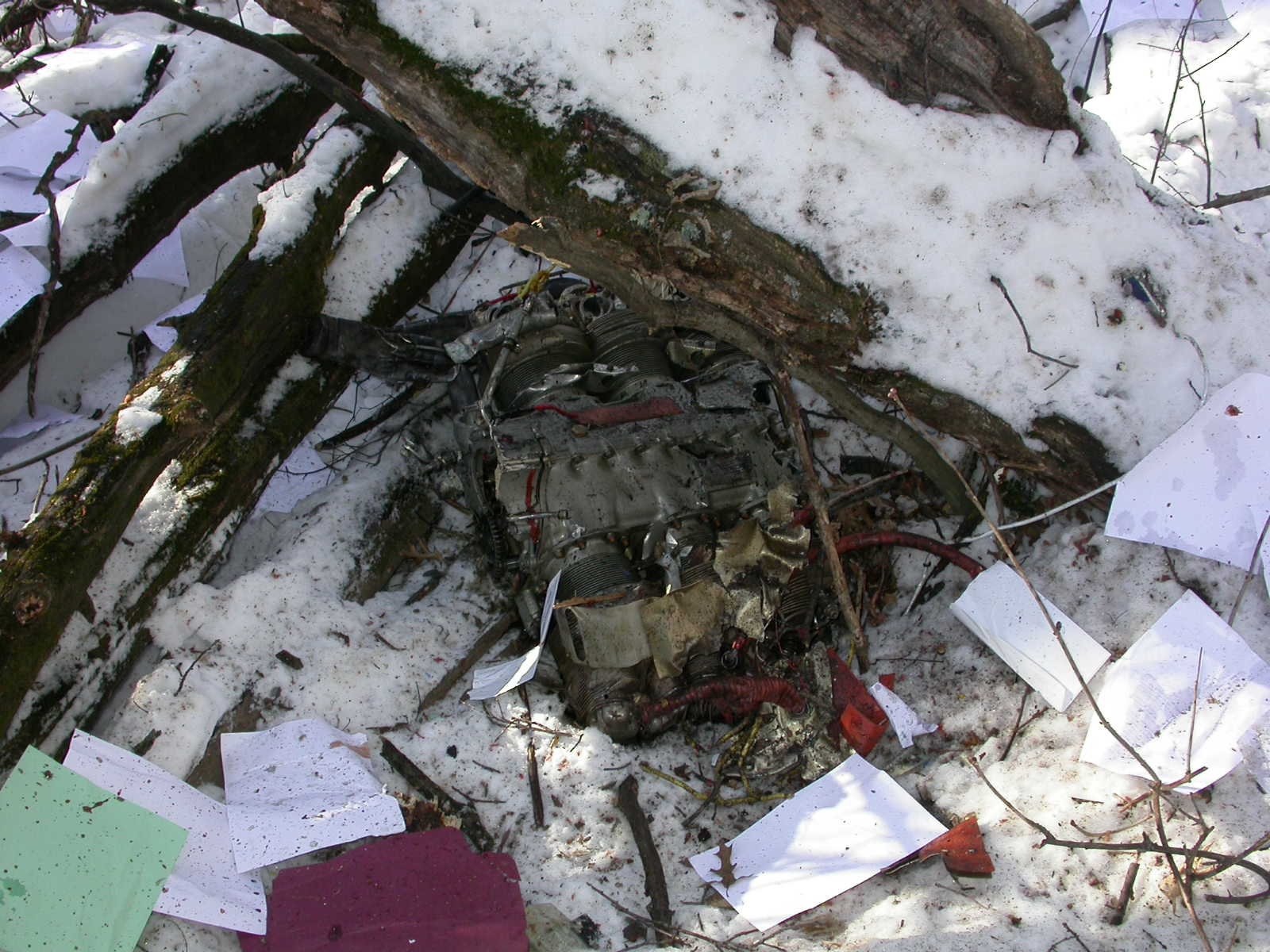
Investigators found no pre-impact mechanical anomalies. The engine, when examined, showed oil residue on the crankshaft and connecting rods with no thermal discoloration, meaning there was no indication of an oil starvation or heat event before impact. Borescope inspection of all cylinders showed light gray deposits in the combustion chambers and normal valve deposits consistent with typical operation. The fuel system components, including the fuel manifold valve and fuel pump, showed no anomalies beyond impact damage. The propeller blades showed signatures consistent with the engine producing power at impact: blade A bent aft with chordwise scratching and tip curling, blade B with scuffing across the entire cambered surface and leading-edge gouges, blade C with an s-bend and leading-edge damage. All of this pointed to a rotating, power-producing engine at the moment of ground contact, consistent with what the witnesses heard.
The weather picture at the time of the accident was significant. The Menomonie Municipal Airport (LUM), approximately 5 miles south of the impact site, reported an overcast ceiling at 1,100 feet agl at both 2115 and 2135. Temperature was minus 10 degrees Celsius, with dew points between minus 15 and minus 16. New Richmond, 29 miles to the west-northwest, was reporting a ceiling of 900 feet agl at 2139. Current Icing Product charts for 2100 and 2200 showed greater than 80 percent probability of icing at 4,000 feet msl over eastern Minnesota and western Wisconsin. The probability over the accident site itself was approximately 70 percent. The airplane, a Cirrus SR20, was not certified for flight into known icing conditions. The Pilot’s Operating Handbook stated explicitly: “Flight into known icing is prohibited.”
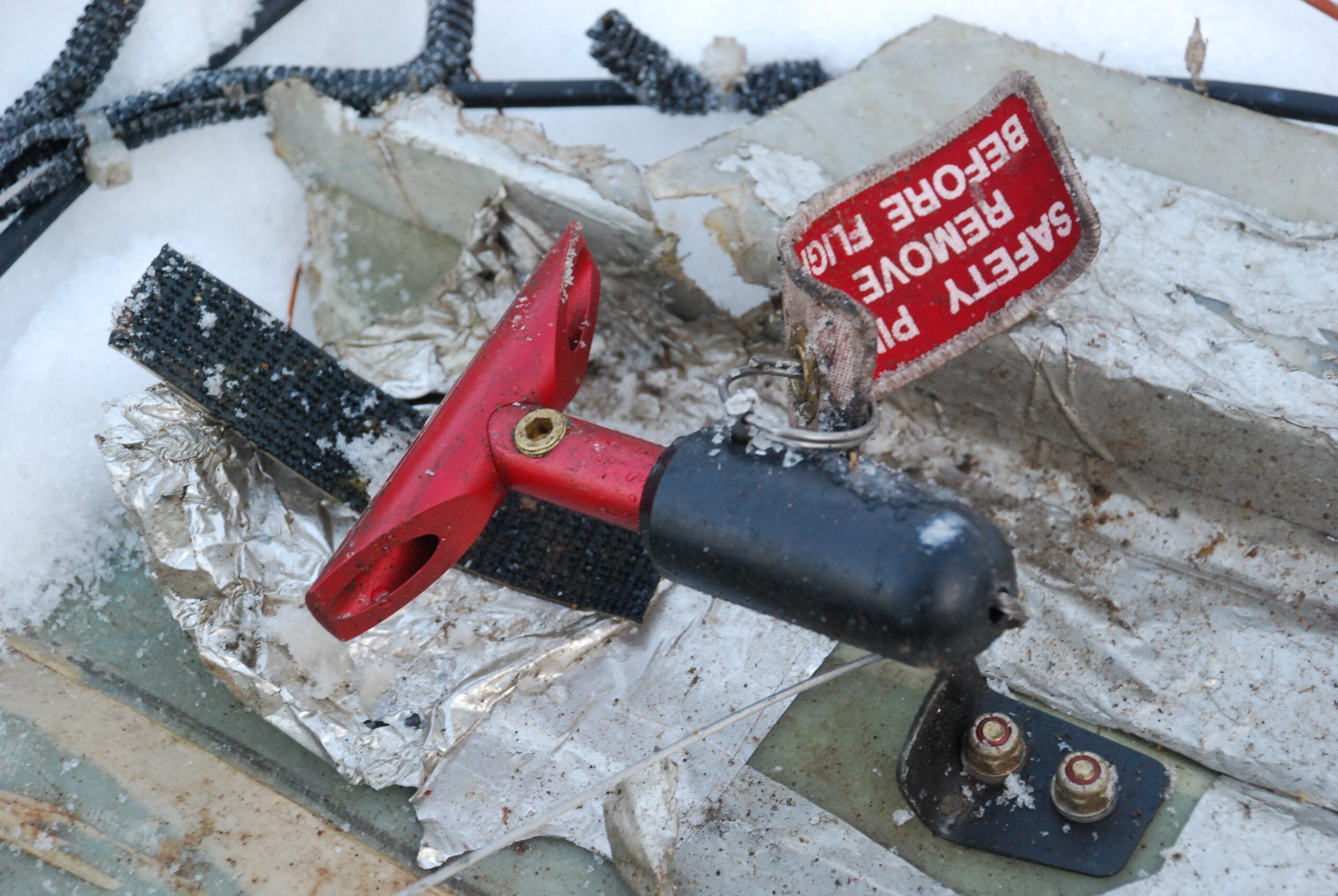
Two findings from the wreckage stood out beyond the weather and flight path data. First, the Cirrus Airframe Parachute System (CAPS) had not been deployed. The CAPS activation handle, its holder, and the activation cable were found separated from the fuselage in the debris path. The CAPS safety pin, with its red “Remove Before Flight” tag still attached, was found inside the activation handle. The preflight checklist required that pin to be removed before flight. It had not been removed. Whether the pin would have changed the outcome of this particular high-speed, low-altitude impact is an open question, but the parachute system was inoperative from the moment the airplane left the ground. Second, the MFD flash memory card sustained severe fire and heat damage. NTSB’s Vehicle Recorders division attempted to transplant the memory devices to an identical undamaged card, but the damage was too extensive. No flight data from the accident flight was recovered.
NTSB Probable Cause
The pilot’s failure to maintain control of the airplane while flying at night in instrument meteorological conditions.
Safety Lessons
Three people died on a flight that by any reasonable measure should not have departed. The chain of decisions that night was long enough that any single link could have broken it. Here is what stands out.
- An instrument rating is a license to enter IMC, not a guarantee of surviving it. The pilot had 19 hours of actual instrument experience, all of it accumulated in the 41 days since he passed his instrument checkride. He had 16 hours of night flight. He had 22 hours in the specific airplane he was flying that night. None of those numbers are inherently disqualifying, but they frame the task: a night IMC descent into an approach environment with ceilings at 900 to 1,100 feet agl, icing probability at 70 percent, and a transponder that had stopped reporting altitude to ATC. That is not a beginner’s scenario, and currency in a simulator or with an instructor does not transfer directly to single-pilot night IMC in a real airplane under actual workload.
- Icing risk at the destination is not the same as icing risk at the departure airport. The Current Icing Product charts showed no icing over Sheboygan at departure time. They showed 70 to 80 percent probability at 4,000 feet msl over the accident site. The weather briefer had flagged this explicitly five hours before departure: the return trip would be more conducive for icing. The pilot said he would check again before leaving. The record does not show that he did. Checking departure weather is not the same as evaluating destination and en-route conditions at the time of arrival, particularly when conditions are forecast to deteriorate through the evening.
- A parachute system that cannot be activated is not a safety net. The CAPS safety pin was still installed at impact. The preflight checklist required it to be removed. Whether the parachute could have been reached and deployed in a high-speed spiral descent is genuinely uncertain. But a system that physically cannot fire because its safety pin was never pulled is a system that provides no protection at all. Every Cirrus-specific checklist item exists because someone analyzed what could go wrong. The preflight CAPS check is not a formality.

Frequently Asked Questions
Q: What caused the Cirrus SR20 crash near Menomonie, Wisconsin, in 2009?
A: The NTSB determined the probable cause was the pilot’s failure to maintain control of the airplane while flying at night in instrument meteorological conditions. The pilot had received his instrument rating approximately 41 days before the accident and had about 19 hours of actual IMC experience. The airplane entered a right turn during descent and impacted terrain at high speed with the engine producing power.
Q: Was icing a factor in the N495LV accident?
A: Icing conditions were present along the route. Current Icing Product charts showed approximately 70 percent probability of icing at 4,000 feet msl over the accident site, and the weather briefer had specifically warned the pilot hours before departure that the return trip would be more conducive for icing. The pilot reported to ATC at 2142 that the airplane was not picking up ice. The SR20 was not certified for flight into known icing conditions. Whether structural ice contributed to the loss of control was not definitively determined, but the icing environment was a significant factor in the overall risk picture.
Q: Why wasn’t the Cirrus parachute (CAPS) deployed?
A: The CAPS safety pin was found still installed in the activation handle at the accident site. The Cirrus preflight checklist specifically requires the safety pin to be removed before flight. With the pin installed, the parachute system could not be activated. Whether CAPS deployment would have been survivable given the airplane’s speed and altitude at the time of the upset is unknown, but the system was inoperative throughout the flight due to the pin not being removed.
Q: How much instrument experience did the pilot have before this flight?
A: The pilot received his instrument rating on December 20, 2008, approximately 41 days before the accident. His logbook showed approximately 19 hours of actual instrument flight and 16 hours of night flight, all accumulated since late November 2008. He had 22 hours in the accident airplane, all logged since January 1, 2009. He had completed the Cirrus Factory Transition Training VFR course in October 2008, which gave him 13.2 hours in an SR22.
Q: Why was the transponder not reporting altitude to ATC?
A: The airplane’s Garmin GTX-327 transponder has separate ON and ALT modes. In ON mode, the transponder replies to interrogations but does not transmit altitude (Mode C). In ALT mode, it transmits both identification and altitude. ATC began losing the Mode C altitude reply at 2138 and asked the pilot to recycle the transponder. The exact reason the transponder stopped reporting altitude was not determined, but the loss of Mode C meant ATC had no verified altitude information on the airplane during its final descent.