What Happened
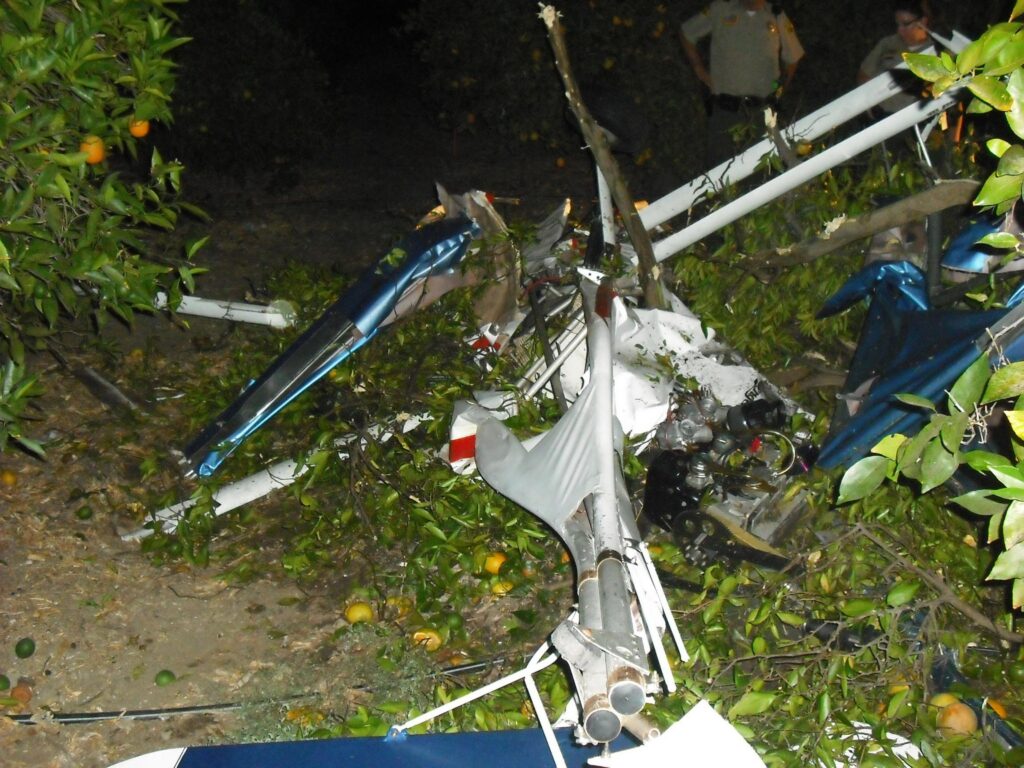
On September 16, 2009, at 4:42 PM Pacific time, a Quad City Challenger II experimental light-sport aircraft, N732LS, crashed in a citrus grove near Redlands Municipal Airport in California, killing both occupants. The 66-year-old commercial pilot and 36-year-old private pilot co-owner had departed French Valley Airport 40 minutes earlier for what should have been a routine flight between the two Southern California airports.
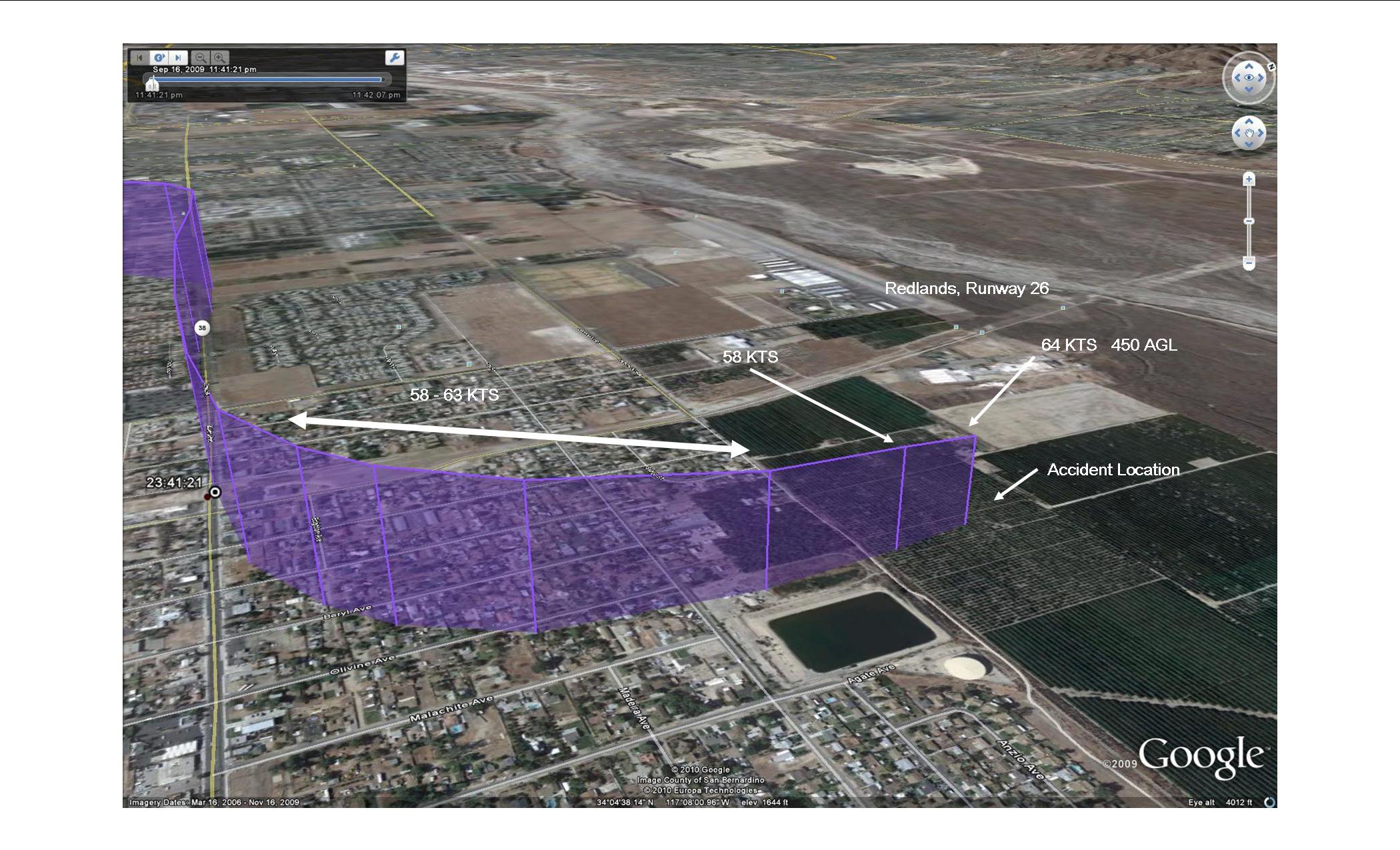
The flight had been proceeding normally. GPS data recovered from the wreckage showed the Challenger climbing to 2,300 feet after departure, then cruising northbound for 38 minutes at altitudes between 2,300 and 3,000 feet with ground speeds ranging from 40 to 75 knots. The pilots flew a standard approach to Redlands, entering the left downwind for Runway 26 at 2,400 feet — 800 feet above the ground.
That’s when things started going wrong. A witness flying in the traffic pattern at Redlands heard a pilot report on the common traffic frequency that he was approaching left downwind for Runway 26. The witness described the pilot’s voice as “shrill” and “excited.” The call was also unusual because Redlands normally uses right traffic for that runway. The witness landed and began taxiing when he heard the pilot report turning left base for Runway 26.
The witness then saw a high-wing aircraft at about 300 to 500 feet above the ground in a position that matched left base. He watched the airplane descend at a 45-degree angle behind trees and out of his view. The GPS data tells the rest of the story. After turning base about one mile southeast of the runway, the Challenger maintained 58 knots for 42 seconds while descending to 2,200 feet. Four seconds later came the final GPS position: 2,151 feet altitude, 64.5 knots ground speed. The wreckage was found 300 feet northwest of that final recorded position.
Investigation Findings
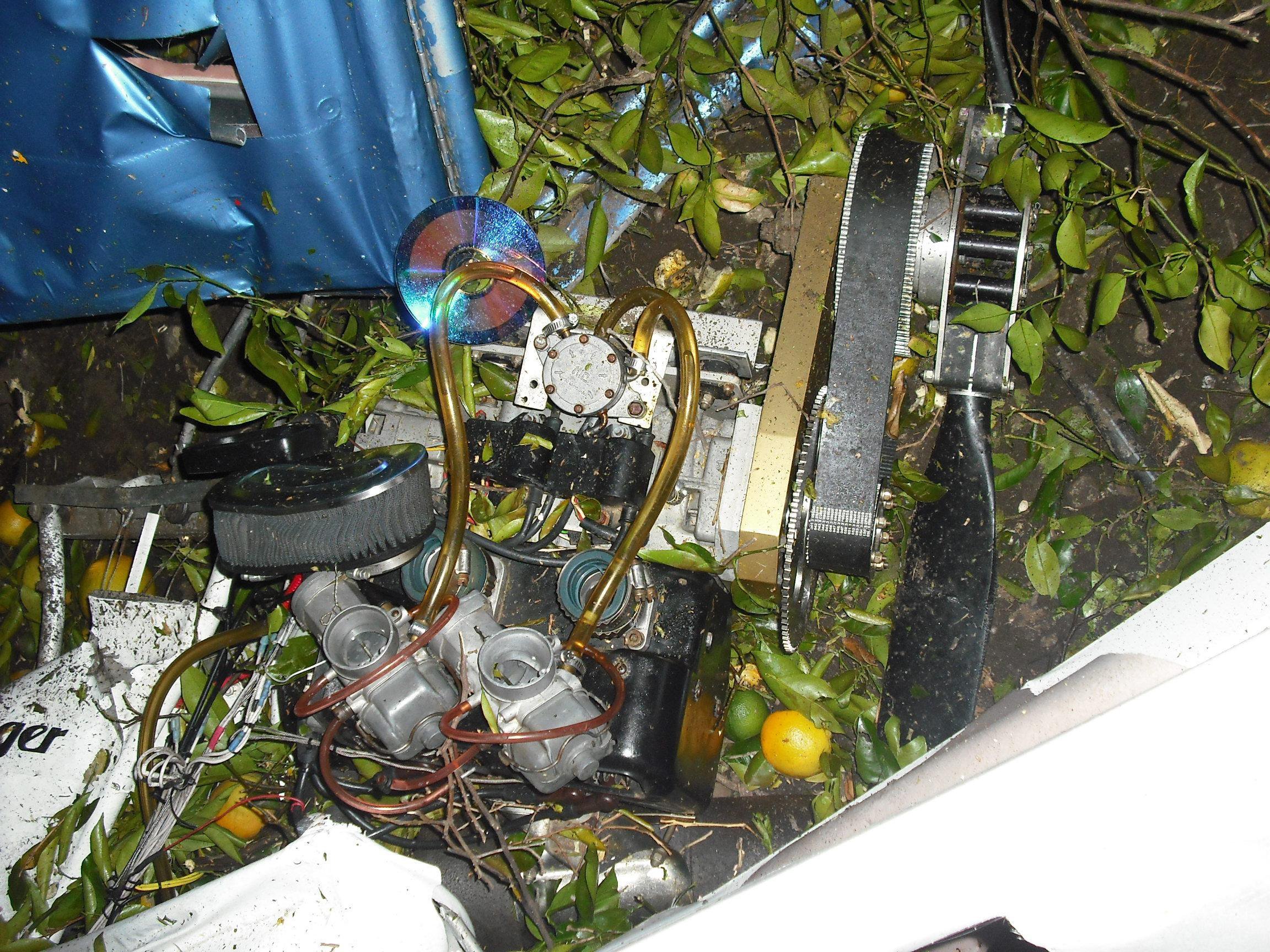
The main wreckage came to rest at the base of a citrus tree in an orchard about one mile from the runway. The trees around the airplane were spaced 20 feet apart and showed no damage, indicating the Challenger had come straight down between them. But the most telling piece of evidence lay 30 feet east of the main wreckage: the outboard 10-foot section of the right wing, completely separated from the fuselage.
The right wing told a story of structural failure in flight. The fabric covering for both the top and bottom surfaces had detached along the entire leading edge and was found draped behind the wing’s rear spar like a streaming banner. Only a two-inch strip of fabric remained bonded to the leading edge. Three of the outboard wing ribs had failed about 12 inches forward of the trailing edge, with fracture surfaces showing the elongated “necking” pattern typical of tensile overload. The failure origins centered around the fabric attachment rivet holes.
The wing spars showed clear signatures of the loads they experienced as the wing came apart. The rear spar exhibited compression damage on its lower surface and curved downward from the failure point to the wing tip. The forward spar failed with compression signatures facing down and aft. The remaining inboard section had torn free from its fuselage attachment, with bolt holes elongated and pulled open as the spar trailed aft and away from the airplane. Physical evidence on both the wing and propeller — a diagonal scar on the wing spar containing black material matching the propeller, and corresponding nicks and blue paint transfer on the propeller tip — showed the separated wing had struck the spinning propeller as it departed the aircraft.
The airplane itself raised questions about construction and maintenance practices. Investigators found household drywall screws securing the tailwheel assembly, an automotive paper fuel filter that the engine manual specifically prohibited, and multiple unauthorized holes drilled through load-bearing structures. Corrosion was noted throughout the aircraft, including on the vertical stabilizer attach points and wing strut support structures. Perhaps most concerning, fabric reinforcement around rivet holes consisted of fiber packaging tape overlaid with painter’s masking tape. The wing fabric itself, while testing within normal strength ranges, bore no manufacturer markings and appeared to be uncertified lightweight material.
NTSB Probable Cause
Structural failure of the right wing during the landing approach due to the separation of the wing’s fabric covering.
Safety Lessons
This accident highlights critical vulnerabilities in experimental aircraft construction and the cascading failures that can result from seemingly minor component failures. The wing fabric separation created a catastrophic chain reaction that the pilots had no ability to control or recover from.
- Fabric attachment integrity is critical to structural survival. When the wing fabric separated from the leading edge, it didn’t just reduce lift — it created a massive drag parachute that generated loads the wing structure couldn’t handle. The fabric attachment points around the rivet holes became stress concentrators that initiated the structural failures. Even certified lightweight fabric requires proper installation techniques and reinforcement materials.
- Construction shortcuts compound into major safety risks. The use of drywall screws, automotive fuel filters, unauthorized holes, and improvised reinforcement materials suggests a pattern of expedient rather than airworthy construction practices. Each individual shortcut might seem minor, but together they indicate an approach that prioritizes convenience over structural integrity. Experimental aircraft builders have tremendous freedom, but that freedom comes with the responsibility to maintain professional construction standards.
- Age and maintenance history matter more in experimental aircraft. This 18-year-old aircraft had an unknown operational history before the current owners purchased it. The new fabric covering installed two months before the accident might have masked underlying structural issues or been improperly installed. Without manufacturer oversight or standardized maintenance procedures, experimental aircraft owners must be even more vigilant about structural condition and proper repair techniques.
Frequently Asked Questions
Q: How does fabric wing covering failure lead to total structural collapse?
A: When fabric separates from the wing’s leading edge while remaining attached at the trailing edge, it creates a massive drag parachute streaming behind the wing. This generates enormous asymmetric loads that the wing structure was never designed to handle, leading to spar failures and wing separation. The loads are amplified because they’re applied suddenly and at the worst possible location for the wing’s structural design.
Q: What are the warning signs of fabric covering deterioration?
A: Look for loose or separated fabric along attachment points, especially at the leading edge and around rivet locations. Check for proper fabric tension — loose or sagging areas indicate attachment problems. Examine reinforcement materials around high-stress areas; proper aircraft fabric tape should be used, not automotive or household materials. Any visible corrosion around attachment hardware is also a red flag.
Q: How should experimental aircraft owners approach fabric covering maintenance?
A: Use only approved aircraft fabric materials and follow established covering procedures, even on experimental aircraft. When re-covering, ensure proper surface preparation, correct fabric tension, and appropriate reinforcement materials. Don’t assume that “good enough” construction practices are acceptable — the consequences of fabric failure can be catastrophic. Consider having covering work done by experienced professionals familiar with fabric aircraft construction.
Q: What should pilots know about flying experimental aircraft with unknown maintenance histories?
A: Approach such aircraft with extreme caution and conduct thorough pre-purchase inspections by qualified mechanics familiar with the specific aircraft type. Budget for potential major repairs or rebuilds. Maintain meticulous records going forward and consider any aircraft with improvised repairs or non-standard materials as requiring immediate professional attention. The freedom of experimental aviation comes with the responsibility for ensuring airworthiness.
Q: Could the pilots have recognized this failure was imminent?
A: The “shrill and excited” radio call suggests the pilots recognized something was wrong, but fabric separation happens very quickly once it begins. Visual inspection during preflight might have revealed loose fabric or inadequate reinforcement materials, but once airborne and in the approach phase, there would be little time to recognize and respond to progressive fabric failure before structural collapse occurred.