What Happened
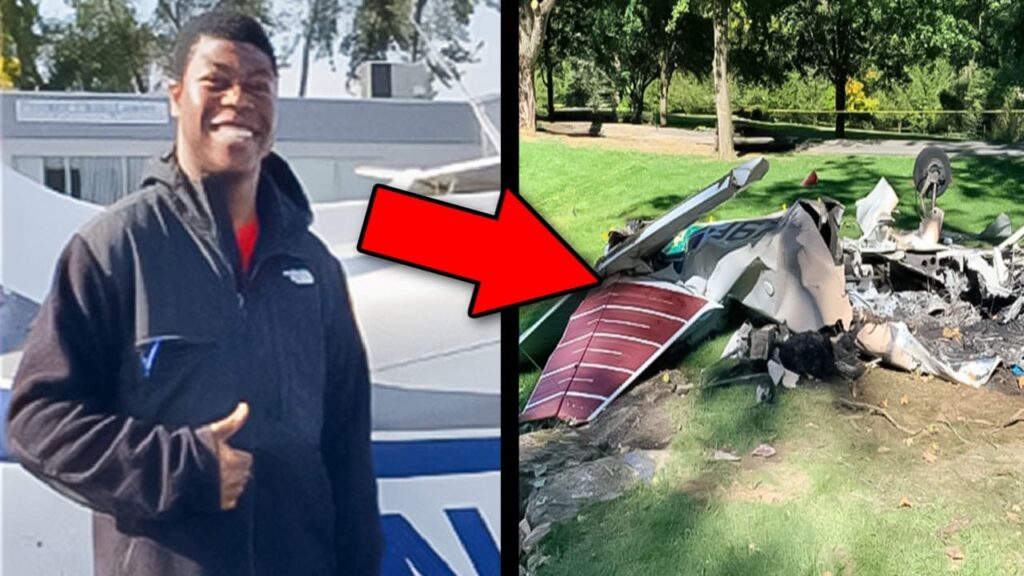
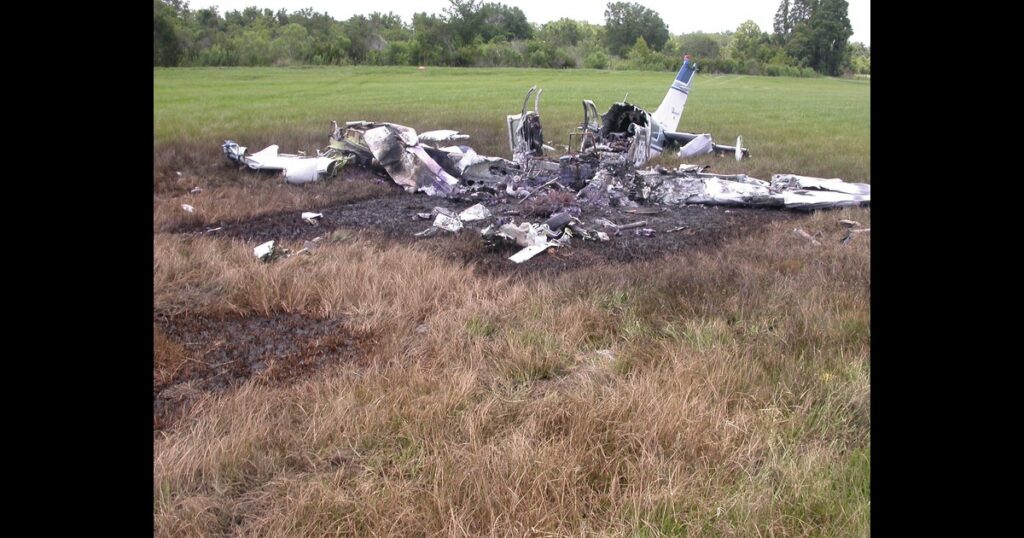
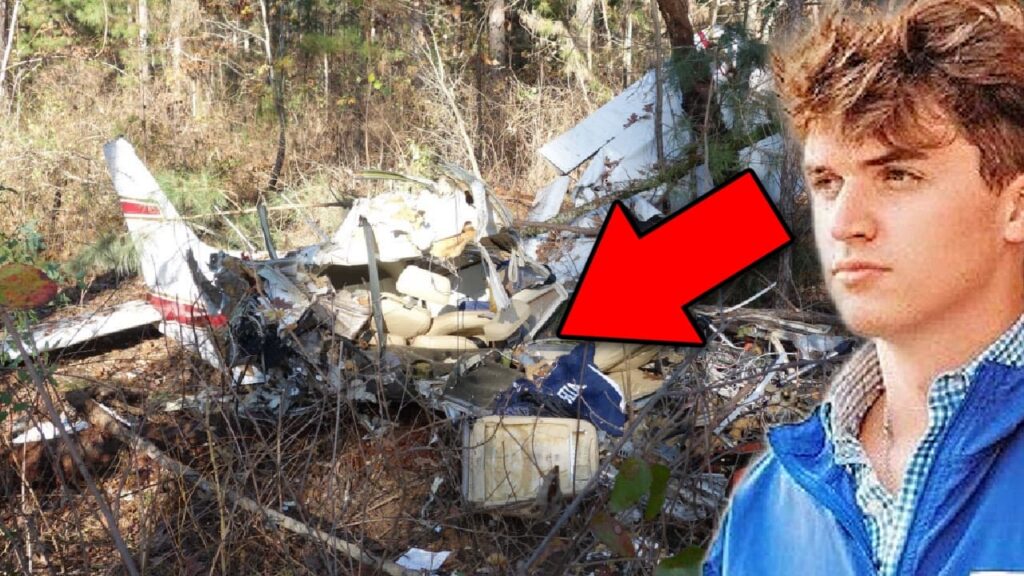
At approximately 4:39 in the morning on December 16, 2020, a Piper PA-28-180, registered N55168, flew into wooded terrain near Barksdale Air Force Base outside Bossier City, Louisiana. The student pilot and his passenger were both killed. The airplane was destroyed on impact. It was a personal flight conducted under Part 91, and it never should have launched.
The story starts the night before. A second CFI — one who had not yet flown with the student pilot — met him that evening. The student pilot had come to pick up the pilot’s operating handbook for the airplane. He told the CFI he was planning a cross-country flight for the next morning. The CFI pulled up the forecast and walked him through it: in-flight icing, low ceilings, weather that no student pilot had any business flying into. The student pilot seemed to understand. He gave no indication he was impaired. The CFI told him not to fly. And then the student pilot left.
Sometime before 4:12 a.m., he arrived at Shreveport Downtown Airport with a passenger. Security video captured the airport’s pilot-controlled lighting activating at 4:12. At 4:17, an airplane departed runway 14. Radar picked it up about a minute later. The weather at that moment: ceiling overcast at 400 feet above ground level, visibility 7 statute miles, temperature and dew point separated by just 1 degree Celsius. The airplane entered instrument meteorological conditions essentially at liftoff. The student pilot held no instrument rating. He had received a local traffic pattern solo endorsement less than a month earlier, on November 21 — with explicit instructions to call his CFI before flying to review weather and NOTAMs, and a clear restriction against carrying passengers. He had not called anyone.
Radar tracked the flight for the next 22 minutes. What it showed was not a purposeful cross-country. The airplane flew an irregular, wandering path to the east and then began maneuvering over Barksdale Air Force Base. An air traffic controller at Shreveport Regional noticed it and contacted the Barksdale tower. The tower controller turned the runway lights up to full brightness and tried to raise the airplane on the radio. No response. The radar returns showed the airplane’s altitude bouncing between roughly 600 and 1,800 feet mean sea level — which placed it well inside the overcast layer for much of the flight. Then, at 4:39, the data showed the airplane enter a left descending turn. The radar returns stopped.
The airplane hit the trees in a remote section of the base. The left wing separated from the fuselage. The right wing partially separated. The engine compartment and cockpit were crushed. Both occupants died from multiple blunt force injuries. Post-accident examination found no mechanical anomalies with the airframe or engine. Nothing was wrong with the airplane.
Investigation Findings
Investigators recovered flight data from two onboard devices: an Appareo Status 3 and a Garmin GPSMap 496. Both had recorded the flight to nonvolatile memory, and both matched the radar track exactly. The flight path was erratic from the start — not the kind of deviation you see with a distracted but oriented pilot, but the kind associated with a pilot who has lost meaningful control over what the airplane is doing.
The toxicology picture was significant. The FAA Forensic Sciences Laboratory detected amphetamine in the student pilot’s blood at 346 nanograms per milliliter and in his urine at 218 nanograms per milliliter. Therapeutic concentrations of amphetamine run between 20 and 100 nanograms per milliliter. Concentrations above 200 nanograms per milliliter are consistent with abuse. His blood level was more than three times the top of the therapeutic range. Cetirizine — an antihistamine with sedating properties — showed up in his urine but not his blood, so investigators did not treat it as a contributing factor in the accident. Metoclopramide and phenylpropanolamine were also detected but considered non-impairing.
His father confirmed after the accident that the student pilot had been taking Vyvanse, a prescription medication for ADHD that metabolizes to amphetamine. At his FAA third-class medical exam six months earlier, the student pilot had reported no medications and no medical concerns. ADHD itself — independent of any medication — is associated with impairments in decision-making, executive function, reaction time, visual-motor coordination, and what researchers call rule-governed behavior. The student pilot had been given explicit rules by two separate CFIs. He violated all of them.
The combination of an untrained pilot, night IMC, a ceiling at 400 feet, no instrument rating, no IFR currency, an ADHD diagnosis, and amphetamine blood levels in the abuse range produced the flight track investigators documented. The airplane’s spiraling descent at the end was consistent with the classic graveyard spiral — a loss of spatial orientation in which the pilot, sensing what feels like a coordinated level turn, pulls back on the stick rather than rolling to wings level. Pulling back tightens the turn and increases the rate of descent. Airspeed builds. The airplane drills into the ground.
NTSB Probable Cause
The student pilot’s decision to conduct a flight during night instrument meteorological conditions and his loss of airplane control due to spatial disorientation. Contributing to the accident was the student pilot’s use of an amphetamine and his attention deficit hyperactivity disorder.
Safety Lessons
This accident is not complicated to reconstruct. The chain of decisions that ended two lives was long, visible, and documented before the first radar return ever appeared. What it illustrates is the way impulsivity and poor judgment stack on top of each other when there are no checks left in the system.
- A solo endorsement is not a general license to fly. The student pilot’s endorsement came with two hard limits: call the CFI before flying to review weather and NOTAMs, and no passengers. Those limits exist because a student’s endorsement is issued for a specific, bounded context — typically the local traffic pattern in VMC. Night IMC cross-country operations are not in that context by any reasonable reading. If you are a student pilot, your endorsement describes the exact envelope of your legal and safe operation. If you are a CFI, this case is a reminder that those limits need to be explicit, documented, and reinforced every time you see the student.
- Amphetamine at abuse-level concentrations represents a serious flight risk, and ADHD is a medical condition that requires full disclosure at your medical exam. The student pilot’s blood amphetamine level was 346 nanograms per milliliter — more than three times the top of the therapeutic range. At higher doses, amphetamine is associated with increased risk-taking and impaired executive function. His ADHD diagnosis independently carries the same associations. The FAA’s medical certification process exists precisely to catch this. The student pilot reported neither condition at his exam. If you have a disqualifying condition or are taking a medication that requires special issuance, the path forward is to work through the FAA’s process — not to conceal it and fly anyway.
- The graveyard spiral kills non-instrument-rated pilots in IMC at a rate that has not changed meaningfully in decades. The Airplane Flying Handbook is direct about what happens when a pilot without instrument training enters conditions where the ground and horizon are not visible: the vestibular system generates false sensations that the pilot cannot override by feel. The inner ear cannot detect slow attitude changes, and it actively produces incorrect information about airplane attitude. The only defense is instrument training, instrument currency, and — most critically — the decision not to enter those conditions in the first place. A 400-foot ceiling at 4 in the morning is not a judgment call. It is a hard stop.
Frequently Asked Questions
Q: Can a student pilot fly at night?
A: A student pilot can fly at night, but only with a specific night solo endorsement from a CFI, and only within the conditions and limitations that endorsement specifies. Night solo requires additional training beyond a standard daytime pattern endorsement. In this accident, the student pilot had only a local daytime traffic pattern endorsement with explicit restrictions — not a night solo endorsement.
Q: Is ADHD disqualifying for an FAA medical certificate?
A: ADHD is not automatically disqualifying, but it does require evaluation and in many cases a special issuance medical certificate. The FAA has a formal process for pilots with ADHD diagnoses to obtain certification, which typically involves neuropsychological testing and documented treatment. Flying on a standard medical certificate while concealing a known ADHD diagnosis — as the student pilot in this case did — is both a regulatory violation and a serious safety risk.
Q: What causes a graveyard spiral, and how do you recover from one?
A: A graveyard spiral develops when a pilot in IMC allows the airplane to enter a banked turn without recognizing it. The inner ear adapts to the sustained turn and stops signaling a turn. When the nose drops and airspeed builds, the pilot’s instinct is to pull back — which tightens the turn and accelerates the descent rather than recovering from it. Recovery requires recognizing the situation on instruments: reduce power, roll wings level using the attitude indicator, then ease back pressure. Avoiding IMC without instrument training and currency is the only reliable prevention.
Q: What are the FAA rules about flying after taking amphetamine medications like Adderall or Vyvanse?
A: Amphetamine-based medications, including Adderall, Dexedrine, and Vyvanse, are on the FAA’s list of medications that are not approved for use while flying. Pilots taking these medications are not medically eligible to exercise pilot privileges. Additionally, the underlying condition being treated — typically ADHD — may itself require special issuance. Pilots who are prescribed these medications should work with an Aviation Medical Examiner to understand their certification options before flying.
Q: What is pilot-controlled lighting, and what does its activation tell investigators?
A: Pilot-controlled lighting (PCL) allows pilots to activate runway lights by clicking their radio transmitter on a designated frequency — typically 7 clicks for full brightness, 5 for medium, and 3 for low. Security video at Shreveport Downtown Airport showed the PCL activating at 4:12 a.m., which established the timeline of when the student pilot was on the field and preparing to depart. Because PCL must be activated from the cockpit frequency, it placed the pilot in the aircraft approximately 5 minutes before departure.