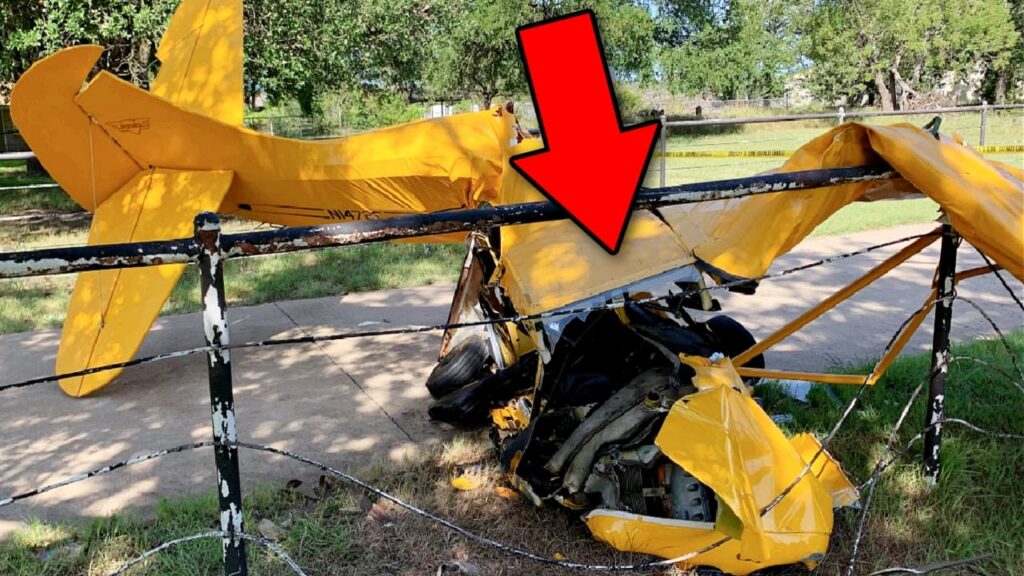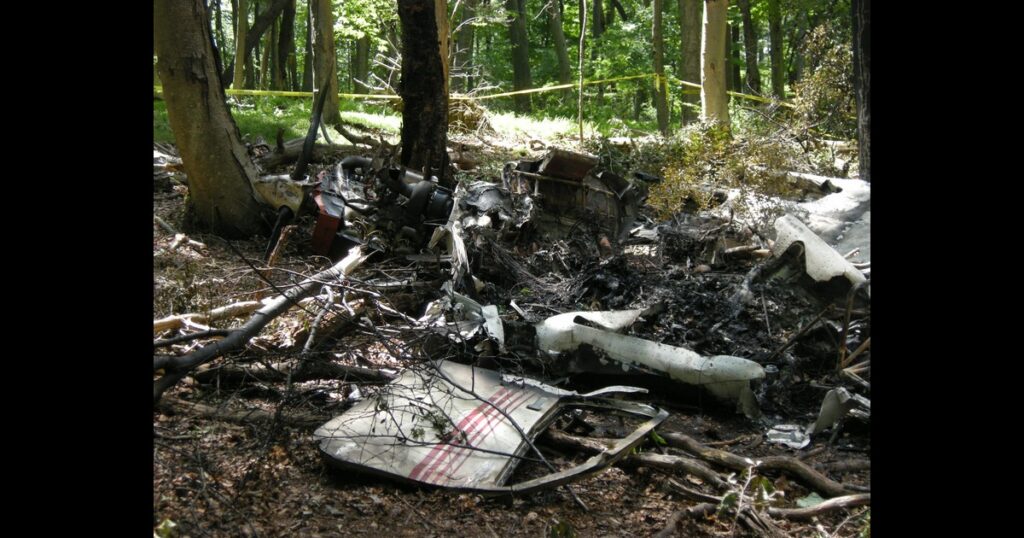
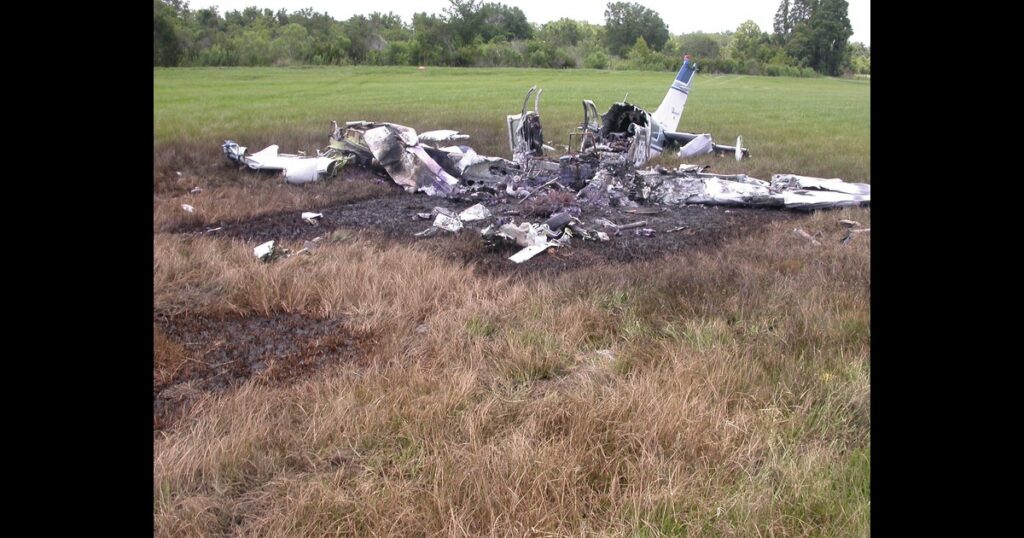
What Happened
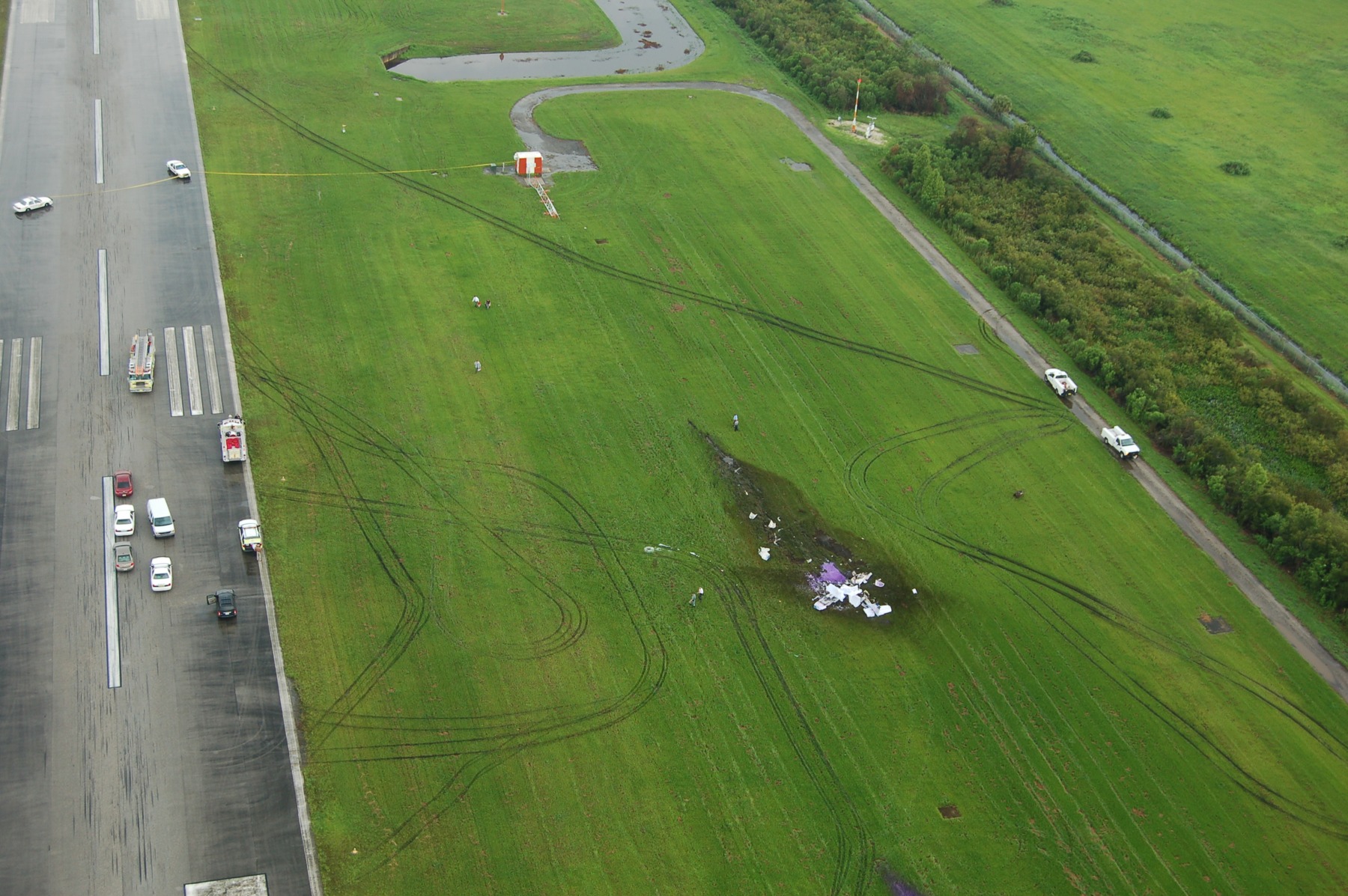
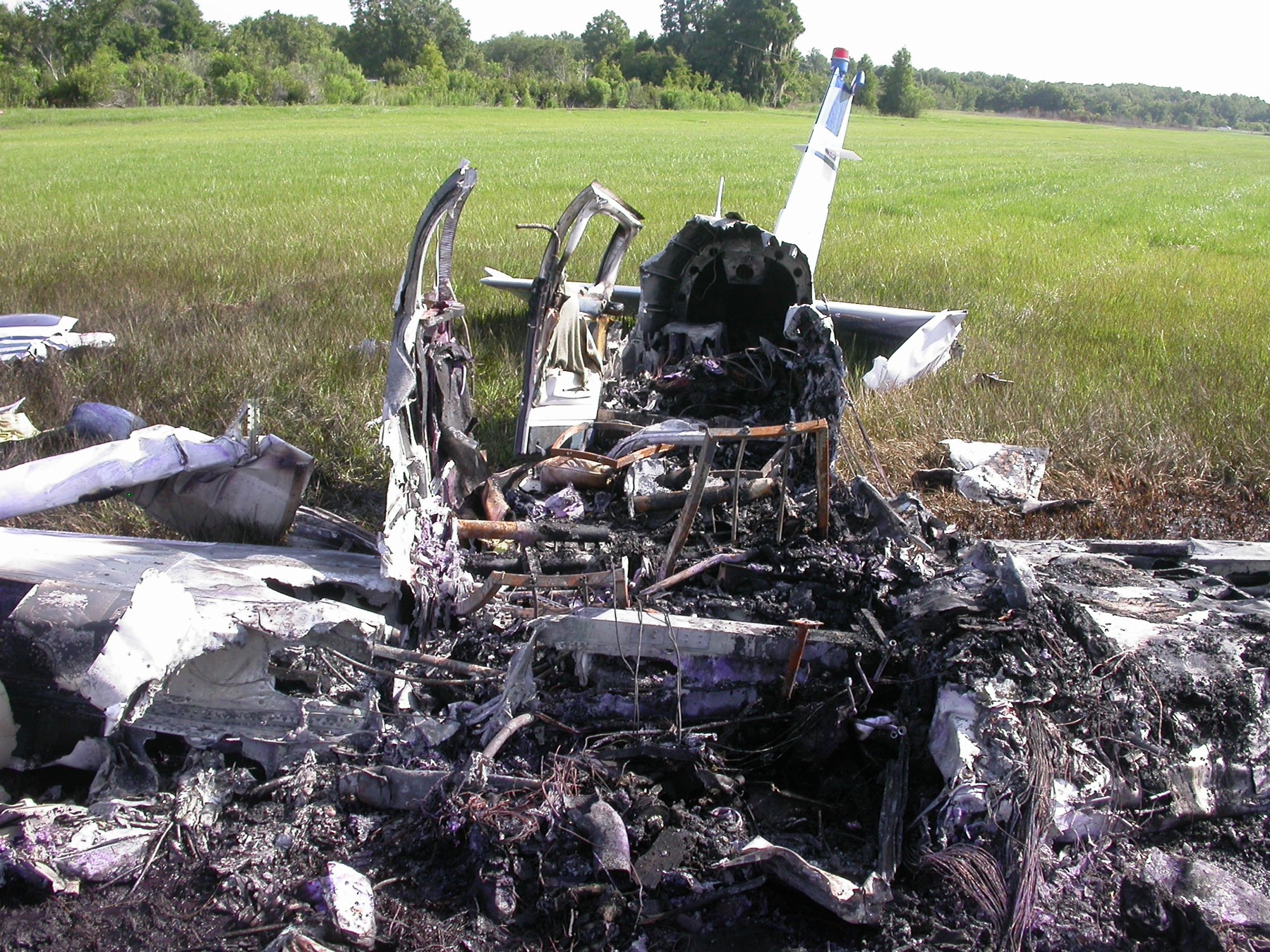
On July 17, 2008, at 1526 eastern daylight time, a Beech A-36, N36CL, lifted off runway 5 at Vandenberg Airport in Tampa, Florida, drifted left of centerline, and struck an instrument landing system glide slope antenna that stood 49 feet tall and 212 feet left of the runway centerline. The airplane cartwheeled, came to rest right side up, and caught fire immediately. The 81-year-old private pilot and his two passengers were killed. The flight was an Angel Flight mission, originating at Vandenberg and bound for Stuart, Florida, on an IFR flight plan.
The sequence started before the pilot ever taxied. The 1522 surface weather observation at Vandenberg put the wind at 220 degrees, 6 knots. Runway 5 has a magnetic heading of 050 degrees. That meant the pilot was looking at a nearly direct tailwind for the entire takeoff roll. The Beech A-36 Pilot Operating Handbook is specific on this point: at 3,450 pounds and 25 degrees Celsius at sea level with no wind, the airplane breaks ground after 1,100 feet and clears a 50-foot obstacle in 2,100 feet. Add that 6-knot tailwind and those numbers grow to 1,450 feet of ground roll and 2,750 feet to clear the obstacle. That is a 31 percent increase in both figures on a runway that is only 5,000 feet long. The airplane’s ramp weight that afternoon was calculated at 3,448 pounds, essentially matching the POH chart’s reference weight. The math was not favorable, and runway 23 was the calm-wind option sitting at the other end of the same pavement.
At 1521:39, the pilot called the Tampa east satellite local controller requesting his IFR clearance. The controller could not locate the flight plan in the system and worked around it, issuing a clearance to enter Lakeland airspace with a void time, requiring the pilot to be airborne by 1530. The pilot acknowledged at 1523:56. That gave him roughly six minutes to complete his checks and get rolling. Whether the void time factored into the decision-making on which runway to use is not known, but the clock was running. A witness driving southbound on I-75, which runs adjacent to the airport, watched the takeoff and told investigators the airplane appeared to begin its roll on the last one-third of the runway. That would put the start point somewhere around the 3,300- to 3,500-foot mark, leaving perhaps 1,500 to 1,700 feet of pavement ahead. The witness noted a light rain and no perceptible wind.
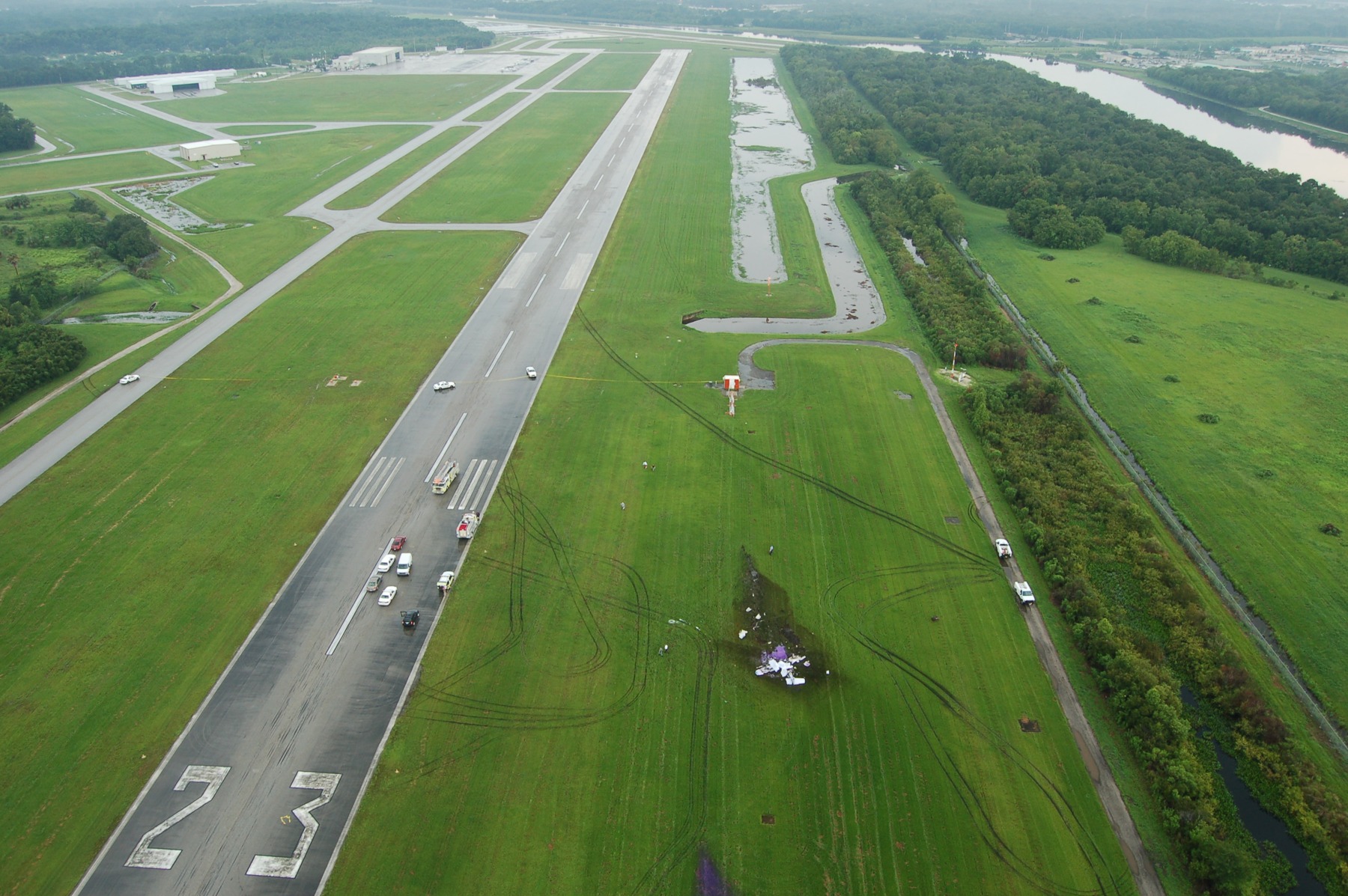
The airplane rotated and the gear came up. Then it drifted left. The right wingtip struck a pole. From there the airplane cartwheeled to the right, hit the ground, and came to rest on a heading of 220 degrees, roughly 377 feet down the crash debris line. The propeller and nose gear door had struck the top of the antenna. Nose landing gear hardware and propeller blade tip fragments were found 61 feet down the debris line. The right wing contacted the ground at 254 feet. The airplane came down right side up and burned. The cause of death for all three occupants was suffocation from inhalation of superheated air.
Investigation Findings
The NTSB’s examination of the airframe, flight controls, engine assembly, and accessories found no evidence of any precrash mechanical failure or malfunction. The Continental IO-550-B engine, overhauled at Penn Yan Aero in April 2007 and reinstalled with 186.43 hours since major overhaul at the time of the accident, had received an oil change in April 2008 and showed no anomalies. The fuel tanks were intact and the airplane had been refueled with 32.16 gallons of 100LL on July 12, five days before the accident. This was not a mechanical event.
The pilot held a private certificate with instrument rating and reported 4,950 total hours on his most recent FAA medical application and 5,010 hours on his April 2008 Mercy Flight membership renewal. His last biennial flight review was June 2007. His current logbook was not recovered, as it was stored in a black bag in the airplane and was presumed destroyed in the fire. What investigators did know about the pilot’s recent medical history was significant: he had been diagnosed with prostate cancer, was receiving hormone injections every three months, and had completed 21 of 25 scheduled external radiation treatments at the time of the accident. Radiation treatment side effects can include fatigue, pain, and general physical discomfort. The FAA does not categorically disqualify pilots for cancer or its treatment, and the regulations do not require pilots to proactively report new conditions between required medical exams. Under 14 CFR 61.53, the obligation falls on the pilot to self-assess and self-ground if a condition would make them unable to meet their medical certificate’s requirements. The toxicology results returned negative for carbon monoxide, cyanide, ethanol, and all screened drug classes.
The glide slope antenna that the airplane struck was positioned 3,461 feet from the runway 5 threshold and 212 feet left of the centerline, abeam the precision approach path indicator on the right side of the runway. A witness placed the airplane’s takeoff roll beginning on the last one-third of the runway, which is consistent with the debris field: the antenna was at the 3,461-foot mark, and if the airplane started rolling near the 3,300-foot mark, it would have been airborne but still extremely low when it reached that structure. The weight and balance calculation put the ramp weight at 3,448 pounds, within limits, with a center of gravity of 81 inches aft of datum. Everything was legal. The wind was not.
NTSB Probable Cause
The pilot’s improper decision to take off with a tailwind and his failure to maintain runway alignment during initial takeoff climb.
Safety Lessons
Three things converged on runway 5 that afternoon. Any one of them, caught and corrected, likely changes the outcome.
- Tailwind penalties are not linear, and the POH numbers are not padded. A 6-knot tailwind added 350 feet to the ground roll and 650 feet to the obstacle clearance distance for this airplane at this weight. Those are not worst-case numbers with safety margin baked in. They are the performance you can expect from a well-maintained airplane in standard conditions. The pilot started his roll from the last one-third of a 5,000-foot runway, which means he had, at most, around 1,700 feet of pavement remaining. The POH said he needed 1,450 feet just to break ground. The numbers do not work, and they were available before the engine started.
- A void time is not a reason to compromise the departure runway selection. The controller issued a clearance with a 1530 void time, and the pilot acknowledged at 1523:56. Seven minutes is not much runway. But taxiing to the other end of the runway, or requesting an amended void time, or simply canceling IFR and departing VFR were all options available. A void time creates pressure, and pressure creates the conditions where pilots make decisions they would not make with unlimited time. Recognize the pressure for what it is.
- Ongoing medical treatment deserves an honest self-assessment before every flight, not just at the medical exam. The pilot was 21 sessions into a 25-session radiation treatment course. The regulations do not automatically ground a pilot for that. But 14 CFR 61.53 is clear: the pilot is responsible for determining whether a condition or its treatment is affecting their ability to meet their medical standard. That assessment has to happen every time, not once every few years in an AME’s office. The pilot had initially turned down this mission, then called back and accepted it later the same day. What changed in that interval is not known.
Frequently Asked Questions
Q: What caused the Beech A-36 crash at Vandenberg Airport in 2008?
A: The NTSB determined the pilot made an improper decision to depart runway 5 with a 6-knot direct tailwind and failed to maintain runway alignment during the initial takeoff climb. The airplane drifted left of centerline and struck an ILS glide slope antenna located 212 feet left of the runway 5 centerline.
Q: How does a tailwind affect takeoff distance in a Beech A-36?
A: According to the Beech A-36 Pilot Operating Handbook, at 3,450 pounds and 25 degrees Celsius at sea level, a no-wind takeoff requires 1,100 feet of ground roll and 2,100 feet to clear a 50-foot obstacle. With a 6-knot tailwind, ground roll increases to 1,450 feet and obstacle clearance distance grows to 2,750 feet, a 31 percent increase in both figures.
Q: What are the rules for pilots flying with a medical condition between FAA examinations?
A: Under 14 CFR 61.53, a pilot must not act as pilot in command if they know or have reason to know of any medical condition that would make them unable to meet the requirements of their medical certificate, or if they are receiving treatment that results in that inability. The FAA does not require pilots to report new conditions between required medical examinations, but the responsibility to self-ground rests with the individual pilot.
Q: What is an ILS glide slope antenna and why was it a hazard here?
A: An ILS glide slope antenna is ground-based equipment that transmits the vertical guidance signal for instrument approaches. At Vandenberg Airport, the antenna for runway 5 stood 49 feet tall and was positioned 3,461 feet from the runway 5 threshold and 212 feet left of the runway centerline. An aircraft that drifts left shortly after rotation is flying directly toward that structure at very low altitude.
Q: What is an Angel Flight and how was this mission organized?
A: Angel Flight, operated here by Mercy Flight Southeast, Inc., is a volunteer pilot organization that provides free air transportation for patients traveling for medical care. The organization contacted nine pilots on July 14, 2008 for this mission. All nine initially declined, including the accident pilot, who later called back and accepted the assignment.
Sources and References