What Happened
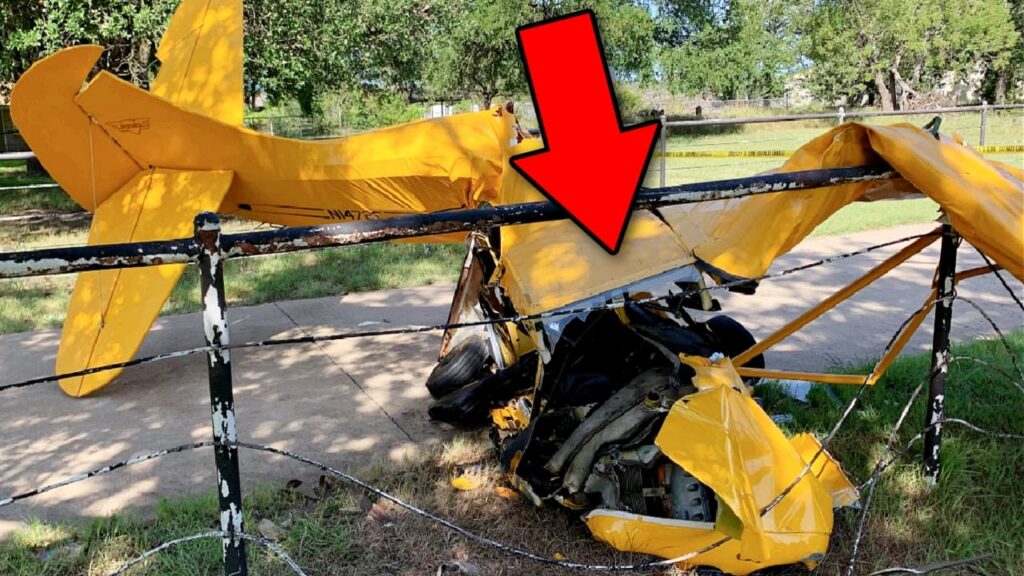
On the morning of August 21, 2021, an Aeronca 7AC, N1472E, lifted off from runway 15 at Flying Oaks Airport (2TE2) in Fort Worth, Texas. The pilot, an airline transport pilot, was in the rear seat. His son was in the front seat. It was supposed to be a local flight. By 0853 central daylight time, both of them were dead. The airplane came to rest about 1,100 feet southeast of the departure end of runway 15, sustaining substantial damage to the fuselage and both wings.
Multiple witnesses watched the takeoff from the field. One of them was a flight instructor. He described the takeoff roll as “extra-long” and noted that the airplane was already behaving strangely before it left the ground. During the initial roll, the airplane went “out of control” and “almost ground looped.” Then it kept rolling. And rolling. When it finally broke ground, it “appeared to get slow” during the initial climb. He watched the airplane start a roll to the right. The left wing fell. About 100 feet above ground level, it stalled and entered a spin.
A second witness told a similar story from a different angle. During the takeoff, the airplane appeared to be “barely climbing.” Near the end of the runway, at roughly 100 feet agl, he observed a strong right yaw, then a gradual left turn. The pilot appeared to push the nose down, then the airplane rolled hard left and entered the spin. Neither witness reported hearing any abnormal engine noise. The engine wasn’t the problem.
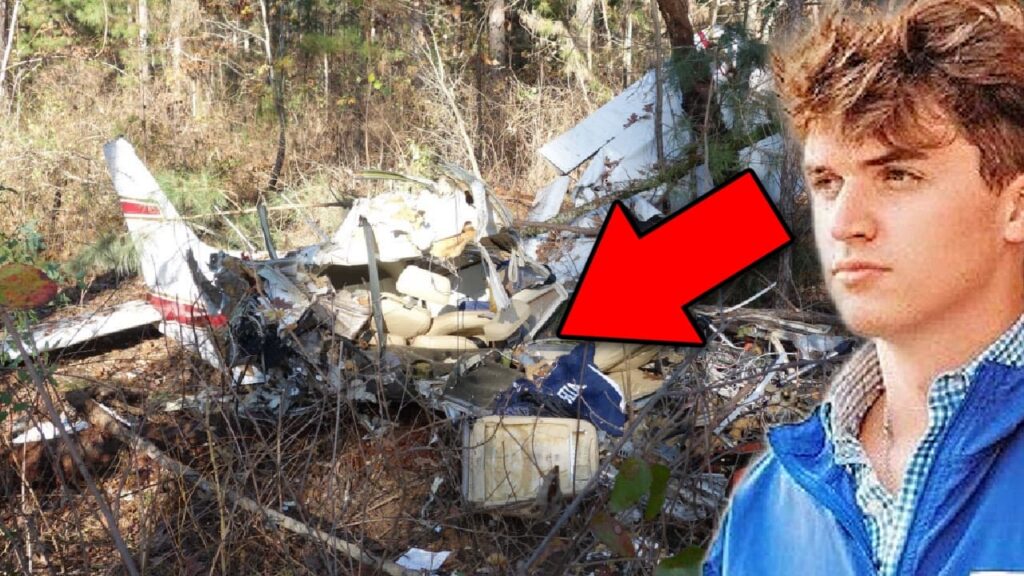
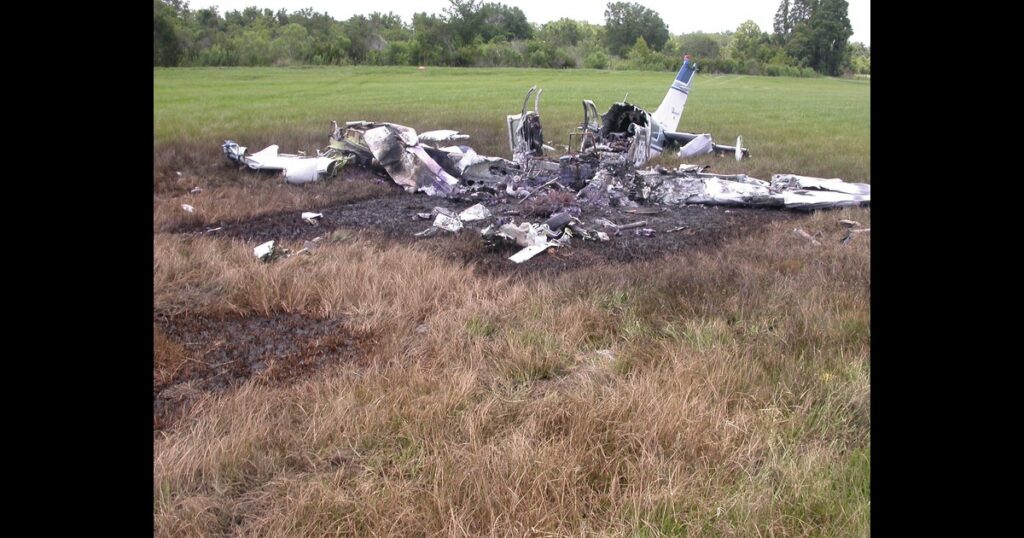
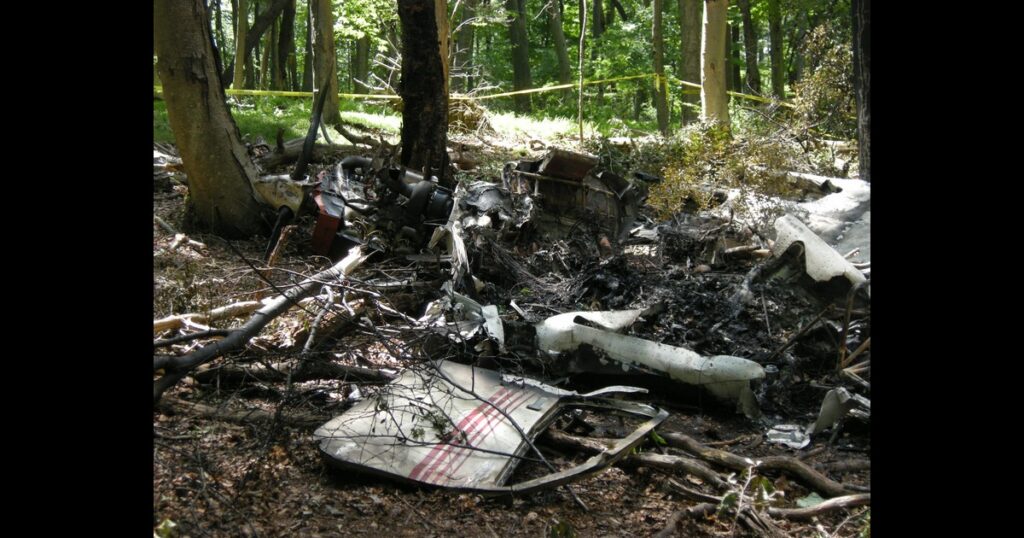
The airplane struck the ground about 1,100 feet southeast of the runway’s departure end, on a magnetic heading of 079 degrees, at an elevation of roughly 860 feet msl. The single fuel tank, located between the cockpit and the firewall, was breached on impact. An FAA aviation safety inspector on scene noted a strong odor of fuel, though there were no signs of a pre-impact fuel leak on the airframe. Vegetation blighting was visible in the grass where the nose came to rest. Flight control continuity was confirmed at both cockpit stations. There was no mechanical reason the airplane couldn’t fly.
Investigation Findings
The NTSB’s examination of the airframe and engine found no pre-impact mechanical malfunctions or failures that would have precluded normal operation. The maintenance records showed no uncorrected discrepancies. A dorsal fin had been installed on the empennage in April 2020, which was an approved modification. Flight controls functioned at both positions. The airplane simply didn’t have a mechanical problem.
What investigators did find was a weight and balance problem. A significant one. The pilot had purchased the airplane in May 2021, about three months before the accident. Using the airplane’s weight and balance records and the known weights of both occupants, investigators calculated the loading at departure. With a full fuel load, full oil, and no baggage aboard, the airplane was 225.6 pounds over its maximum gross weight at the time it rolled onto runway 15. The center of gravity was within limits, but the total weight was not. The Aeronca 7AC is a light, fabric-covered tandem two-seater. It was not designed to carry 225 extra pounds off a grass strip on an August morning in Texas.
That August morning in Fort Worth mattered more than it might sound. The estimated density altitude at the time of the accident was 2,610 feet msl. The field elevation at Flying Oaks Airport is roughly 710 feet. So the airplane’s engine and wings weren’t operating in 710-foot air. They were operating in air as thin as you’d find at 2,610 feet. The engine made less power than it would on a standard day. The wings needed more speed to generate the same lift. The climb rate was reduced. The stall speed was higher. Every performance number moved in the wrong direction, and the airplane was already 225 pounds past its limit before any of that happened.
The airplane had flight controls at both cockpit stations but flight instruments only at the front seat. There were no flaps, no stall warning system, and no angle of attack indicator. The pilot in the rear seat had no airspeed indicator, no altimeter, and no way to get a direct readout of how close he was to the edge. The flight instructor witness described someone who was already behind the airplane on the ground before the wheels ever left it.
NTSB Probable Cause
The pilot’s exceedance of the airplane’s critical angle of attack during the initial climb, which resulted in an aerodynamic stall. Contributing to the accident was the pilot’s inadequate preflight planning, which resulted in an exceedance of the airplane’s weight and balance limitations and decreased takeoff performance.
Safety Lessons
The Aeronca 7AC is not a forgiving airplane when you push past its limits. Neither is any other airplane. But this accident has a specific shape to it, and the shape is worth understanding clearly.
- Weight limits are performance limits, not bureaucratic ones. The 7AC’s maximum gross weight isn’t an arbitrary number someone stamped on a document. It’s the upper boundary of what the airframe, engine, and wing were tested and certified to handle. At 225.6 pounds over that number, combined with a density altitude of 2,610 feet, the airplane’s climb performance was critically degraded before it ever left the ground. The stall speed goes up when the airplane is heavy. The available power to outrun that stall speed goes down when the air is thin. Those two trends converge fast at 100 feet agl.
- Density altitude compounds every other problem you already have. An 800-foot field in Fort Worth in August does not behave like an 800-foot field. The density altitude that morning put the effective performance environment at 2,610 feet. That means a longer takeoff roll, a slower climb, a higher stall speed, and less engine power, all simultaneously. When an airplane is already overloaded, density altitude doesn’t add to the problem. It multiplies it. Preflight planning on warm-weather days at any elevation means doing the density altitude math before you load up.
- Seat position matters in tandem aircraft with split instrumentation. The 7AC had instruments only in the front seat. The pilot flew from the rear. He had no airspeed indicator, no way to watch the numbers deteriorate in real time. Pilots flying tandem aircraft where instruments are limited to one station need to account for that during planning and during flight, not after liftoff. If you can’t see the airspeed, your feel for the airplane has to be sharper, and your margins have to be larger, not smaller.
Frequently Asked Questions
Q: Why did the Aeronca 7AC stall so quickly after takeoff?
A: The airplane was 225.6 pounds over its maximum gross weight, and the density altitude at the time was approximately 2,610 feet. Both conditions raised the stall speed and reduced climb performance. During the initial climb at roughly 100 feet agl, the pilot exceeded the airplane’s critical angle of attack. At that combination of weight and density altitude, there was almost no margin between flying speed and stall speed, and no altitude for recovery once the stall occurred.
Q: How much does being overweight affect stall speed?
A: Stall speed increases with the square root of the weight ratio. So if an airplane is operating at a weight 20 percent above its certified maximum, its stall speed increases by roughly 10 percent. For a light aircraft like the Aeronca 7AC, even a modest overload can push stall speed up several knots, which matters enormously during the slowest phase of flight: the initial climb after takeoff.
Q: Does density altitude affect stall speed?
A: Indicated stall speed does not change with density altitude, but true airspeed at the stall increases. More practically, the airplane’s engine produces less power at higher density altitudes, which means less thrust available to maintain climb speed. The combination of reduced power and reduced aerodynamic efficiency leaves a narrower margin between flying and stalling, especially during the takeoff climb when power demands are highest.
Q: Can a spin at 100 feet agl ever be recovered from?
A: No. A developed spin at 100 feet above ground level is not survivable. Spin recovery requires altitude for the nose to fall through and the rotation to stop before the airplane can be leveled. Even practiced spin recovery from entry to wings-level requires several hundred feet minimum. An inadvertent spin beginning at 100 feet agl has no recovery window.
Q: Why did the Aeronca 7AC pilot sit in the rear seat if the instruments were in the front?
A: In tandem aircraft like the 7AC, the rear seat is traditionally the pilot-in-command position. The airplane was designed so the pilot could fly from either seat, but the flight instruments were installed only at the front station. This means a pilot flying from the rear had no direct airspeed reference. That’s not unusual for the type, but it places a higher burden on the rear-seat pilot to manage energy and angle of attack by feel and sound rather than instrument reference.