
What Happened
On June 18, 2011, a Cessna T210N registered N210KW departed Westchester County Airport in White Plains, New York at approximately 1303 eastern daylight time, bound for Montauk Airport on Long Island. The certificated commercial pilot, who was also a flight instructor with 4,150 hours on his most recent medical, had three passengers aboard. All four were fatally injured when the airplane collided with trees and terrain near Armonk, New York, about three minutes after wheels-up.
The story, though, started well before the takeoff roll. A locally-based pilot watching from the field observed the accident airplane perform approximately eight engine run-ups at the departure end of runway 34 before the flight ever moved. During the first several attempts, the engine produced a distinct “chugga-chugga” sound. It smoothed out during the final two or three run-ups. The same witness noted that the takeoff roll was unusually long and that the climb performance after rotation looked poor. A summer intern at Panorama Flight Service, himself a private pilot, had observed the pilot even earlier, running the engine up in the tie-down area on the ramp before taxiing, which he described as unusual and generally considered bad form due to the noise and prop blast. That run-up included at least three propeller cycling sequences and a sustained high-power run lasting about a minute. Start to finish, the sequence on the ramp took three to four minutes.
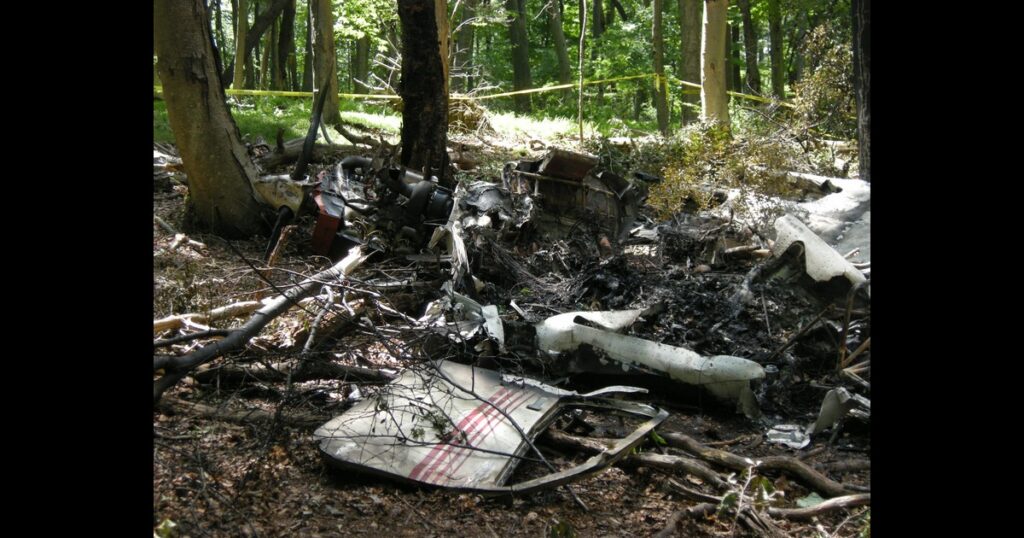
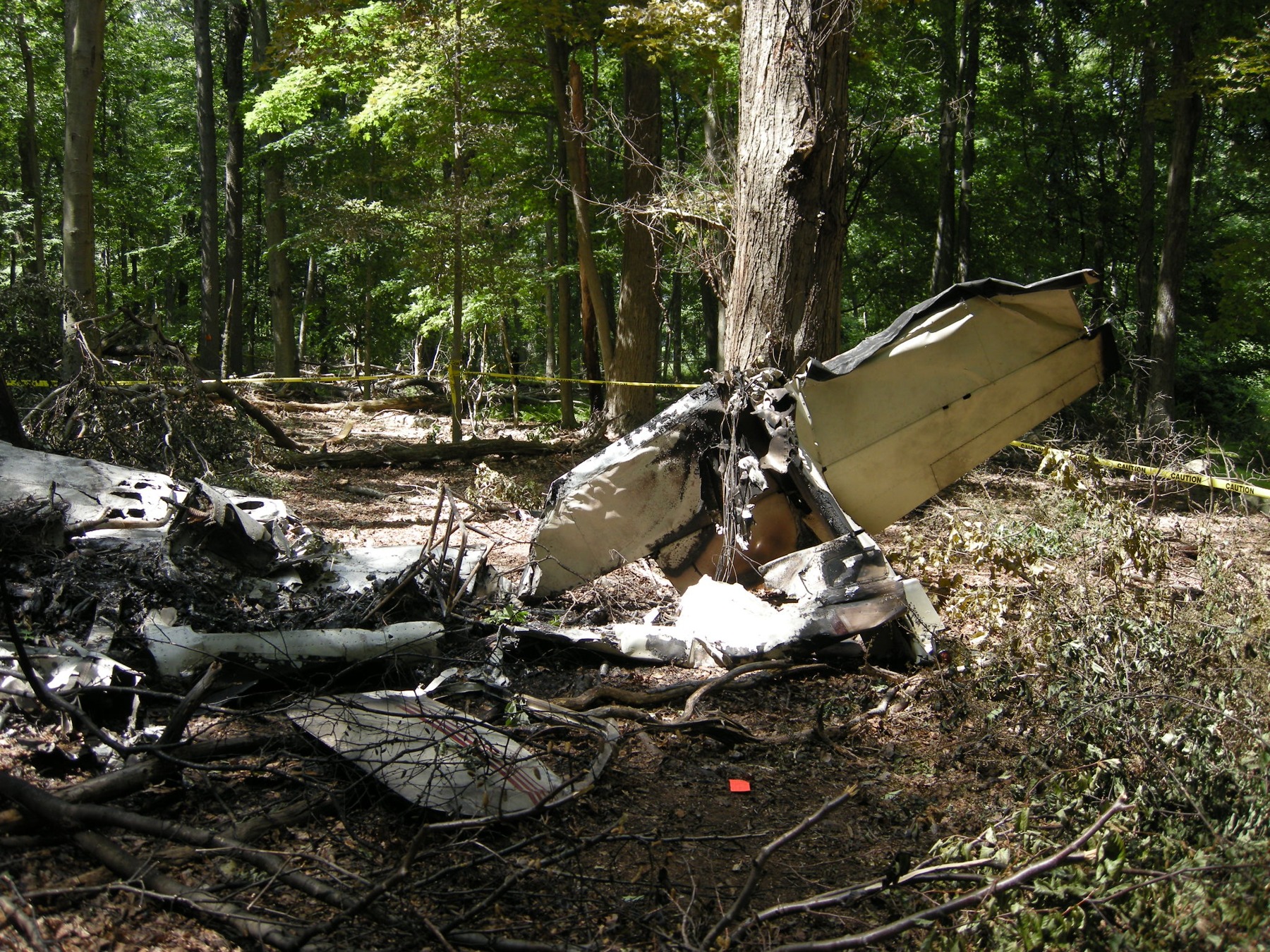
The airplane departed runway 34. It climbed to a maximum of approximately 1,400 feet mean sea level, around 1,000 feet above the ground. Somewhere in that first minute of flight, the pilot came back on the radio and told approach control he needed to return to the airport and requested runway 16. The controller asked if he was declaring an emergency. He said he was. The controller asked him to switch to tower frequency. The pilot responded that he could not switch to tower. That was the last recognizable transmission from N210KW. Radar contact continued briefly, showing 87 knots ground speed on a heading of 169 degrees, before the return disappeared from the scope at the same location as the impact site. The wreckage was found in a wooded area about one mile north-northeast of the approach end of runway 16. The wreckage path ran roughly 350 feet along a heading of 153 degrees, beginning at the top of a 60-foot maple tree and ending near the base of another tree with impact damage 40 feet up. The airplane came to rest inverted. The cockpit and cabin were largely consumed by a post-crash fire.
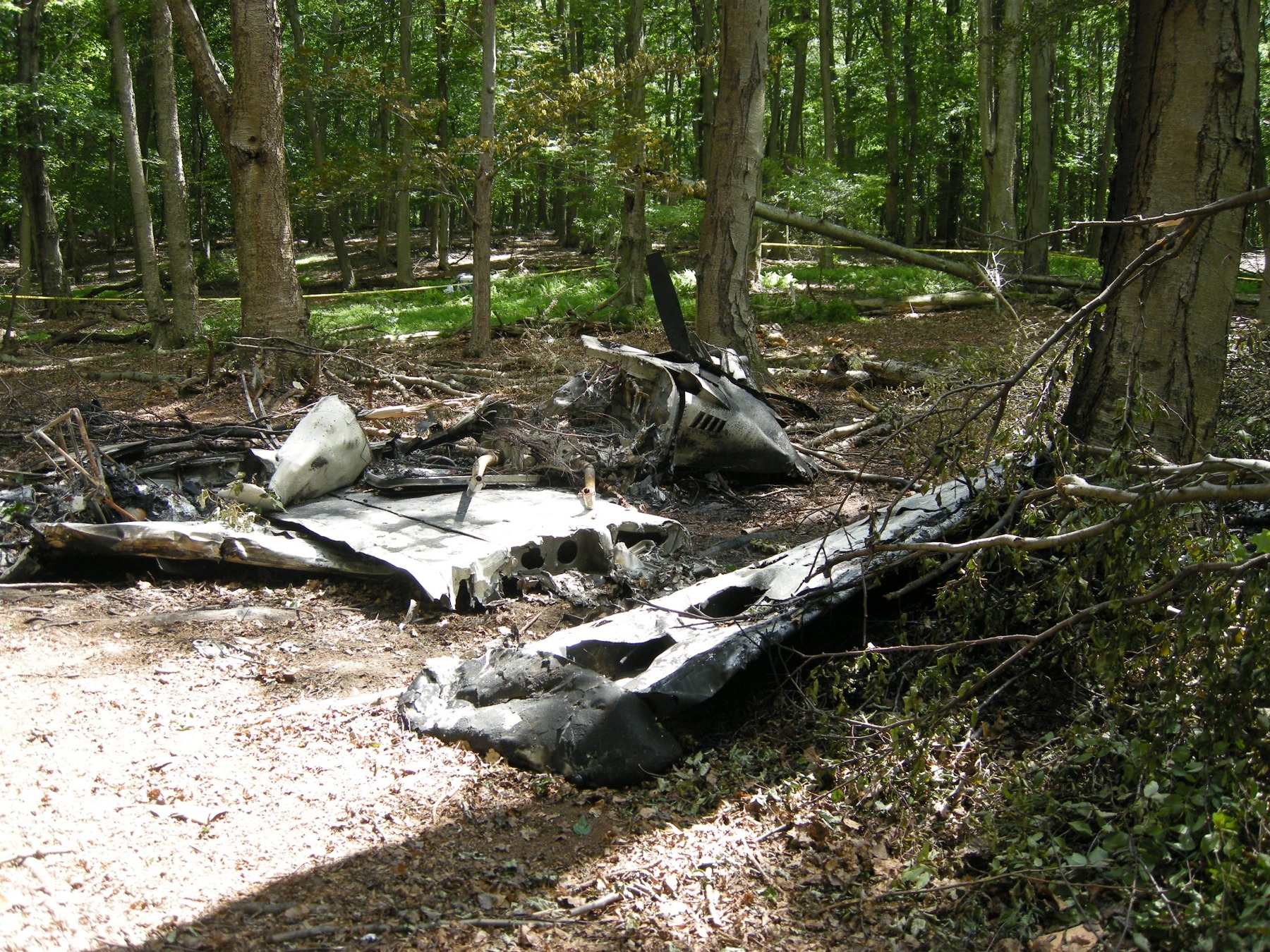
The landing gear and flaps were retracted. The propeller remained attached to the engine. The propeller blades showed impact-related bends and dents but no torsional twisting, no leading-edge gouges, no chordwise scratching, and no deformation consistent with high-power rotation at impact. One blade left a smooth cut on an adjacent tree trunk. The engine had sustained only minor damage from impact and heat. The turbocharger rotated freely. The fuel gascolator bowl and screen were clean and dry.
Investigation Findings
Continental Motors examined the engine at their Mobile, Alabama facility on July 18, 2011. The oil system contained fine aluminum particles. The magnetic chip detector held larger metallic fragments. When investigators checked the left magneto timing, they found it set at 30 degrees before top dead center. The manufacturer specification for the Continental TSIO-520R9B is 22 degrees BTDC. That is 8 degrees advanced beyond the limit. The right magneto had broken free of its mount during impact, so its timing could not be checked. Both magnetos, when tested on a bench, operated normally. The maintenance records showed the magnetos had last been retimed during an annual inspection about 27 months before the accident, at 30.2 hours since major overhaul. The engine was at 74.2 hours SMOH at the time of the accident.
Disassembly of the engine told the rest of the story. The number 2 cylinder was destroyed from the inside. The piston head showed severe thermal deterioration consistent with pre-ignition or detonation. The spark plug electrodes from that cylinder were completely embedded with aluminum and were incapable of producing a spark. The combustion chamber itself contained molten aluminum debris. The intake and exhaust valve heads showed the same material. The other five cylinders, by contrast, looked normal. Combustion deposits, wear patterns, and operating signatures on cylinders 1, 3, 4, and 5 were all within expected ranges. The number 6 piston showed slightly less than normal combustion deposits with some pitting on the face, but nothing approaching the catastrophic thermal event in number 2. The fuel system, from throttle body through the six injector nozzles, tested within spec on calibrated benches.
The airport’s noise abatement monitoring microphones had recorded the accident flight on both legs. The NTSB Vehicle Recorder Division analyzed the audio alongside radar data and microphone positions. The recording showed three distinct noise regions: the outbound climb at 3 minutes 18 seconds, the inbound return leg at 4 minutes 40 seconds, and the terrain impact at 4 minutes 59 seconds. The sound pressure level on the inbound leg was significantly lower than on the outbound climb. The engine was still running when the airplane hit the trees, but it was producing considerably less power than it had on takeoff. The analysis suggested the pilot was flying the approach at a reduced power setting. Whether additional power was available and how much the damaged engine could have produced remained undetermined.
NTSB Probable Cause
The pilot’s decision to depart on the flight with a suspected mechanical deficiency and his subsequent decision to fly the final approach at a reduced power setting. Contributing to the accident was the improper timing of the magneto(s) that resulted in a severe detonation event.
Safety Lessons
This accident compressed an entire chain of go/no-go failures into about three minutes of flight time. Each link in that chain was visible before the wheels ever left the ground.
- Eight run-ups before departure is a ground abort, not a clearance to go. A normally operating turbocharged Continental should not require multiple attempts to smooth out at run-up power. The “chugga-chugga” sound, the rough idle, the unusually long takeoff roll, and the weak climb were all observable before the airplane reached pattern altitude. When the pre-takeoff checks are themselves a troubleshooting session, the airplane does not depart.
- Magneto timing 8 degrees advanced beyond limits creates a detonation environment, not just a performance penalty. Advancing ignition timing causes the fuel-air mixture to begin burning earlier in the compression stroke. Under the heat and pressure of a turbocharged engine, that early ignition becomes detonation. Detonation at sufficient intensity destroys pistons and embeds the combustion chamber with aluminum. The Continental TSIO-520 specification of 22 degrees BTDC is not a guideline. Infrequently flown engines with documented magneto work in their history warrant a timing check at annual, not every other annual.
- When you declare an emergency one mile from the field with a sick engine, fly at the power setting that keeps you flying. The noise abatement recording showed the engine was still running at impact. It was running at reduced power. The gear was retracted. The flaps were retracted. The airplane hit at the approach end of the runway it was trying to reach, in the trees, at a shallow glide angle. With 1,000 feet of altitude at the start of the emergency and a destination one mile away, power management in those final seconds mattered. If the engine had anything left to give, the approach configuration and power setting needed to extract it.
Frequently Asked Questions
Q: What caused the engine failure on the Cessna T210N N210KW accident?
A: The left magneto was found timed at 30 degrees before top dead center, 8 degrees beyond the manufacturer limit of 22 degrees BTDC. That advanced timing caused a severe detonation event in the number 2 cylinder, which destroyed the piston and embedded the spark plug electrodes with molten aluminum. The NTSB also found the pilot’s decision to depart despite clear pre-flight indications of a mechanical problem contributed to the accident.
Q: What does improper magneto timing do to a turbocharged aircraft engine?
A: Magneto timing controls when the spark fires relative to the position of the piston in the cylinder. When timing is set too far advanced, the mixture ignites while the piston is still moving upward during the compression stroke. In a turbocharged engine operating at high manifold pressure, that early ignition can trigger detonation, where the fuel-air charge explodes rather than burns progressively. Severe detonation melts pistons, destroys combustion chamber surfaces, and can disable a cylinder entirely within a short period of operation.
Q: How many run-ups did the pilot perform before the fatal departure?
A: Witnesses reported approximately eight run-ups at the departure end of runway 34, in addition to an extended run-up sequence on the ramp at the tie-down area that lasted three to four minutes and included at least three propeller cycling sequences. A locally-based pilot who observed the departure run-ups noted the engine initially made a “chugga-chugga” sound that smoothed out in the final two or three attempts.
Q: Why did the pilot continue flying the approach at reduced power during the emergency?
A: The NTSB was not able to determine definitively why the pilot used a reduced power setting on the inbound leg. The noise abatement audio analysis showed significantly lower sound pressure on the return approach compared to the outbound climb, indicating reduced engine output. The investigation concluded that additional power was likely available. The NTSB identified the decision to fly the approach at reduced power as a contributing factor in the accident outcome.
Q: How often should magneto timing be checked on a Continental TSIO-520?
A: Continental’s maintenance documentation requires magneto timing verification as part of routine inspections. On N210KW, the magnetos had last been retimed approximately 27 months before the accident, at only 30.2 hours since major overhaul. The airplane had been flown infrequently since then, accumulating a total of only 74.2 hours SMOH by the accident date. Infrequent operation does not eliminate the need for scheduled inspections, and timing drift that goes unchecked across inspection cycles can reach dangerous levels before it produces obvious symptoms.
Sources and References