What Happened
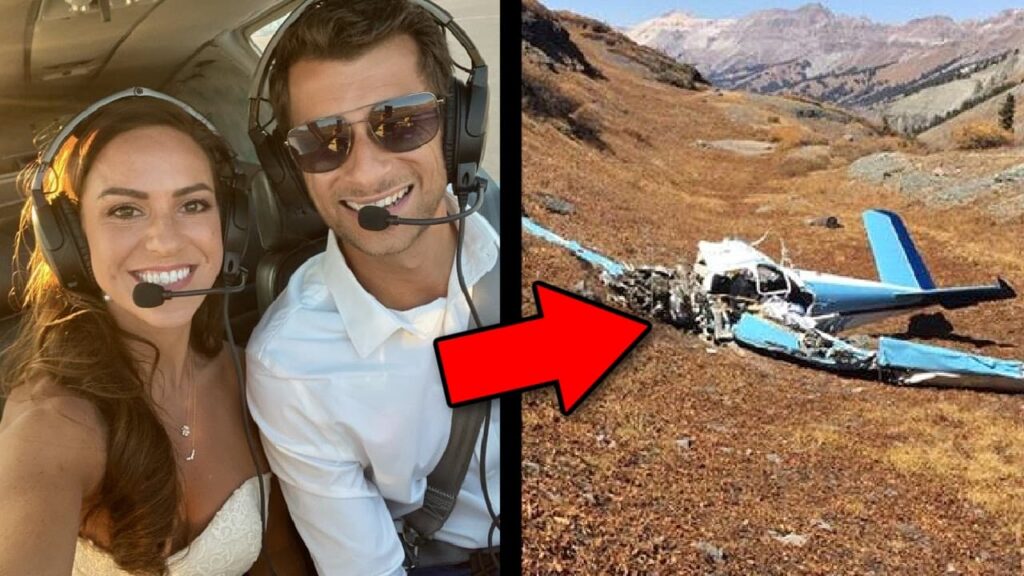
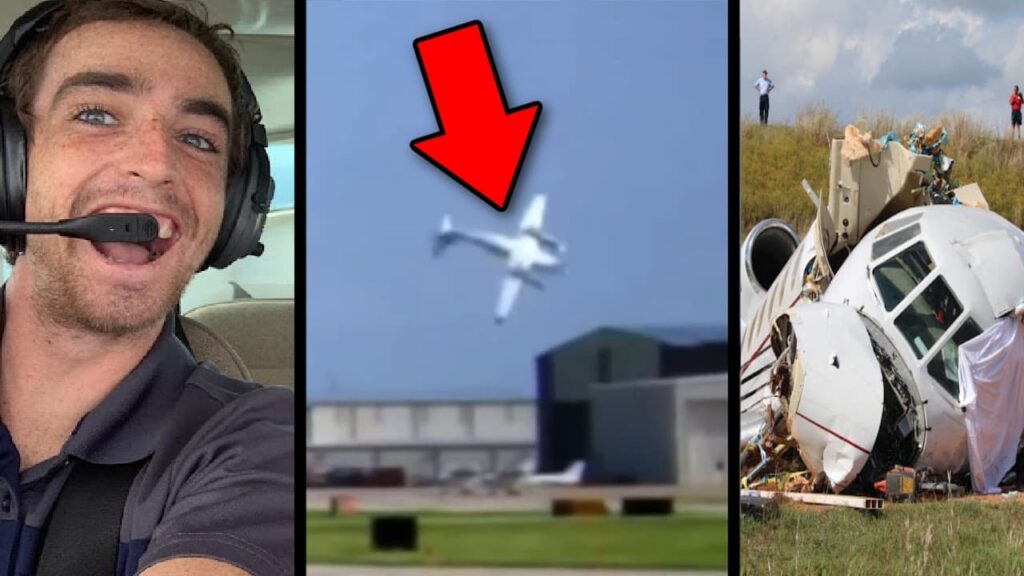
On the morning of November 30, 2019, a Pilatus PC-12/47E registered N56KJ was sitting on the ramp at Chamberlain Municipal Airport (9V9) in Chamberlain, South Dakota, covered in snow and ice after a night parked outside in winter weather. By 1233 central standard time, the airplane was gone — destroyed in a corn field three-quarters of a mile west of the runway, carrying 12 people. Nine of them, including the pilot, were fatally injured. Three passengers survived with serious injuries.
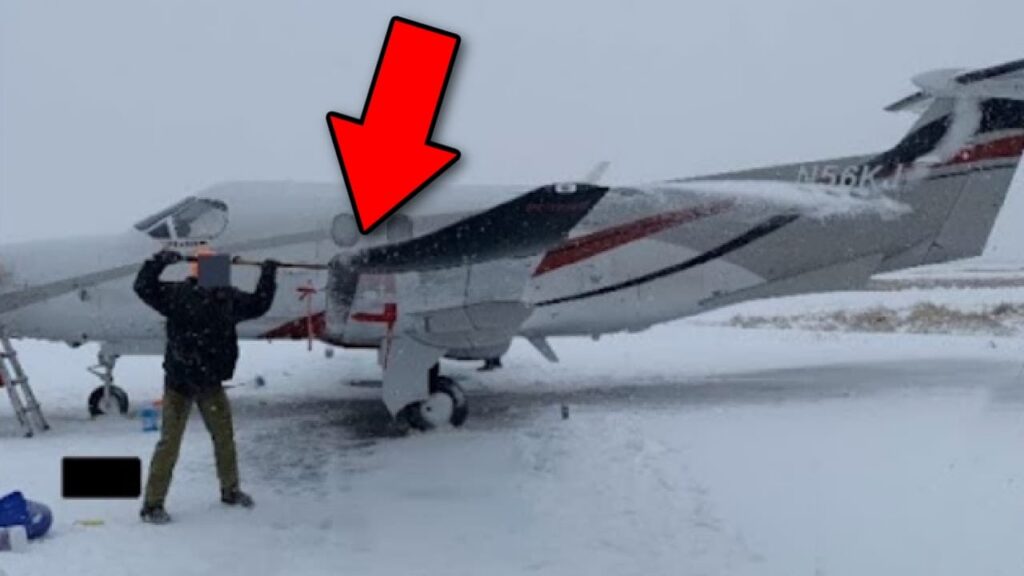
The group had flown in from Idaho Falls the day before, arriving around 0927. They were there for a hunting trip, staying overnight at a local lodge. The airplane sat outside on the ramp while light to moderate snow and freezing drizzle fell through the night. By the morning of November 30, snow had accumulated on every exposed surface. The pilot and one passenger stayed back from the morning hunt, and a lodge representative drove them to the airport. They stopped at a hardware store on the way for isopropyl alcohol. They borrowed a ladder from the lodge — about 7 feet tall — and spent approximately three hours working to clear the airplane.
The ladder didn’t reach the top of the tail. The horizontal stabilizer stayed covered. The lodge representative, who was there watching, later reported that it was snowing hard by the time the pilot decided to go. The pilot told him the airplane was “98% good” and that the remaining ice would come off during takeoff. A surface observation taken at 1215 recorded light snow. By 1235, it had intensified to moderate snow. Atmospheric sounding data showed moderate or greater airframe icing conditions were likely from the surface all the way up to 11,500 feet mean sea level. AIRMET advisories for moderate icing, moderate turbulence, and IFR conditions due to precipitation, mist, fog, and blowing snow were all in effect. The pilot had obtained a weather briefing at 1204 that included METARs, PIREPs, and TAFs. He did not request the current AIRMET information.
At 1224, the pilot contacted Minneapolis Air Route Traffic Control Center and requested an IFR clearance from 9V9 to Idaho Falls Regional Airport. He said he planned to depart runway 31 and would be ready in 5 minutes. Minneapolis ARTCC issued the clearance at 1227 with a void time of 1235. No radio calls came back. Radar contact was never established. Data recovered from the Lightweight Data Recorder installed on the airplane told the rest of the story.
The takeoff roll began at 1231:58. The airplane lifted off 30 seconds later. Rotation was initiated at approximately 88 knots — about 4 knots below the speed specified in the airplane flight manual for maximum gross weight in icing conditions, which was 92 knots. Immediately after liftoff, the stall warning and stick shaker activated. One second after liftoff. The stick pusher came on 15 seconds after liftoff. All three continued intermittently for the rest of the flight. The airplane immediately entered a left turn. Bank angle varied between 10 degrees left wing down and 5 degrees right wing down in the early climb, then continued to increase. Airspeed oscillated between 89 and 97 knots initially, then decayed to approximately 80 knots as altitude and bank angle both peaked. The airplane reached 64 degrees of left bank at its maximum altitude of roughly 380 feet above ground level. Then it descended. It did not stop descending. A witness about a half-mile northwest of the airport heard the engine running well, heard the airplane enter a left turn based on the sound alone — he couldn’t see it through the clouds and snow — and then heard it for about 4 or 5 seconds before the sound stopped. The property owner found the wreckage at 1357.
Investigation Findings
The airplane was certified for 10 occupants — two flight crew seats and eight passenger seats. There were 12 people on board the accident flight. None of the extra occupants qualified as lap children under FAA regulations; all were adults. Weight and balance calculations estimated the airplane was approximately 107 pounds over its approved maximum gross weight. The center of gravity was calculated to be between 3.99 and 5.49 inches beyond the aft CG limit, depending on where the unseated occupants and baggage were positioned. The actual CG was within 12.76 inches of the aft CG limit regardless of seating arrangement, because the airplane remained stable on the ramp without tipping onto its tail — if it had loaded beyond the main landing gear pivot point, it would have done exactly that.
Image analysis of photos and video taken before the flight confirmed accumulated snow on the upper surface of the horizontal stabilizer and on the vertical stabilizer, with icicles visible on the horizontal stabilizer bullet fairing — both while parked on the ramp and as the airplane taxied. The pilot cleared the wings. He did not clear the tail. The NTSB’s airplane performance study, conducted using both desktop simulations and a Level D full-flight simulator approved for PC-12 training, found that the snow and ice on the empennage did not significantly degrade aerodynamic performance after takeoff. But the effect of that snow and ice on the airplane’s CG — adding weight to the tail — and on elevator hinge moments and control column forces could not be determined. What the simulations did show was that pitch oscillations consistent with the LDR data could be reproduced through control inputs alone, without any aerodynamic contamination, when the airplane was loaded to a similar aft CG position.
LDR data from the flight the previous day — Idaho Falls to Chamberlain — showed a rotation pitch rate of approximately 4.3 degrees per second, pitch angles above the 9-degree flight director target, and pitch oscillations that investigators attributed to the reduced longitudinal stability of the aft CG. The accident takeoff initial pitch angle was 11.8 degrees, where it paused briefly before continuing to 15.8 degrees. A comparison with another pilot who flew the same airplane regularly showed a distinctly different technique: that pilot used rotation pitch rates of approximately 3 degrees per second and an initial pitch angle of 5 degrees, increasing gradually to 9 degrees. The piloted simulator sessions confirmed that the accident pilot’s technique — a relatively abrupt, heavy pull on the control column — combined with an already aft CG, excess weight, and early rotation at below-specification airspeed, drove the airplane to a high angle of attack immediately after liftoff. The stall protection system activated within 1 second. The resulting pitch oscillations deepened into the stall region. Flight control authority was sufficient to maintain control for approximately 22 seconds after liftoff. At 64 degrees of bank, the airplane was already past the critical angle of attack. The engine was producing rated takeoff power throughout. No preimpact mechanical failure was found.
NTSB Probable Cause
The pilot’s loss of control shortly after takeoff, which resulted in an inadvertent, low-altitude aerodynamic stall. Contributing to the accident was the pilot’s improper loading of the airplane, which resulted in reduced static longitudinal stability and his decision to depart into low instrument meteorological conditions.
Safety Lessons
Nine people died on a clear-air-power, mechanically sound airplane in a corn field three-quarters of a mile from the runway. The engine was producing full rated power. The flight controls were functional. The chain that killed them was built on the ramp, before the airplane ever moved.
- Weight and balance is not paperwork — it is physics. The PC-12 in this accident was 107 pounds over gross weight and between 4 and 5.5 inches beyond the aft CG limit. What that means in practice is that the airplane became hypersensitive in pitch. A pull on the column that would have been unremarkable at a normal CG drove the nose to 15.8 degrees on a heavy, slow, early-rotating airplane in icing conditions. The stall warning activated 1 second after the wheels left the ground. That is not a recovery situation — that is an already-failed situation. Calculate actual weight and balance before every flight. If the numbers don’t work, the flight doesn’t go.
- Contamination you cannot reach is contamination that stays on the airplane. The pilot spent three hours deicing. He cleaned what a 7-foot ladder could reach. The horizontal stabilizer stayed covered. The NTSB could not fully quantify what that snow did to the elevator control forces and CG, because the physics of contaminated tail surfaces in flight are difficult to model precisely. That uncertainty is exactly the point. If you cannot verify a surface is clean, you cannot verify the airplane is airworthy. Clean the whole airplane or don’t go.
- Rotation technique matters more when the margins are smallest. The accident pilot consistently rotated faster and to higher initial pitch angles than a second pilot who flew the same airplane. On a normal flight with a normal CG and normal weight, that technique may have produced no consequences. On this flight — aft CG, over gross, icing conditions, below-spec rotation speed — the aggressive pull was the final link in the chain. Simulator data showed the same takeoff was manageable with a slower, shallower rotation technique even with the aft CG. The airplane’s handling qualities change with loading. Technique should change with them.
Frequently Asked Questions
Q: Why did the stall warning activate just 1 second after liftoff on the PC-12?
A: The airplane was already at the edge of its aerodynamic envelope before the wheels left the ground. It was 107 pounds over maximum gross weight, loaded 4 to 5.5 inches beyond the aft CG limit, and rotated at 88 knots — 4 knots below the icing-condition rotation speed specified in the flight manual. The aft CG made the airplane extremely sensitive in pitch, and the pilot’s abrupt pull on the column drove the angle of attack into the stall warning range almost immediately after liftoff. The airplane never had a chance to accelerate into a stable climb.
Q: Did the snow and ice on the tail cause the PC-12 to crash?
A: The NTSB’s performance simulations found that the accumulated snow and ice on the horizontal stabilizer and vertical stabilizer did not significantly degrade the airplane’s aerodynamic performance after takeoff. However, investigators could not determine the effect of that contamination on the airplane’s center of gravity — the added tail weight would have shifted CG further aft — or on elevator hinge moments and column forces. Similar pitch oscillations appeared on the previous day’s flight from Idaho Falls, when the airplane was not snow-contaminated but was loaded to a similar aft CG position. This suggested the CG condition, not the contamination itself, was driving the instability.
Q: How did 12 people end up on a 10-seat Pilatus PC-12?
A: The airplane was configured with two flight crew seats and eight passenger seats, for a total of 10 certificated seats. The Part 91 personal flight carried the pilot and 11 passengers — two more than the certificated seat count. FAA regulations allow children under 2 years of age to be carried as lap children without occupying a seat, but none of the 12 occupants met that threshold. The excess occupants added both weight beyond the maximum gross weight limit and shifted the center of gravity further aft than permitted.
Q: What is aft CG and why does it make an airplane harder to control?
A: Center of gravity is the balance point of the airplane along its longitudinal axis. The aft CG limit is the rearmost allowable position. When CG moves aft, the horizontal tail has less leverage to push the nose down — it is working closer to the pivot point, so it takes less force to pitch the nose up and more force to recover from a high nose attitude. Static longitudinal stability decreases. On the PC-12 in this accident, the CG was 4 to 5.5 inches past the aft limit, which made the airplane highly sensitive to pitch inputs and difficult to control after the stall protection system activated.
Q: What does the PC-12 stick pusher do, and why didn’t it save the airplane?
A: The stick pusher is a stall protection device that automatically pushes the control column forward to reduce the angle of attack and prevent a full aerodynamic stall. It activated 15 seconds after liftoff on N56KJ. The NTSB’s simulator study found that flight control authority was sufficient to maintain control until approximately 22 seconds after liftoff — meaning the stick pusher was working, but the combination of aft CG, excess weight, and the resulting pitch oscillations drove the airplane into a deep stall penetration that the system could not fully counter. At 380 feet above the ground, there was no altitude remaining to complete a recovery even if control had been regained.