What Happened
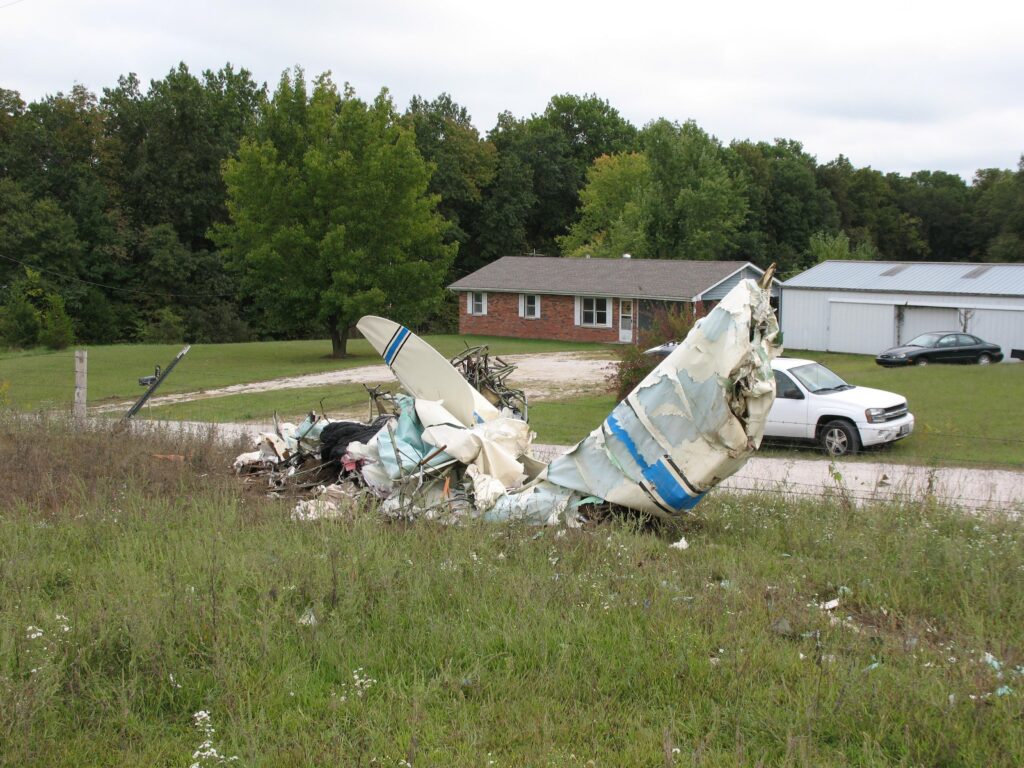
On September 22, 2009, at 0935 central daylight time, a Piper PA-12 registered N3234M impacted a grassy field along the north side of County Road 346 near Wise Drive in Callaway County, Missouri, about five miles east-northeast of Columbia Regional Airport. The 31-year-old private pilot, the sole occupant, received fatal injuries. The airplane sustained substantial damage. The flight had no instrument rating, no IFR-equipped airplane, no flight plan, and no formal weather briefing. It had departed Montgomery-Wehrman Airport in Montgomery City, Missouri, roughly 50 minutes earlier, bound for Wichita, Kansas, and ultimately Alaska.
The pilot had purchased the PA-12 in Pennsylvania just two days before, on September 20, 2009. He departed Pennsylvania that same afternoon heading west. It was never determined where he spent the first night. What is known is that by September 21, weather had forced him down at Montgomery-Wehrman Airport, a privately owned grass strip open to the public, about 30 nautical miles east-northeast of the eventual accident site. The airport manager met him there. The two of them checked radar on the television and watched a frontal system moving in. It rained all night. The pilot decided to wait it out.
The next morning, September 22, the pilot came back to the airport and started the airplane. He taxied to the fuel pump and that was when he found the first problem: the right fuel cap was missing. The tank had been sitting open through a night of rain. He drained the right fuel sump repeatedly and kept finding water. The left tank was checked and was clean. The airport manager gave him a replacement cap for the right tank. With the sump drains pulling clear, the pilot apparently decided the tank was serviceable. He departed at approximately 0845.
At 0854, the weather observation at Columbia Regional, roughly five miles west-southwest of where the accident would happen, showed a quarter-mile visibility in fog, an indefinite ceiling at 100 feet, temperature and dewpoint both at 17 degrees Celsius. That is not marginal VFR. That is hard IFR. A cold front had pushed through the area overnight, dragging instrument conditions in behind it. The departure airport at Montgomery City was still under VFR. Wichita, the destination, was under VFR. The IFR conditions sat squarely across the route, right in the middle.
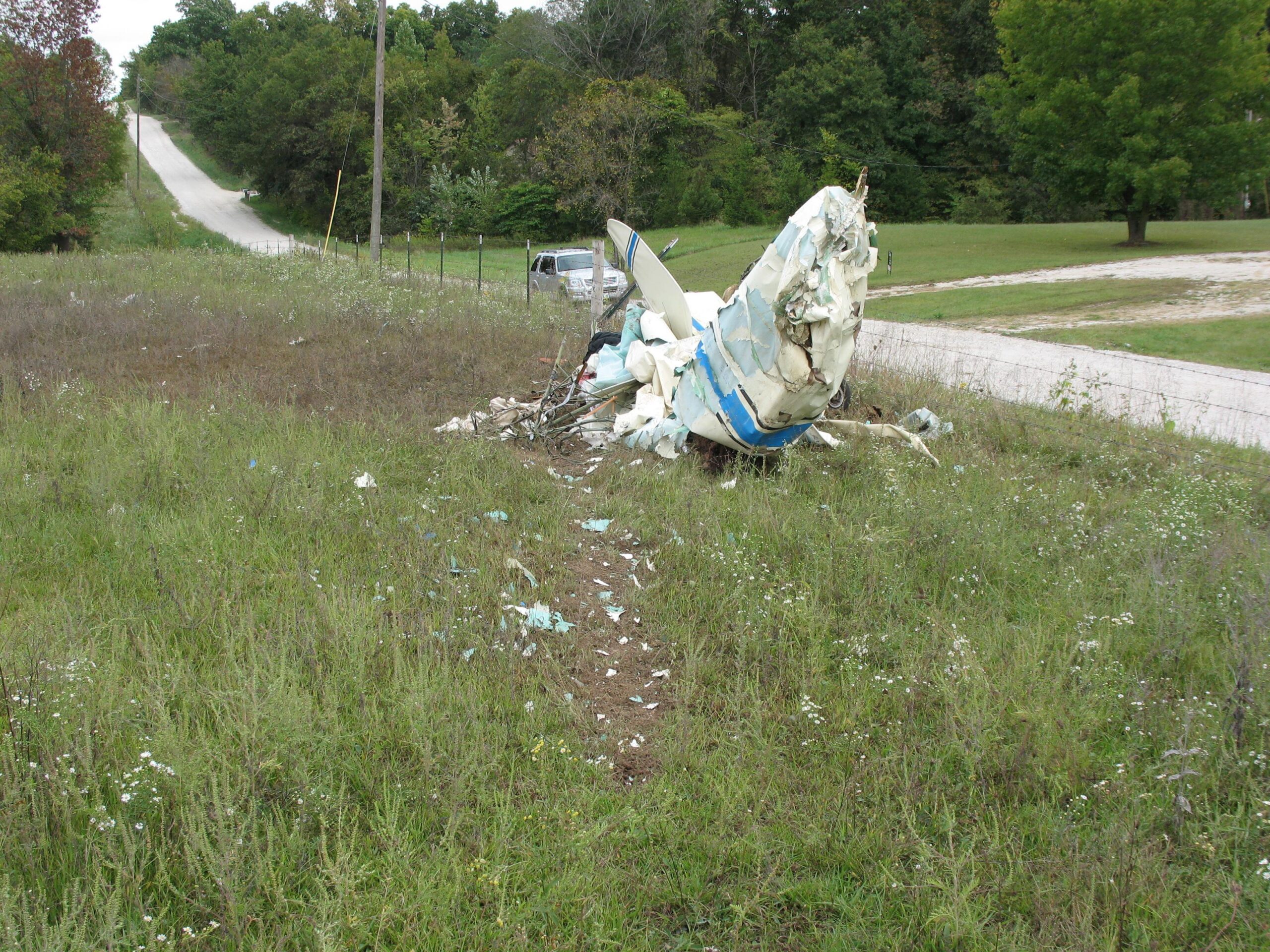
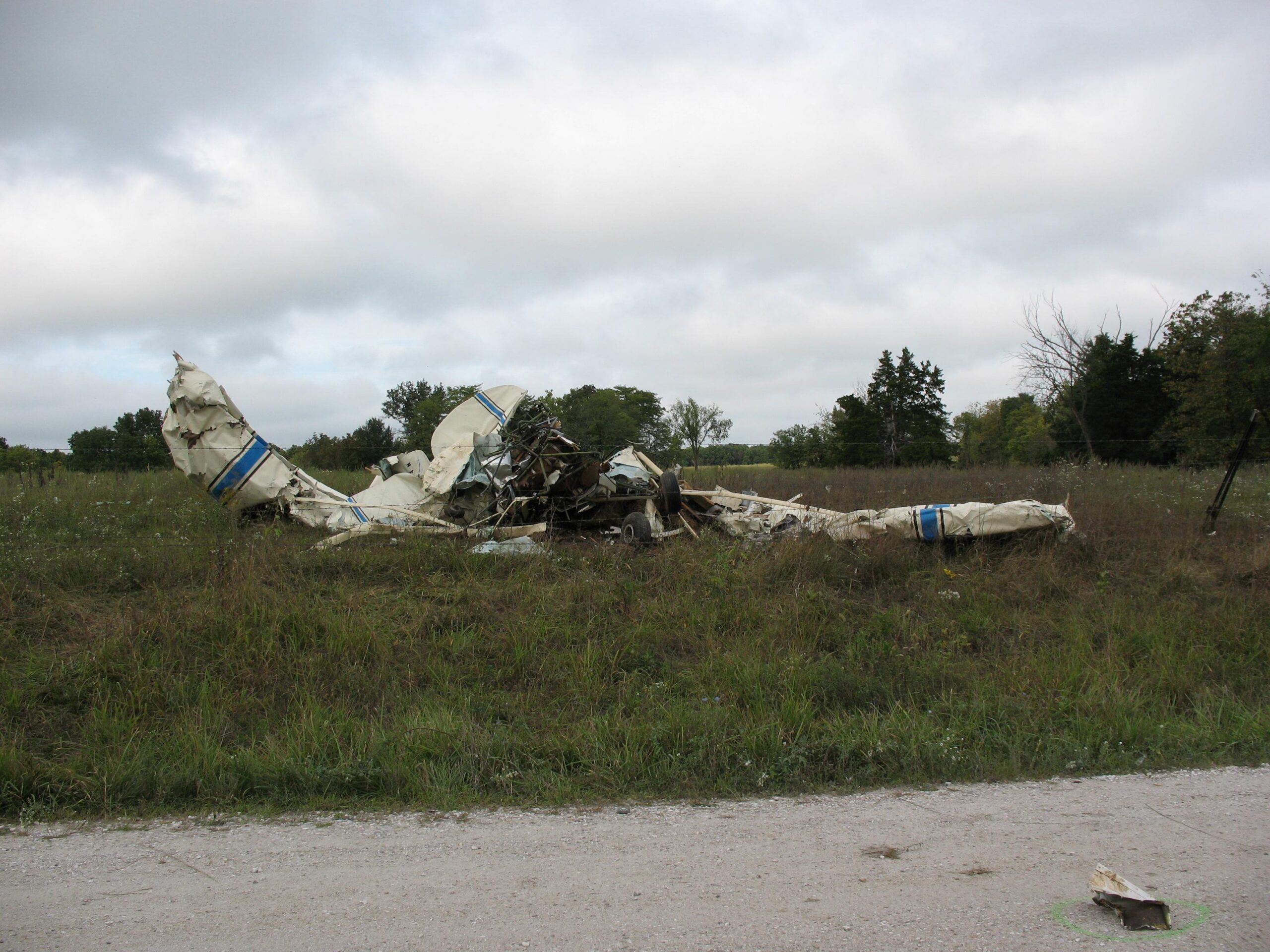
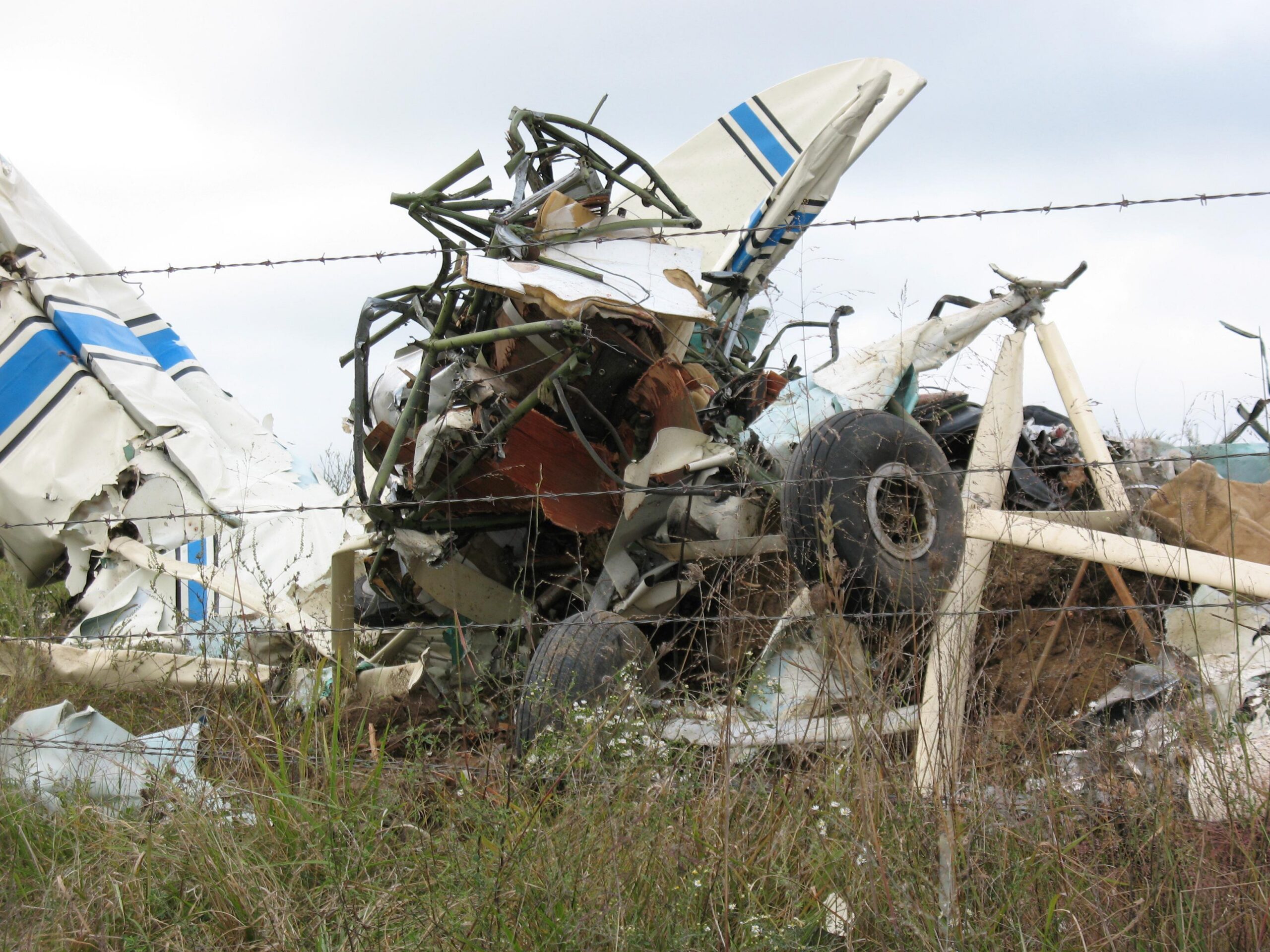
Witnesses on the ground saw and heard what happened next. One described the airplane flying 50 to 60 feet above the ground with the engine sputtering and cutting in and out. A second witness saw the airplane below the fog, lost sight of it but could still hear it, and reported that it circled the area two or three times before going quiet. A third witness, whose property the airplane flew over at roughly 50 to 60 feet, described the same sputtering engine noise. Then silence. The airplane hit the field in a steep nose-down attitude with approximately 80 degrees of left roll. Both propeller blades were bent aft. The engine was found in a crater at the impact point. The left wing was bent aft from root to tip, the leading edge crushed and buckled. The empennage was crushed and buckled near the center of the main wreckage.
Investigation Findings
Investigators found no preimpact mechanical anomalies in the airframe or engine. The crankshaft rotated freely when turned by hand. Internal components showed no interference or binding. The top spark plugs were worn but functional. The left magneto had broken away from the engine in the impact but still produced spark when rotated manually. The carburetor had separated from the oil sump at the mounting flange, and impact had punched a large hole in the sump itself. All of the damage was consistent with the forces of ground impact, not with a mechanical failure that preceded it. The engine was producing power, and the propeller blade deformation confirmed it was under load when it hit.
The fuel situation was more complicated. Water contamination of the right tank had been discovered and addressed before departure, but the pilot had spent the night with an open tank during sustained rainfall. Draining the sump finds water that has settled to the lowest point, but it cannot guarantee a tank is fully clean when that much water has had that much time to mix into the fuel. Witnesses reported sputtering consistent with intermittent fuel delivery problems, and the probable cause identified partial loss of engine power as a result of water contamination. The engine was not producing full power when the airplane entered the worst of the conditions.
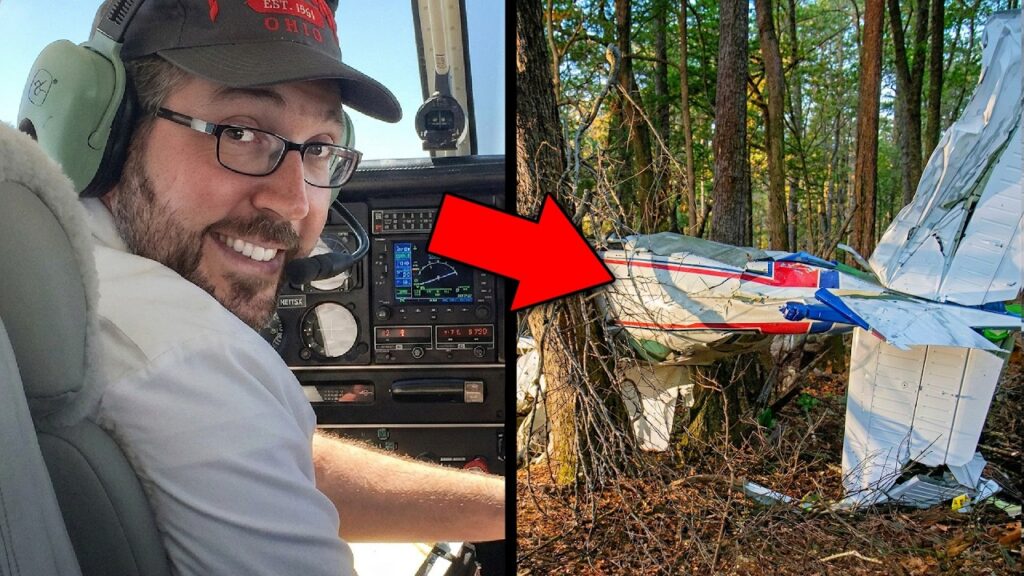
The pilot held a private certificate with single-engine land rating and 284 total hours, about 29 of them recent in a Piper J-4 in Alaska. He was not instrument rated. The PA-12 was not equipped for IFR flight. There was no record of a weather briefing from flight service or DUATS. The surface analysis and weather depiction charts both showed IFR conditions along and behind the cold front, directly across the planned route. The departure and destination airports were VFR. The band of IFR in between, where the accident happened, was showing quarter-mile visibility in fog with a 100-foot indefinite ceiling at the time he was flying through it.
NTSB Probable Cause
The pilot’s continued visual flight into instrument meteorological conditions, which included low ceilings and fog, and his failure to maintain control of the airplane. Contributing to the accident was the partial loss of engine power as a result of water contamination of the fuel.
Safety Lessons
Three threads run through this accident, and each one represents a decision point where the outcome could have changed.
- A clear departure airport does not mean a clear route. Montgomery City was VFR that morning. Wichita was VFR. The band of IFR conditions sat between them, and without a weather briefing, the pilot had no way to know where that band started, how wide it was, or how thick it was. The 0854 Columbia METAR, which was available before he departed at 0845, showed a quarter-mile visibility and a 100-foot indefinite ceiling five miles from where he would die. A full route weather briefing, even a self-brief through DUATS or 1800wxbrief.com, would have put those numbers in front of him before the engine started.
- Water contamination through an open fuel cap is not a problem you drain away in a few pulls of the sump. The right tank sat open through an entire night of rain. Sump drains are designed to catch water that has settled to the lowest point of the tank. After prolonged exposure with that volume of rainfall, trace contamination can remain mixed in the fuel and only separate out in flight, usually at the worst possible moment. The correct response to a missing fuel cap after an overnight rain is not repeated sump draining. It is defueling the affected tank entirely and refueling with verified clean fuel, or not departing until a proper assessment can be made.
- Once scud-running starts, the airplane has already committed to a margin that does not allow for surprises. Fifty to sixty feet above the ground with a 100-foot ceiling and quarter-mile visibility leaves no room to maneuver if the engine coughs, if the terrain rises, or if the visibility drops another notch. Witnesses heard the engine sputtering during the low passes. The airplane circled two or three times. Each circle was an attempt to find a way through or a way down that did not exist in those conditions. The NTSB described the impact attitude as steep nose-down with 80 degrees of left roll, which is consistent with spatial disorientation or loss of control at very low altitude with no visual references. Turning back before the first cloud encounter, not after the second or third, is the only margin that works.
Frequently Asked Questions
Q: What does an indefinite ceiling at 100 feet mean compared to a regular ceiling?
A: A standard ceiling is the base of a defined cloud layer. An indefinite ceiling is reported when the sky is obscured by something at the surface, typically fog or precipitation, and you cannot distinguish where the ground ends and the cloud begins. An indefinite ceiling at 100 feet means the obscuring phenomenon, in this case fog, filled the airspace from the surface upward with no clear base. Visibility in those conditions is measured horizontally, but vertically there is essentially no sky to fly under.
Q: Can sump draining fully remove water contamination after a missing fuel cap exposed a tank to overnight rain?
A: Not reliably. Sumping removes water that has already settled to the lowest point of the tank and collector bowl. After extended exposure through an open cap during sustained rainfall, water can remain dispersed or stratified throughout the fuel. Multiple clear sump samples give increasing confidence but not certainty, especially when the volume of ingested water may be high. The safest procedure in that scenario is to defuel the contaminated tank entirely and refuel with verified clean fuel before flight.
Q: Why did the pilot likely not know he was flying into IFR conditions if the departure airport was VFR?
A: The NTSB found no record of a preflight weather briefing from flight service or DUATS. Without a route-wide briefing, a pilot departing a VFR airport may not know that IFR conditions exist 30 to 40 miles down the route. The cold front that passed through overnight had left a band of IFR conditions between Montgomery City and the pilot’s destination. Both endpoints looked clear. The instrument conditions in between were not visible from the ground at departure time and would only become apparent once the pilot was already inside them.
Q: What is spatial disorientation and why does it happen so quickly at low altitude in fog?
A: Spatial disorientation occurs when the vestibular system, the inner ear, sends signals that conflict with what the instruments show. In fog or cloud with no visible horizon, the visual system has nothing to correct against. The inner ear is easily fooled by sustained turns, acceleration, or attitude changes. A pilot who has been circling at 50 feet in quarter-mile fog may feel wings-level while the airplane is rolling steeply. At that altitude, the time between an unrecognized unusual attitude and ground impact is measured in seconds.
Q: Is a Piper PA-12 legal to fly in IFR conditions?
A: Not in these circumstances. IFR flight requires the aircraft to be equipped with IFR-certified instruments and navigation equipment and requires the pilot to hold an instrument rating. The PA-12 in this accident was not equipped for IFR flight, and the pilot was not instrument rated. Flying into IMC under those conditions is a violation of FAR 91.157 (special VFR limitations), FAR 91.205 (required instruments), and the regulatory requirements for instrument flight. But more practically, even a fully equipped airplane and a current instrument pilot would have found 100-foot indefinite ceiling and quarter-mile visibility an extremely demanding environment.