What Happened
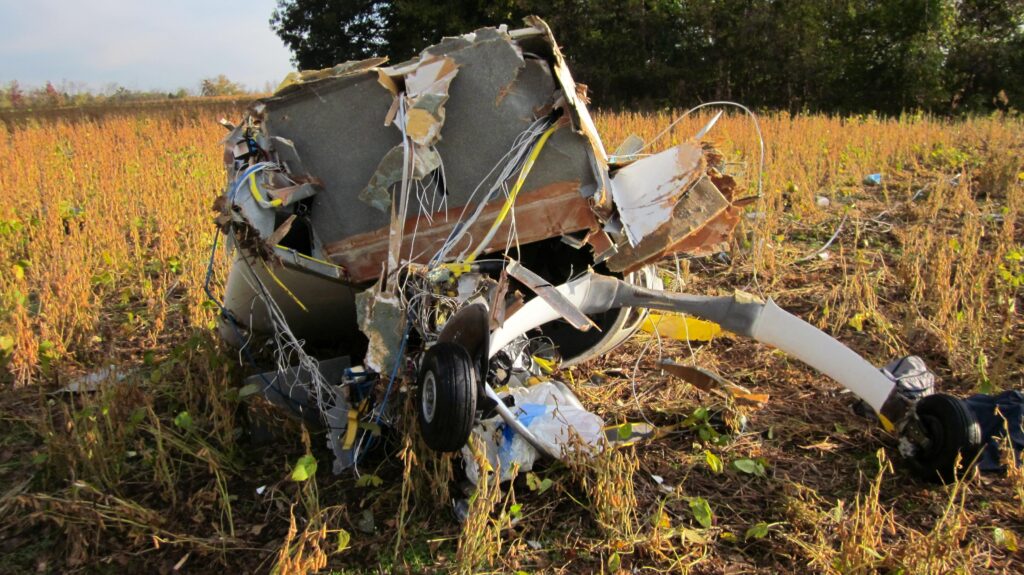
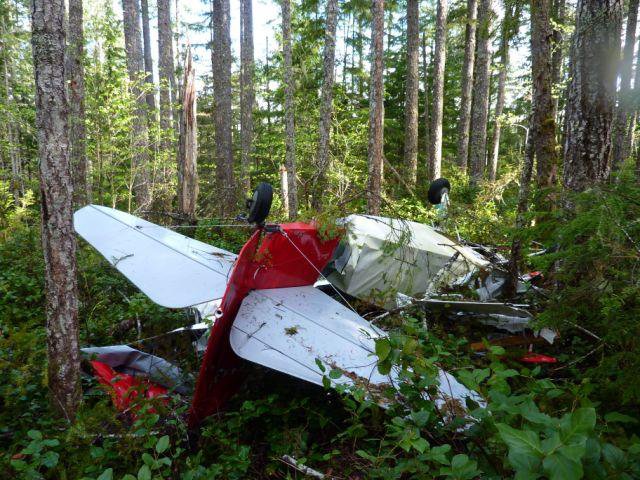
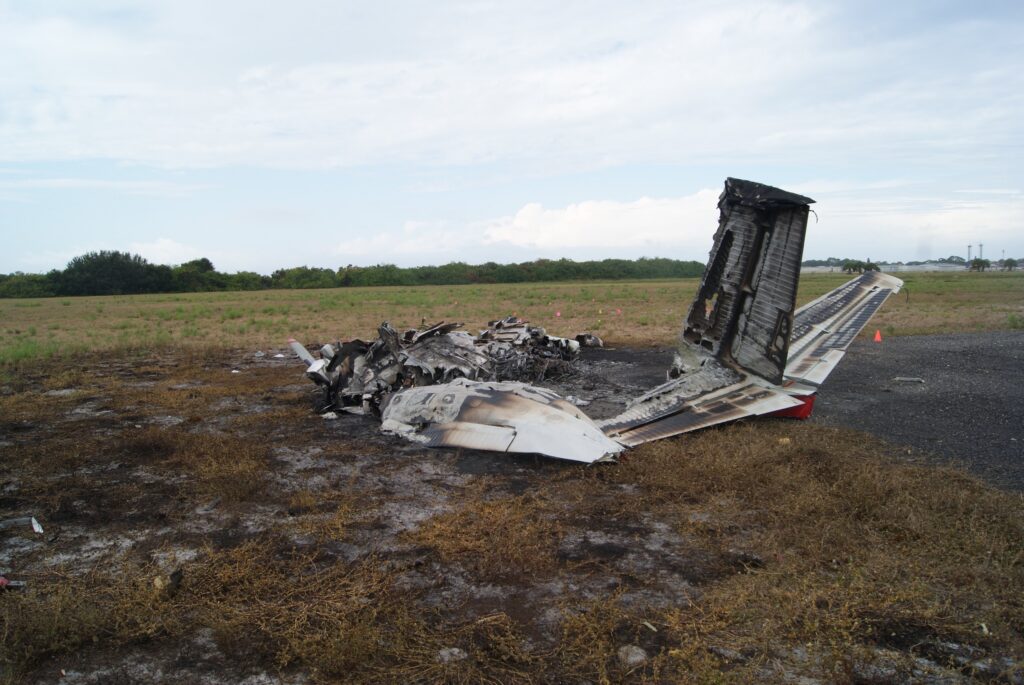
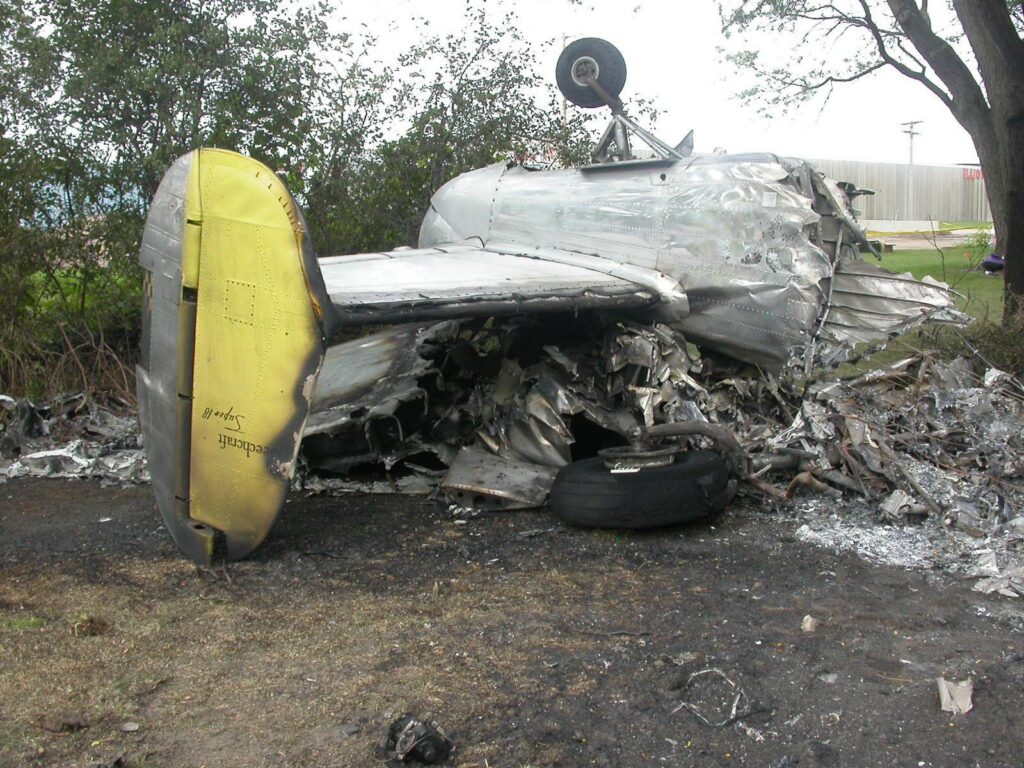
On the morning of August 12, 2009, a 1958 Beech E18S, registered N3038C, lifted off Runway 28R at Flying Cloud Airport in Eden Prairie, Minnesota. The pilot, a 53-year-old commercial certificate holder, and a student pilot riding along as a passenger were both killed when the airplane lost control during a series of low-altitude left turns and struck the ground just northeast of the airport property. A post-impact fire consumed most of the fuselage. The flight lasted roughly five minutes from wheels-up to impact.
The plan that morning was straightforward enough on paper. The pilot had arranged to fly N3038C to LO Simenstad Municipal Airport in Osceola, Wisconsin, pick up some passengers, and return to FCM. Before heading east, he told ground control he wanted to circle the airport a couple of times first to “make sure she wants to fly.” Ground cleared him for takeoff on 28R with a left-turn circling clearance over the field at 2,500 feet mean sea level before proceeding to Osceola. He broke ground at 1133.
He never reached 2,500 feet. Multiple witnesses on the airport watched the airplane climb out of 28R and immediately recognized that something was wrong. The airplane was wallowing, nose-high, moving slowly through the air. Witnesses estimated it never climbed above 500 feet above ground level throughout the entire sequence. Some said the engines sounded normal. Others said they were sputtering. One witness specifically reported white smoke trailing from the left engine and heard it popping on the takeoff roll. An experienced Beech 18 mechanic on the field, a man with roughly 2,000 hours in type, stepped outside when he heard the engines start. He watched the airplane take off and begin what he described as a shallow climb with the nose pitching up and the airplane “wallowing” side to side. He estimated the altitude at less than 500 feet, and his read on the situation was that the airplane appeared to be in an uncoordinated stall as it rolled left with the nose coming down.
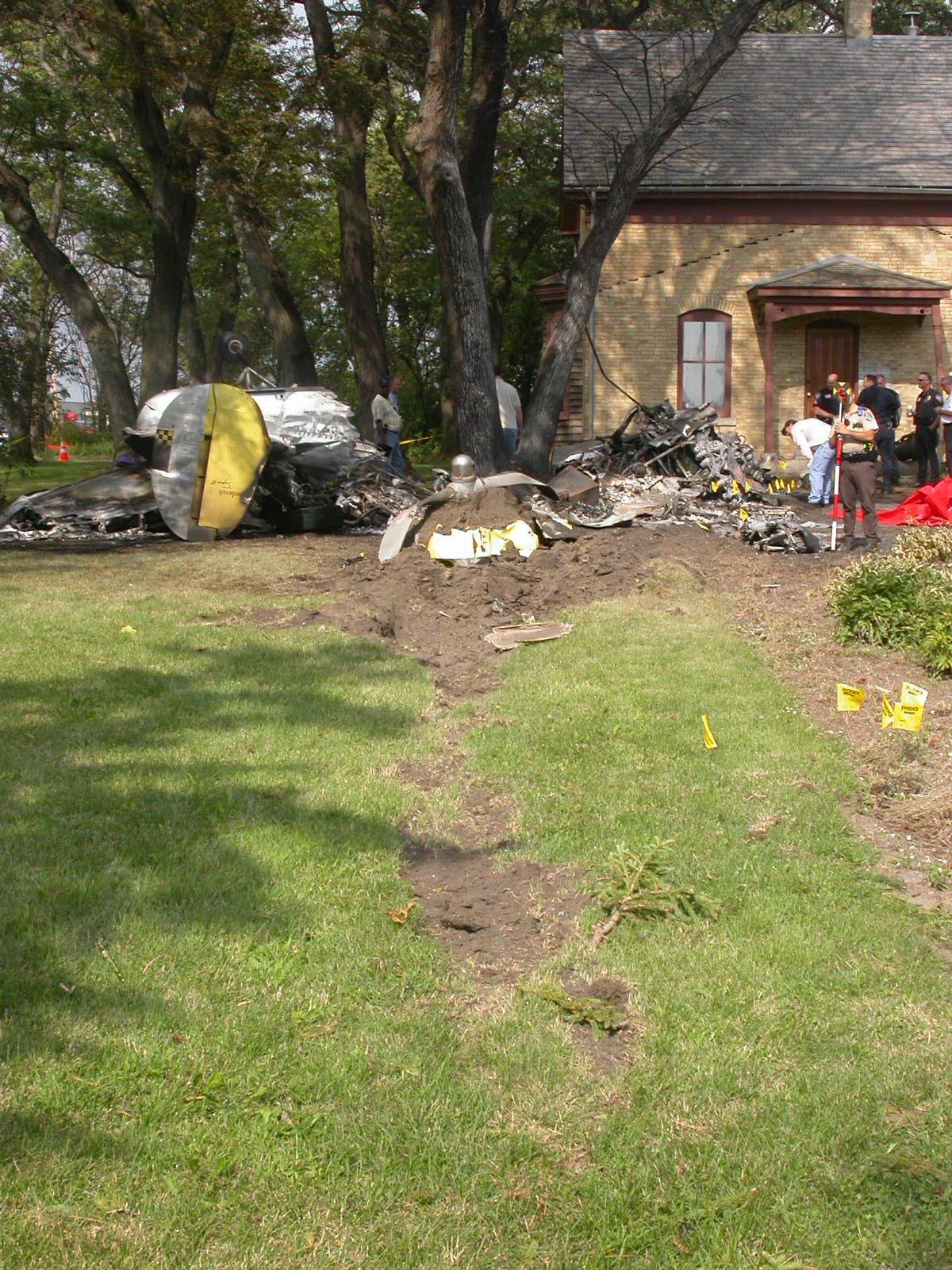
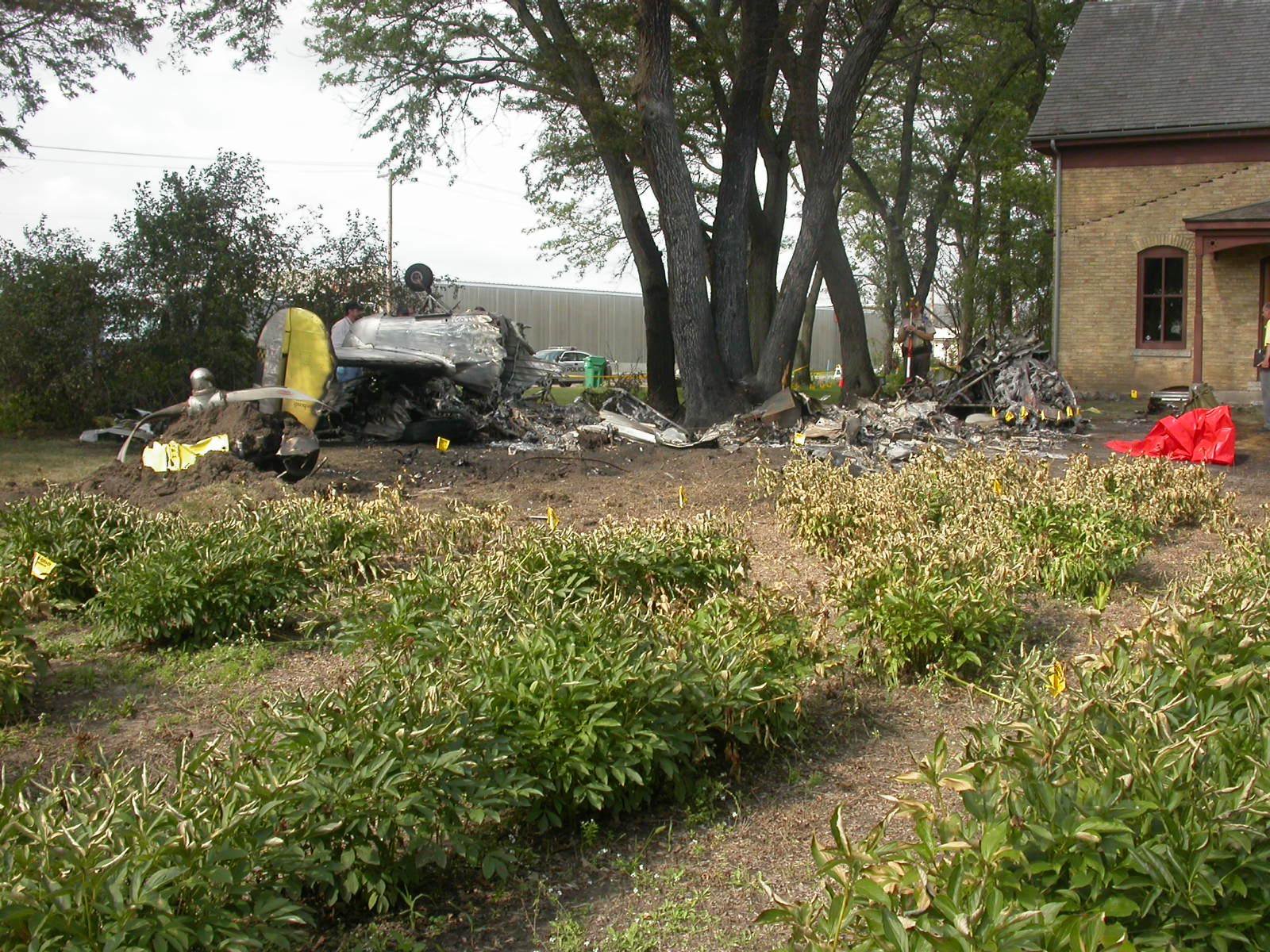
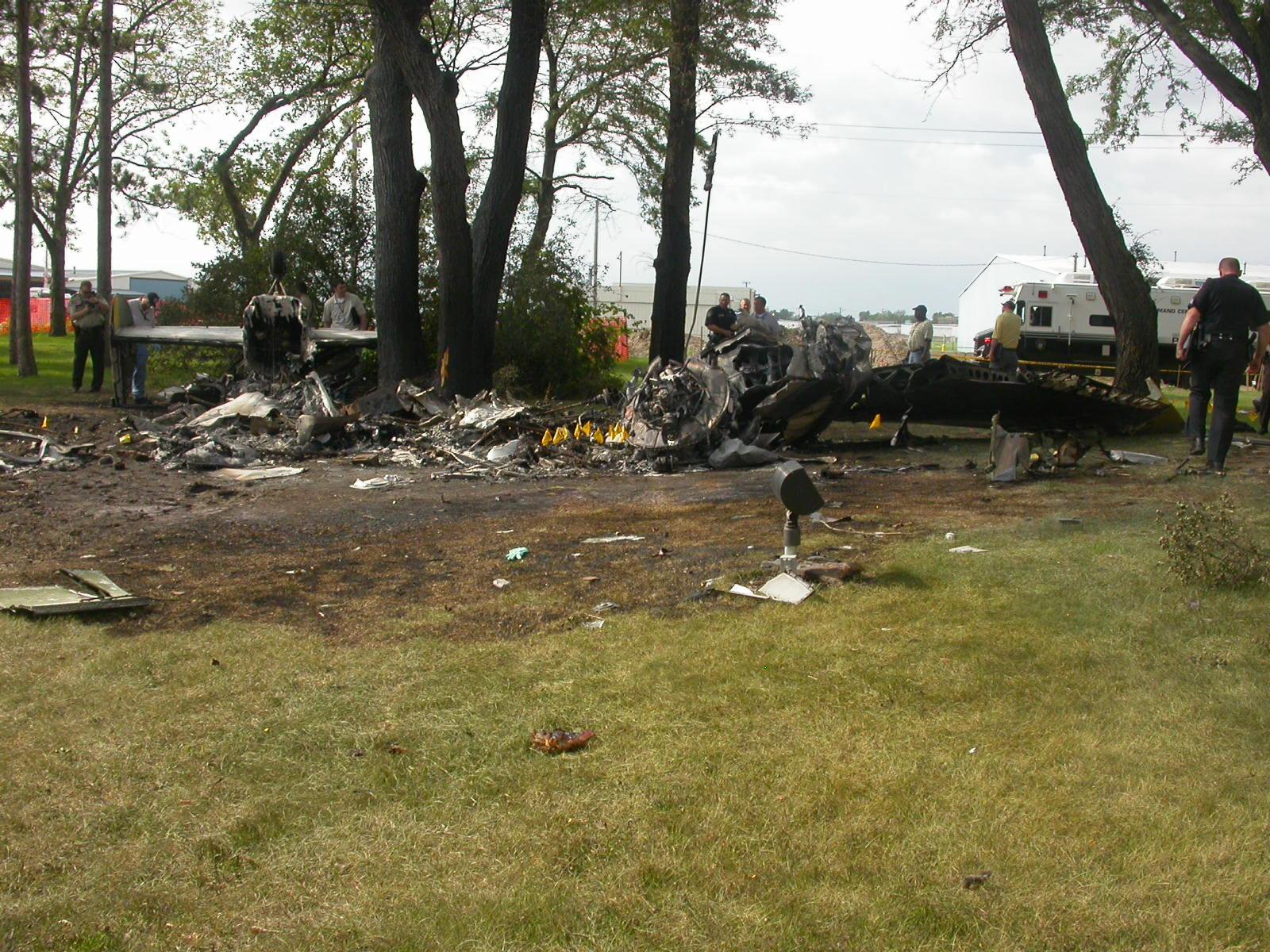
The sequence lasted about five minutes and covered three left turns. Witnesses described the airplane heading south from the departure end, then turning east, then north, then attempting to fly back toward the runway from the west. Several people said it looked like the pilot was trying to land. An aircraft mechanic positioned on the south side of the airport watched the airplane come toward him at roughly 300 feet above ground level, nose high, at what he judged to be a dangerously slow airspeed, looking exactly the way an airplane looks when it has lost an engine. He watched it overshoot the runway threshold, continue west to about 250 feet and descending, and then begin turning back toward the airport. The nose dropped to a near-vertical attitude. The wings briefly leveled and the nose started to rise, but the airplane continued descending behind the tree line and he lost visual contact. The landing gear was extended for the entire flight. N3038C came down at the northwest corner of the intersection of Pioneer Trail and Flying Cloud Drive, clipping two 50-foot pine trees before striking the ground along a roughly westward wreckage path. The airplane came to rest near a historic farmhouse on city-owned property. Both occupants died of blunt-force injuries. The fuselage was largely destroyed by fire.
Investigation Findings
The NTSB’s examination of N3038C’s maintenance history turned up a picture of an airplane that had been essentially dormant for five years before this flight. The last annual inspection was logged in October 2002. The last logbook entry of any kind was dated November 2005. A mechanic who had worked for the previous owner told investigators the airplane had been parked outside and used as a parts source to keep another Beech 18 airworthy. The pilot had purchased the airplane roughly a year before the accident and was in the process of restoring it with help from a mechanic friend. The two of them had reinstalled the left engine and propeller, replaced the ailerons, and removed the boost pump. Since the airplane was last fueled with 120.1 gallons of 100LL on July 12, 2009, a full month before the accident, they had conducted approximately 20 engine run-ups and the pilot had completed high-speed taxi tests. No one had flown it.
A Special Flight Permit had been obtained authorizing a one-time ferry flight from FCM to Osceola, Wisconsin, with landing gear down and crew limited to essential personnel. The permit was valid through August 15, 2009. But the mechanic who applied for it had not signed it and had not made any logbook entries before leaving town, because he did not believe the airplane was going to be flown while he was away. He told investigators he wanted to go over the airplane one more time before it left the ground. He also stated that, to his knowledge, the pilot had never flown a Beech 18 before August 12. Everyone who knew the pilot confirmed he had no time in type.
Post-accident examination of the wreckage established flight control continuity throughout most of the system. The right aileron control cable and elevator trim cable were both separated near the cockpit, but both exhibited broom-straw fracture signatures consistent with overload at impact rather than an in-flight failure. The elevator trim tabs were found at approximately 5 degrees tab-down. Both propellers showed chordwise scratches and rearward blade bending consistent with the engines producing some power at impact, though the left engine sustained such extensive fire and heat damage that detailed analysis was not possible. The right engine was missing both magnetos, which were not located in the wreckage. Critically, the left main fuel selector valve was found in the OFF position. The right fuel selector valve was positioned to the rear auxiliary tank. The aircraft flight manual calls for both fuel selectors to be positioned on the main tanks and the fuel boost pump to be ON for takeoff. Dried grass and nesting material were found packed inside the left wing structure, consistent with the airplane having sat outdoors for years. The amount of fuel remaining at the time of the accident could not be determined. The fuel crossfeed valve and boost pump switch were not recovered from the wreckage.
NTSB Probable Cause
The pilot’s lack of experience flying the accident make and model of airplane, which led to a loss of control while maneuvering to return to the airport. Contributing to the accident was a partial loss of engine power for undetermined reasons.
Safety Lessons
This accident involves several distinct failure points, but they all feed into a single outcome: a pilot operating an airplane that was, in every meaningful sense, beyond his ability to manage in the conditions he faced. Each of the lessons below addresses a specific link in that chain.
- Type experience is not transferable in a twin-engine tailwheel like the Beech 18. The Beech 18 is a challenging airplane on its best day. It has counter-rotating engines with critical engine characteristics, tailwheel ground handling that punishes inattention, and single-engine performance margins that require precise airspeed management to be useful at all. The pilot held a multi-engine private certificate, but multi-engine privilege and Beech 18 experience are not the same thing. Witnesses with 2,000 hours in type recognized what was happening within seconds of the airplane leaving the ground. The pilot, with zero hours in type, had no reference point for what normal felt like, which made it nearly impossible to recognize or correct what was going wrong.
- Pre-takeoff fuel configuration on older multi-engine airplanes is a non-negotiable checklist item. The left fuel selector was found in the OFF position and the right selector was on a rear auxiliary tank at the time of impact. Whether those positions were set before takeoff, accidentally moved during the accident sequence, or changed by the pilot in flight as a troubleshooting attempt cannot be determined. What can be said is that the Beech 18 flight manual is explicit: main tanks, boost pump on, for takeoff. An airplane that has been sitting for five years, recently reassembled by a restoration crew, with a missing boost pump, represents exactly the scenario where a careful, methodical checklist review matters most. The fuel system state found in the wreckage is consistent with at least partial fuel starvation to the left engine, which is consistent with the witness who saw white smoke and heard popping from the left engine on the takeoff roll.
- A Special Flight Permit is not an airworthiness certificate, and “ready to ferry” is not the same as “ready to fly.” The mechanic who filed the ferry permit had not signed it, had not completed a final inspection, and did not know the flight was happening. The permit itself limited occupants to essential crew and required gear-down operations, which the pilot complied with. But a ferry permit is issued to move an aircraft to a maintenance facility, not to operate it as a transport. The pilot flew to Osceola to pick up passengers for a return flight to FCM. That intent, combined with a passenger aboard who was not essential crew, suggests a fundamental misunderstanding of what the permit authorized. Flying an unairworthy airplane to pick up additional passengers is not a ferry operation. It is a flight that was not legal to conduct.
Frequently Asked Questions
Q: What caused the Beech E18S to crash at Flying Cloud Airport in 2009?
A: The NTSB determined the primary cause was the pilot’s lack of experience in the Beech 18. The airplane was wallowing, nose-high, and never climbed above roughly 500 feet before the pilot lost control during low-altitude maneuvering back toward the runway. A partial loss of engine power from undetermined causes was listed as a contributing factor. The left fuel selector was found in the OFF position, which is inconsistent with the aircraft manual’s required takeoff configuration.
Q: How dangerous is flying a Beech 18 with no prior experience in type?
A: The Beech 18 is widely regarded as one of the more demanding piston twins to fly. It has tailwheel handling characteristics, counter-rotating engines with a pronounced critical engine, and single-engine climb performance that vanishes quickly at heavy weights or low airspeeds. Experienced Beech 18 pilots typically build time in type through dual instruction and supervised solo flights before operating the aircraft independently. In this accident, a witness with 2,000 hours in type recognized an uncoordinated stall developing from the ground. The pilot with zero hours in type had no comparable reference to work from.
Q: What does a Special Flight Permit allow, and was it valid for this flight?
A: A Special Flight Permit (sometimes called a ferry permit) allows an aircraft that does not meet normal airworthiness requirements to be flown for a specific, limited purpose, typically to a maintenance facility for repair. This permit authorized a single flight from FCM to Osceola, Wisconsin, with gear down and crew limited to essential personnel. The mechanic who applied for the permit had not signed it and was not aware the flight was taking place. Additionally, the pilot intended to pick up passengers in Osceola and return to FCM, which was not an authorized purpose under the permit’s terms.
Q: Was the Beech 18 airworthy at the time of the accident?
A: The airplane had not received an annual inspection since October 2002. The last logbook entry was dated November 2005. It had been parked outdoors and used as a parts source. Grass and nesting material were found inside the wing structure. The mechanic assisting with the restoration had not completed a final inspection before the flight and did not know the pilot planned to fly that day. The airplane was being operated on a Special Flight Permit specifically because it did not meet normal airworthiness standards.
Q: What did investigators find about the engines and fuel system?
A: The left fuel selector valve was found in the OFF position and the right valve was positioned to the rear auxiliary tank at the time of impact. The Beech 18 flight manual requires both selectors on the main tanks and the fuel boost pump on for takeoff. The boost pump had been removed during the restoration and was not present in the aircraft. One witness observed white smoke from the left engine and heard it popping on takeoff. The NTSB listed a partial loss of engine power as a contributing factor but could not determine a definitive cause due to fire damage to both engines.