What Happened
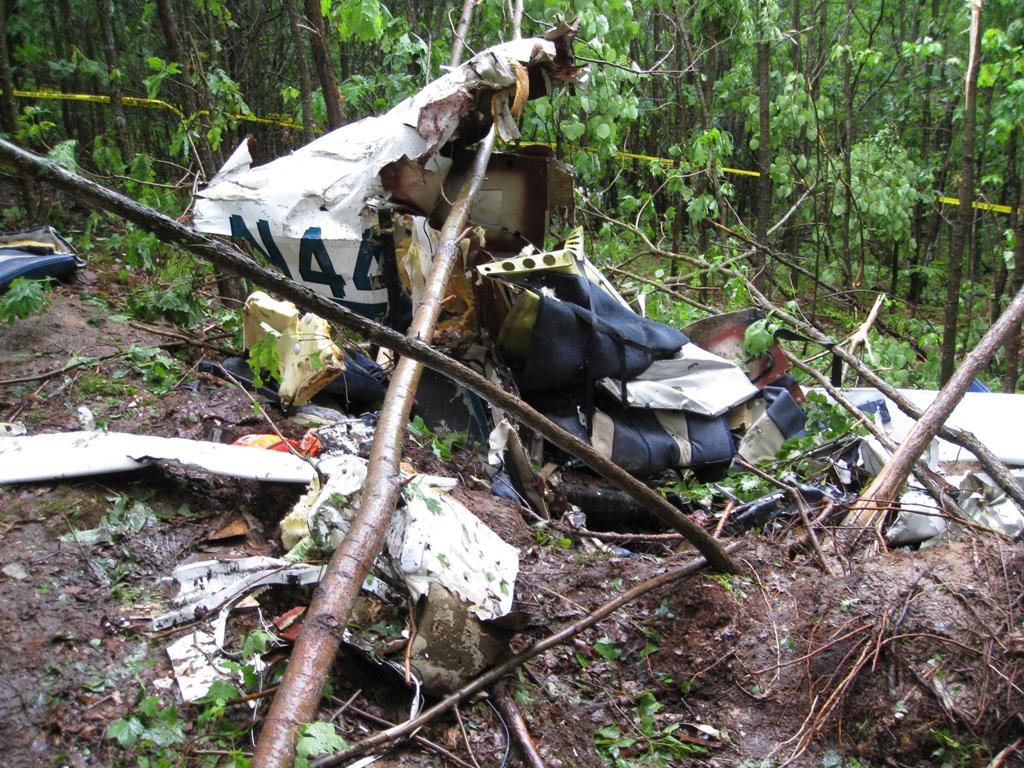
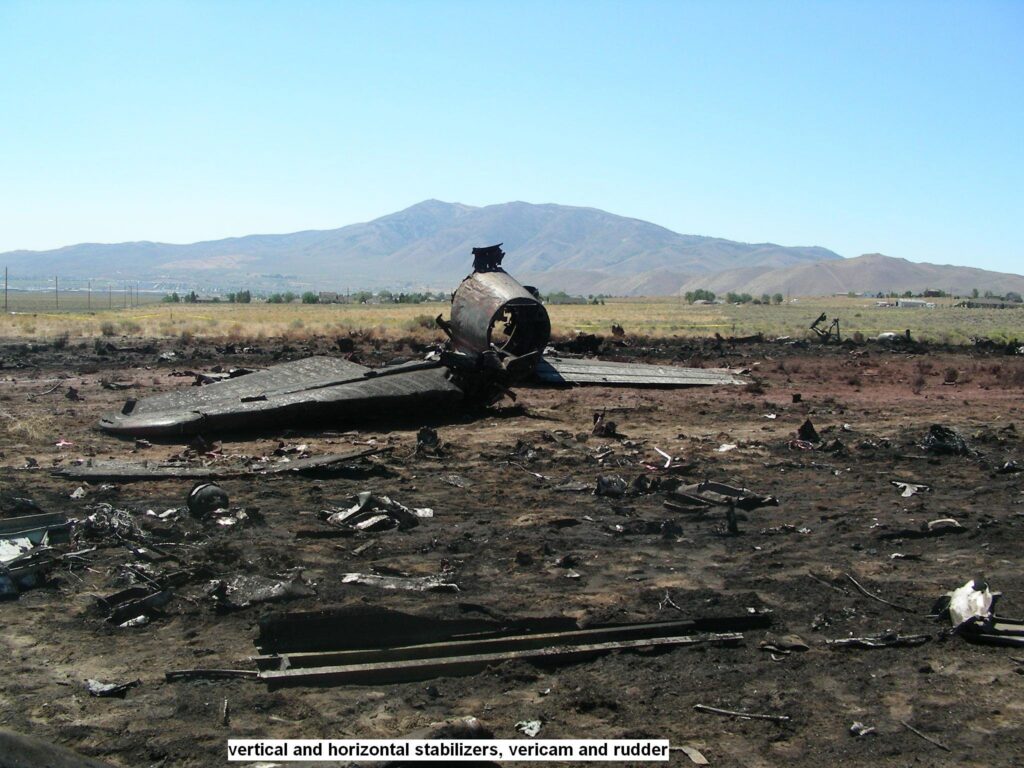
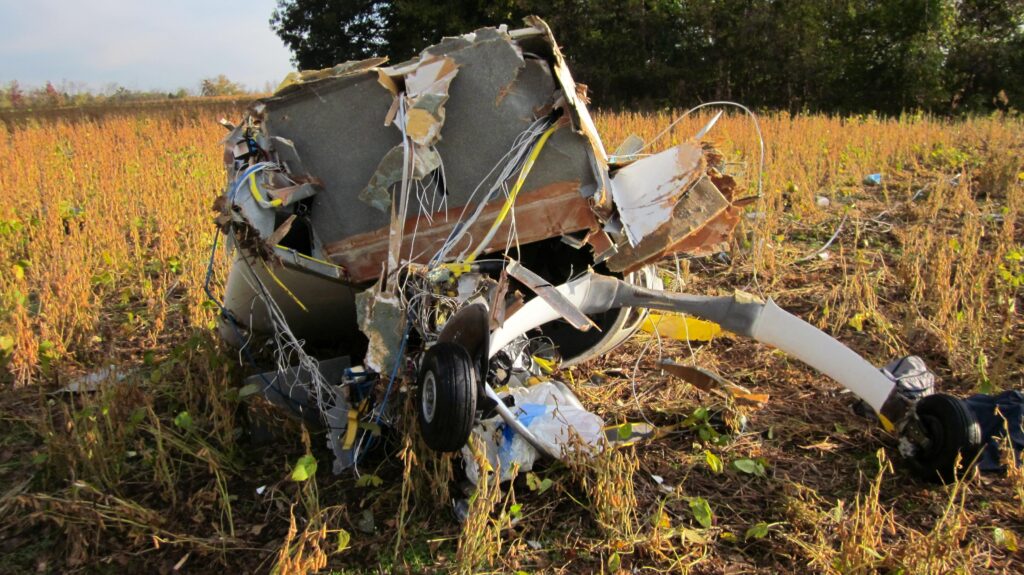
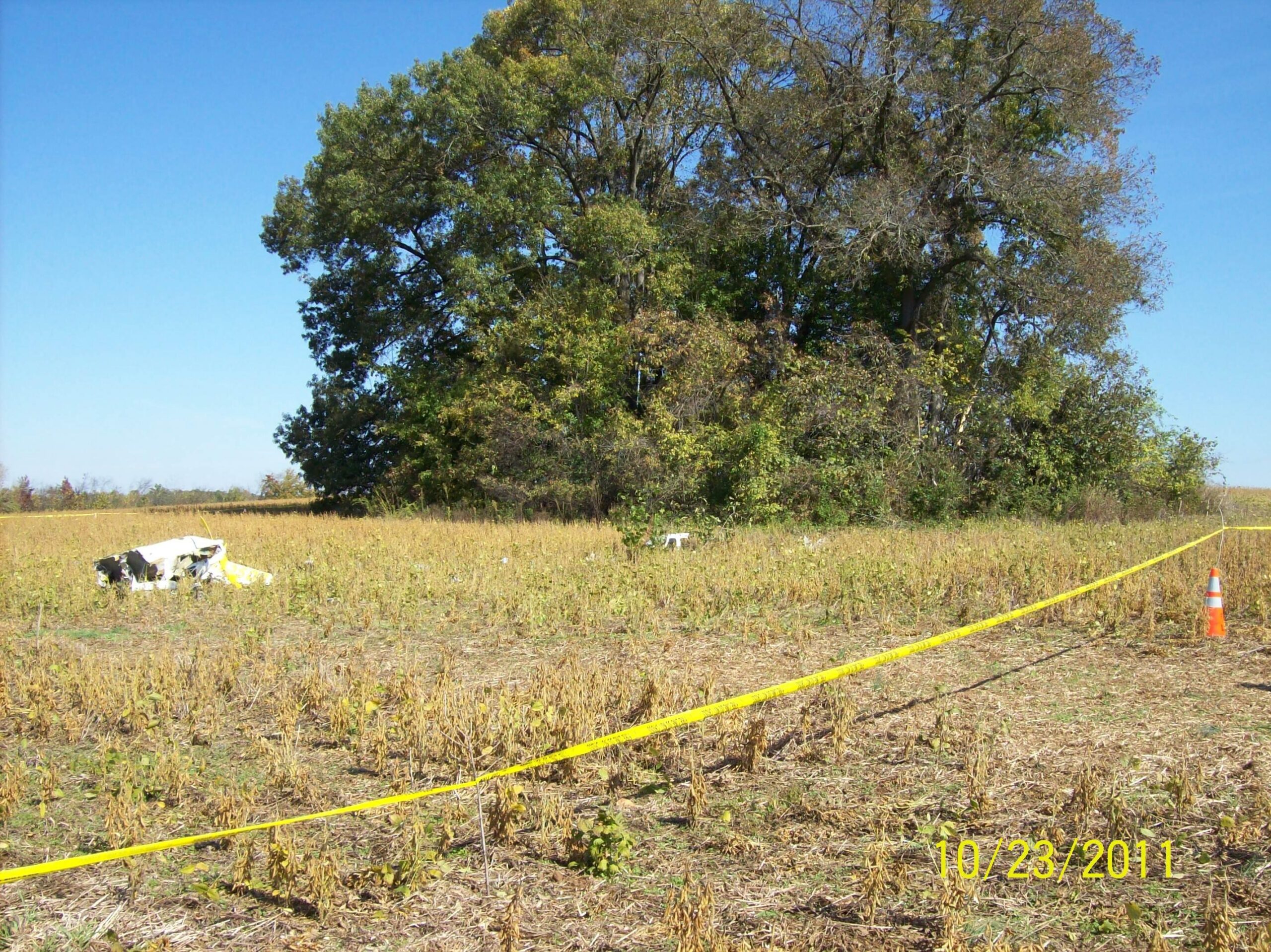
On October 23, 2011, at approximately 1100 eastern daylight time, an experimental amateur-built Elkind Cozy MK IV, N795DB, struck a tree at the edge of a soybean field roughly 1/8 mile east of runway 24 at Davidson County Airport in Lexington, North Carolina. The certificated private pilot, age 69, was killed. His passenger, a certificated airline transport pilot, received serious injuries. The airframe sustained substantial damage.
The flight had originated at Craig Municipal Airport in Jacksonville, Florida, at 0846 that morning. Before departure, notations on the printed flight plan indicated the left main fuel tank held 15 gallons and the right main tank held 24 gallons. The passenger recalled the split differently, estimating 20 gallons on the left and 17 on the right, and noted that roughly 4 gallons would be burned during engine start, run-up, and the climb to cruise altitude. Either way, they were working with somewhere between 33 and 39 gallons of usable fuel for a cross-country flight that would ultimately cover 2 hours and 14 minutes of flight time. The airplane had been last refueled at Palatka, Florida, on October 16, seven days earlier, with 37.62 gallons of 100LL.
The two pilots filed an IFR flight plan with Miami Contracted Flight Service at 0756 and received a weather briefing before departing. Weather at Davidson County was not a factor. The 1115 surface observation showed calm winds, 10-mile visibility, clear skies, and an altimeter of 30.16. They canceled their IFR flight plan approximately 60 miles south of the destination and continued VFR toward Lexington. About 20 minutes out, the pilot told his passenger they had 7 gallons remaining in the right main fuel tank. The passenger encouraged him to switch to the left tank. The pilot declined.
The passenger asked whether they were going to land straight ahead on runway 6, which was roughly aligned with their inbound course. The pilot said no. He was going to fly a left traffic pattern to runway 24 instead. So the pilot turned downwind, lowered the nose wheel, and was rolling into the base leg turn when the engine started sputtering. At that moment, the fuel selector valve was still on the right tank. The pilot did not switch tanks. He initiated a steep descending turn toward the runway. The airplane’s right wing struck a tree 32 feet above its base, inboard of the right winglet. The impact was violent. The wreckage came to rest inverted 140 feet down the debris line in an open soybean field.

A lineman at Davidson County watched the airplane in a steep descending turn east of the airport before it disappeared behind the tree line. Two nearby residents heard the engine sputtering, then a sound like something hitting a tree.

Investigation Findings
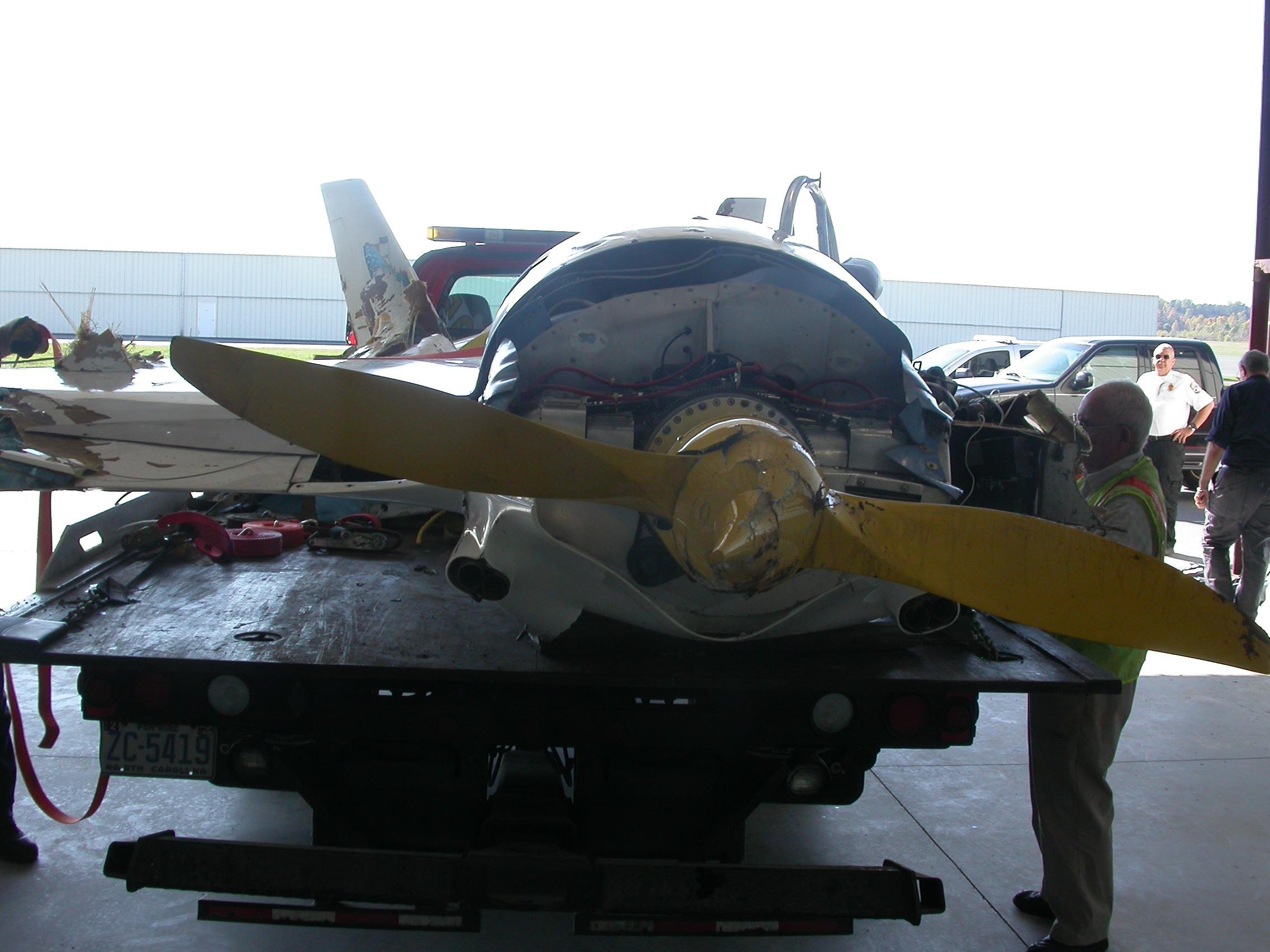
Investigators examined the wreckage thoroughly. The right main fuel tank was ruptured, and no fuel was present. No fuel staining was found on the strake or wing surface, and no browning of vegetation near the wreckage indicated a fuel spill before impact. The left main fuel tank was also ruptured and empty. The right sump tank, which feeds from the right main, was dry. The left sump tank was intact and held roughly 1 gallon of fuel. The fuel caps on both main tanks were secure with tight seals. The aircraft fuel strainer bowl contained about 1 teaspoon of blue liquid that smelled like aviation gasoline.
The fuel selector valve was found positioned between the left tank and the off positions. Investigators noted that impact forces and cable movement during the crash sequence could have shifted the valve from its pre-impact position, so the post-crash selector location could not be taken as definitive evidence of what the pilot had selected in the cockpit. The fuel lines from the left sump tank to the engine were ruptured in the crash, but the sump itself was intact. The right sump was empty.
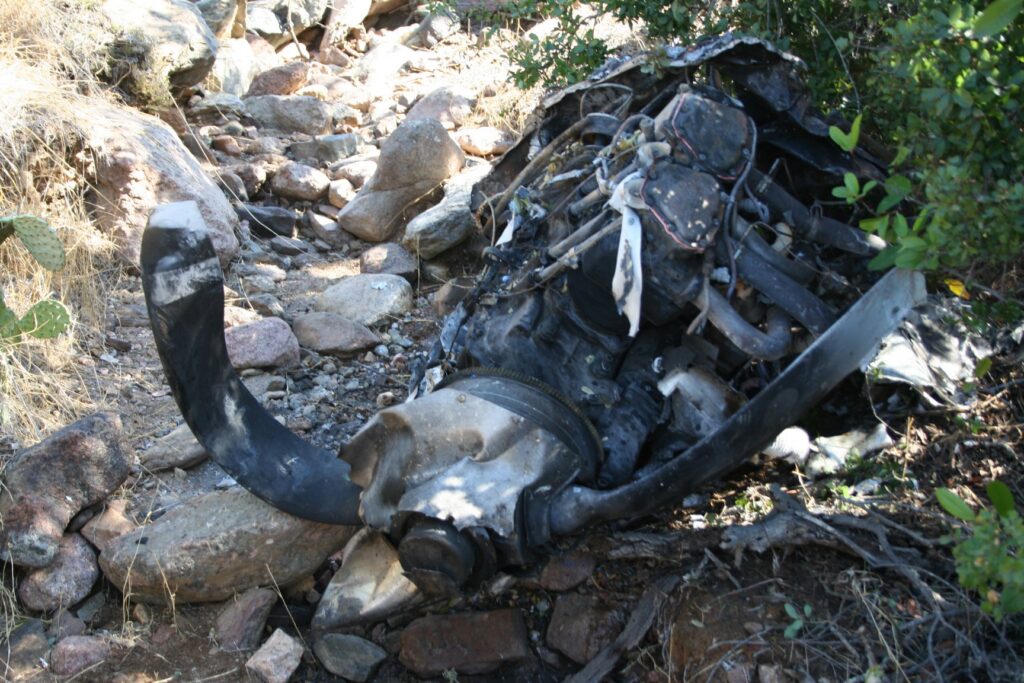
The engine assembly showed no evidence of any mechanical anomaly that would have prevented normal operation. Both magnetos produced spark when the propeller was rotated by hand. The Light Speed Engineering capacitive discharge ignition system installed in place of the right magneto could not be tested because first responders had removed the battery, but its ignition leads and coil packs were undamaged. The fuel injector servo, flow divider, and injector nozzles were all removed, inspected, and found free of contamination. The engine driven fuel pump produced pressure when actuated by hand. Suction and compression were confirmed on all four cylinders. Bore scope examination of all cylinders revealed no anomalies. Every mechanical system that could be examined pointed away from a mechanical failure and toward fuel starvation as the cause of the power loss.
A representative of Ly-Con Engines and Accessories provided fuel consumption data for the experimental Lycon IO-360 220-horsepower engine installed in the airplane. At 65 percent power, the burn rate was 10.33 gallons per hour, producing a total burn of 23.04 gallons over 2 hours and 14 minutes. At 75 percent power, the rate climbed to 13.75 gallons per hour, for a total of 30.66 gallons. At 85 percent power, the burn reached 14.66 gallons per hour and 32.69 gallons total. None of those figures included fuel consumed during start, taxi, and climb. The passenger’s estimate of roughly 37 usable gallons at departure, minus 4 gallons for start and climb, left approximately 33 gallons for cruise. A flight at 75 percent power would have consumed 30.66 gallons during cruise alone, leaving less than 3 gallons of margin by the time they were in the pattern. At 85 percent, the numbers were tighter still.
The pilot’s logbook was not recovered. It had been stored in a flight bag aboard the airplane. His medical application from November 2010 listed 725 total hours. His CFI, who had flown with him beginning in April 2011 and administered his flight review on July 2, 2011, said the pilot claimed 1,200 to 1,300 total hours and had received 13 hours of instruction in the Cozy MK IV before the sign-off. The pilot held a private certificate with a single-engine land rating, issued July 29, 2009, and a third-class medical. Toxicology was negative for carbon monoxide, ethanol, and drugs.
NTSB Probable Cause
The pilot’s inadequate fuel management, which resulted in a total loss of engine power due to fuel starvation.
Safety Lessons
Several decisions in the final minutes of this flight compounded each other in ways that are worth walking through carefully.
- Switch tanks before the warning, not after it. When the pilot acknowledged 7 gallons remaining in the right tank, he was roughly 20 minutes from landing, and his passenger was already urging him to act. Seven gallons sounds like a margin. But on a fuel-injected engine drawing from a sump tank, those 7 gallons were not all immediately accessible. The right sump was empty at the crash site. Fuel starvation can happen with fuel still remaining in the main tank if the sump runs dry first. The Cozy MK IV’s fuel system uses sump tanks that must refill from the mains. Waiting until the engine sputters to switch is waiting too long. The time to switch is when the fuel level first becomes a concern, not when it becomes a crisis.
- Fuel planning has to account for the full burn, not a best-case number. The printed flight plan showed 39 gallons on board. The passenger recalled 37 usable gallons. At the power settings likely used for a cross-country cruise, fuel consumption ran between 13 and 15 gallons per hour. Over 2 hours and 14 minutes, the math closed fast. A realistic pre-flight fuel check against actual cruise consumption numbers would have identified the tight margin before the flight ever left Jacksonville. The Cozy MK IV is an experimental airplane with a modified engine; its fuel burn differed from any POH baseline. Pilots operating experimental aircraft with non-standard powerplants need manufacturer-specific consumption data, not handbook estimates from a stock engine.
- When the engine starts sputtering in the pattern, the first action is fuel selector. The pilot had one immediate option when the engine began to sputter turning base leg: switch tanks. There was approximately 1 gallon remaining in the left sump. It may not have saved the approach, but it was the only action that could have restored power. Instead, the pilot initiated a steep descending turn. A steep turn at low altitude and low airspeed with a sputtering engine is a configuration that leaves almost no room for error. The runway was 1/8 mile away. The field ahead was flat and open. A wings-level forced landing into that soybean field, while simultaneously switching tanks, would have offered a far better outcome than a steeply banked turn into trees.
Frequently Asked Questions
Q: What is a Cozy MK IV and how does its fuel system work?
A: The Cozy MK IV is an experimental amateur-built composite canard airplane with seating for four. It uses a pusher engine configuration with fixed main gear and a retractable nose wheel. Its fuel system uses two main fuel tanks located in the wing strakes, each feeding a sump tank. The engine draws from the sump tanks rather than directly from the mains. This means that if a main tank runs low and the sump has not fully replenished, the engine can starve even if fuel still shows in the main tank. Pilots transitioning to the type need to understand this system before flying cross-country.
Q: Why didn’t the pilot switch fuel tanks when the passenger suggested it?
A: The NTSB report does not document the pilot’s stated reasoning. The passenger reported encouraging the pilot to switch tanks when 7 gallons remained in the right main, and the pilot declined. The pilot also declined to switch after the engine began sputtering in the pattern. The investigation found no mechanical obstruction to switching tanks. Whatever the pilot’s reasoning was, the decision not to act on both occasions contributed directly to the outcome.
Q: How much fuel should have been on board for this flight?
A: The flight covered 2 hours and 14 minutes. At 75 percent power, the Lycon IO-360 installed in this airplane burned approximately 13.75 gallons per hour, totaling about 30.7 gallons for the flight itself. Additional fuel was consumed during start, taxi, and climb. FAR 91.151 requires VFR day flights to carry enough fuel to reach the destination plus at least 30 minutes of reserve. At 13.75 gallons per hour, 30 minutes of reserve equals roughly 6.9 gallons. A properly planned flight would have required at least 37 to 40 usable gallons depending on power setting, which was close to the entire usable capacity of the airplane.
Q: Could the pilot have made the runway if he had switched tanks immediately when the engine sputtered?
A: Possibly. The left sump tank contained approximately 1 gallon of fuel at the crash site. Whether that fuel would have restored engine power long enough to complete a landing depends on how quickly the engine would have responded and how much altitude remained. But the left tank was never selected. The pilot initiated a steep descending turn instead. The airplane struck a tree 32 feet off the ground approximately 1/8 mile from the runway 24 threshold. Switching tanks was the one action that offered any chance of engine recovery, and it was not taken.
Q: What should a pilot do when the engine starts sputtering on approach?
A: The standard memory item for an unexplained power loss is to immediately check and switch the fuel selector to a tank with known fuel, then verify mixture is full rich, throttle is set appropriately, and confirm no other obvious cause. If the engine does not recover, the priority becomes maintaining airspeed above stall and selecting the best available landing surface ahead. Steep turning maneuvers at low altitude with a compromised engine dramatically reduce the margin for error and have caused numerous fatal accidents. The general guidance is to land mostly straight ahead rather than turn back toward the runway if altitude is insufficient.