What Happened
On September 1, 2008, at approximately 1810 Pacific daylight time, a Lockheed P2V-7 air tanker registered N4235T and operating under the call sign Tanker 09 lifted off Runway 32 at Reno/Stead Airport in Reno, Nevada, and never came back. The 61-year-old airline transport-rated captain, the 41-year-old airline transport-rated co-pilot, and a 25-year-old flight mechanic riding the cockpit jumpseat were all killed when the airplane rolled left and impacted terrain approximately 1.2 nautical miles from the departure end of the runway. The P2V-7 was operated by the California Department of Forestry and Fire Protection under contract with Neptune Aviation Services of Missoula, Montana, and it was carrying 2,070 gallons of fire retardant when it went down.
The day had started without incident. The crew had flown one firefighting mission earlier that morning, made two retardant drops, and returned to the Reno/Stead Air Attack Base. The post-flight walk-around turned up nothing. The airplane sat through lunch while the crew rested, and at approximately 1730, a dispatch notice came in for a second mission to support the Smitty Fire burning roughly 85 nautical miles to the south. The regularly assigned crew chief preflighted the airplane alongside the flight mechanic and found no anomalies. Then a small wrinkle: the flight mechanic had asked to ride along on this sortie. The captain approved the request. This was the young mechanic’s first operational flight on the L-P2V.
Loading was completed by 1755. At 1758, the captain radioed the ramp to hold their hotel rooms. They would be back. At 1801, with both radial engines already running, the CVR captured the captain walking the co-pilot through the departure map. Two minutes later he told the co-pilot to go ahead and start the jet engines. From 1805 to 1806, the crew stepped through the before-takeoff checklist challenge-and-response sequence. At 1805:45, the captain gave his takeoff briefing: VFR departure off Runway 32, same calls, if they got airborne they’d enter a left downwind and come back around for Runway 32. He did not want to jettison the retardant load. Then, at 1806:09, he handed the takeoff to the co-pilot. The co-pilot acknowledged with a laugh and said, “Same briefing.” No additional briefing was given. Nobody asked for one.
At 1807:05, the CVR recorded increasing engine speed. Takeoff roll commenced. At 1807:16 the co-pilot called rudder control. At 1807:27 the captain called eighty knots, cross-checked. At 1807:38 he called rotate at 108 knots. The co-pilot called positive rate at 1807:43 and METO power at 1807:55. The Appareo GAU 2000 flight recorder shows the airplane lifted off at 18:07:40 at approximately 130 knots, climbed to a maximum of about 250 feet above ground level, and reached a peak climb rate of 600 feet per minute. Then, at 1808:00, the CVR recorded the sound of decreasing engine speed. Five seconds later, the co-pilot said “Whoa,” followed by heavy breathing. At 1808:10, the captain said, “We got a fire over here. A big ol’ fire.” At 1808:15, the co-pilot said, “I’m holding full right aileron.” Neither pilot called for retardant jettison. Neither pilot verbally ran the jet engine fire emergency checklist. The captain did not take the controls. Between 1808:24 and 1808:31, the recorder captured only the sound of heavy breathing from the captain’s seat. At 1808:32, it captured the sound of impact.
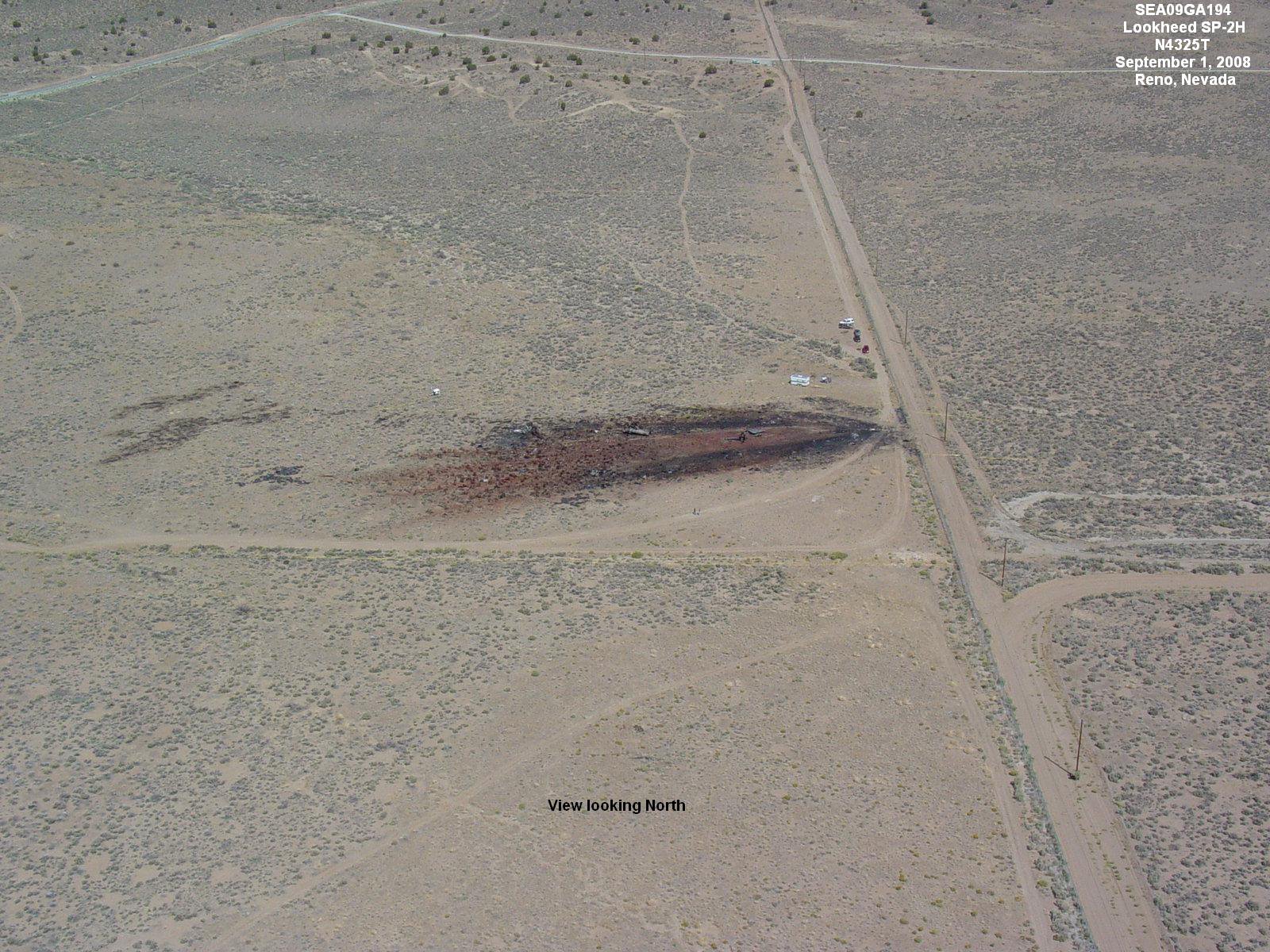
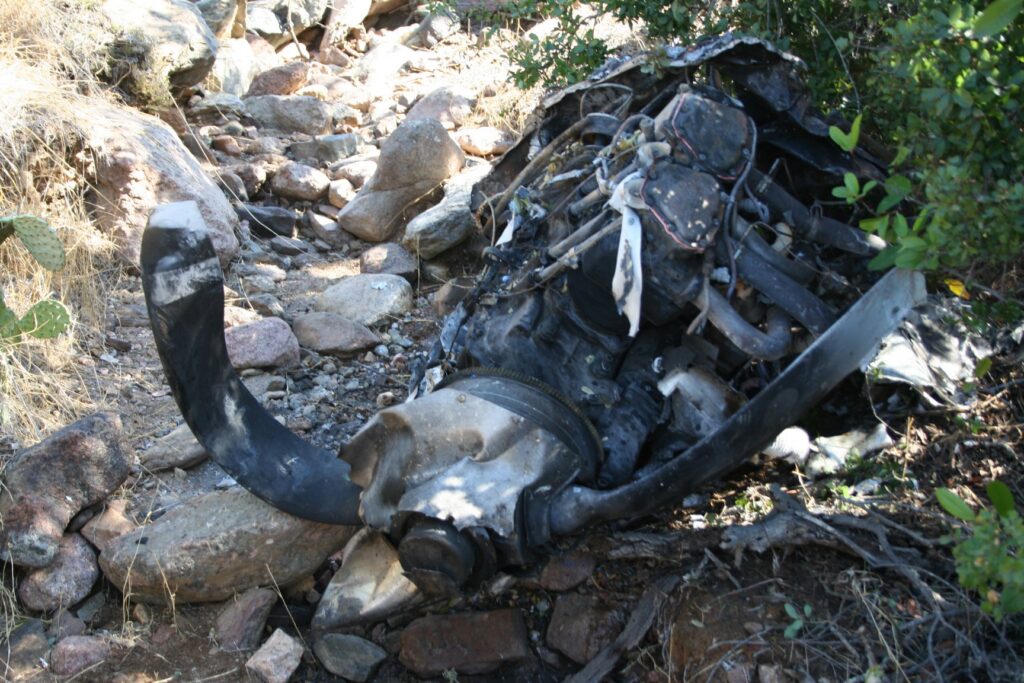
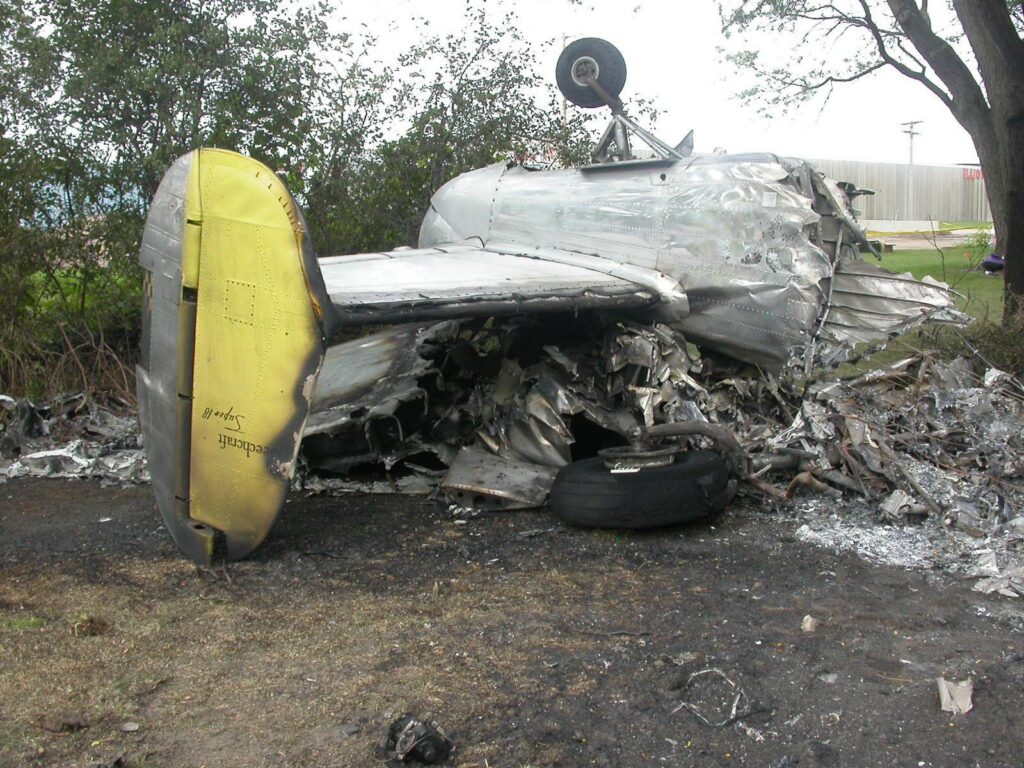
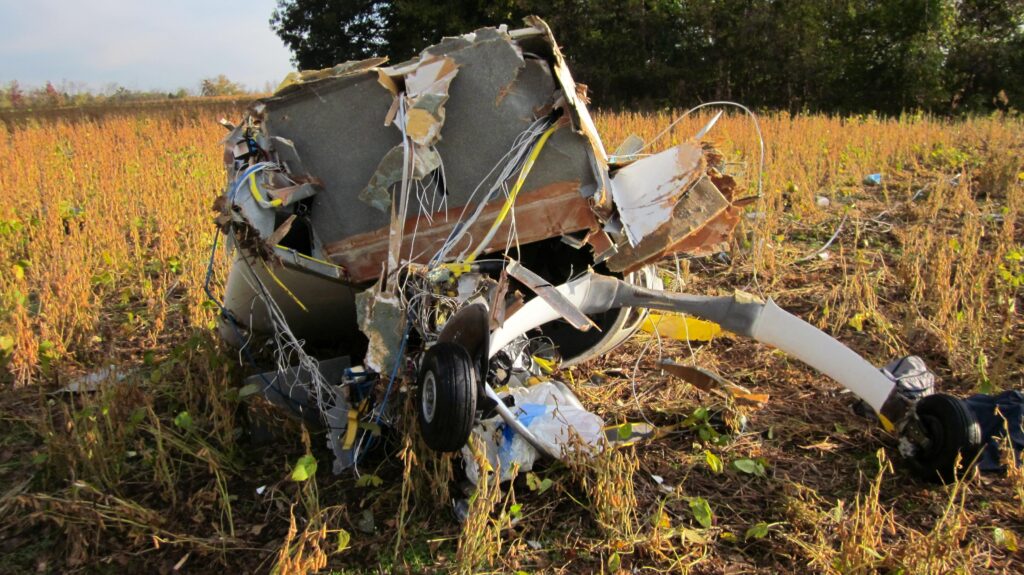
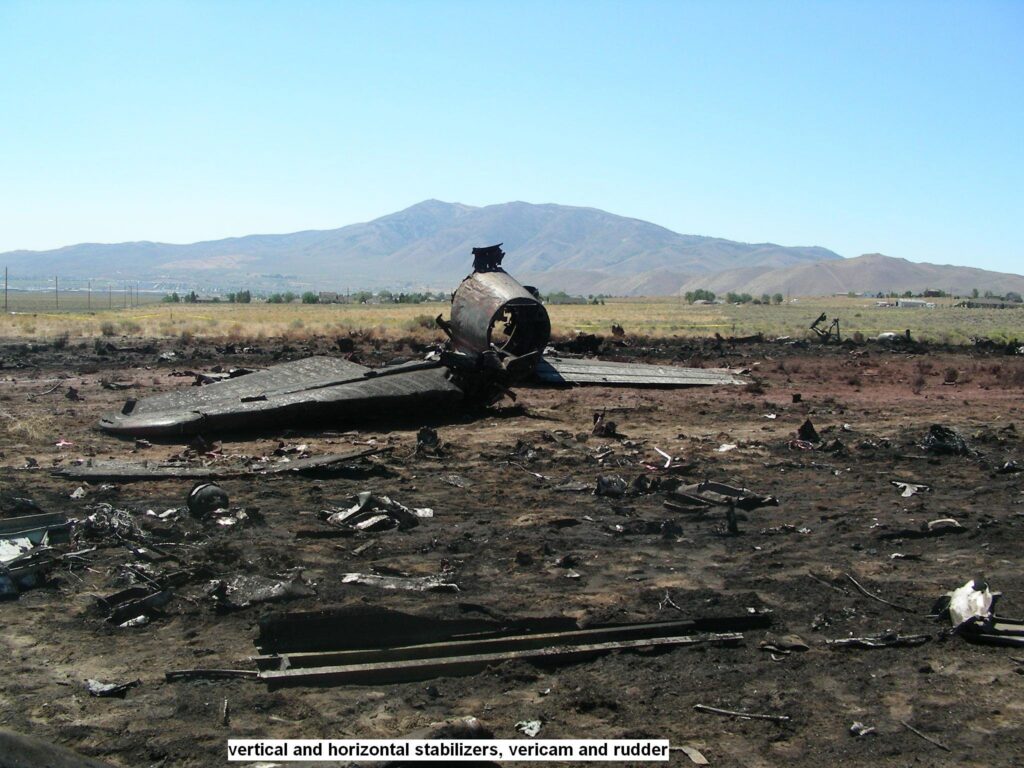
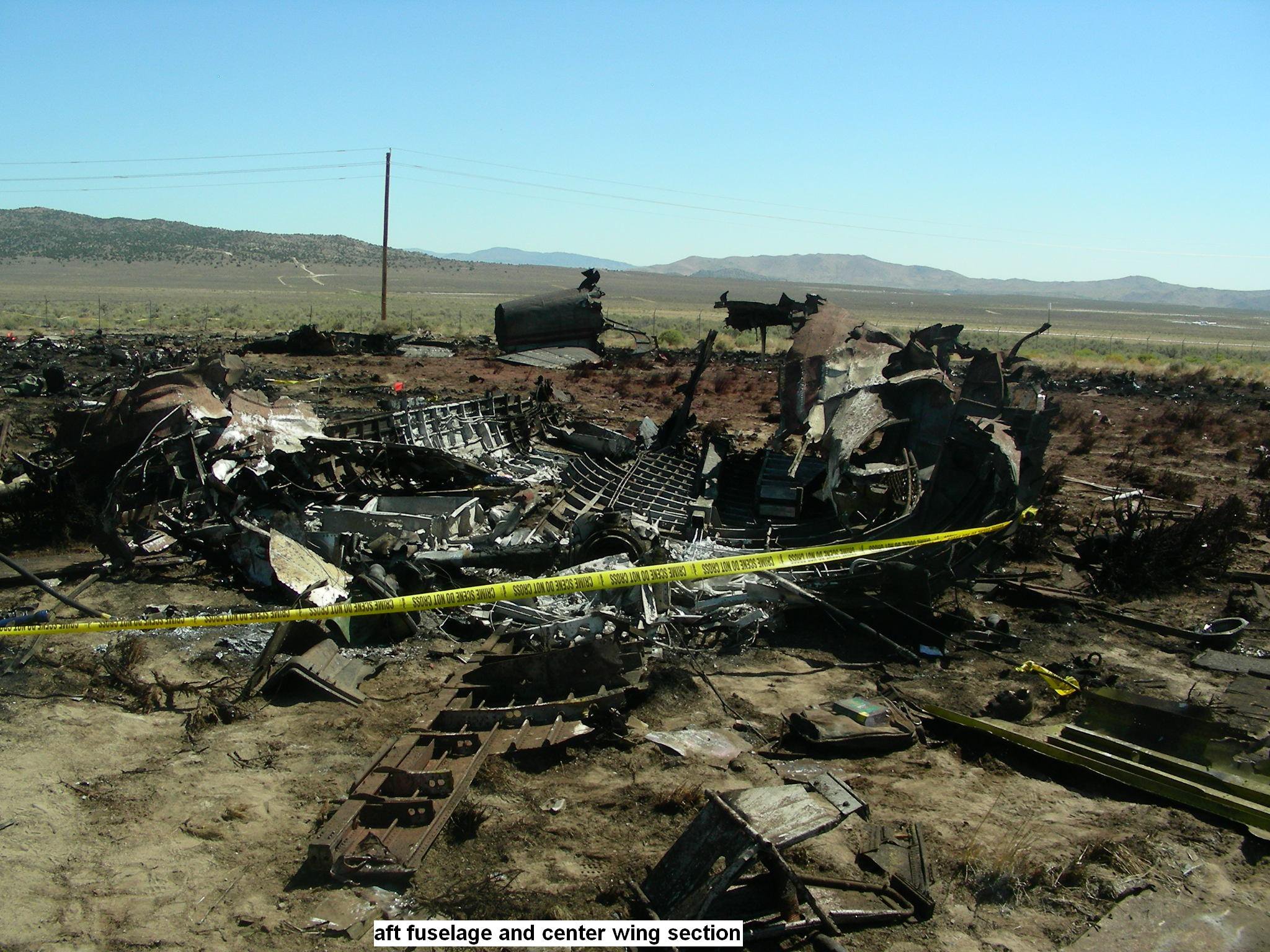
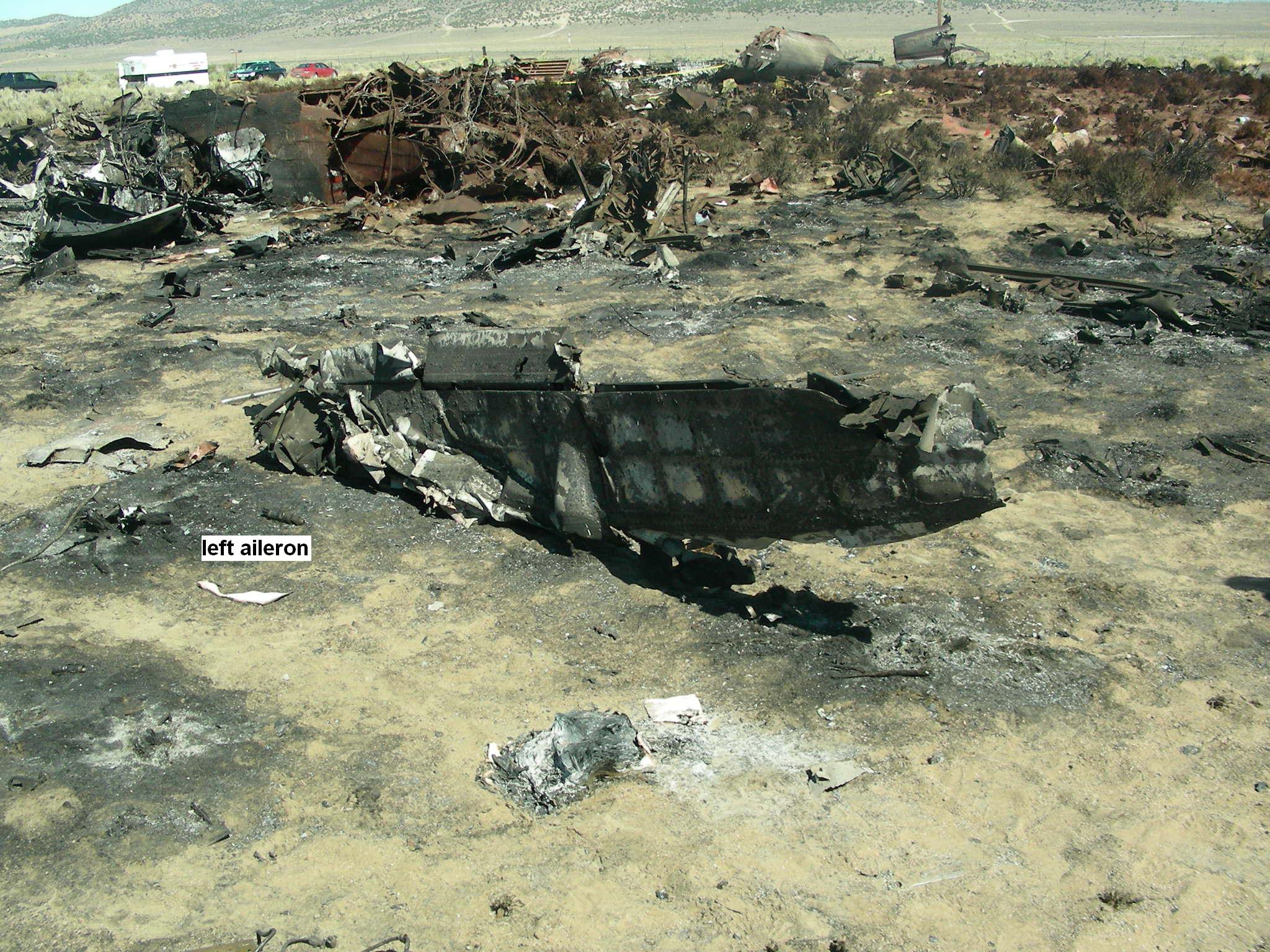
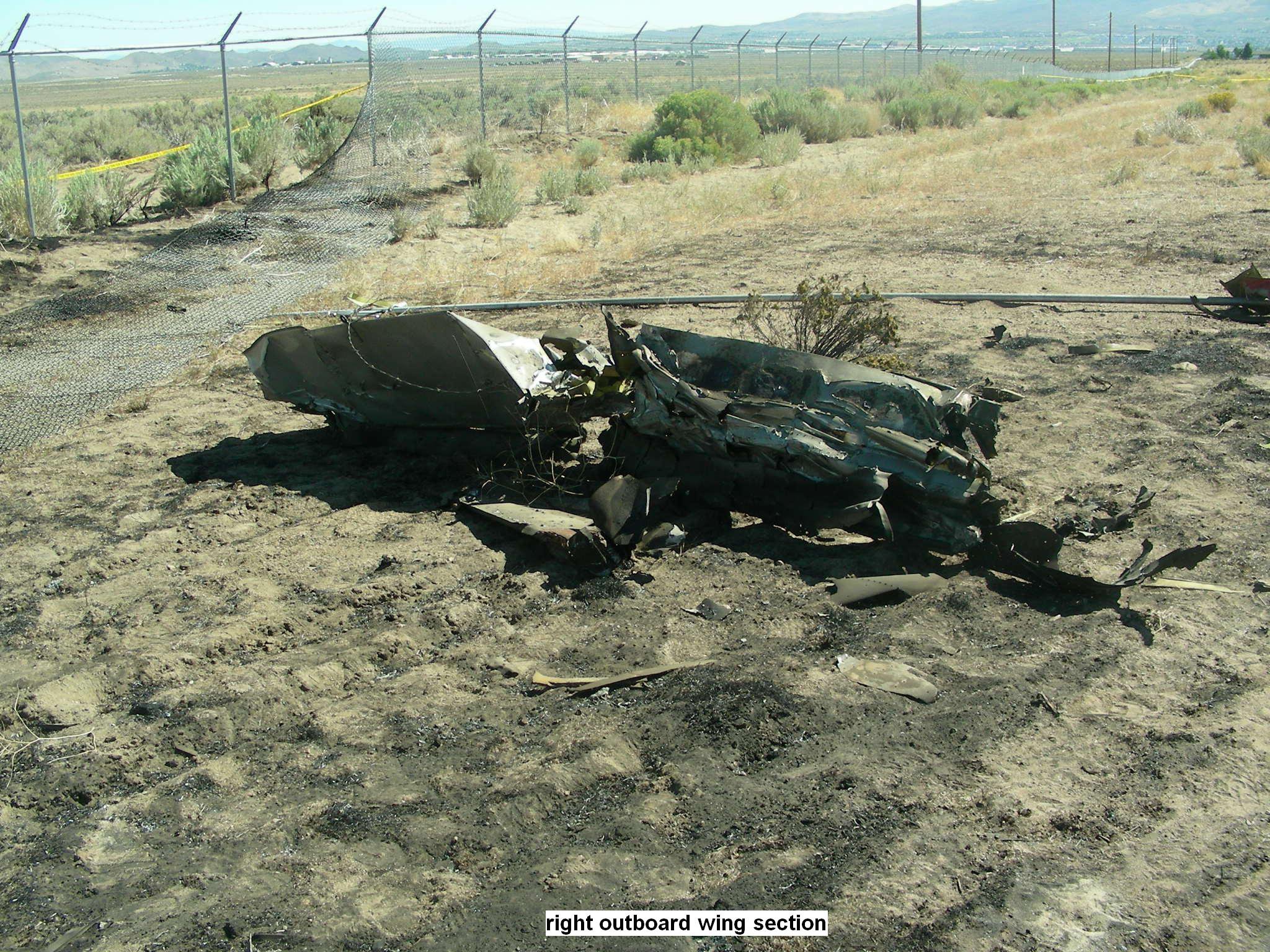
The crew chief, standing to the left and rear of the airplane on the ramp, saw the left jet engine produce a ball of fire at approximately 200 feet agl. He called the tanker base immediately to pass the warning. There was no response from the crew. Witnesses around the airport perimeter watched the left wing become progressively engulfed. The assistant air attack base manager observed the bank angle reach 45 degrees, then continue through 60 degrees as the airplane yawed back left and descended left-wing-first into the terrain northwest of the field. The wreckage came to rest at an elevation of 5,072 feet msl on a heading of 250 degrees magnetic, roughly 22 feet above the airport elevation of 5,050 feet. The fire retardant load stained the debris field a reddish-orange across an area 750 feet long and 585 feet wide.
Investigation Findings
The NTSB found that the left outboard jet engine, a Westinghouse J34-WE-36 with serial number 211235, had suffered a catastrophic failure of its 11th stage compressor disc during the initial climb. Components from that engine were scattered in a debris field extending approximately 1,750 feet from the departure end of Runway 32 along the extended centerline. The 11th stage disc itself was found 875 feet from the runway’s departure end. The bearing housing was 1,100 feet out. The compressor housing was 1,200 feet out. The pattern was consistent with an uncontained engine failure that ejected major components outward before the airplane had climbed to 300 feet agl.
The NTSB Materials Laboratory examined the failed disc and identified a fatigue fracture that had initiated at the transition radius between the disc web and the bolting ring. The fatigue crack measured 2.7 inches long circumferentially and had penetrated 0.23 inch of the disc’s 0.29-inch-thick section before the disc fractured in overstress. At the origin, metallurgists found a single scratch measuring between 0.0013 and 0.0016 inch wide and 0.0010 and 0.0015 inch deep, with an aluminum oxide abrasive particle embedded at its end. That particle, and the scratch itself, were the fatigue initiation site. The surface finish in that area measured as rough as 187 microinch RA in places, against a drawing requirement of 63 microinch RMS. Critically, the NTSB laboratory technician noted that a 10-power magnifying glass, the tool specified by the approved inspection procedure, would not have been sufficient to identify the scratch as an anomaly. The compressor rotor assembly had never been overhauled or exchanged during the engine’s entire civilian service life. Total cycle estimates for the engine, drawing on Navy and civil operational records, placed it somewhere between 4,000 and 4,300 cycles at the time of the accident.
The flight recorder data told the story of what happened in the cockpit after the engine failed. At 18:08:23, the airplane was at 5,289 feet msl and 184 knots. Over the next six seconds, it decelerated through 163, 159, 153, 144, 130, 110, and 84 knots while descending through 5,221 feet msl. At 18:08:29, airspeed reached 53 knots. The airplane had passed through published Vmca of 108 knots at 18:08:29, and that is also the precise moment the flight recorder showed roll rate increasing rapidly left-wing-down. The left jet fuel shutoff valve was found in the OPEN position in the wreckage. The emergency checklist had not been executed. The retardant load had not been jettisoned. Company training required pilots to successfully simulate both procedures during engine-failure training on takeoff with a full retardant load. The Neptune Aviation Services Vice President of Operations confirmed this explicitly: pilots were tested on simulated engine failures during takeoff with a simulated full load, and they were expected to jettison the load and execute the engine-failure procedure to acceptable standards.
NTSB Probable Cause
The failure of the flight crew to maintain airspeed above in-flight minimum control speed (Vmca) after losing power in the left jet engine during initial climb after takeoff. Contributing to the accident was the crew’s inadequate cockpit resource management procedures, the failure of the captain to assume command of the airplane during the emergency, the flight crew’s failure to carry out the jet engine fire emergency procedure, and the failure of the crew to jettison the retardant load.
Safety Lessons
Three crew members aboard a well-maintained, professionally operated air tanker died within 22 seconds of a compressor disc failure. The mechanical event was not survivable in the way it unfolded, but the sequence of decisions that followed the failure is exactly where pilots at every level can learn something.
- When you hand over the controls, command authority has to transfer explicitly. The captain gave a takeoff briefing, then handed the takeoff to the co-pilot with 37 seconds notice and no re-briefing. When the emergency hit, the co-pilot was flying the airplane, the captain was narrating the problem, and nobody was executing the checklist or jettisoning the load. On a four-engine tanker with 2,070 gallons of retardant on board, those 22 seconds were not enough time to sort out who owned the airplane. CRM training both pilots had completed just seven months earlier existed precisely to prevent this outcome. Briefings, handoffs, and emergency authority transfer need to be rehearsed to the point where they are reflexive, not deliberated.
- Airspeed is the only thing keeping a Vmca scenario from becoming a loss-of-control event. The P2V-7 NATOPS manual listed Vmca at 108 knots. The airplane decelerated from 184 knots to below 108 knots in six seconds after the engine failure. That rate of deceleration reflects an airplane being flown with full right aileron input but without a nose-down pitch correction and without the retardant load jettisoned. A 2,070-gallon retardant load weighs roughly 17,500 pounds. Dumping that weight immediately after an engine failure on takeoff is not optional in company procedure, it is mandatory. The crew knew this. The load stayed aboard. The physics of the situation did not wait for a checklist to be called.
- Pre-takeoff briefings need to account for every seat in the cockpit. This flight had three people in the cockpit, one of whom was on his first operational flight in the L-P2V. The before-takeoff briefing addressed runway, downwind pattern, and retardant jettison intent. It was given by the captain and then re-assigned to the co-pilot without revision. It did not address what each person would do if the left jet failed on climbout. Thirty-seven seconds later, each crewmember had a different job, and none of the three executed a coordinated emergency response. A complete departure briefing for a fully-loaded air tanker departing from a 5,050-foot-elevation airport at 1810 on a late-summer afternoon includes the engine-failure plan, who dumps the load, who flies, and who calls the checklist. Out loud. Before the power comes up.
Frequently Asked Questions
Q: What caused the Tanker 09 P2V crash in Reno in 2008?
A: The immediate cause was fatigue failure of the 11th stage compressor disc in the left outboard J34-WE-36 jet engine, which caused an uncontained engine failure and fire at approximately 250 feet agl during initial climb. After the failure, the crew did not execute the jet engine fire emergency checklist, did not jettison the 2,070-gallon retardant load, and did not maintain airspeed above Vmca of 108 knots. The airplane decelerated below Vmca and rolled left into the terrain 1.2 nautical miles from the departure end of Runway 32.
Q: What is Vmca and why did it matter in this accident?
A: Vmca is the minimum airspeed at which an airplane can maintain directional control with one engine inoperative and the remaining engines at takeoff power, with a bank angle of no more than 5 degrees into the operating engines. For the P2V-7, that speed was 108 knots. Once the left jet engine failed, the airplane needed to stay above 108 knots or the asymmetric thrust would overcome rudder and aileron authority. The flight recorder shows the airplane decelerating from 184 knots to 53 knots in six seconds after the failure, passing through Vmca at the same moment the left-wing-down roll rate began increasing rapidly. At that point, the airplane was below the altitude and airspeed combination needed to recover.
Q: Could the inspection program have caught the cracked compressor disc?
A: The NTSB found that the approved inspection procedure, which required a 10-power magnifying glass during Phase D inspections, was not capable of identifying the scratch at the fatigue origin as an anomaly. The NTSB laboratory technician stated this explicitly. The scratch that initiated the fatigue crack measured between 0.0013 and 0.0016 inch wide. Additionally, the surface finish in the area of the crack measured as rough as 187 microinch RA in some locations, well above the drawing requirement of 63 microinch RMS, but this variation was not detectable under the approved inspection methods. The FAA-sanctioned Approved Aircraft Inspection Program was reviewed and found to have no shortcomings in its documentation or execution.
Q: Why didn’t the crew jettison the retardant load after the engine failure?
A: The CVR recorded no call for retardant jettison at any point during the 22-second emergency. Neptune Aviation Services’ procedures explicitly required pilots to jettison the retardant load upon experiencing an engine failure on takeoff, and pilots were trained and tested on this procedure with a simulated full load. The NTSB identified the failure to jettison as a contributing cause of the accident. Carrying a roughly 17,500-pound retardant load with an asymmetric thrust emergency at low altitude significantly degraded the airplane’s ability to maintain airspeed and control, and the contributing factor section of the probable cause reflects that directly.
Q: What role did crew resource management failures play in the Reno P2V accident?
A: Both the captain and co-pilot had completed CRM training in February 2008, seven months before the accident. Despite this, the CRM breakdown during the emergency was near-total. The captain announced the fire but did not take the controls, call for checklist execution, or call for retardant jettison. The co-pilot reported holding full right aileron but did not call for any emergency procedures. The handoff of the takeoff from captain to co-pilot 37 seconds before roll meant command authority was ambiguous precisely when clarity was most critical. The NTSB cited inadequate cockpit resource management and the captain’s failure to assume command as contributing causes.