What Happened
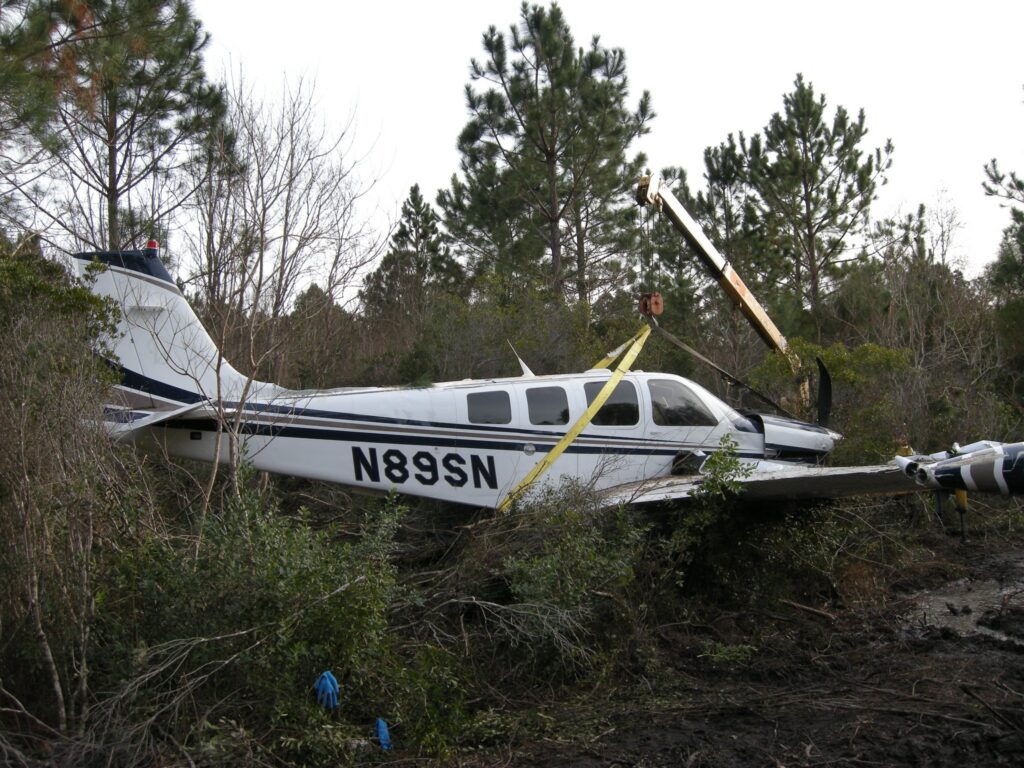
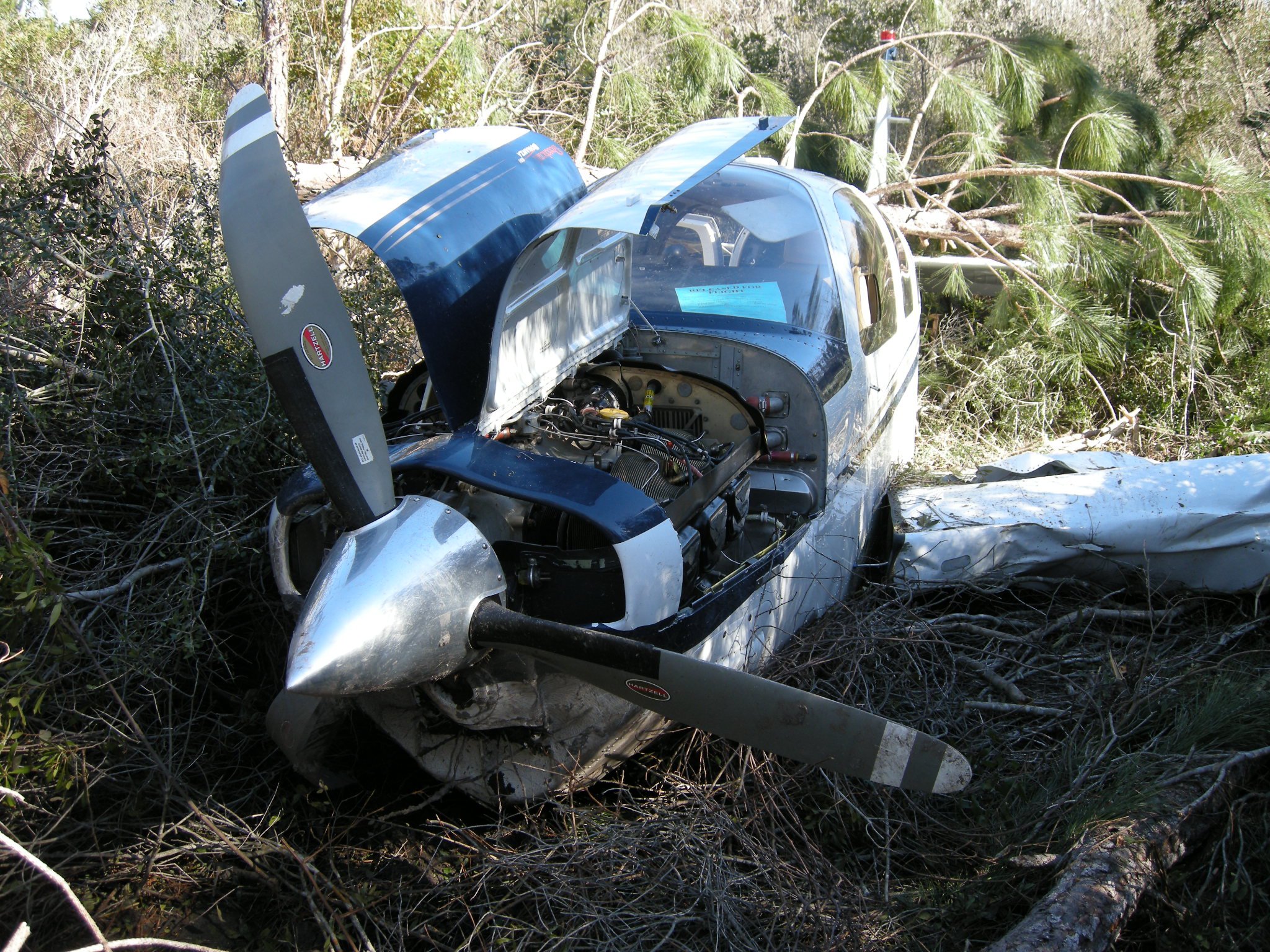
On December 18, 2013, a 2006 Raytheon G36 registered N89SN departed North Palm Beach County General Aviation Airport (F45) in West Palm Beach, Florida at 0554 eastern standard time on an IFR flight plan bound for Destin-Fort Walton Beach Airport (DTS). The airline transport pilot, the sole occupant, was operating the Bonanza as a business flight for Grey Aviation, Inc. He never made it to Destin. About 90 minutes into the flight, with the destination airport roughly 60 miles ahead, the engine went silent. The pilot was fatally injured when the airplane came down in a heavily wooded swamp near Panama City, Florida.
The morning conditions over the Florida Panhandle were clear. The 0658 CST observation from Tyndall Air Force Base, located about 5 miles southwest of where the airplane went down, showed sky clear, winds from 020 degrees at 9 knots, and visibility 10 miles or greater. Density altitude was not a factor. The engine was not a factor either, as it turned out. What the pilot was running low on was far simpler: fuel.
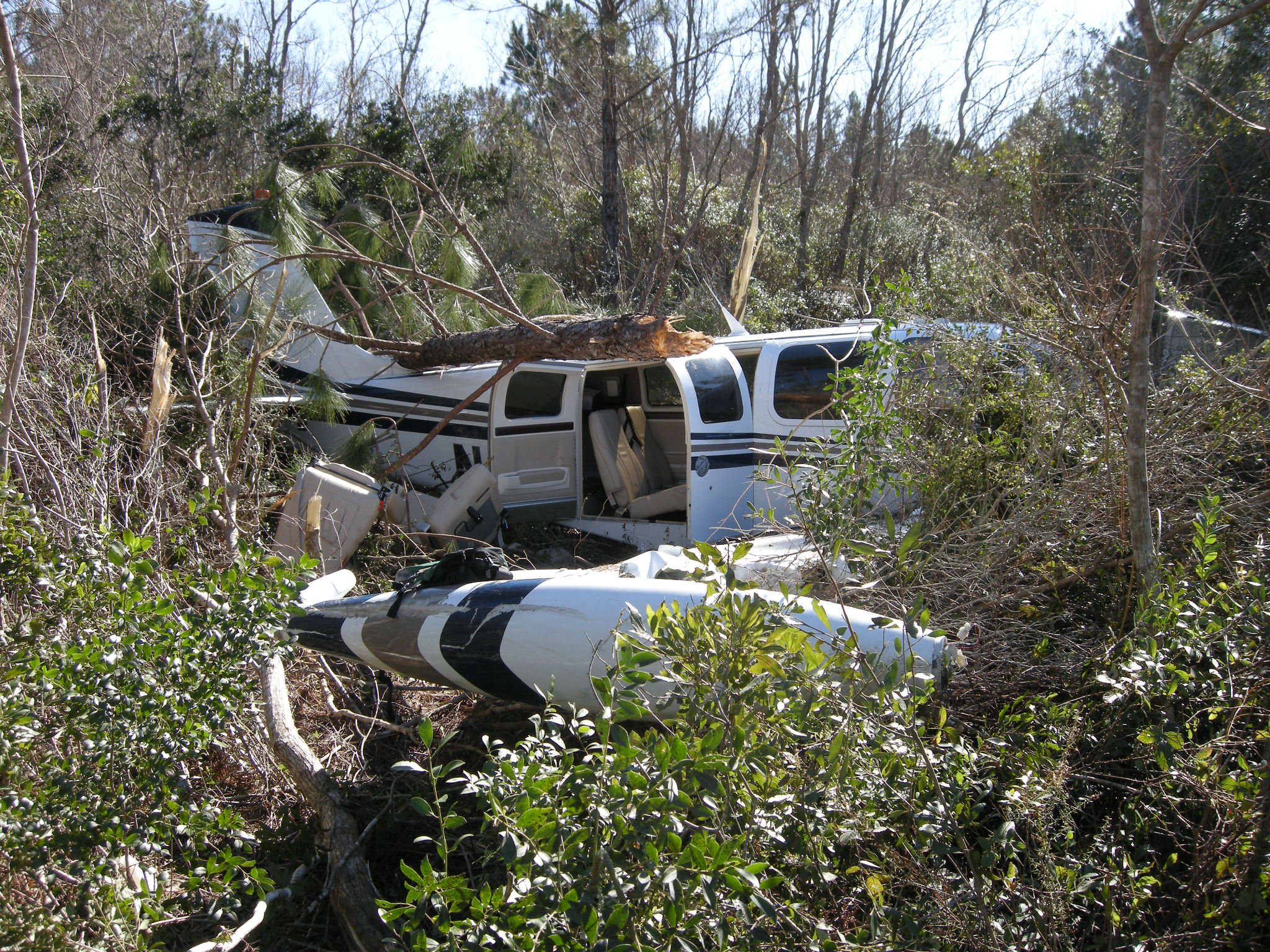
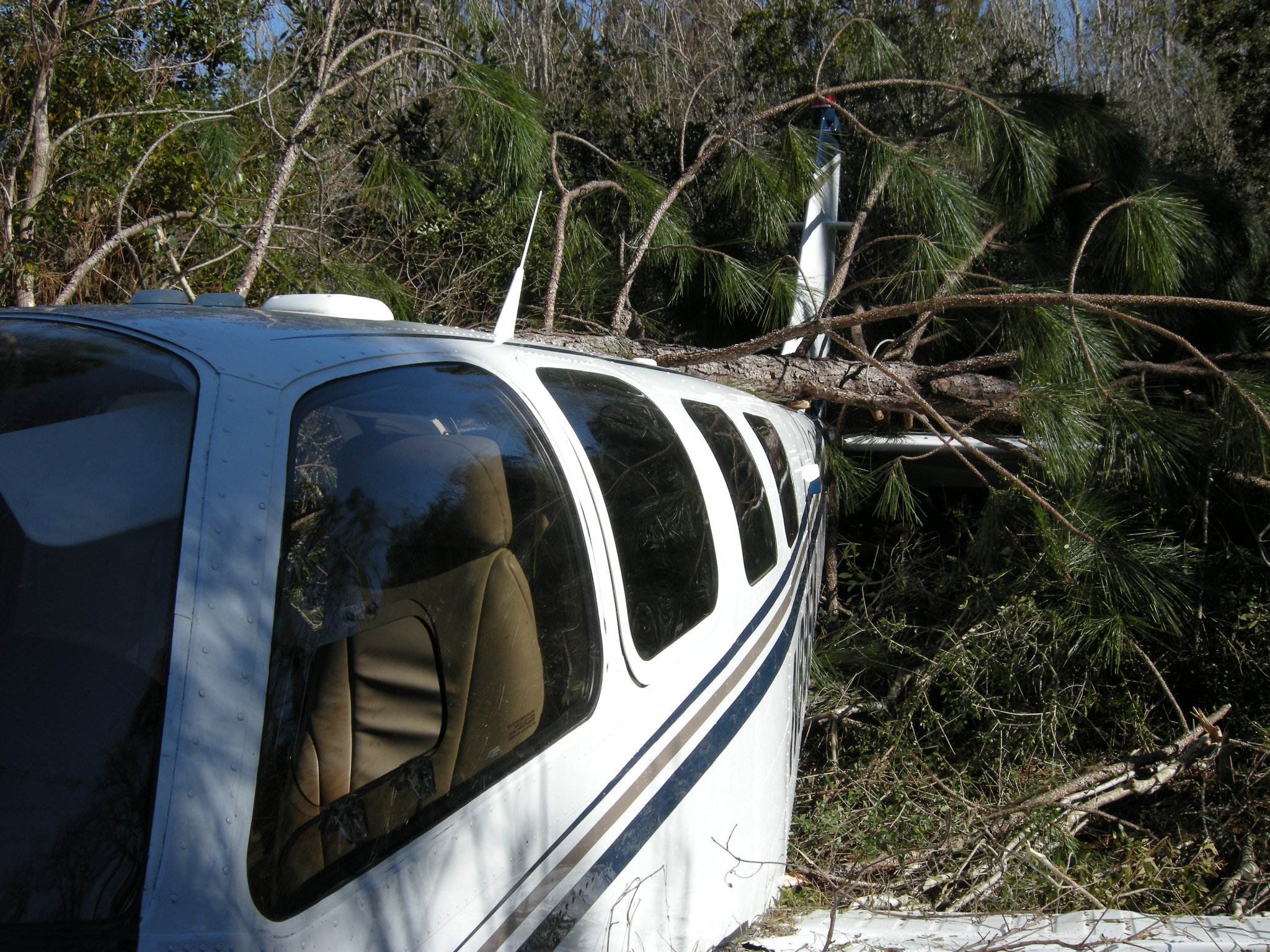
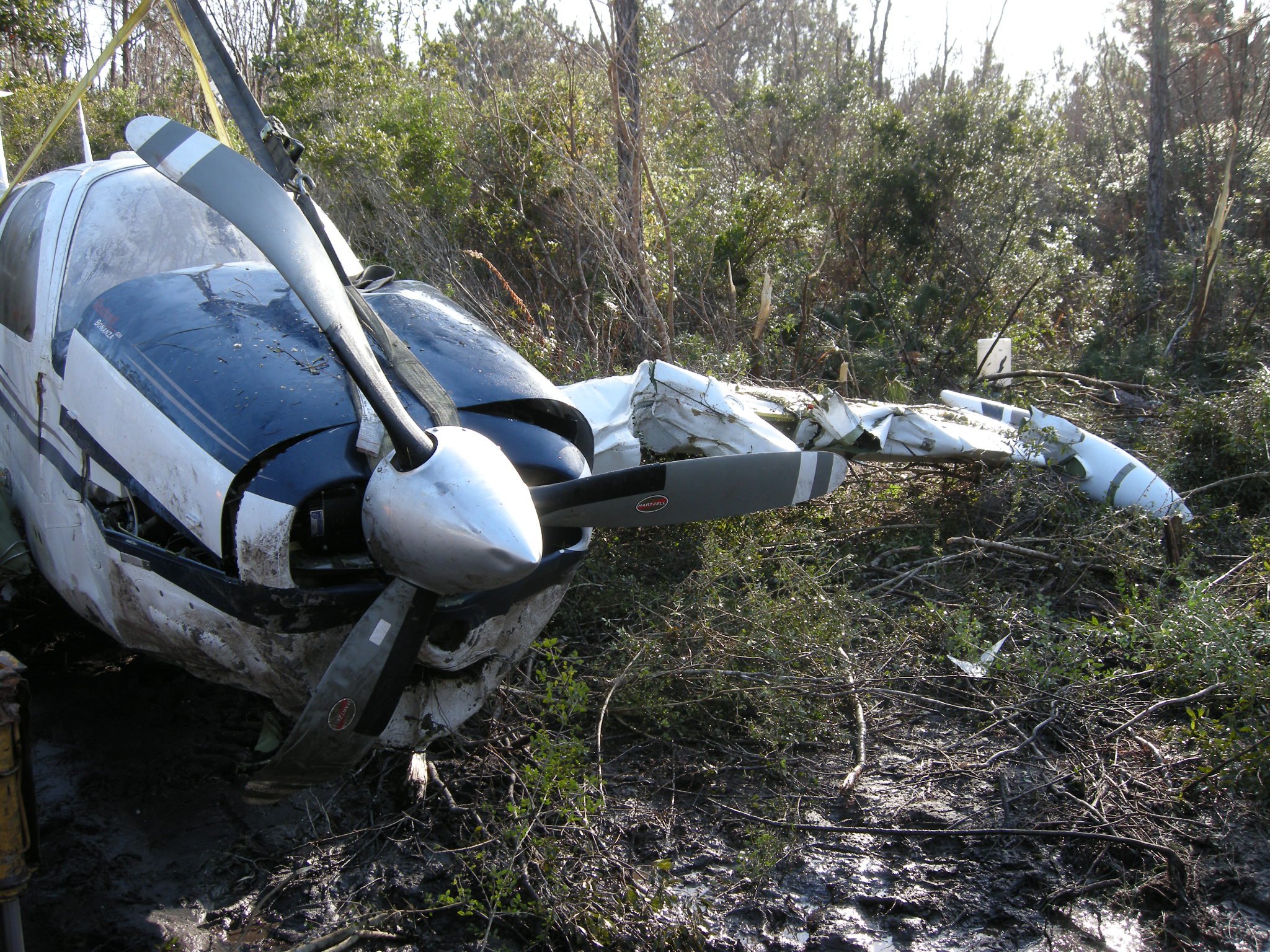
At 0715:36 CST, the pilot made radio contact with Tyndall approach control and reported losing engine power. The controller came back with information on nearby airports. The pilot turned toward Sandy Creek Airpark (75FL), a fly-in community roughly in range, and reported it in sight. Shortly after, radar and radio contact were lost. Search teams were dispatched, and investigators found the wreckage about one mile east of 75FL in a heavily wooded swamp. There were no witnesses.
The pilot held an airline transport certificate with single and multi-engine land ratings and reported 5,000 total hours on his most recent Class 1 medical application from March 2013, including 50 hours in the prior six months. According to the airplane’s owner, he had been the sole pilot of N89SN since the aircraft was purchased on August 28, 2013. In that time, the airplane had accumulated about 53.5 hours of flight time. The Hobbs meter at the accident site read 734.2 hours.
The last recorded fuel purchase for N89SN was on November 22, 2013, at Tampa International Airport. An FBO there sold 18.2 gallons of 100LL to the aircraft that day. After that fueling, the airplane flew direct to F45 and sat on the ramp there for 26 days. According to personnel at F45, no fuel was purchased for the airplane between November 22 and December 18. The Hobbs time when the airplane departed Tampa on November 22 was 729.9 hours. The Hobbs time at the accident site was 734.2 hours. That means 4.3 hours of engine time elapsed between the last known fueling and the moment the engine stopped.
The G36 is equipped with a Continental IO-550B producing 300 horsepower at 2,700 rpm. At typical cruise power settings, that engine burns somewhere in the range of 15 to 18 gallons per hour. Even at the more conservative end, 4.3 hours of operation would consume roughly 65 gallons. The G36’s standard usable fuel capacity across its main tanks is 74 gallons, with additional capacity available in optional wingtip tanks. N89SN was fitted with those tip tanks. The problem is that nobody knew exactly how much fuel was on board when the airplane left Tampa on November 22, which means nobody knew exactly how much was on board when it departed West Palm Beach on December 18, nearly a month later.
Investigation Findings
When investigators reached the wreckage, the fuel tank selector handle was in the left main position. The left wing tank was intact and not breached. Inside it: about one pint of fuel. The right tank had been breached in the impact, but there was no evidence of fuel pooling on the ground beneath it, suggesting very little was in that tank when it ruptured. The optional wingtip tanks were empty. Investigators collected every drop of fuel they could find, including a small pool of water directly under the airplane that contained residual fuel. The total: approximately 2.5 gallons. The manufacturer-specified unusable fuel quantity for the G36 is 6 gallons. The airplane had less fuel on board than it was designed to leave behind.
The propeller blades told the same story from a different angle. There were no rotational signatures, no leading-edge damage, no chord-wise scratches consistent with a spinning propeller contacting trees and terrain. The blades were not turning when the airplane hit. After the accident, the engine was removed from the airframe and shipped to Continental Motors in Mobile, Alabama, where it was test-run on April 8 and 9, 2014. Investigators removed dried mud from the intake system and replaced an oil cooler damaged in the impact. The plugs were cleaned of rust from the months of post-accident storage. Then the engine was installed in a test cell and started on the first attempt. It ran smoothly at every throttle setting from idle to full throttle, reaching 2,648 RPM. All parameters were normal. Magneto checks were normal. The engine produced power without hesitation. It had not failed before the accident. It had simply been asked to run without fuel.
The Garmin G1000 glass panel in the airplane was equipped to log flight and engine data to a Secure Digital card, which would have provided a detailed picture of fuel flow, engine parameters, and flight track right up to the moment of power loss. The SD card was not installed. No flight data was recovered from the system.
One other detail stood out in the post-accident examination. First responders found the pilot in the left seat, lap belt attached, slumped forward and to the right. His shoulder harness was not attached. It was also undamaged, meaning it was not torn loose in the impact. It simply had not been put on. The damage pattern on the airplane’s multi-function display was consistent with the pilot’s head striking it during the accident sequence. The medical examiner’s office listed the cause of death as blunt force head trauma. Investigators noted that the impact forces experienced by the pilot would likely have been reduced if the shoulder harness had been worn.
There was also a brief note in the ATC transcript worth addressing. At 0715:36, before declaring the engine out, the pilot transmitted something that Tyndall approach transcribed as a reference to losing oil. The audio file was forwarded to the NTSB Vehicle Recorders laboratory. Their assessment was that the word “oil” in the transmission was unintelligible. The actual wording of the distress call could not be confirmed from the recording.
NTSB Probable Cause
The pilot’s inadequate preflight and inflight fuel planning, which resulted in a total loss of engine power due to fuel exhaustion. Contributing to the pilot’s injuries was his failure to use the available shoulder harness.
Safety Lessons
Three things converged here, and each one was independently preventable. Any single change in the chain breaks the outcome.
- Fuel planning is not optional, even for experienced pilots. An airline transport pilot with 5,000 hours ran a Continental IO-550 out of fuel in VFR conditions on a clear day. Certificates and experience don’t automatically translate into disciplined fuel accounting on every flight. The G36 Pilot’s Operating Handbook specifies usable fuel capacity and fuel burn figures at each power setting. At 75% power, the IO-550B burns approximately 16 gallons per hour. A simple calculation before departure would have flagged the risk. IFR fuel requirements under 14 CFR 91.167 mandate enough fuel to fly to the destination, then to the alternate, then an additional 45 minutes. Whether the numbers ever got run on December 18 is unknown, but the outcome answers the question.
- A 26-day gap between fueling and departure demands a verified fuel quantity, not an assumption. The last known fuel purchase was 18.2 gallons added at Tampa on November 22. The airplane then flew to West Palm Beach and sat for 26 days. Nobody at F45 fueled the airplane during that period. When the pilot walked out to the ramp on December 18 for a roughly 400-nautical-mile IFR cross-country, the actual fuel state was unknown. The Garmin G1000 fuel display is only as accurate as the quantity entered during the last fueling. A visual inspection of the tanks using a calibrated fuel stick before departure is the only way to know what is actually on board. Assuming the G1000 carries forward an accurate fuel quantity across a weeks-long layover is an assumption that has a known failure mode.
- The shoulder harness is not a formality. The pilot survived the engine failure. He found the airport. He was low, slow, and trying to get into a 2,200-foot strip surrounded by swamp and trees, and the airplane came down short, but he was still alive in that seat when the trees started. His lap belt held him in place. His head was free. The MFD is mounted right in front of the pilot’s face, and the impact damage on that display tells you exactly what happened next. The shoulder harness was right there, undamaged, unlatched. FAR 91.107 requires passengers to have their seatbelts fastened during taxi, takeoff, and landing. The regulation does not prohibit releasing the shoulder harness during cruise, but the harness is there for the moment you don’t see coming. A forced landing into trees is exactly that moment.
Frequently Asked Questions
Q: How much fuel does a Raytheon G36 Bonanza burn per hour?
A: At 75% power, the Continental IO-550B engine in the G36 burns approximately 15 to 16 gallons per hour. At higher power settings the burn rate climbs toward 18 gallons per hour. The G36 has a standard usable fuel capacity of 74 gallons across the two main tanks, with optional tip tanks adding additional capacity. At a conservative 15 GPH cruise burn, full main tanks provide roughly 4.9 hours of endurance, plus reserves.
Q: What are the IFR fuel reserve requirements under FAR 91.167?
A: Under 14 CFR 91.167, an IFR flight must carry enough fuel to fly to the first airport of intended landing, then to fly to the alternate airport if one is required, and then to fly for an additional 45 minutes at normal cruising speed. This is the regulatory floor, not a planning target. Many experienced pilots plan to land with at least one hour of fuel remaining. The 45-minute reserve exists precisely because fuel planning errors, headwinds, and routing changes are predictable variables.
Q: Can you trust the Garmin G1000 fuel display as your primary fuel quantity reference?
A: No. The G1000 fuel totalizer calculates remaining fuel based on a quantity entered by the pilot at the last fueling, minus the fuel flow calculated by the engine instruments since then. If the initial quantity entered was wrong, or if the aircraft has sat for an extended period without the system being updated, the displayed quantity will be wrong. The only way to verify actual fuel on board is a visual inspection using calibrated fuel dipsticks or filling the tanks to a known quantity before departure. The G1000 is a useful cross-check, not a substitute for a direct fuel verification.
Q: Is fuel exhaustion common in accidents involving experienced pilots?
A: More common than most pilots expect. The NTSB database contains numerous fuel exhaustion accidents involving pilots with instrument ratings, commercial certificates, and ATP certificates. Experience reduces some risk categories but does not automatically produce disciplined fuel accounting. Familiarity with a particular aircraft can create complacency around fuel planning, particularly on routes flown repeatedly or in aircraft with large usable fuel capacity where pilots underestimate how quickly reserves can erode.
Q: Why does wearing a shoulder harness matter in a survivable forced landing?
A: In a crash deceleration, an unrestrained upper body swings forward with significant force. Even at relatively low impact speeds, the head can strike the instrument panel, yoke, or windscreen with enough energy to cause fatal trauma. A lap belt alone prevents ejection from the seat but does nothing to stop forward upper-body rotation. The shoulder harness distributes crash forces across the chest and shoulder, keeps the head from traveling forward into the panel, and is the single most effective occupant protection device in the cockpit for survivable accidents. FAA and NTSB data consistently show reduced fatality rates in crashes where shoulder harnesses were used.