What Happened
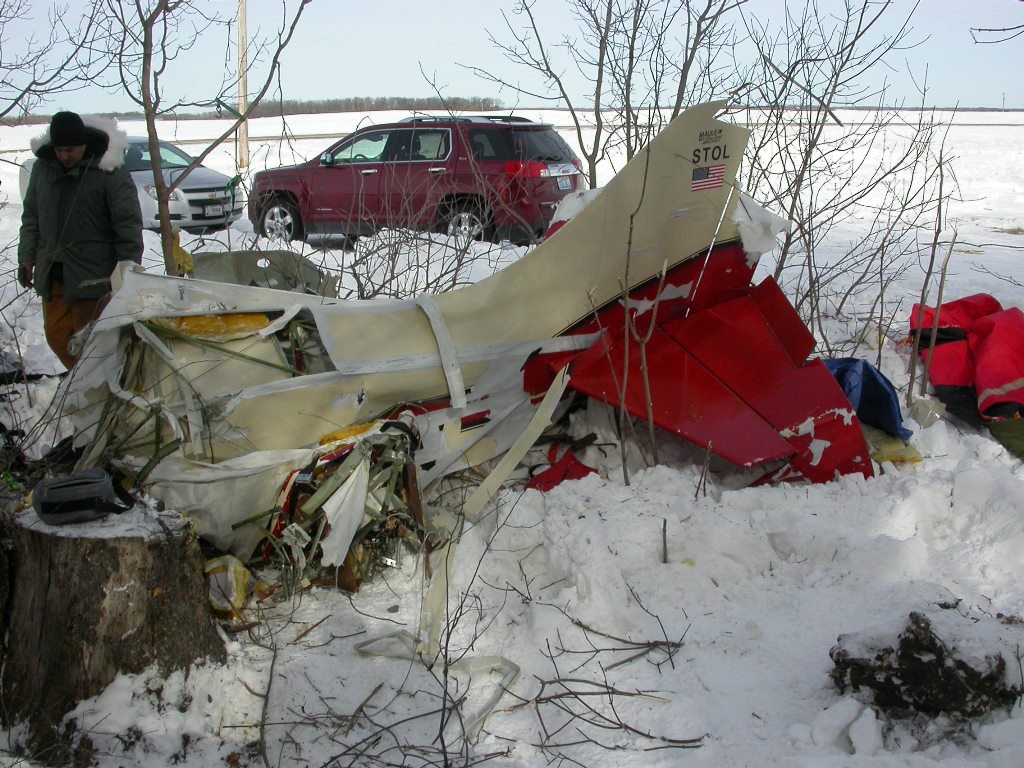
On the evening of February 20, 2013, a 1993 Maule MXT-7-180, registration N9229Y, departed Greater Peoria Regional Airport (PIA) in Peoria, Illinois at 1438 central standard time. The private pilot, a 41-year-old man with 539.1 total flight hours and 53.4 hours in the Maule specifically, was heading home to a private strip near Ottertail, Minnesota after a week-long business trip. He would not make it. The airplane came down in a snow-covered field near Parkers Prairie, Minnesota around 1820 that evening. The pilot was fatally injured.
Before departing Peoria, the pilot had the airplane topped off. An FBO fueled N9229Y with 34 gallons of 100LL, filling it to capacity. But the start-up didn’t go smoothly. The pilot flooded the engine during the initial attempt. FBO personnel pulled the airplane into the hangar, removed and cleaned the spark plugs, checked the mag timing, and charged the battery before they got it running. No anomalies were found. The tachometer read 1,376.1 when the invoice was written. By the time the wreckage was found, it read 1,380.2. That difference of 4.1 hours represents the entire flight.
The airplane had a specific fuel system setup worth understanding. The Maule MXT-7-180 carries fuel in four tanks: two main tanks inboard, each holding 20 gallons of usable fuel, and two auxiliary tanks outboard, each holding 15 gallons. Total usable fuel at departure was 70 gallons. But the main tanks are the only ones that feed the engine directly. The auxiliary tanks replenish the mains through transfer pumps, which the pilot has to manually switch on in the cockpit. The pilot and his brother had developed a routine for this: fly on the mains until they reached the half-full mark, then switch on the transfer pumps to top them back up from the aux tanks. The brother noted the transfer rate was slow, just barely enough to keep pace with the engine’s consumption.
The pilot was in contact with his family throughout the flight. He reported passing over the Quad Cities area around 1510. He sent a text message to his wife saying he would be flying over home at 1825 and mentioned he would land if there was still enough light. Later, he called his brother asking whether the farm’s landing strip had been plowed. The brother confirmed it had. The pilot replied with a simple “OK.” That message came in at 1805. It was the last contact anyone had with him.
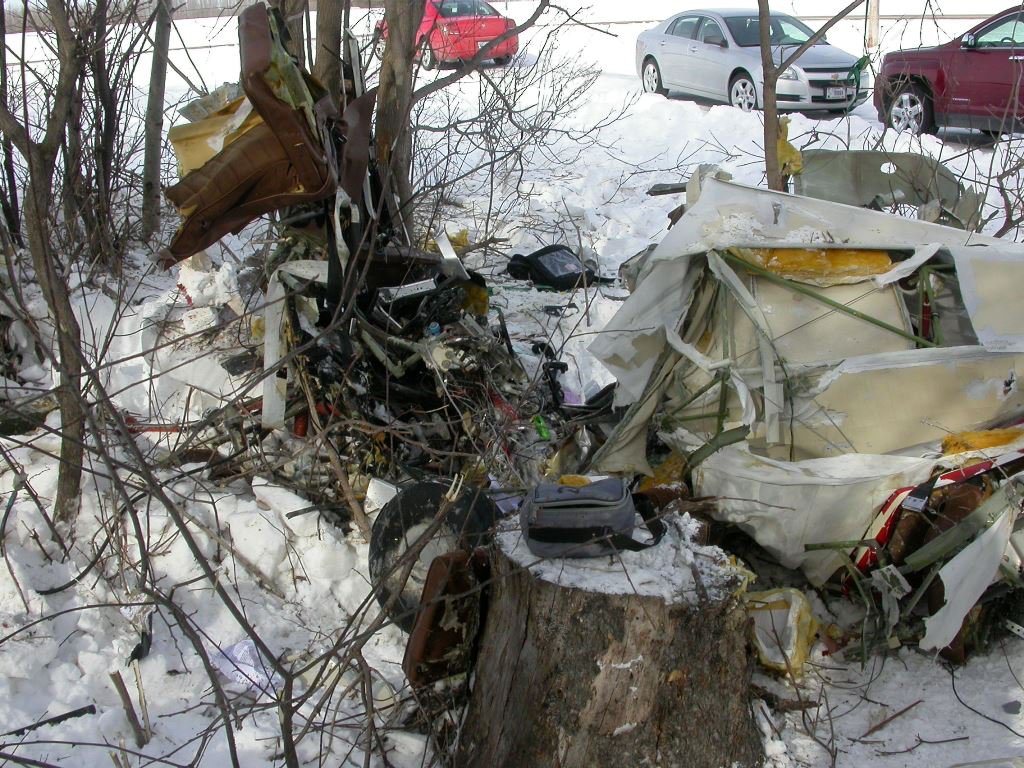
Two witnesses near the accident site filled in the final moments. A man who lived on the property where the airplane came down heard it before he saw it. He heard a loud pop that he described as sounding like a backfire, then the sound of the impact. He went outside, found the wreckage, and noticed the smell of fuel. A second witness about a half mile away had been watching the airplane approach from the south. It flew over their property, then made a left 180-degree turn. The witness estimated the airplane was flying about 30 feet above the ground in the dark. The engine initially sounded normal, then sputtered just before the airplane hit the terrain.
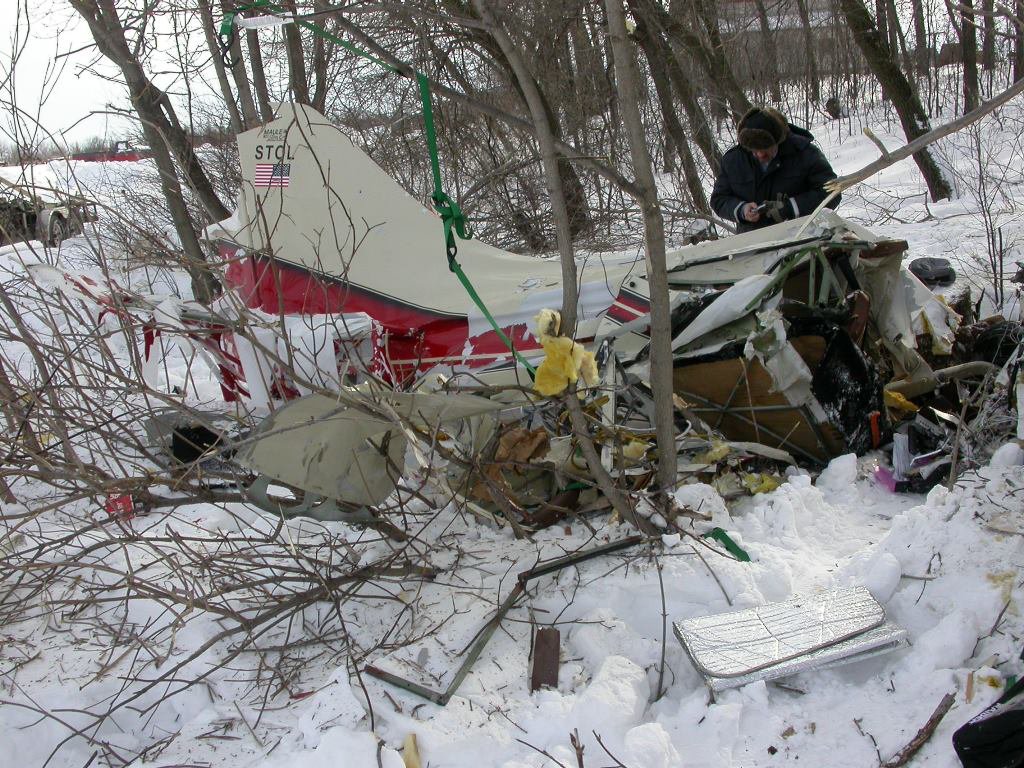
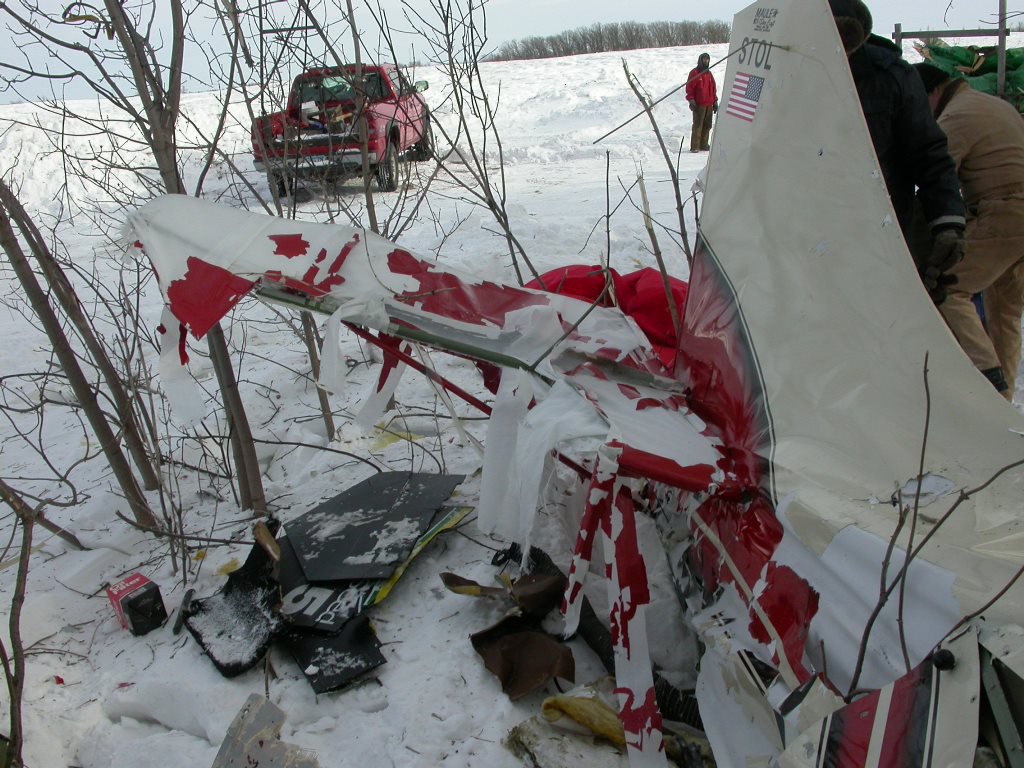
The airplane struck an open snow-covered field, traveled roughly 300 feet, crossed a rural driveway, and came to rest in a wooded area on a heading of approximately 300 degrees. The wreckage trail included sections of both wings, lift struts, the upper cowling, the propeller, and the right wing auxiliary fuel tank. The cockpit was destroyed by impact forces. The fuel selector was found in the “Both” position. The fuel transfer pump switches were never located in the wreckage.
Investigation Findings
Investigators examined the engine on February 22, 2013, two days after the accident. What they found was an engine that showed no signs of mechanical failure. The spark plugs appeared normal. A borescope inspection of the cylinders, pistons, and valves came back clean. Crankshaft rotation confirmed continuity through the accessory gears and all four cylinders. Thumb compression was present on every cylinder. Both magnetos sparked on all leads when rotated by hand. The oil pickup screen and propeller governor screen were clear. The vacuum pump rotor and vanes were intact. The carburetor showed no anomalies. Every mechanical component that investigators could test came back serviceable.
The fuel picture told a different story. The airplane had departed with a full load of 70 gallons. At 9 gallons per hour, a 4.1-hour flight would burn approximately 37 gallons in cruise alone, and that figure doesn’t include fuel used during taxi and the extended start-up sequence at Peoria. The main tanks together held only 40 gallons of usable fuel. Without transferring from the auxiliary tanks, the mains would have been exhausted somewhere around the 4-hour mark, if not before. The auxiliary tanks carried 30 gallons total that never made it to the engine in time, or at all.
The pilot’s iPhone was recovered and sent to the NTSB Recorder Laboratory. No GPS track data was found, but there was evidence of active ForeFlight use during the flight. Two saved flight plans matched the accident flight. One routed direct to the private “Menze-Aaron” airstrip, with a calculated distance of 430 nautical miles and a planned fuel burn of 35.9 gallons. That figure is close to the available fuel in the main tanks alone, and critically, the ForeFlight screen noted that winds aloft were not included in the calculation. The other saved plan routed to Wadena Municipal Airport, 422 nautical miles out. Neither flight plan accounted for the full fuel load in the auxiliary tanks, and the direct route to the private strip projected a fuel burn that left almost no margin if the transfer pumps weren’t running.
NTSB Probable Cause
The pilot’s failure to transfer fuel from the auxiliary fuel tanks to the main fuel tanks in a timely manner, which resulted in fuel starvation to the engine.
Safety Lessons
This flight was planned, fueled, and executed by a pilot who knew his airplane’s fuel system well enough to have a standard operating procedure for it. The problem wasn’t ignorance of the system. The problem was timing, and when a fuel system requires active management, the margin for getting that timing wrong is narrower than most pilots appreciate until it runs out.
- Auxiliary tank systems require a timer, not a fuel gauge check. The Maule’s aux tanks transfer slowly, and the brother specifically noted the rate was barely enough to keep pace with engine consumption. Waiting until the mains are at half before switching on the pumps works, but only if you catch it at half. At 9 gallons per hour on 40 gallons of main tank fuel, the mains run from full to empty in roughly 4.4 hours. Miss the transfer window by 30 minutes, and you are flying on borrowed time. A cockpit timer set at departure, not a periodic scan, is the only reliable way to manage a system like this on a long cross-country in the dark.
- Flight planning fuel burns should include all phases, not just cruise. The ForeFlight plan showed 35.9 gallons for the direct route, and that calculation excluded winds aloft. The actual flight was 4.1 hours at 9 gallons per hour, putting the burn at roughly 37 gallons before adding taxi and climb. With a 40-gallon main tank capacity and a direct-route fuel plan showing 35.9 gallons, there was essentially no buffer in the mains to account for a delayed transfer. Any navigation software estimate that excludes winds and shows a fuel burn approaching your direct-feed tank capacity should trigger a fuel stop, not a departure.
- Low, slow, and dark is the worst possible moment to be troubleshooting fuel starvation. The witness described the airplane at approximately 30 feet above the ground, flying fast, with the engine sputtering. At that point the outcome was already determined. Fuel exhaustion on a cross-country typically gives a pilot time and altitude to respond. Fuel starvation on short final to a dark, private strip in rural Minnesota in February gives neither. The go/no-go decision on fuel management has to happen at altitude and well before the destination, not in the traffic pattern.
Frequently Asked Questions
Q: What is the difference between fuel exhaustion and fuel starvation?
A: Fuel exhaustion means all onboard fuel has been consumed and there is nothing left to burn. Fuel starvation means fuel is present on the airplane but is not reaching the engine, usually due to a closed valve, clogged line, or in this case, a failure to transfer fuel from tanks that don’t directly feed the engine. In the Maule MXT-7-180, the auxiliary tanks require active transfer pump operation to move fuel into the main tanks that actually supply the carburetor. The airplane likely had fuel in the aux tanks at impact, but the main tanks feeding the engine had run dry.
Q: How does the Maule MXT-7-180 fuel system work?
A: The Maule MXT-7-180 uses a four-tank system. Two inboard main tanks each hold 20 gallons of usable fuel, and two outboard auxiliary tanks each hold 15 gallons, for a total of 70 gallons usable. The engine is fed by the main tanks only. The auxiliary tanks do not feed the engine directly. Instead, electrically driven transfer pumps move fuel from the aux tanks into the mains when the pilot activates the transfer switches. Because the transfer rate is slow, fuel management requires anticipating when the mains will need replenishment and activating the pumps well ahead of that point.
Q: Could the pilot have survived if he had made a forced landing attempt instead of continuing to the strip?
A: The NTSB investigation does not speculate on alternate outcomes, and neither should we with certainty. What the evidence shows is that the engine was sputtering at approximately 30 feet above the ground in darkness, and the airplane was traveling fast. A planned precautionary landing at a lighted airport along the route, made while the engine was still running and the airplane was at cruise altitude, would have provided far more options than the situation the pilot faced in the final moments of the flight.
Q: Did ForeFlight’s fuel calculation contribute to this accident?
A: The NTSB did not identify ForeFlight as a causal factor. However, the investigation noted that the ForeFlight flight plan for the direct route showed a planned fuel burn of 35.9 gallons with a note that winds aloft were not included. That estimate was close to the main tank capacity of 40 gallons, meaning the navigation software’s projection left almost no room for error in the main tanks without auxiliary transfer. Flight planning tools calculate estimates, not guarantees, and the responsibility for understanding how those estimates relate to the specific aircraft’s fuel system rests with the pilot in command.
Q: Was the pilot instrument rated, and did weather play a role?
A: The pilot held a private certificate with a single engine land rating only, no instrument rating. Weather was not a factor in this accident. The Alexandria ASOS, 27 miles south of the accident site, reported clear skies and 10-mile visibility at 1753. The primary contributing factor was fuel starvation resulting from failure to transfer fuel from the auxiliary tanks to the main tanks in time.