What Happened
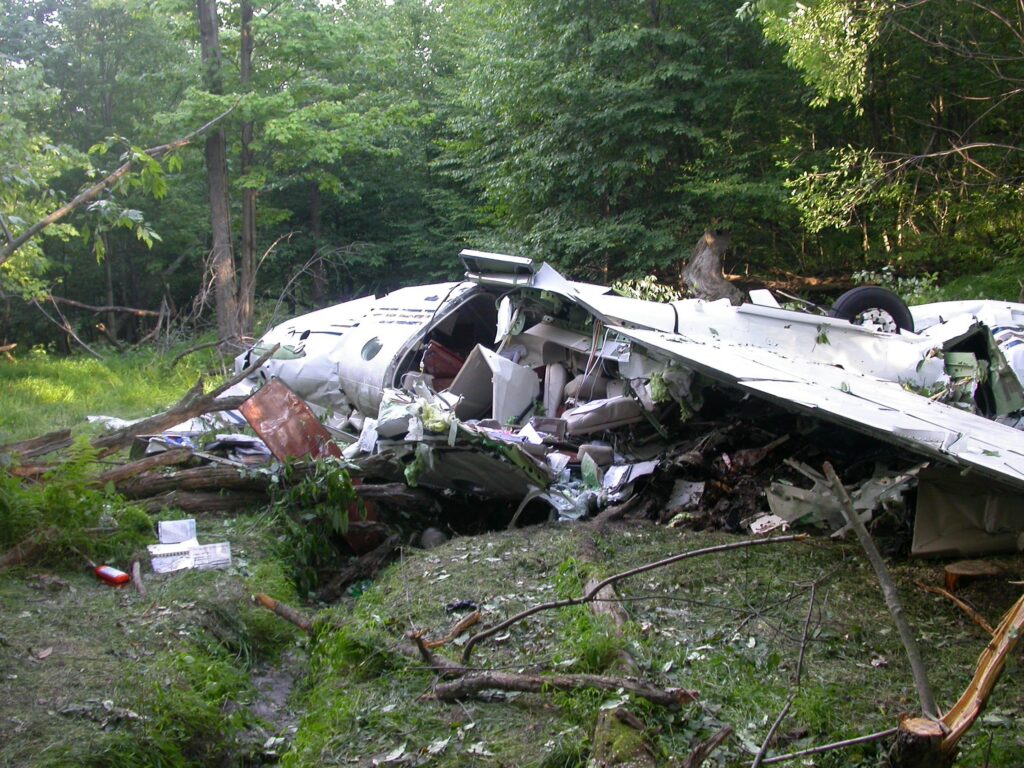
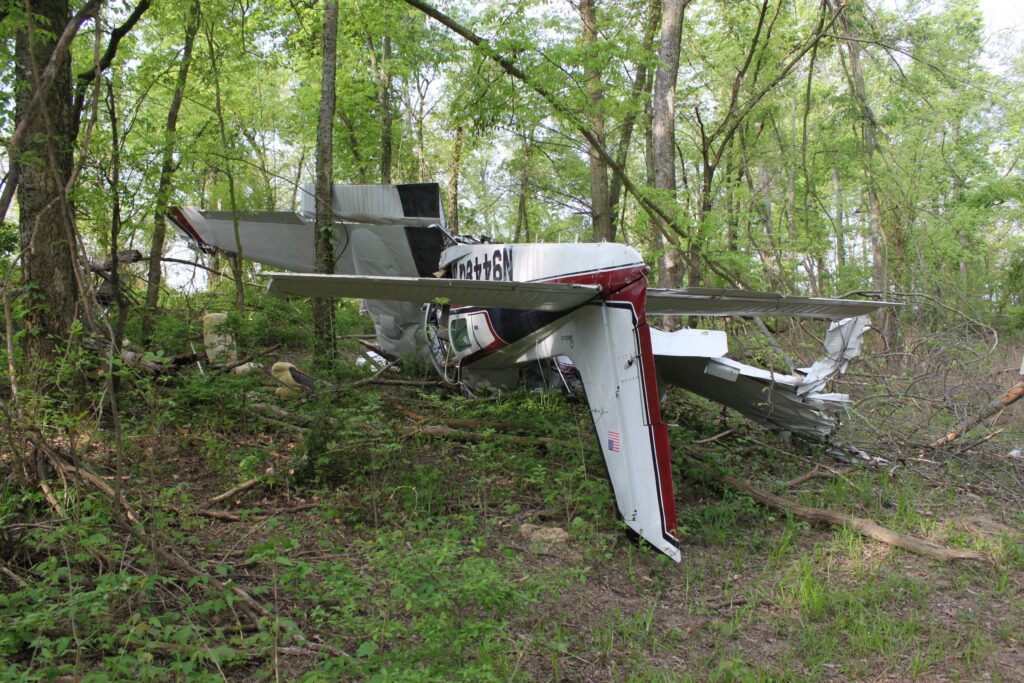
On April 1, 2012, at approximately 1600 central daylight time, a 1972 Beech 58 twin, registered N9448Q, lifted off from Woosley Field Airport (96KY) in Calhoun, Kentucky, and never made it past the tree line. The airplane was privately owned and operated by its pilot, a 46-year-old commercial certificate holder flying under Part 91. The flight was a short hop, just 20-some miles to Madisonville Municipal Airport (2I0), for one reason: to get fuel. The pilot was the sole occupant. He was fatally injured. The Beech came to rest inverted in a wooded area roughly 1,000 feet southwest of the runway 27 departure end.
Woosley Field was the pilot’s own airstrip. He built his house on it. Witnesses who knew him well said he always flew past the departure end of runway 27 before turning, following the runway heading out over the open ground before banking toward wherever he was going. So when several people watching that afternoon saw the Baron roll left and disappear over the trees well before the end of the runway, they knew something was wrong. One witness watched the wings rock, return to level, then saw the left turn begin. She heard what she thought might have been an impact. She did not see smoke. Not believing a crash had actually happened, she waited. She called 911 at 2246 that evening. Searchers found the wreckage just before midnight.
The runway itself was 1,800 feet of grass oriented 09/27. The terrain drops steeply beyond the departure end of 27, and trees line the south side beginning just past mid-field. Based on weather data from Owensboro-Daviess County Airport, about 13 nautical miles away, conditions at the time of departure were 10-mile visibility, scattered clouds at 8,500 feet, winds from 230 degrees at 11 knots gusting to 16, and an outside air temperature of 31 degrees Celsius. Performance calculations using the pilot’s estimated weight of 276.6 pounds, minimum required fuel of 13 gallons per wing, and those weather conditions put the takeoff roll at roughly 1,200 feet on a paved, dry runway. The accelerate-stop distance, the distance needed to get to decision speed and stop if something went wrong, came out to 3,100 feet. The runway was 1,800 feet of grass. Those numbers do not fit together cleanly.
The pilot held a commercial certificate with single-engine land and instrument ratings, and a private certificate with a multi-engine land rating limited to VFR only. His logbook showed approximately 1,747 total hours at the time of purchase of the Baron, with roughly 117 hours in multi-engine airplanes across his most recent logbook. He had purchased N9448Q on December 10, 2011, logging about 2 hours in the airplane on the delivery flight from Middlesboro to Madisonville. The airplane’s hour meter showed approximately 5 hours of flight since that purchase date. The accident flight was the day’s first departure. The hour meter read approximately 789 at the time of the crash.
The airplane had been fueled with 50 gallons of 100LL at Madisonville on February 13, 2012, about six weeks before the accident. The pilot’s wife reported that fuel was transported by portable container to a grass strip in Sacramento, Kentucky. On the day of the accident, the pilot was departing for Madisonville specifically to take on more fuel, which means he was flying the airplane in a low-fuel state at takeoff. Because the exact fuel load could not be confirmed, NTSB used the POH minimum required for takeoff of 13 gallons per wing for the performance calculations. Whatever was actually on board, it was not much.
Investigation Findings
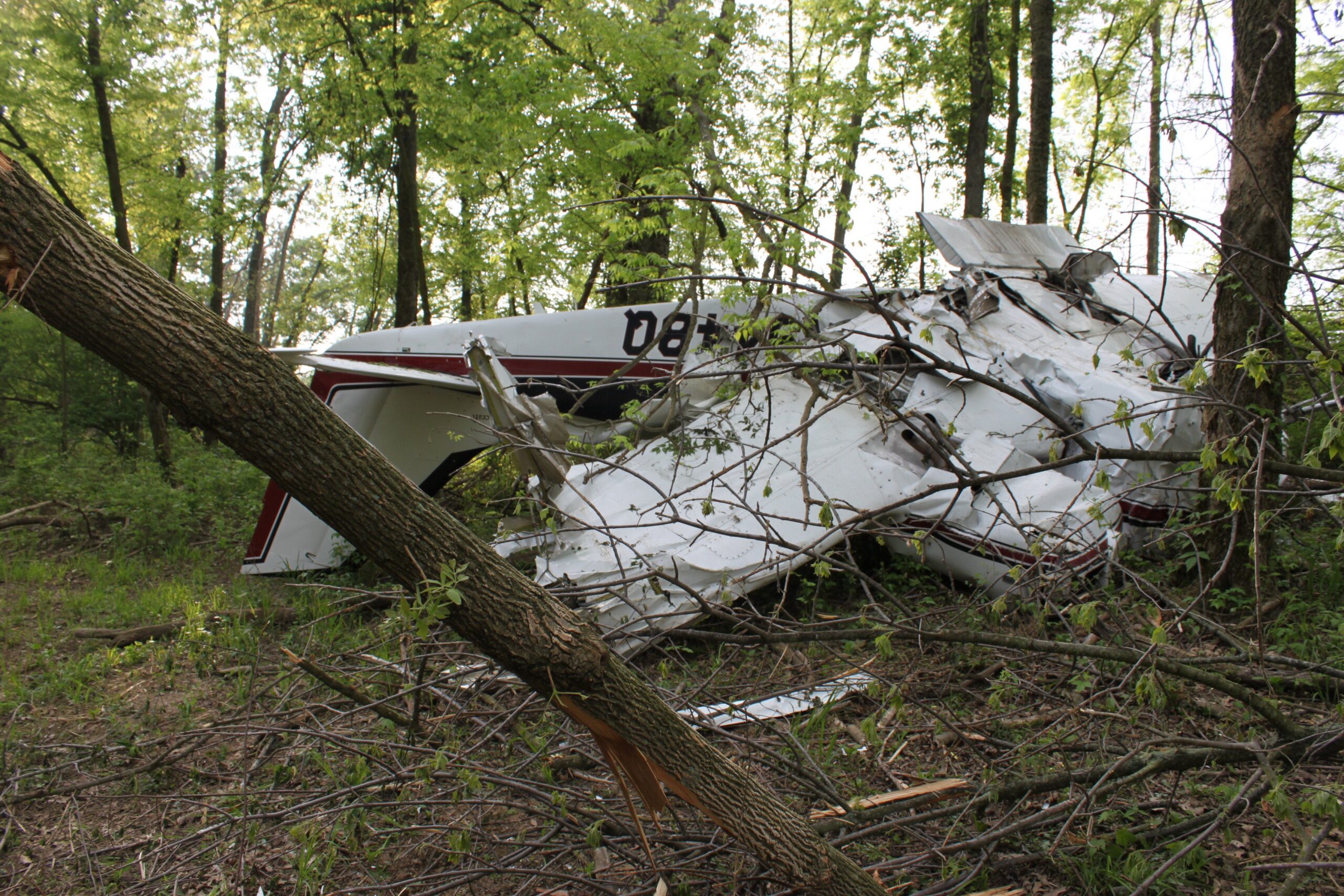
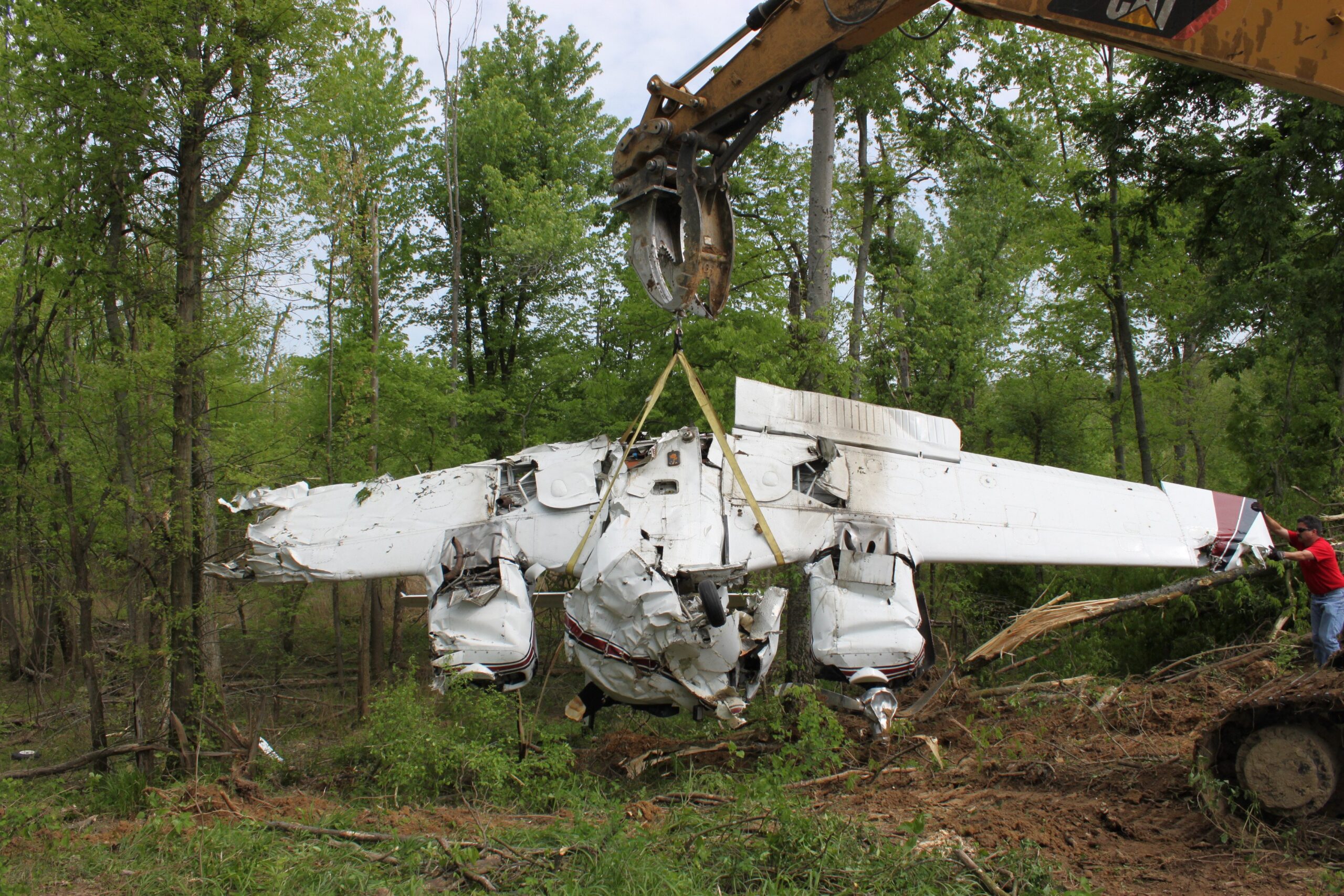
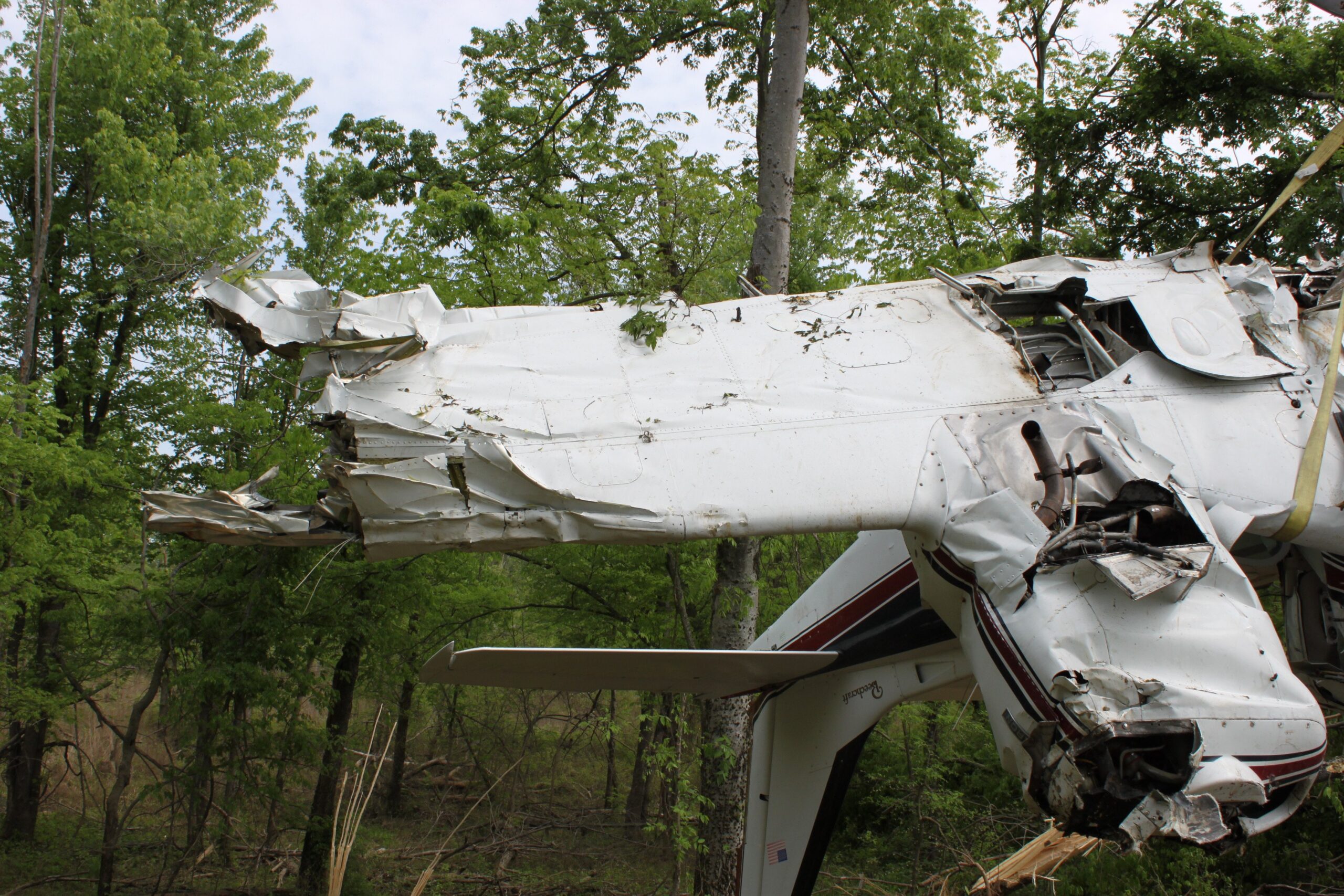
The wreckage came to rest on a magnetic heading of approximately 250 degrees, inverted, with the empennage elevated. The airplane had rolled left and gone in. There was no post-crash fire. Flight control continuity was confirmed for all axes. The flaps were symmetrically extended approximately 15 degrees, which is the approach setting. Landing gear was down. The throw-over control yoke was positioned to the left seat and showed evidence of right roll input at impact, consistent with a pilot fighting a left roll. The left and right fuel selectors were both in the ON position. Both boost pump switches were in the HIGH position.
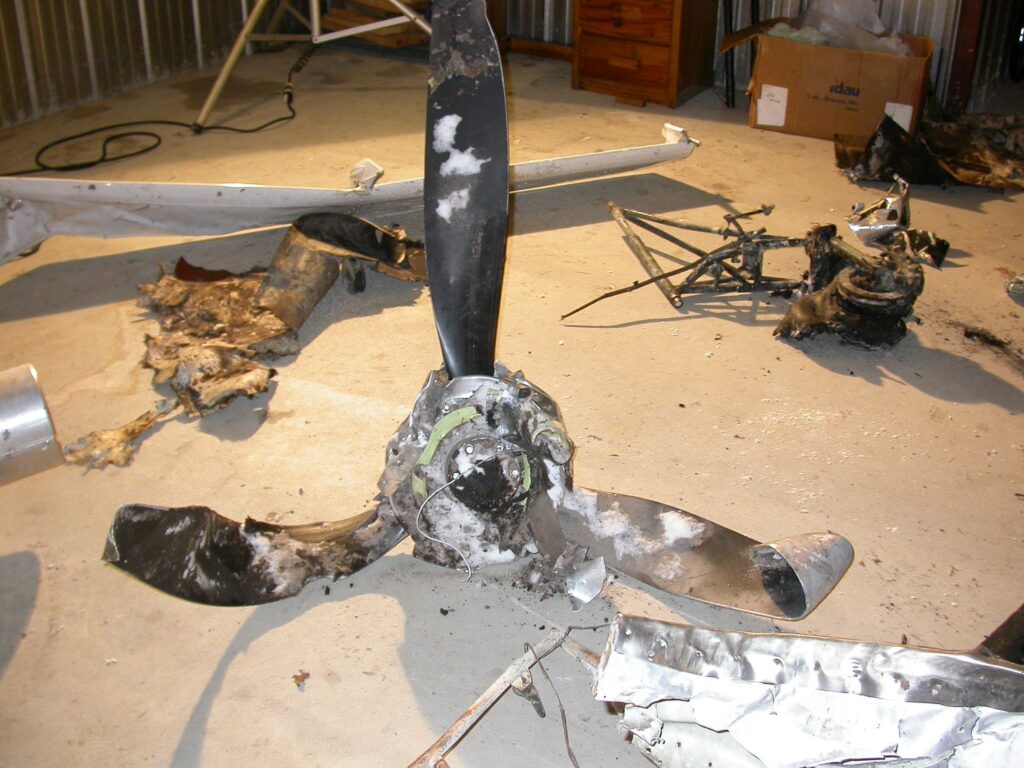
The propeller blades told the clearest story. One of the right engine propeller blades showed damage consistent with power at impact. The left engine propeller blades showed no evidence of power. The left engine had quit. Both engines were removed from the airframe and transported to the Continental Motors facility for test runs. Despite the left engine’s cracked crankshaft flange requiring workarounds to even attempt a run, both engines ran. Left engine magneto drop was approximately 40 rpm per side, full throttle rpm reached approximately 2,550 against a spec of 2,700. Right engine magneto drop was approximately 60 rpm per side, full throttle rpm reached approximately 2,572. Compression checks on all cylinders of both engines came back 69 psi or better on the left and 70 psi or better on the right at 80 psi test pressure. No mechanical defects were found in either engine that would have caused a power loss.
What the investigators found instead was water. Rust-colored water had infiltrated virtually every downstream component of the left engine’s fuel system: the engine-driven fuel pump, the fuel strainer sump filter, and the pump drain line all tested positive for water using SAR-GEL indicator paste. The fuel strainer drain line on the left wing was nearly completely blocked internally by rust debris. The box section cell sump drain on the left wing had its drain holes plugged by unknown debris. The interior of the left fuel strainer bowl was heavily corroded. The strainer filter itself was corroded. No fuel was found remaining in the left wing cells. The right side told a nearly identical story: rust-colored water from the strainer bowl, heavy corrosion on the interior surfaces, the fuel strainer drain line almost completely blocked by a white powdery substance consistent with corrosion, and water and fuel mixed together in the line from the auxiliary fuel pump to the firewall. Right side SAR-GEL testing came back positive at the fuel pressure line, the fuel metering unit, the strainer sump filter, and the boost pump-to-firewall line. So the right engine was carrying contaminated fuel too. The left engine simply reached the threshold first.
The source of the water was the fuel filler caps. Both caps on the accident airplane were identified as Gabb Special Products P/N 37810-1, a design that had not been manufactured since 1979 when Parker Hannifin discontinued the line. The caps were not serialized, so the manufacture date could not be determined. Testing at Parker Hannifin’s facility in Naples, Florida, confirmed both caps leaked badly. The left cap began leaking at just 0.01 psig with water on top of it and could not be pressurized beyond 5.0 psig due to excessive leakage from the lock mechanism and the entire cap perimeter. One hundred milliliters of water poured onto the installed cap drained into the test fixture in 1 minute 36 seconds. The outer o-ring on the left cap was hard, showed embedded corrosion on the contact surface, and was found to be the wrong size: P/N MS29513-338, which had been installed per a July 2010 maintenance entry. The correct o-ring for this cap is P/N MS29513-339. These two o-rings have the same cross-section thickness, but the 338 has an inside diameter of 3.076 to 3.124 inches, while the 339 runs 3.240 to 3.310 inches. The wrong o-ring had been installed on the left cap for at least two years. The right cap’s outer o-ring showed heavy corrosion and also failed leak testing at minimal pressure. Both inner o-rings were flat, cracked, and hardened. Neither cap would have kept rain or standing water out of the fuel system for any meaningful period of time.
The maintenance record for N9448Q going back to the airplane’s original airworthiness certificate in February 1972 contained exactly one entry referencing the fuel filler caps. That entry, dated July 2, 2010, described replacement of the left fuel cap with a serviceable unit and installation of the new outer o-ring. The right fuel cap had no documented maintenance, replacement, or overhaul entry in its entire 40-year life. The most recent annual inspection had been completed on December 9, 2011, one day before the pilot took delivery. The mechanic used the Beech 100-Hour or Annual Long Form Inspection Guide as his reference but did not retain a copy of the marked-up checklist. He noted discrepancies on an invoice. The water-contaminated fuel system and the deteriorated fuel cap o-rings were not flagged.
There was a broader maintenance manual problem in the background. Following a 2008 incident involving a Canadian-registered Beech 58 that ditched in a river in British Columbia after the right engine lost power on takeoff due to water intrusion through degraded fuel cap o-rings, Parker Hannifin and Hawker Beechcraft Corporation reviewed the maintenance manuals for the 55 and 58 series. A note was added to Section 28-10-00 requiring inspection and overhaul of the fuel filler caps. But when that revision was incorporated into the Baron 55 and 58 maintenance manual, the placement of the note made it ambiguous whether the requirement applied to all serial numbers or only selected airplanes. The serial number of the accident airplane, TH-204, fell outside the scope as the manual was written at the time of the December 2011 annual inspection. The manual was corrected in July 2012, three months after the accident, to apply the overhaul requirement to all affected airplanes. In December 2009, the FAA had also published Aviation Maintenance Alert No. 377 referencing Transport Canada’s Service Difficulty Advisory AV-2009-05, which described the exact failure mode: flush-mounted fuel caps with deteriorated o-rings allowing long-term water contamination. The warnings were in print. The contamination in N9448Q was already underway.
NTSB Probable Cause
The failure of the pilot to maintain airplane control after experiencing a loss of power from the left engine due to water contamination of the fuel system. Contributing to the accident was the pilot’s inadequate preflight inspection of the airplane and maintenance personnel’s inadequate annual inspection, because both failed to detect the long-term water contamination of the fuel system and the deteriorated outer o-rings on both fuel caps. Also contributing to the water contamination of the fuel system was the inaccurate information and instructions in the airplane maintenance manual pertaining to overhaul requirements of the fuel filler caps.
Safety Lessons
This accident developed over months, not seconds. The water was accumulating through both fuel caps with every rain that fell on the parked airplane. The final outcome was set long before April 1, 2012. Three things, done differently at any point along the chain, likely change the ending.
- Sump every drain, every preflight, every time. The Beech 58 POH calls for draining the fuel sumps in both wheel wells and the fuel drains in each wing before flight, with daily purging of the snap-type drains. N9448Q had six wing drains between both wings: one per inboard baffled cell, one per strainer, one per box section cell. Two of those drains were blocked by corrosion debris on the left side. One was nearly blocked on the right. But the inboard baffled cell drains were open. Water flowing from the cap inward collects in the cells. Even with the system compromised, consistent and methodical sumping of every accessible drain gives contamination a way out and gives the pilot visual confirmation it is there. Pulling a quarter-teaspoon of rusty water from the sump on a VFR day is the whole story. No rusty water, no crash.
- Flush-mounted fuel caps are a maintenance item, not hardware. The Gabb P/N 37810-1 caps on N9448Q had been out of production since 1979. The o-rings in these caps are elastomers. Elastomers harden, crack, and flatten over time regardless of how many hours the airplane flies. An airplane that sits outside between flights, exposed to UV and temperature cycling, degrades its cap seals faster than the hour meter reflects. The correct inspection is tactile: remove the o-ring, feel it, flex it. A hard o-ring that does not spring back is a failed o-ring. The maintenance records for N9448Q showed one fuel cap entry in 40 years, and that entry installed the wrong-diameter o-ring. Verifying the correct P/N against the IPC takes thirty seconds with the parts catalog open.
- Know your airplane’s single-engine performance before you need it. The pilot held a multi-engine private certificate restricted to VFR, with approximately 2 hours in this specific airplane before the accident flight. The Beech 58 at maximum gross weight requires coordinated, immediate response to an engine failure at low altitude: identify, verify, feather, and maintain Vyse (minimum single-engine control speed, 84 knots in the Baron 58). Below Vyse with an engine out and the dead engine on the low side of a roll, there is almost no recovery envelope. The witnesses described wings rocking and a left roll developing. That roll was the airplane going below Vyse with a dead left engine on a short grass strip with a steep drop-off at the end. Building actual proficiency in single-engine procedures, not just a logbook endorsement, is the only preparation that functions in the first ten seconds after the engine quits.
Frequently Asked Questions
Q: What caused the engine failure in the Beech 58 N9448Q crash at Calhoun, Kentucky?
A: The left engine lost power due to water contamination of the fuel system. Water had been entering the fuel cells through deteriorated outer o-rings on both fuel filler caps over an extended period. Rust-colored water was found throughout the fuel system components on both sides of the airplane, and the fuel strainer drain lines were partially blocked by corrosion debris, trapping the contamination in the system.
Q: How does water get into a Beech 58 fuel system through the fuel caps?
A: The Beech 58 uses flush-mounted fuel filler caps with inner and outer o-rings that create a seal between the cap and the fuel cell adapter. When those o-rings harden, crack, or are the wrong diameter for the cap assembly, the seal fails. Rain water sitting on top of the cap can migrate past the outer o-ring and into the fuel cell. On N9448Q, the left cap’s outer o-ring was also the wrong size, having been replaced in July 2010 with P/N MS29513-338 instead of the correct MS29513-339. The right cap had no documented maintenance in its 40-year service life.
Q: Would proper preflight sumping have detected the water contamination before the flight?
A: It is possible, but the blocked drain lines complicated the picture. Two of the six wing drains were partially or fully blocked by rust debris, which would have limited what came out of those specific points. However, the inboard baffled cell drains on both wings were unobstructed, and those drains are the ones the POH specifically calls for during preflight. Consistent, thorough sumping of every accessible drain point gives water in the system a path to be discovered. The NTSB concluded the pilot’s preflight inspection was inadequate because the long-term contamination went undetected.
Q: Was there an airworthiness directive or maintenance alert about Beech 58 fuel cap o-ring failures before this accident?
A: Yes. Following a 2008 incident involving a Canadian-registered Beech 58 that experienced engine failure from water contamination through degraded fuel cap o-rings, Transport Canada published Service Difficulty Advisory AV-2009-05 in September 2009. The FAA published Aviation Maintenance Alert No. 377 in December 2009 referencing that advisory. Hawker Beechcraft also revised the Baron 55 and 58 maintenance manuals to require fuel cap inspection and overhaul, but the revision’s placement created ambiguity about which serial numbers were covered. The accident airplane’s serial number TH-204 fell outside the requirement as written until the manual was corrected in July 2012, three months after the fatal accident.
Q: What is the single-engine minimum control speed (Vmc) for the Beech 58, and why does it matter on takeoff?
A: The Beech 58 Vyse, the best single-engine rate-of-climb speed, is 84 knots indicated airspeed. On a short grass runway with a steep terrain drop-off at the departure end and limited altitude above the ground, an engine failure immediately after liftoff puts the pilot in an extremely narrow recovery window. Below Vyse with an engine out, rudder authority may be insufficient to arrest the yaw and roll toward the dead engine. Immediate feathering, maintaining or accelerating to Vyse, and coordinated rudder input are all required simultaneously. The accident pilot held a multi-engine rating limited to VFR with approximately 2 hours total time in the accident airplane, making practiced single-engine response to a departure-phase failure an open question.