What Happened
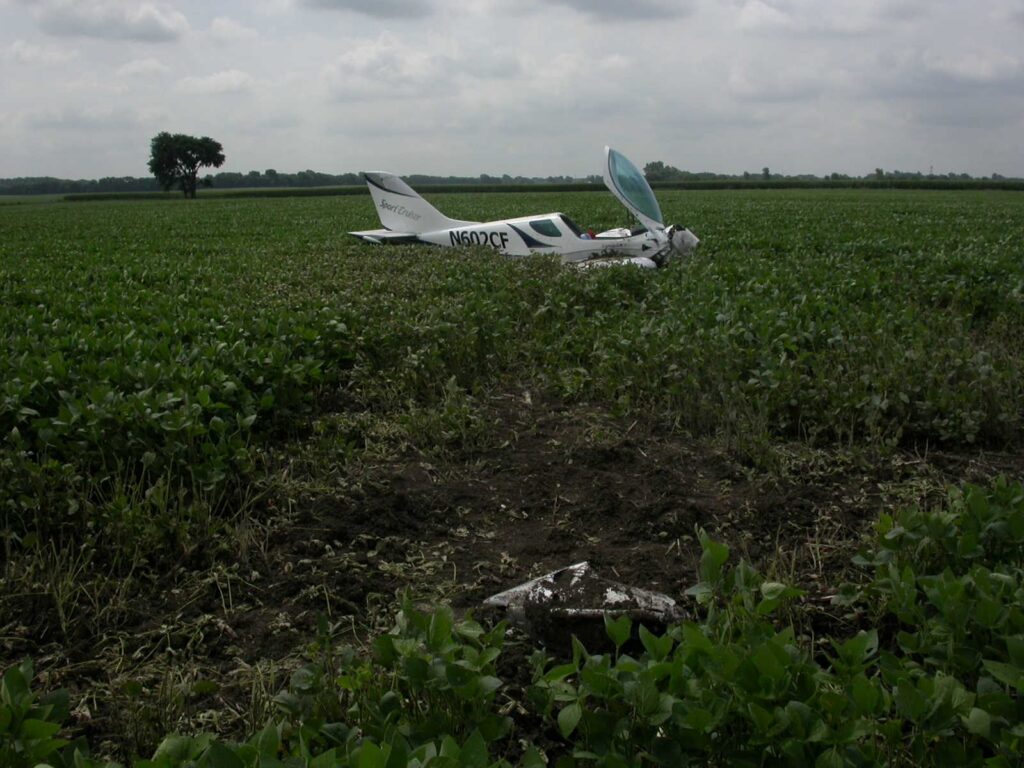
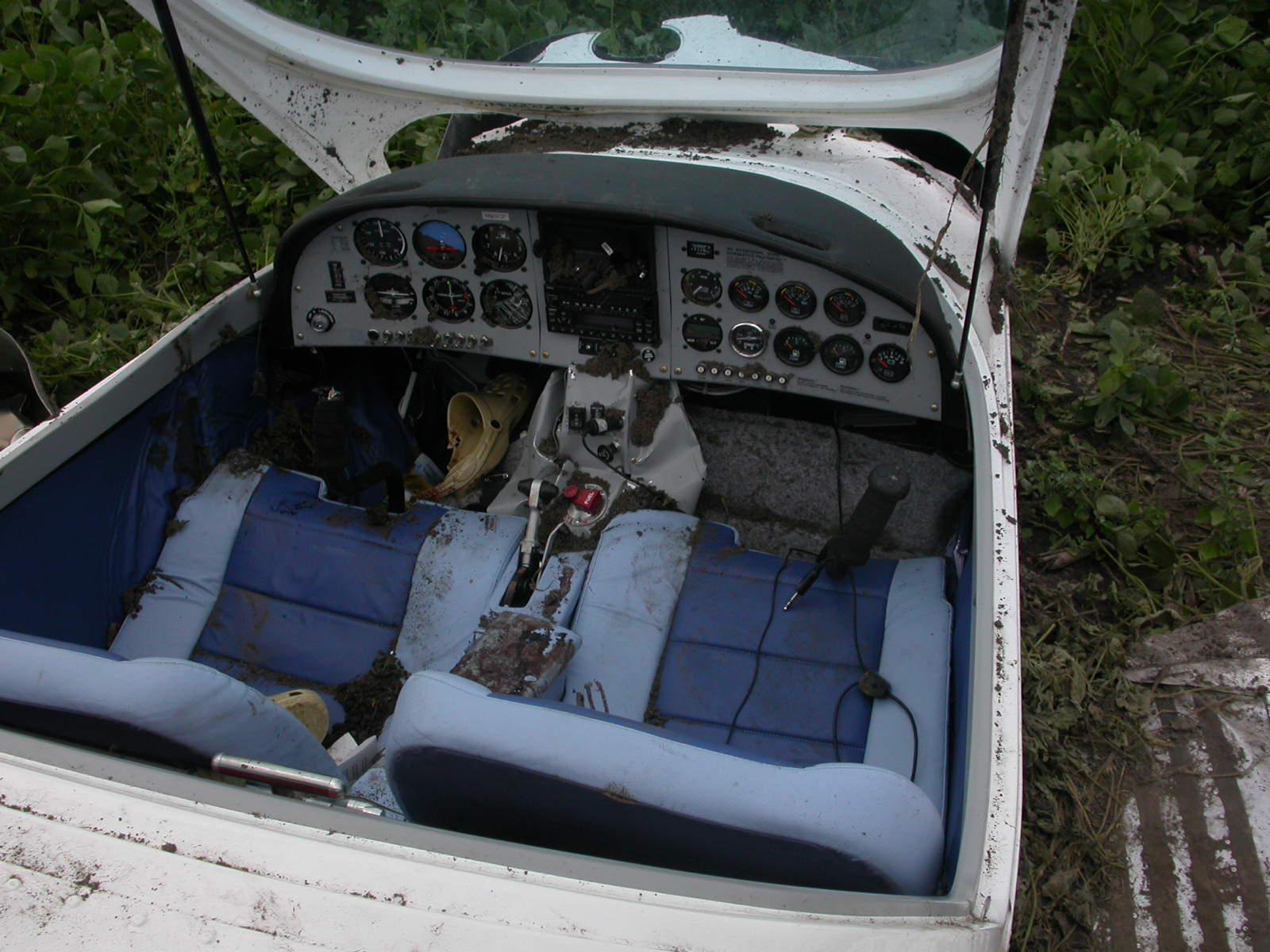
On the morning of July 21, 2008, a Czech Aircraft Works Sport Cruiser, N602CF, lifted off from runway 36 at Cushing Field (0C8) near Newark, Illinois, at approximately 1030 central daylight time. The airplane was a 2008-model Special Light Sport Aircraft operated as a rental by Sport Pilot Chicago, based at the same grass strip. The 77-year-old sport pilot at the controls had about 104 hours in certificated airplanes and roughly 42 hours in ultralights, with 19 of those certificated hours logged specifically in the Sport Cruiser. He was the only person aboard. He would not survive the flight. The airplane sustained substantial damage on impact with a bean field, and the pilot received fatal injuries.
An airport employee watched the takeoff from runway 36, a 2,831-foot grass strip, but turned away after the airplane got airborne. Nobody saw what happened next. The next time anyone laid eyes on N602CF was at 1300, when another pilot flying in the area spotted the wreckage sitting in a bean field 1.16 miles from 0C8 on a 211-degree bearing. Three hours had passed between departure and discovery. There were no distress calls recorded, no witnesses to the accident itself, and no radar track of the flight.
The GPS unit recovered from the cockpit, a Lowrance AirMap 1000, told an incomplete story. It had recorded a previous flight from Cushing Field out to Waukegan Airport and back, but there was no track data at all for the accident flight. The unit only stored latitude and longitude, with no time or altitude stamps, so even that prior flight couldn’t be dated with certainty. What investigators could piece together came from the wreckage itself, the Hobbs meter, and the geometry of where the airplane came down.
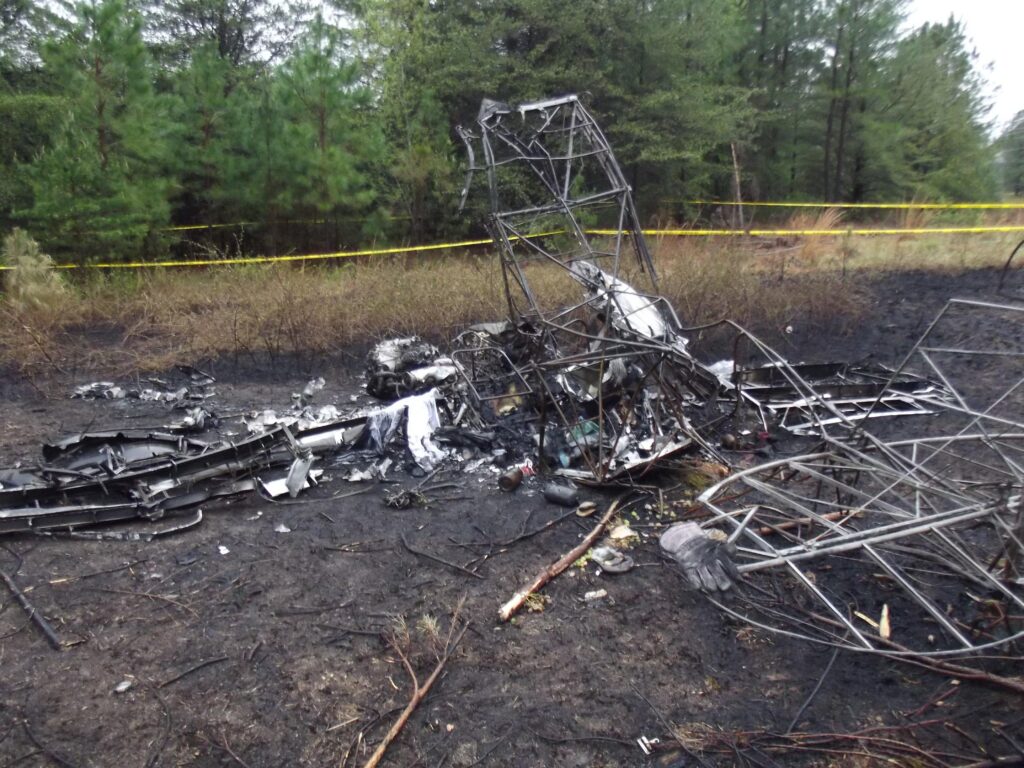
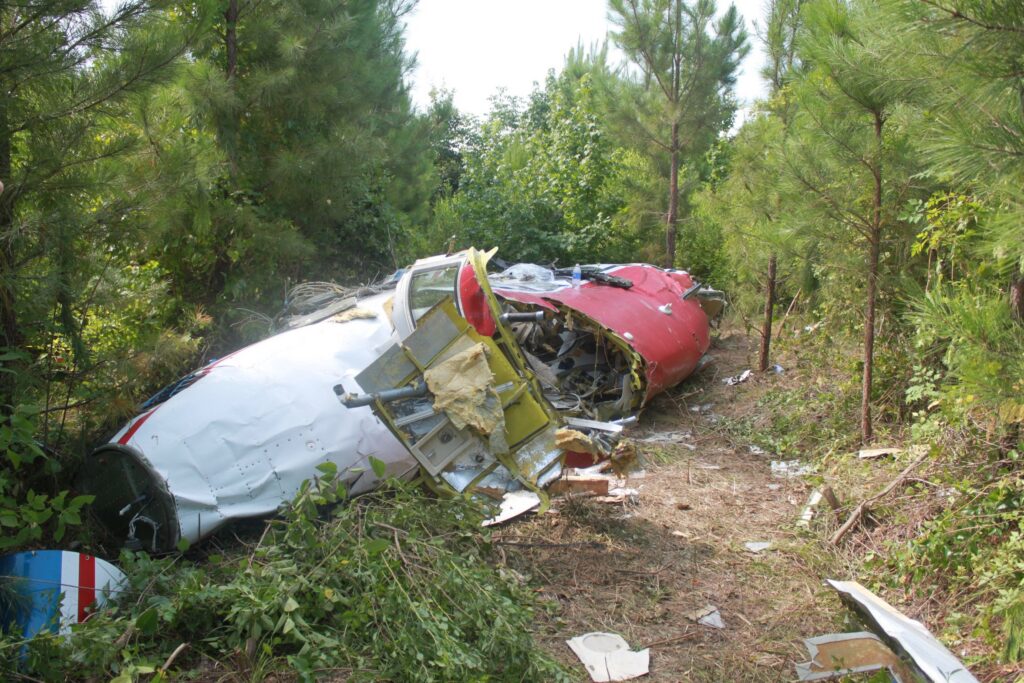
The Hobbs meter read 76.5 hours when the pilot noted it on a small notepad before departure. It read 76.7 hours at the accident site. That’s 0.2 hours, roughly 12 minutes of flight time. The accident site sat squarely inside 0C8’s traffic pattern, at about the point where a left downwind leg transitions to a left base leg. The airplane was found pointing west, oriented away from the runway, having traveled about 68 feet along a 168-degree heading from the initial impact point to where it came to rest. A shallow crater roughly 3 feet across marked where it first hit the ground, and the nose landing gear was found right there beside it. The wreckage path, the impact crater, the orientation of the airplane — everything was consistent with a steep left-banking impact, nose down approximately 30 degrees.
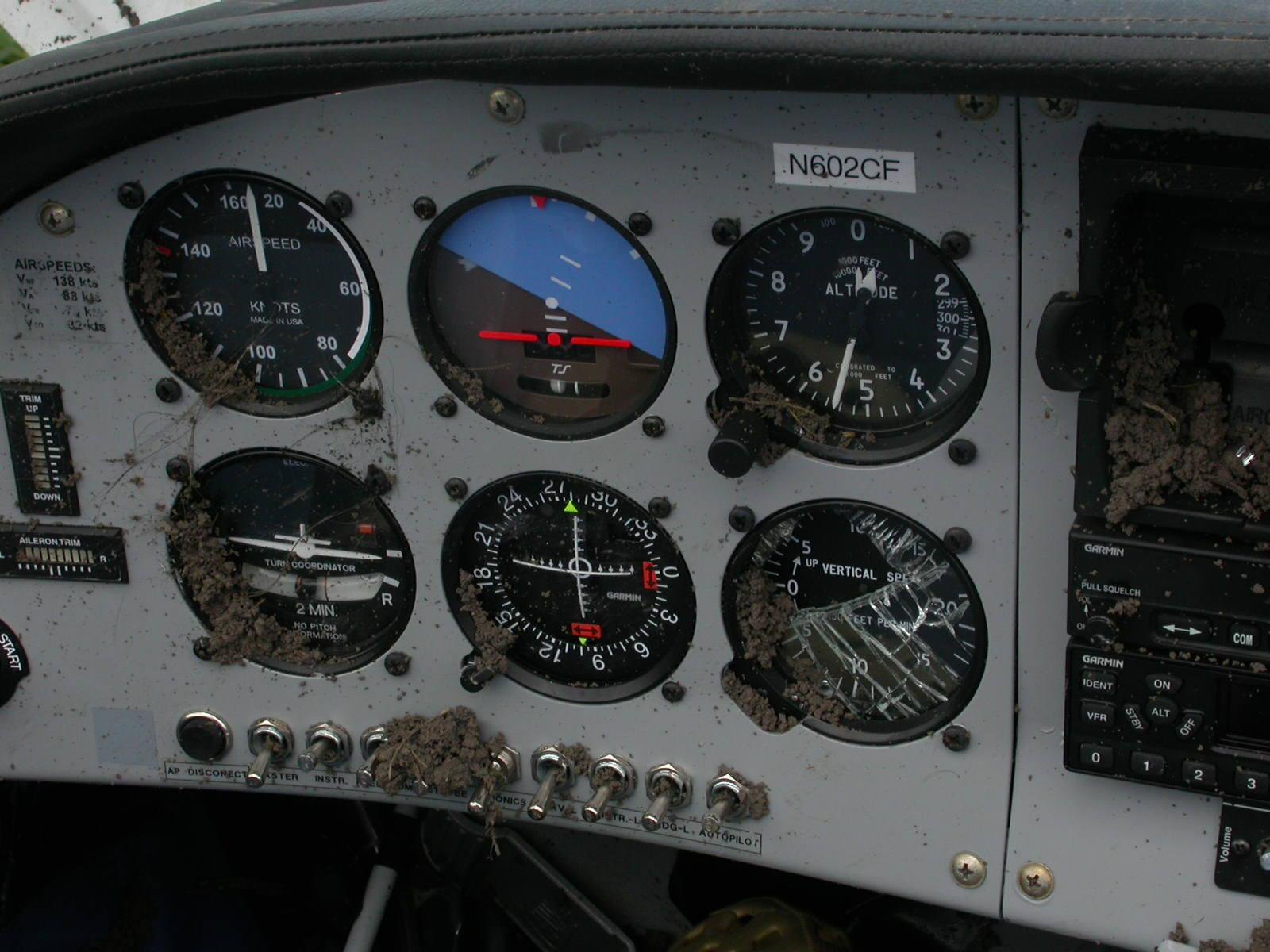
The pilot had not been inactive in the Sport Cruiser. He had flown it in the fall of 2007, then sought out an instructor in the summer of 2008 specifically to get re-familiarized with the airplane before flying it again. On June 24, 2008 — less than a month before the accident — that instructor flew with him and came away impressed. The debrief described the pilot as demonstrating good preparation, checklist use, airplane control, attention to detail, proficiency, and safety. Slow flight, steep turns, stalls, emergency procedures — all checked. The instructor signed him off. Four weeks later, the pilot was dead on the downwind-to-base turn.
The conditions that morning gave no hint of trouble. At 1025, DeKalb Airport 25 miles to the northwest was reporting calm winds, 10 miles visibility, and clear skies, with a temperature-dew point spread of just 2 degrees Celsius. Aurora Airport 16 miles north had a light southeasterly wind at 4 knots, 9-mile visibility, and broken clouds at 2,500 feet. VMC throughout. No weather factor pulled N602CF out of the sky.
Investigation Findings
When the NTSB examined the wreckage, the first thing they ruled out was the airplane. Every flight control was checked from stick to surface, and continuity was confirmed throughout. The engine was pulled from the airframe, mounted on a test stand, started, and run through the full power range without complaint. No preexisting anomalies were found anywhere in the airframe structure. The Sport Cruiser itself was not the problem.
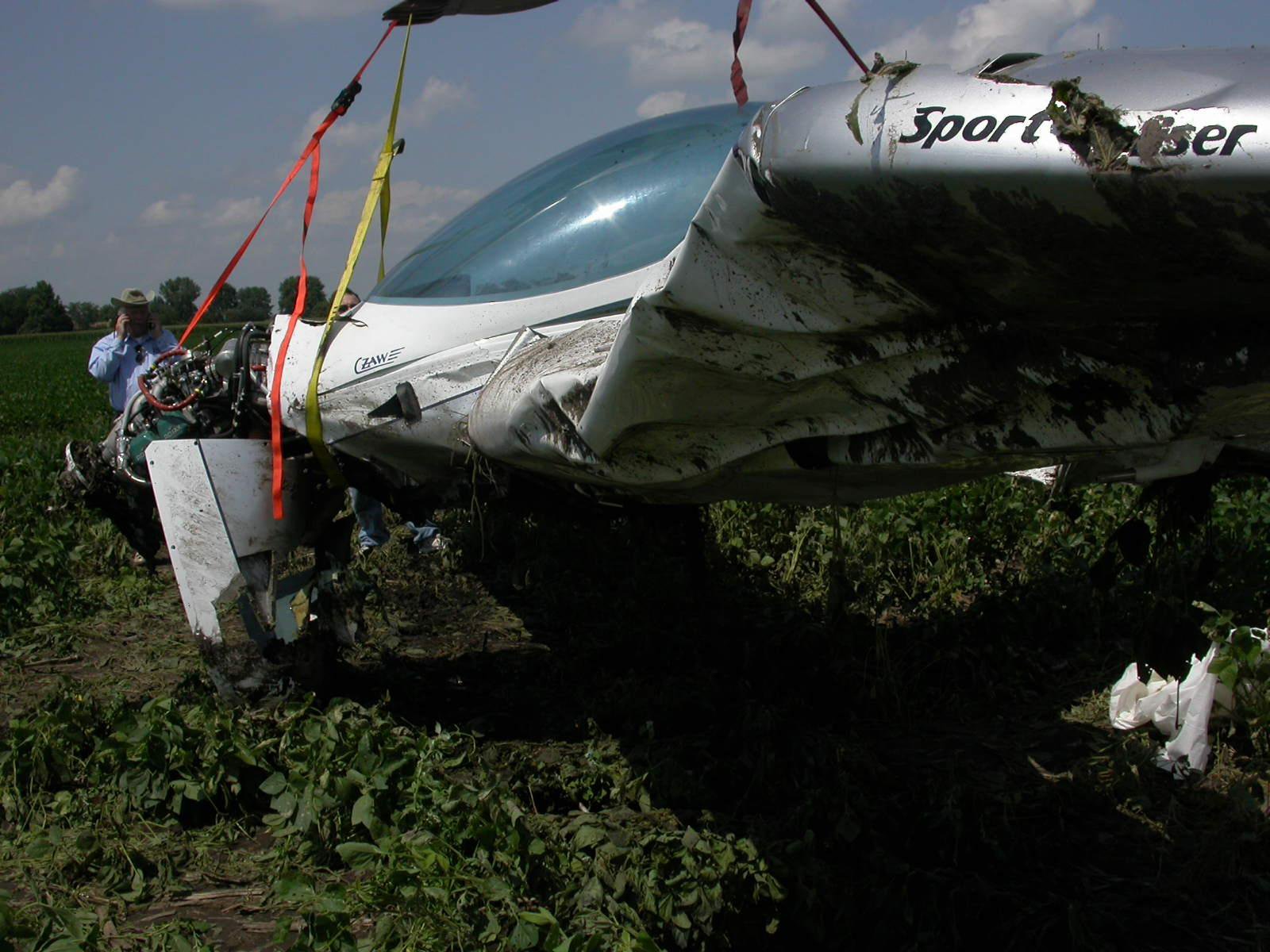
The impact damage painted a specific picture. The firewall was crushed aft at roughly 30 degrees. The cabin floor buckled both left and right. The left wing took significantly more damage than the right: aft buckling at the wing root, the outboard section bent upward and aft, the left flap and aileron partially broken free. The right wing was intact structurally, its leading edge showing surface damage but no aft crushing. That asymmetric damage pattern, combined with the left-bank impact geometry, pointed clearly toward a steep descending left turn when the airplane met the ground. The Sport Cruiser’s published stall speed with flaps extended is 37 mph, and 39 mph clean at max gross weight with engine at idle. A steep left turn at low altitude, slow airspeed, close to the stall — that is the classic base-turn loss of control scenario.
The shoulder harness told its own story. The pilot’s harness assembly came off the airplane in four pieces, two of those cuts made by first responders during recovery. But the critical separation had happened during the crash itself: the single strap that connected the shoulder harness to the aft bulkhead had pulled free from the yoke where it was stitched to the left and right shoulder straps. The stitching failed. The NTSB sent the pilot’s harness along with two exemplar harness assemblies to the Materials Laboratory for tensile testing. The results were stark. The exemplar yoke stitching failed at 1,458 pounds and 1,456 pounds respectively. The stitching at the rear attachment point on those same harnesses held until 3,384 and 3,375 pounds. The weakest link in the entire assembly was the yoke, and it failed at less than half the load the rear attachment could sustain.
The harnesses were manufactured by an Italian company, Piemmesse Italia, formerly known as Arconsulting, and tested by a French automotive authority, UTAC, whose report specified a minimum breaking load of 3,300 pounds for webbing. The harnesses were approved for installation in several automobiles. They were not designed or certified to FAA aviation standards. In a conventionally certificated aircraft, shoulder harness webbing must meet a minimum breaking strength of 4,000 pounds under FAA Technical Standard Order requirements derived from SAE Aerospace Standard AS8043. The yoke stitching on N602CF’s harness failed at roughly 1,456 pounds — 36 percent of that standard. The Sport Cruiser, as a Light Sport Aircraft, was self-certified by the manufacturer under ASTM F 2245 standards, which at the time required only that harnesses be designed for specified load factors, with no specific tensile testing requirements. A 1,710-pound minimum tensile test was awaiting consensus but had not yet been adopted. Even that pending threshold would have been above the actual failure load. None of it mattered in the end. The NTSB reviewed the autopsy and concluded that while some of the pilot’s injuries would likely have been less severe had the harness held, the severity of the crash was such that the injuries would probably still have been fatal.
Toxicology came back negative for carbon monoxide, cyanide, and ethanol. Diltiazem and Irbesartan were detected in blood and urine. Both are antihypertensive medications, commonly used to treat high blood pressure. Neither has the kind of disqualifying effect that would have prevented a sport pilot from exercising the privileges of his certificate, and sport pilots are not required to hold an FAA medical certificate.
NTSB Probable Cause
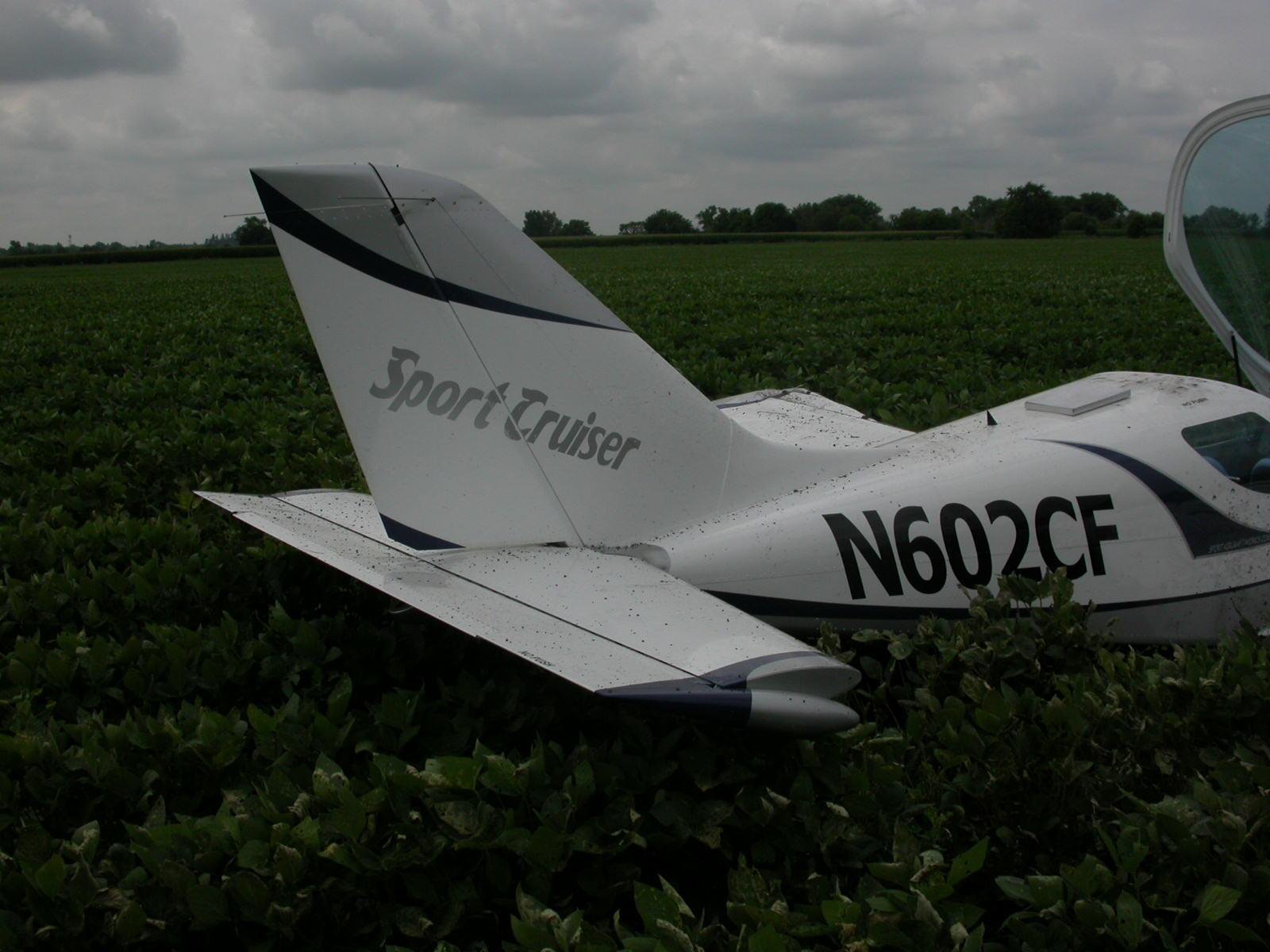
The pilot’s failure to maintain control of the airplane in the landing pattern. Contributing to the severity of injuries was the failure of the pilot’s shoulder harness.
Safety Lessons
Three things worth carrying away from this one, two of them about flying and one about the airplane underneath you.
- The base turn kills pilots with logbooks full of checkmarks. This pilot had just demonstrated stalls, slow flight, steep turns, and emergency procedures to an instructor’s satisfaction less than a month earlier. He was not negligent about currency. But a solo flight at low altitude on a calm VFR morning, transitioning from downwind to base, is a different environment than a dual lesson with an instructor beside you. The base-turn stall-spin sequence doesn’t wait for bad weather or a distracted student. It happens to pilots with recent endorsements when airspeed bleeds off in the turn and the bank steepens to keep the runway in sight. Every pattern flown solo in an unfamiliar rental airplane deserves the same airspeed discipline as a check ride.
- Light Sport Aircraft are self-certified, and the standards are not equivalent to FAA certification. The shoulder harness on N602CF was approved for automotive use in France. Its yoke stitching failed at 1,456 pounds. FAA TSO-certified aviation shoulder harness webbing must meet a 4,000-pound minimum breaking strength. That is nearly three times the actual failure load. LSA buyers and renters should understand that the words “ASTM compliant” and “FAA certified” are not interchangeable, and that the safety equipment in the cabin may not have been built to the same standards they would find in a Part 23 aircraft. Ask the question. Read the POH and maintenance records. Understand what standards the restraint system was tested to before you trust your life to it.
- Hobbs time and currency are not the same thing. Nineteen hours in make and model, spread over a period that included a multi-month gap, is a thin foundation for solo pattern work in an unfamiliar airplane. The pilot recognized this and sought re-familiarization training, which was exactly the right call. But a single dual session, even a thorough one, compresses the relearning into an artificial environment. After any significant break from a specific aircraft, the first few solo sorties deserve conservative planning: longer pattern legs, higher entry altitudes, and explicit airspeed callouts at each leg transition. The traffic pattern is not the place to rebuild muscle memory.
Frequently Asked Questions
Q: What caused the Sport Cruiser crash near Newark, Illinois in 2008?
A: The NTSB determined the probable cause was the pilot’s failure to maintain control of the airplane in the landing pattern. The accident site was located at the downwind-to-base turn position within 0C8’s traffic pattern, and the impact damage was consistent with a steep left-banking, nose-down descent into the terrain. No mechanical defects were found; the engine ran normally on a test stand after recovery.
Q: Why did the shoulder harness fail in the Czech Aircraft Works Sport Cruiser?
A: The pilot’s shoulder harness was manufactured to automotive standards, not FAA aviation standards. Tensile testing of exemplar harnesses showed the yoke stitching — the point where the single attachment strap joins the shoulder straps — failed at approximately 1,457 pounds. FAA TSO-certified aviation shoulder harness webbing must meet a minimum breaking strength of 4,000 pounds. The Light Sport Aircraft self-certification framework under ASTM F 2245 did not, at the time, specify tensile testing requirements equivalent to FAA standards.
Q: Are Light Sport Aircraft held to the same safety standards as FAA-certified airplanes?
A: No. Light Sport Aircraft are self-certified by the manufacturer under ASTM International standards, not FAA type certification. This means individual components like restraint systems, fuel tanks, and structural elements may be built to different — and in some cases lower — standards than equivalent components in Part 23 certified aircraft. Pilots considering LSA purchase or rental should review the specific standards applicable to the equipment installed in the aircraft.
Q: Do sport pilots need an FAA medical certificate?
A: No. Sport pilots are not required to hold an FAA medical certificate. They must hold at least a valid U.S. driver’s license and must not know or have reason to know of any medical condition that would make them unable to operate a light sport aircraft safely. The pilot in this accident was flying legally under sport pilot rules despite being on antihypertensive medications; toxicology confirmed no impairing substances.
Q: What is the stall speed of the Czech Aircraft Works Sport Cruiser?
A: The Sport Cruiser has a published stall speed of 37 mph with flaps fully extended (Vso), and 39 mph at maximum gross weight with wings level and engine at idle. In a steep banked turn at low altitude, the effective stall speed increases significantly due to the load factor imposed by the bank angle. At a 60-degree bank, for example, the stall speed increases by approximately 41 percent above the wings-level value.