What Happened
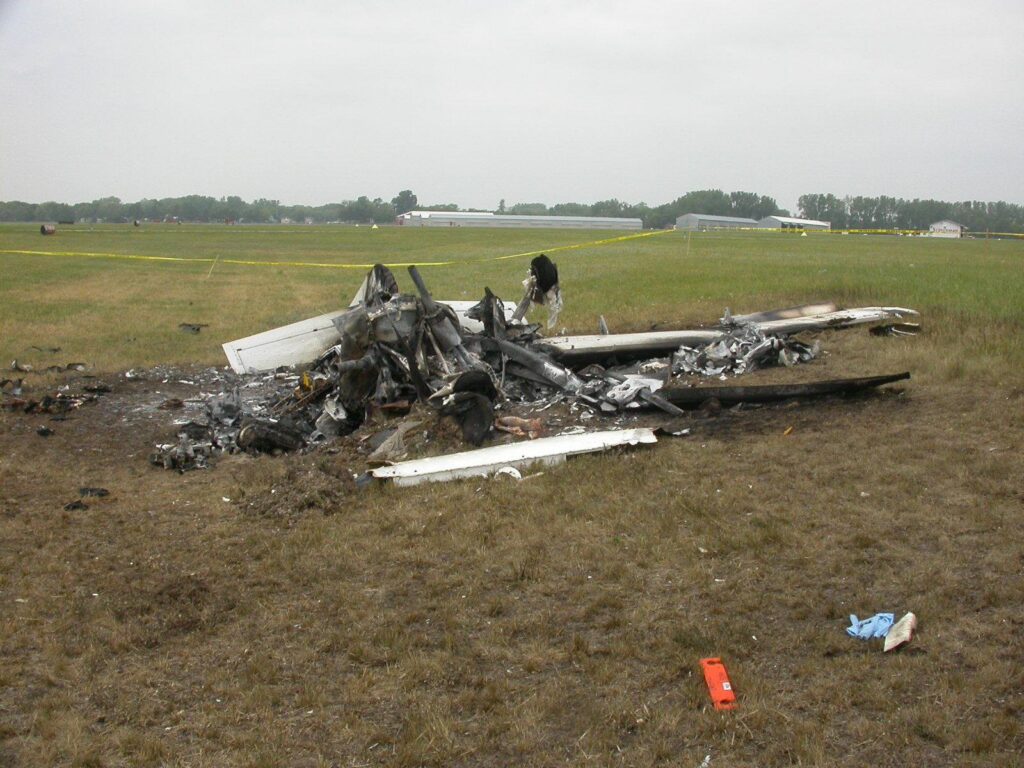
On the night of June 16 into June 17, 2009, a 2004 Cirrus SR22, registered N214BN, departed Kansas City’s Downtown-Wheeler Airport (MKC) at approximately 1918 central daylight time on what was supposed to be the final leg of a long day of flying. The destination was Crystal Airport (MIC) outside Minneapolis, Minnesota. The 60-year-old instrument-rated private pilot was the sole occupant. He never made it to the ramp. The airplane came to rest inverted in a grass area off the side of runway 14L at approximately 2202, consumed almost immediately by post-impact fire. The pilot was fatally injured.
The day had started more than 10 hours earlier in Lawrenceville, Georgia. N214BN departed Gwinnett County Airport (LZU) at 1235 eastern daylight time, flew to Memphis International (MEM), arrived at 1339, departed Memphis at 1558, and touched down at Kansas City at 1827. By the time the pilot climbed back in at Kansas City, he had already logged roughly 7 hours and 17 minutes of flight time. Ground personnel fueled the airplane with 37 gallons of 100LL before departure. The leg to Crystal would take just under an hour. So when he finally contacted MIC tower at 2153 and reported himself outside OYNOP, the initial approach fix for the GPS runway 14L approach, he had been going since mid-afternoon. It was dark. It was raining.
The local controller asked whether he planned a missed approach or a full stop. The pilot said stop. At 2158, the controller cleared N214BN to land and asked how bright he wanted the runway lights. The pilot asked for them a little brighter than they already were and mentioned it was “a little hard to see the field.” The controller brought the lights up to full intensity. The pilot reported passing ZUNBE, the final approach fix, beginning his descent. The controller confirmed the lights were on “full blast.” The pilot replied “ok.” At 2159, the tower closed for the night. The ground controller made the standard closing announcement over the frequency. Shortly after, the pilot radioed that he had the runway in sight. The controller acknowledged with a single “roger.” There were no further transmissions from N214BN.
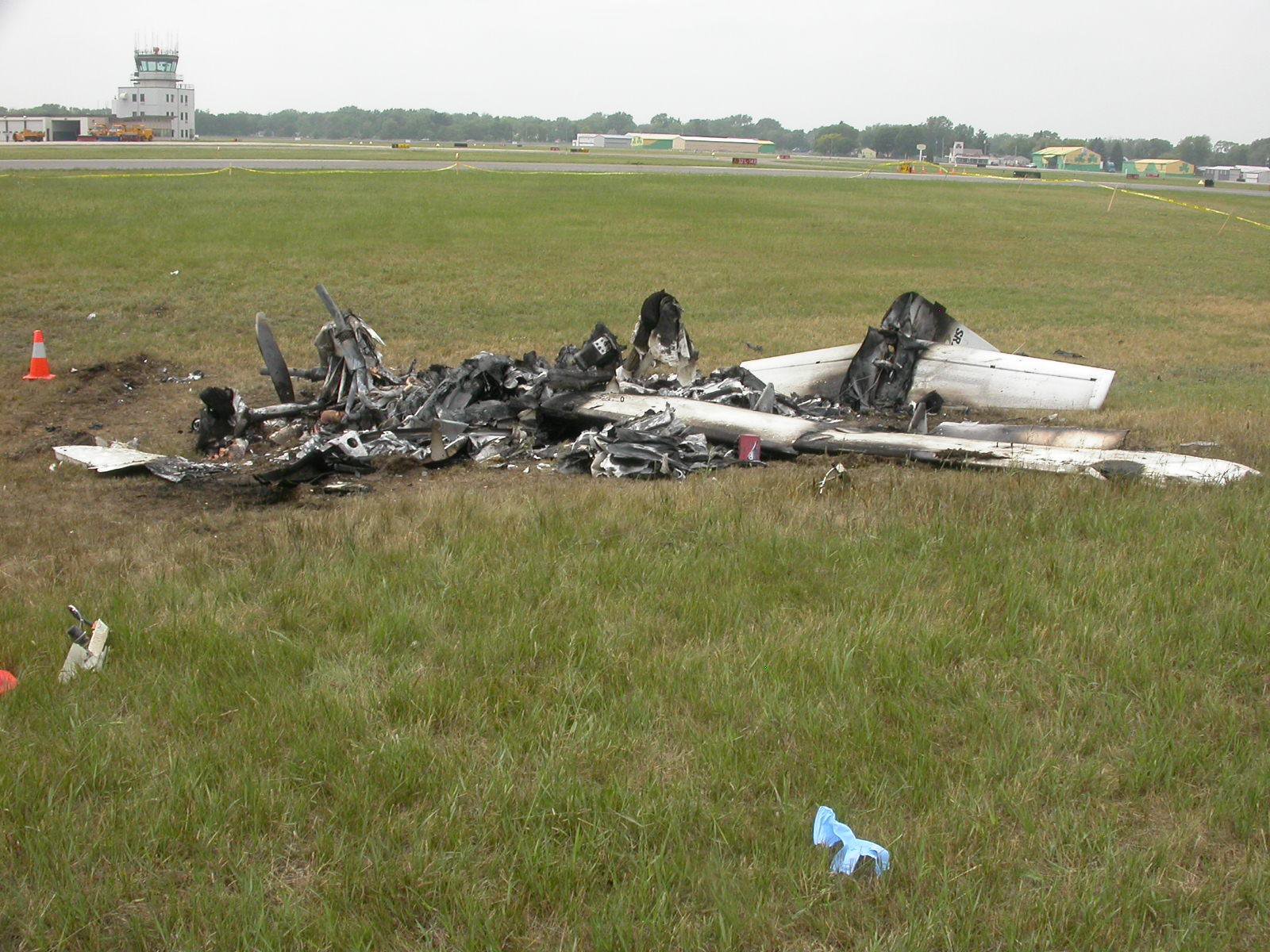
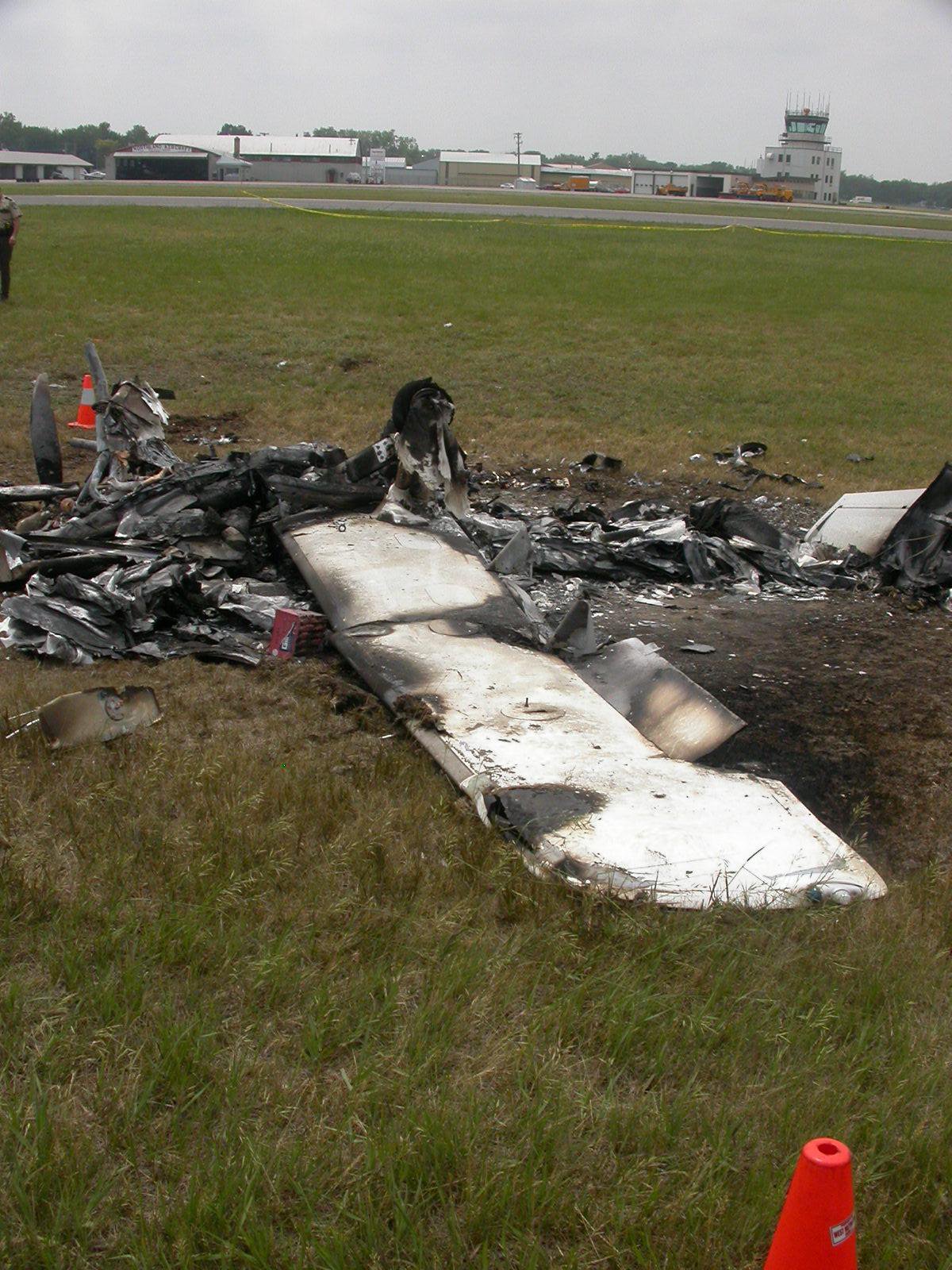
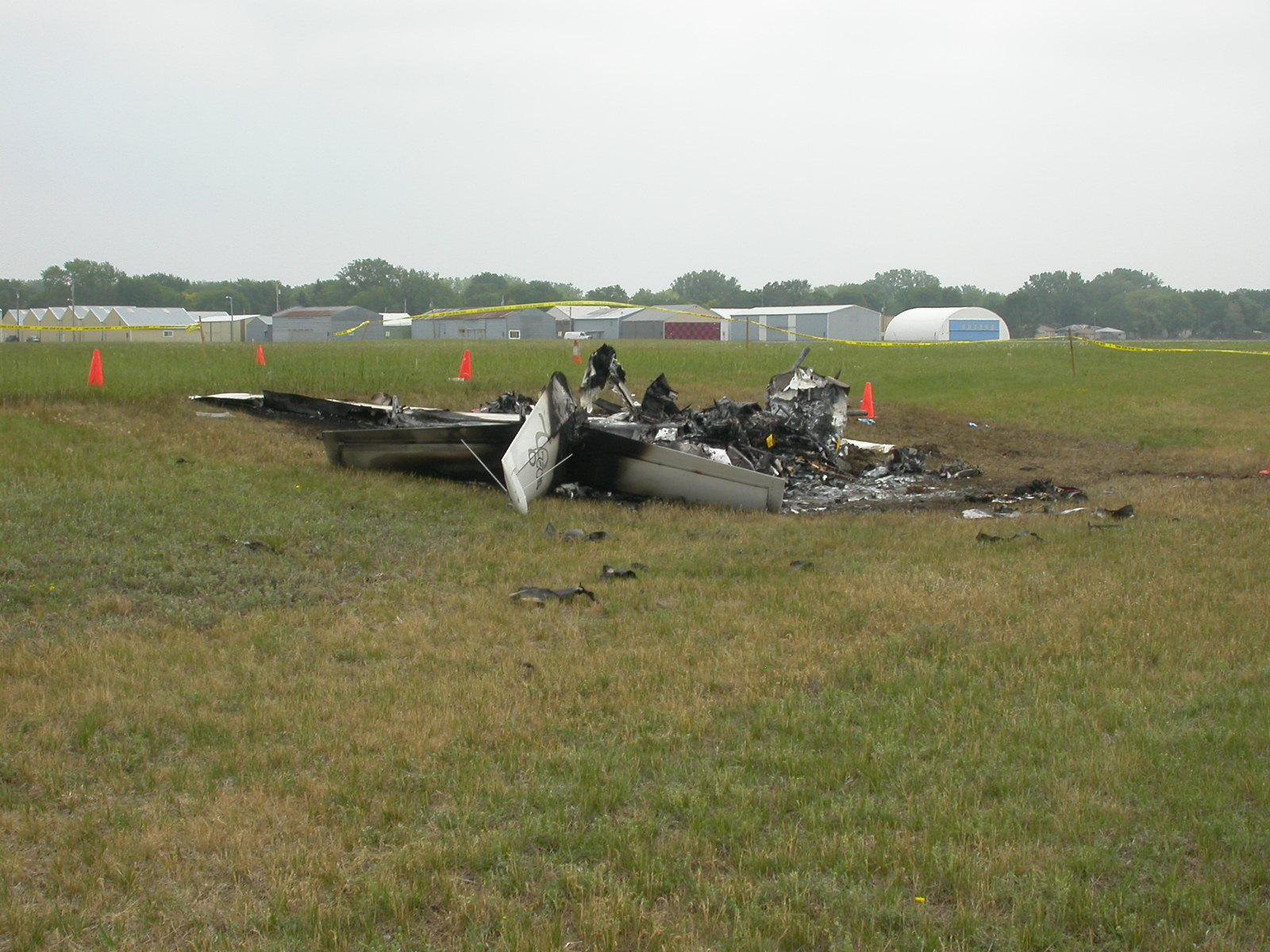
The three controllers packed up and headed down to the parking lot. That’s where they first saw the airplane. It was already fully engulfed in flames off the side of runway 14L. A Civil Air Patrol lieutenant colonel who was leaving a building on the south end of the airport told investigators he heard the airplane overhead, noted the engine was very loud, then heard the power increase sharply, as if the pilot had initiated a go-around. Then he heard the impact. Another witness on the southeast perimeter of the airport watched the approach more directly. He reported the airplane rolled onto its right side, appeared to stall, and struck the ground. Both witnesses described moderate to heavy rain at the time of the accident. The wreckage came to rest inverted on a magnetic heading of 134 degrees, in a grass area roughly 266 feet south of taxiway Alpha and 138 feet east of runway 14L. There were no marks on the runway surface. There were no ground scars in the grass between the runway edge and the first impact mark. The airplane had never actually landed.
Investigation Findings
Radar track data allowed investigators to reconstruct the final minutes of the flight in reasonable detail. Around 2155, N214BN was at 3,000 feet mean sea level, turning southeast toward MIC at roughly 100 knots groundspeed. The airplane began descending. Speed and altitude both decreased through 2158, then groundspeed climbed back up to 121 knots at 2200 before dropping again. The last radar return came at 2201:15, with the airplane at 1,100 feet msl, which placed it approximately 230 feet above the ground, moving at 81 knots groundspeed. There were no further returns.
The wreckage told a story that matched the witness accounts. Four terrain impact marks ran along a magnetic heading of 74 degrees over a span of about 30 feet, beginning roughly 100 feet east of runway 14L. The first mark was a slash about 27 inches long. The second contained red glass. The third, about 45 inches long and 6 inches deep, held red glass and hardware from the left wing navigation light. The last mark was just over 10 feet long. The impact sequence was consistent with the left wingtip striking first, the airplane rolling through, and the fuselage coming down inverted. The CAPS parachute system was intact and had not been deployed. The rocket motor showed that activation cable remained attached to the igniter. About 8 to 10 inches of cable remained, but the parachute had never opened.
Investigators found no mechanical reason for the accident. The engine turned by hand and showed crankshaft continuity throughout. The fuel manifold held fuel. The spark plugs showed normal wear. Control cable continuity was confirmed throughout the airframe, with separations consistent with impact forces rather than pre-existing failures. The propeller blades showed chordwise scratches, rotational crushing on the spinner, and signatures consistent with the engine producing power at impact, which aligned with the witness who heard power being added during what sounded like a go-around attempt. The multi-function display flash memory and the primary flight display memory card were both too badly burned to recover any data. The pilot’s logbooks were in the airplane and were not recovered from the fire. The most recent record of his flight time came from his instrument rating application, filed in February 2009, which documented 505 total hours including 388 in the SR22 and 38 hours of night flight time. The toxicology report came back negative for alcohol and most substances, though oxazepam, a benzodiazepine used to treat anxiety and insomnia, was detected in urine but not in blood. Its presence in urine without blood detection indicated prior use rather than active impairment at the time of the accident. The weather at MIC at 2153 showed a 3-statute-mile visibility with light rain and mist, overcast at 4,200 feet. By 2209, seven minutes after the accident, the observation showed rain and mist with visibility improving slightly to 4 statute miles. Temperature and dewpoint were both 17 degrees Celsius, meaning the air was fully saturated. The pilot had described the field as hard to see even with the runway lights on full intensity.
NTSB Probable Cause
The pilot’s failure to maintain airspeed which resulted in a loss of aircraft control during a go-around. Factors associated with the accident were the dark night lighting conditions, moderate to heavy rain, and fatigue.
Safety Lessons
Several things converged on N214BN that night, and none of them appeared out of nowhere. Each had been building for hours.
- Fatigue degrades the exact skills a go-around demands. The pilot had been airborne for roughly 7 hours and 17 minutes across a day that started more than 10 hours before the accident. A go-around requires a rapid task sequence: full power, pitch attitude, flap retraction, configuration change, climb. Each of those steps demands precise motor coordination and instrument cross-check, two of the first things fatigue erodes. A pilot who is tired at the end of a long duty day needs to actively account for that degradation, not just push through it. If the day has been long, the approach brief should include a firm, pre-decided missed approach plan with altitude and airspeed targets already committed to memory before the gear comes over the threshold.
- A go-around at night in rain is an instrument maneuver, full stop. The pilot had 38 hours of night time logged and had received his instrument rating just four months before the accident. Transitioning from a visual landing attempt to a go-around at 230 feet above the ground, in moderate to heavy rain, with no visual horizon, is not a visual maneuver. The airplane has to be flown by reference to the instruments the instant outside visual cues become unreliable. At low altitude and low airspeed, with power coming in and pitch changing, the penalty for letting the ball slide or the airspeed drop below approach speed for even a few seconds is catastrophic. The SR22 has capable glass cockpit instrumentation. The PFD shows exactly what the airplane is doing. But that only helps if the pilot’s eyes are on it.
- Know the CAPS envelope before you need it. N214BN was equipped with the Cirrus Airframe Parachute System, and the CAPS was never activated. The airplane came to rest with the parachute still folded. The low altitude and the speed of the upset likely left no time for a conscious decision to pull the handle. But the broader lesson is that CAPS is a system that requires pre-planning, just like any other emergency procedure. Cirrus pilots should brief the CAPS decision altitude on every flight in conditions where a low-altitude loss of control is a credible scenario. Waiting to decide is the same as deciding not to use it.
Frequently Asked Questions
Q: What caused the Cirrus SR22 crash at Crystal Airport in 2009?
A: The NTSB determined the probable cause was the pilot’s failure to maintain airspeed during a go-around, resulting in a loss of control. Contributing factors included dark night conditions, moderate to heavy rain, and pilot fatigue. The pilot had been flying for more than 7 hours that day before attempting the final approach into Crystal Airport (MIC).
Q: Why didn’t the pilot deploy the Cirrus CAPS parachute?
A: The CAPS system was intact and undeployed at the accident site. The loss of control occurred at approximately 230 feet above the ground, and the sequence of events likely unfolded too rapidly for a conscious decision to activate the parachute. The activation cable showed about 8 to 10 inches still attached to the igniter assembly, indicating the handle had not been pulled.
Q: How does fatigue affect a pilot’s ability to execute a go-around?
A: Fatigue specifically degrades fine motor coordination, instrument scan speed, and the ability to execute multi-step procedures under time pressure, exactly the skills a go-around requires. Research shows that 17 hours of sustained wakefulness produces performance impairment comparable to a 0.05% blood alcohol level. In this accident, the pilot had been traveling for over 10 hours before the final approach, placing his cognitive and motor performance well below baseline at a moment when precision flying mattered most.
Q: Was there any mechanical failure on N214BN?
A: No. Investigators found no pre-impact mechanical failure or malfunction. The engine rotated by hand with full continuity, fuel was present in the manifold, spark plugs showed normal wear, and control cable continuity was confirmed throughout the airframe. Propeller damage signatures were consistent with the engine producing power at impact, matching witness accounts of hearing the engine surge as if a go-around had been initiated.
Q: What is oxazepam and did it contribute to the accident?
A: Oxazepam is a benzodiazepine medication used to treat anxiety and insomnia. It was detected in the pilot’s urine but not in his blood, which indicated prior use rather than active impairment at the time of the accident. The NTSB did not cite it as a contributing factor. Fatigue, rain, and dark night conditions were identified as the contributing factors alongside the loss of airspeed control.