What Happened
On July 24, 2010, a Bell 47G-4A helicopter, registered N124SH, was doing what it had been doing all morning near Rochester, Minnesota: flying low and slow over agricultural fields, laying down chemical spray runs one after another. The 68-year-old commercial pilot had logged roughly 16 spray passes that day before the accident. The weather was clear, visibility 10 miles, winds out of the southwest at 11 knots gusting to 15. Temperature was 33 degrees Celsius. A hot, hazy July afternoon in southern Minnesota.
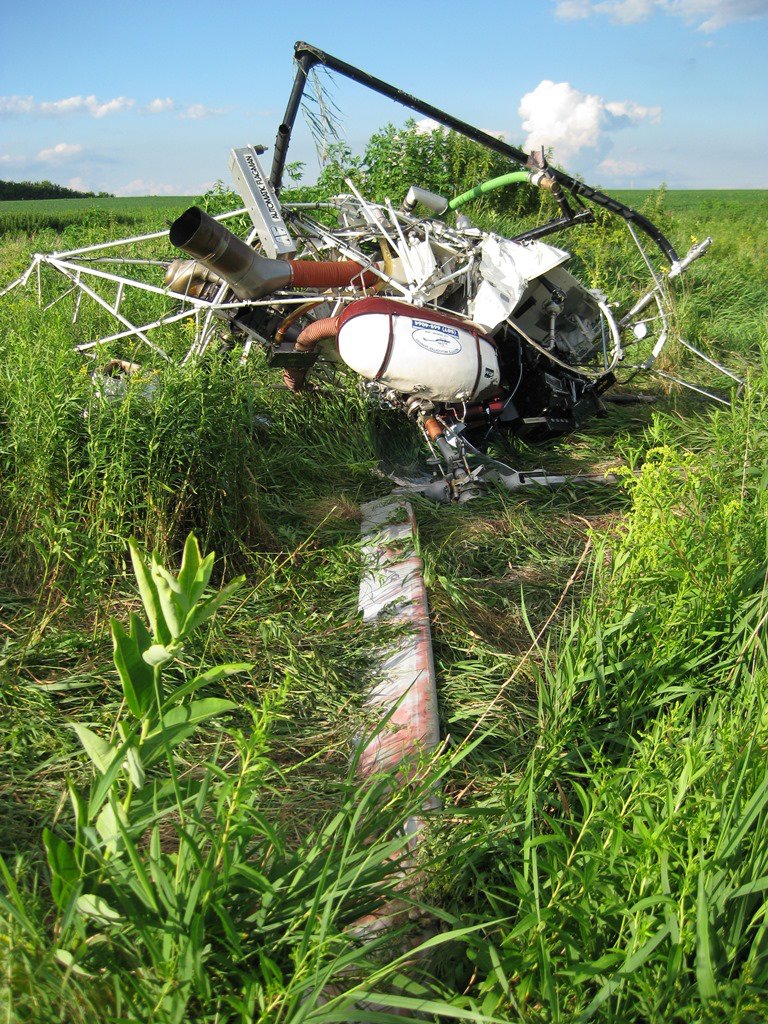
After the most recent run, the pilot came back to the truck, had the helicopter refueled, and had the hopper loaded with a fresh chemical load. The spray truck driver watched all of it. He later told investigators the pilot looked healthy and normal. Nothing unusual. The engine sounded right. The helicopter lifted off and turned toward a field about a mile away. The truck driver kept watching. Then he saw a brown puff of smoke come from the helicopter in flight. The helicopter descended almost immediately and struck a small hill. The wreckage came to rest on the far side of the hill. There was no ground fire. The pilot was fatally injured. The helicopter sustained substantial damage.
That brown puff of smoke, appearing without any warning and followed within seconds by ground impact, was going to take investigators almost seven months of metallurgical work to fully explain.
N124SH was a 1967-vintage Bell 47G-4A, serial number 7599. It had been around long enough to have two engine changes on its logbooks. The helicopter originally flew with a Lycoming VO-540-B1B3 reciprocating engine. In June 2003, the operator converted it to an Allison 250-C20B turbine under STC SH657NW, and the airworthiness certificate was downgraded from normal to restricted category for agricultural operations. Then, just three days before the accident, on July 21, 2010, the operator swapped in a different engine during the annual inspection: a 317-horsepower Allison T63-A-700, serial number AE-403309 BCEF. That engine is the military designation for the Allison 250-C10D, a smaller, earlier variant of the 250 series. The T63-A-700 had been sitting out of service since March 2009, pulled from another helicopter, N3094G. At the time it went back onto N124SH, it had 3,782.8 total hours and 2,026.8 hours since its last overhaul. After installation, the helicopter flew 5.2 hours before the accident.
Five point two hours. That is how long the newly installed engine ran before a first-stage compressor blade fractured at roughly one-third of its span, touched off a cascade of internal damage, and the engine lost power completely at low altitude over a Minnesota farm field.
Investigation Findings
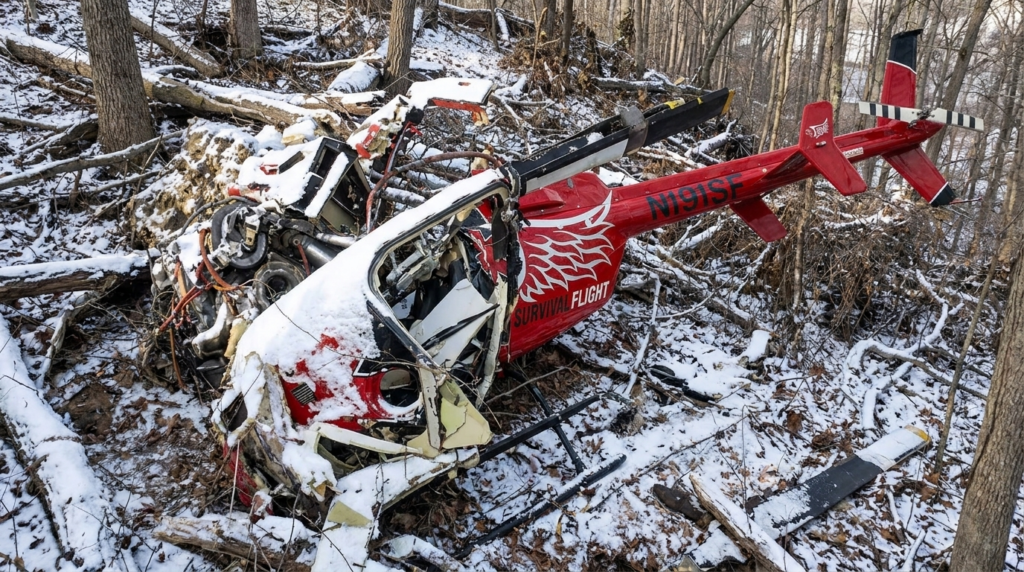
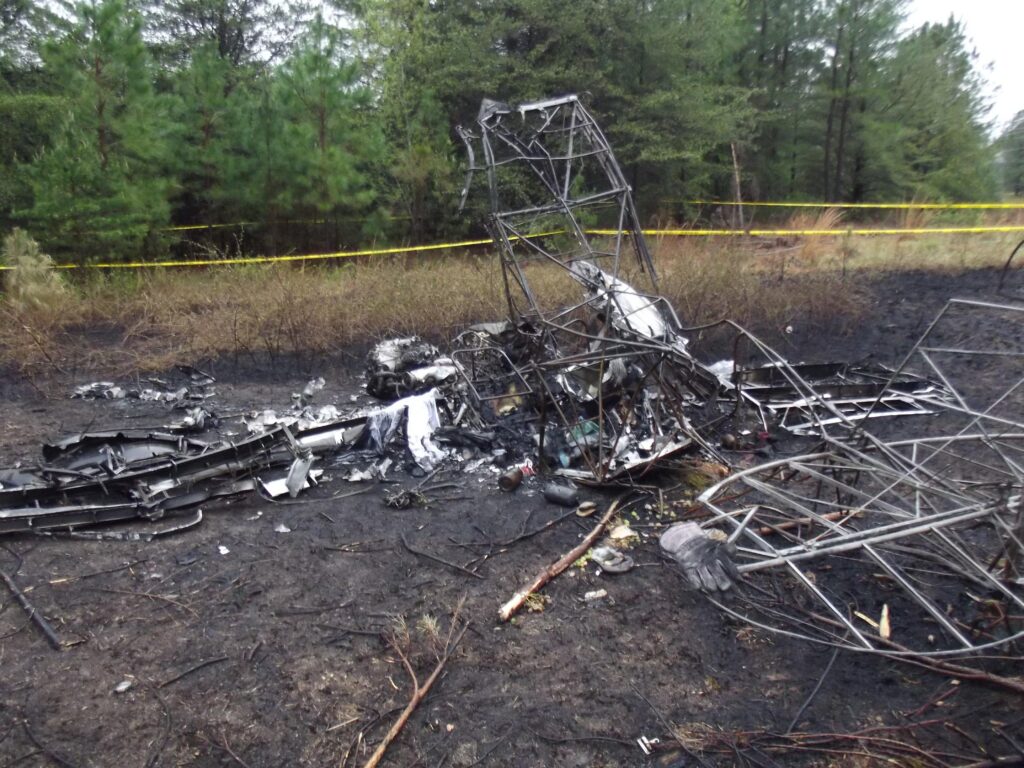
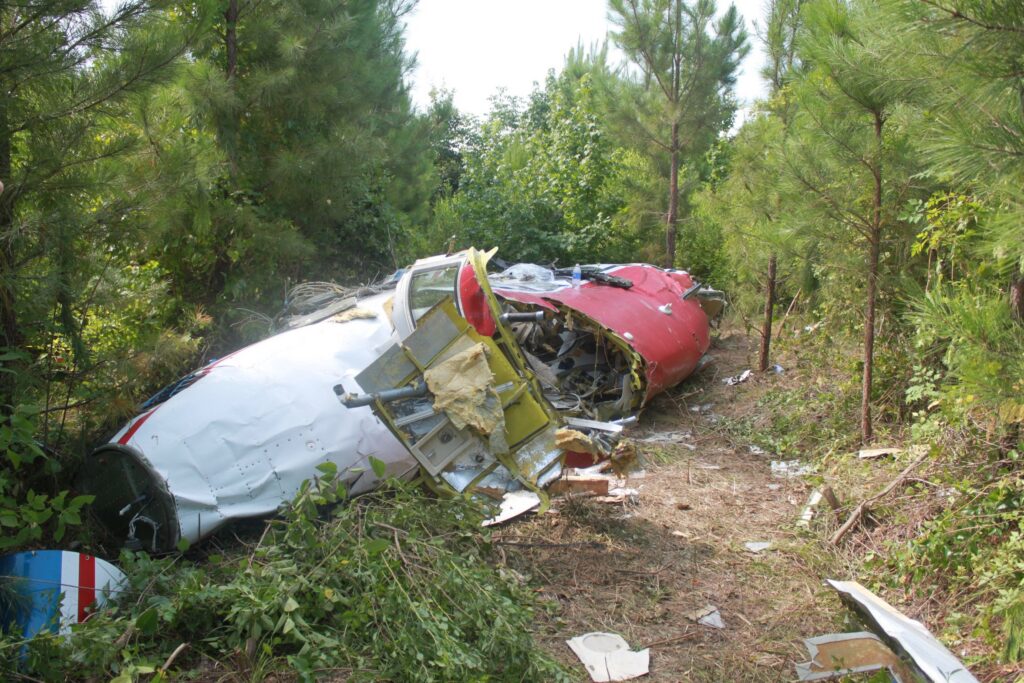
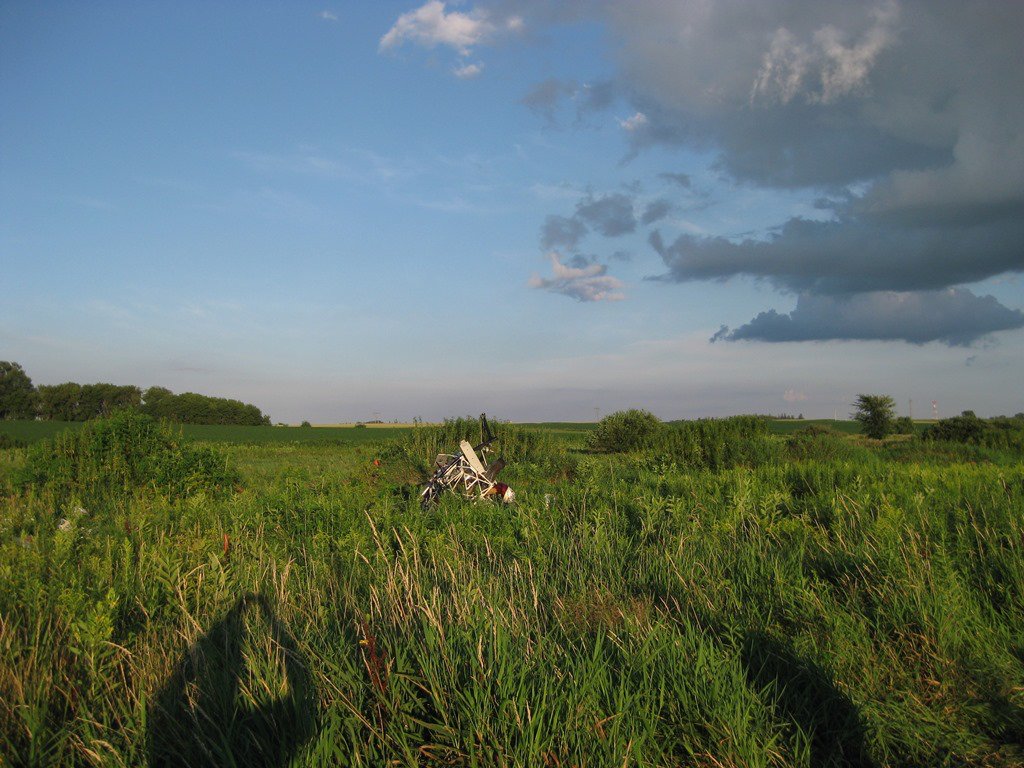
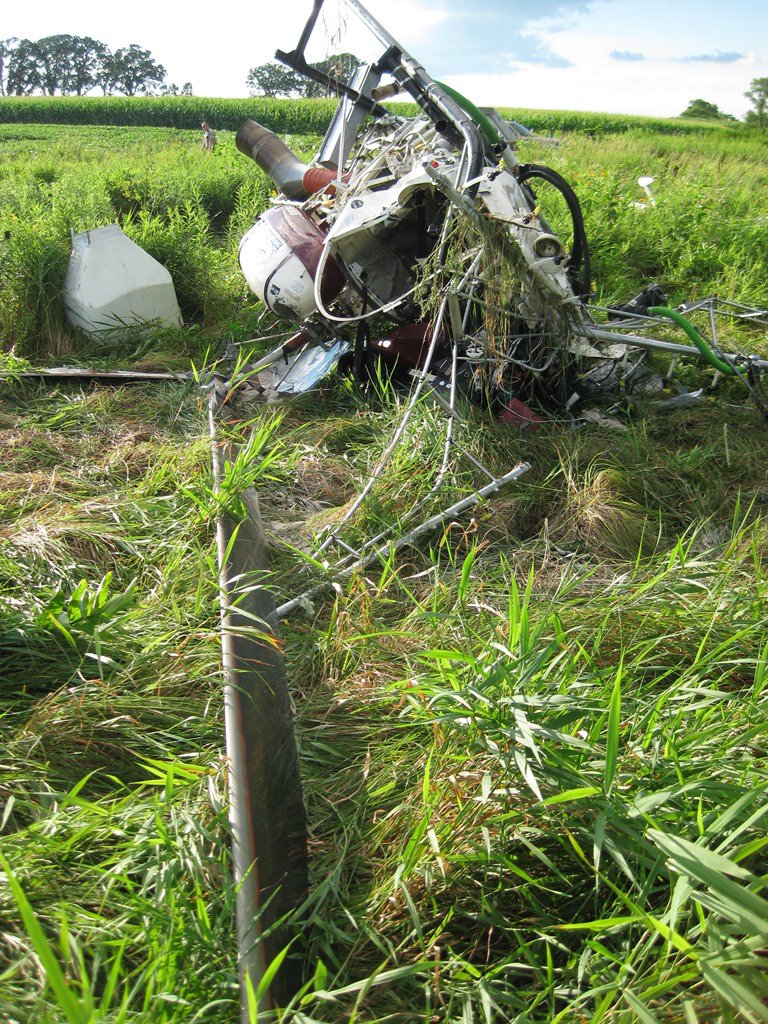
Investigators found the helicopter wreckage on the back side of a small hill, partially inverted on its right side and facing southeast. A red paint transfer mark on the front side of the hill was consistent with a tailboom strike, and the tailboom itself was separated from the fuselage and lying about 10 feet from the main wreckage. The main rotor blades were with the wreckage. One blade had separated from the hub, but both showed minimal leading-edge damage, consistent with low or zero rotor RPM at ground contact. The FAA airworthiness inspector on scene verified engine control continuity, drive train continuity from engine through the transmission to both the main and tail rotors, and full flight control continuity through cyclic, collective, and anti-torque pedals. Nothing in the airframe or flight controls had caused this.
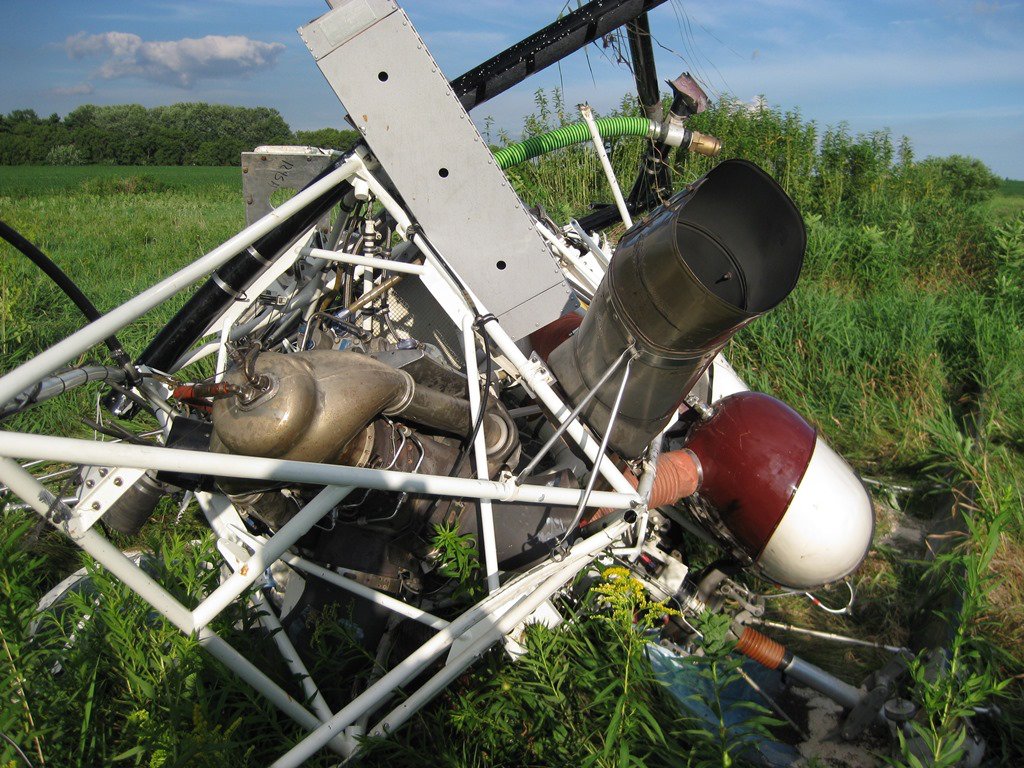
A partial engine teardown at the accident site confirmed the story was in the engine. There were no signs of uncontained failure through the engine cases. Fuel and oil filters were clean. But the compressor No. 1 bearing housing had been torn from its struts, the majority of the axial compressor blades were bent opposite the direction of rotation, and the No. 1 turbine rotor blades were burned and eroded, with roughly 50 percent of blade span missing. Metal fragments were sitting at the No. 1 turbine stator. The engine was crated and shipped to Rolls-Royce in Indianapolis for a full teardown under FAA oversight.
On August 12, 2010, Rolls-Royce engineers and FAA inspectors tore the engine down further. The compressor rotor assembly told the story clearly: a single first-stage blade had fractured at approximately one-third of its span. Every other compressor blade in the assembly showed extensive foreign object damage, which is exactly what you would expect after a blade fragment enters the airflow path and gets ingested through the remaining stages. Then, on February 8, 2011, a metallurgical examination was conducted at Rolls-Royce with FAA oversight. The origin of the fracture was identified as a cluster of delta ferrite islands on the suction side of the airfoil, located approximately 0.36 inches outboard of the blade root and 0.25 inches from the leading edge. The fracture mode was high-cycle fatigue, meaning the blade had been subjected to repeated stress cycles that eventually initiated a crack at that subsurface cluster of delta ferrite, and the crack propagated until the blade failed. The microstructure, hardness, and chemical composition of the blade all conformed to engineering drawing specifications. There was no corrosion at or near the fracture origin. The blade was not defective in any measurable way. It simply failed.
Toxicology results on the pilot were negative for carbon monoxide, cyanide, and ethanol. Ibuprofen was detected in urine. There was nothing in the pilot’s condition that contributed to or caused the accident. An AG-NAV GPS unit recovered from the wreckage had a damaged hard drive and yielded no flight data. A handheld Garmin 496 found at the scene was downloaded, but the data did not correspond to the accident flight. There was no flight data recorder or cockpit voice recorder, nor was one required.
NTSB Probable Cause
The total loss of engine power due to a high-cycle fatigue fracture of a first-stage compressor blade. The reason for the fracture could not be determined during postaccident examination.
Safety Lessons
This accident is unusual because the chain of causation runs out before it reaches a human decision. The blade met spec. The installation was done correctly. The engine had been sitting since March 2009 but passed inspection. And then it failed 5.2 hours later with no warning. That is a hard category of accident to fit into a standard lessons-learned framework, but there are still things worth taking out of it.
- Low-altitude power loss in a helicopter leaves almost no recovery margin. Agricultural spray operations are conducted at heights measured in feet, not hundreds of feet. The Bell 47 has autorotation capability, but converting a complete engine failure into a survivable landing requires altitude and time. At typical spray altitudes of 5 to 15 feet AGL, there is essentially none of either. Any pilot flying low-altitude operations, helicopter or fixed-wing, should understand that a sudden total power loss at operating altitude is not a situation that skill alone can fix. It is a situation that requires enough altitude to work with in the first place.
- Newly installed engines deserve extra scrutiny in the first hours of operation. The T63-A-700 had been out of service for over a year before going back onto N124SH. It passed inspection at installation. But the failure occurred just 5.2 hours into its service life on this airframe. Post-maintenance and return-to-service flights, especially after major component changes, deserve careful attention in the first few hours of operation. That does not mean the failure here was preventable, but the general principle of treating newly installed or recently inactive components as still being in a proving phase is sound practice.
- High-cycle fatigue failures can occur in components that meet all specification requirements. The metallurgical examination found nothing wrong with the blade. Correct chemistry, correct hardness, correct microstructure. The failure initiated at a subsurface delta ferrite cluster that was within tolerance. This is a category of failure that does not necessarily show up in routine inspection and cannot always be predicted. It reinforces the design philosophy behind retirement lives and hard-time limits on rotating engine components, and it is a reason those limits exist even when hardware looks fine visually.
Frequently Asked Questions
Q: What caused the Bell 47 engine failure near Rochester, Minnesota in 2010?
A: The NTSB determined the cause was a high-cycle fatigue fracture of a first-stage compressor blade in the Allison T63-A-700 engine. The fractured blade created a cascade of internal damage, including foreign object damage to all remaining compressor blades and severe erosion of the first-stage turbine rotor blades, resulting in total loss of engine power. Metallurgical examination could not determine why the blade fractured, as its material properties conformed to engineering drawing specifications and no corrosion was found at the fracture origin.
Q: What is high-cycle fatigue in a turbine engine compressor blade?
A: High-cycle fatigue is a failure mode caused by a very large number of relatively small stress cycles. In a turbine engine, compressor blades spin at thousands of RPM and experience repeated aerodynamic and mechanical loading with every revolution. Over time, a crack can initiate at a stress concentration point, often a microstructural feature like a delta ferrite cluster as found in this case, and propagate until the blade fractures. Unlike low-cycle fatigue, which involves fewer, larger load cycles, high-cycle fatigue can occur with no visible warning and in components that otherwise meet all material and dimensional specifications.
Q: Why did the helicopter crash so quickly after the engine failed?
A: The Bell 47 was conducting agricultural spray operations at very low altitude, typically just a few feet to tens of feet above the terrain. When total engine power loss occurred, there was insufficient altitude to complete a successful autorotation. In a helicopter autorotation, the pilot uses stored rotor energy to cushion the landing, but that maneuver requires altitude and time to execute. At spray altitudes, neither was available. The helicopter descended and struck a small hill almost immediately after the brown puff of smoke indicating engine failure was observed.
Q: Was the engine installation done correctly before the accident?
A: Yes. The NTSB found evidence that the Allison T63-A-700 engine was installed properly during the annual maintenance inspection conducted three days before the accident. Engine control continuity, drivetrain continuity, and flight control continuity were all verified at the accident site. The annual inspection was signed off on July 21, 2010, and the helicopter flew 5.2 hours without incident before the blade failure. The accident was not attributed to an installation error.
Q: What is the Allison T63-A-700 engine and how does it relate to the Allison 250 series?
A: The T63-A-700 is the military designation for what the commercial market knows as the Allison 250-C10D. It is an earlier, lower-power variant of the Allison 250 turboshaft family, rated at 317 horsepower. The Allison 250 series, later continued under Rolls-Royce as the M250, is one of the most widely used turboshaft engines in light helicopter history, powering variants of the Bell 47, Bell 206 JetRanger, Hughes 500, and many others. The engine involved in this accident had accumulated 3,782.8 total hours and had been out of service for approximately 16 months before installation on N124SH.