On the morning of August 28, 2017, a Beechcraft A36 Bonanza, registration N87RY, departed Savannah/Hilton Head International Airport on what should have been a routine business flight to the Atlanta area. The weather was good—visual conditions, light winds, and no obvious environmental concerns to complicate the trip.
At the controls was a 39-year-old commercial pilot. He held single-engine, multi-engine, and instrument ratings, along with a first-class medical certificate. His logbook showed about 1,420 hours of total flight time, including over 800 hours as pilot-in-command. This wasn’t a low-time pilot, and he had solid experience in both single and multi-engine aircraft.
The airplane itself was a 1994 Beech A36, powered by a Continental IO-550 engine producing 300 horsepower. It had been maintained in accordance with regulations, and on paper, everything looked normal. But as we often see in accident investigations, the seeds of the accident had been planted long before the engine ever started that morning.
Climb Out and Sudden Silence
The flight departed Savannah around 8:29 a.m. and initially climbed normally. About six minutes into the flight, the airplane reached approximately 3,900 feet mean sea level and was tracking northwest.
Then everything changed.
At 8:35:46, the pilot declared an emergency and reported a total loss of engine power—one of the most serious situations a pilot can face, especially shortly after departure. With no thrust available, the airplane immediately became a glider.
Air traffic control responded quickly, providing vectors to Cypress Lakes Airport (GA35), a private airstrip about 6.5 nautical miles behind the aircraft. The controller stayed with the pilot, offering guidance and support as the situation developed. But there was an immediate problem: distance.
The Turn Back
To reach GA35, the pilot had to execute a 180-degree turn. That’s a maneuver that costs both altitude and energy—two things you don’t have much of after an engine failure in climb.
Radar data showed the airplane began a wide left turn, attempting to line up with the suggested airport. Over the course of that turn, the airplane traveled about 6.3 nautical miles while descending.
During this time, the controller even expressed concern about whether the airplane would make it. The pilot’s final transmission suggested cautious optimism—he said they would “probably make it.”
But “probably” isn’t a margin you want when you’re gliding.
The airplane continued descending through 400 feet, still short of the runway. At 8:39:39, radar contact was lost just moments before impact.
Impact in the Trees
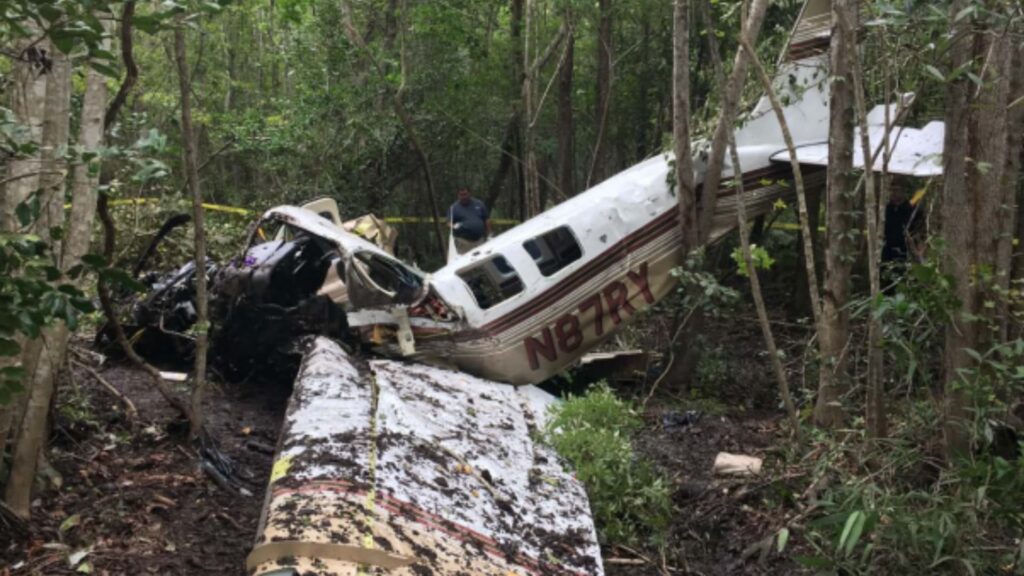
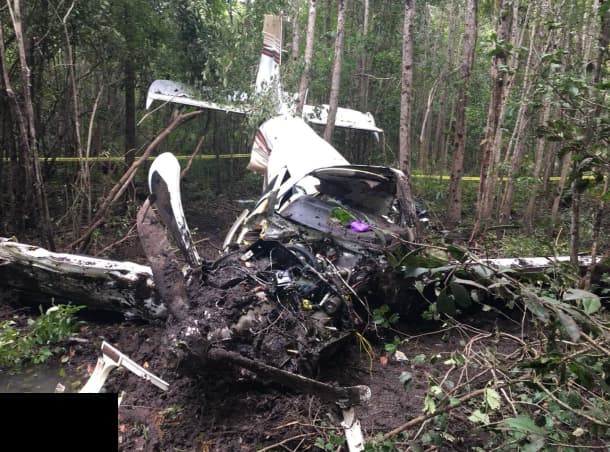
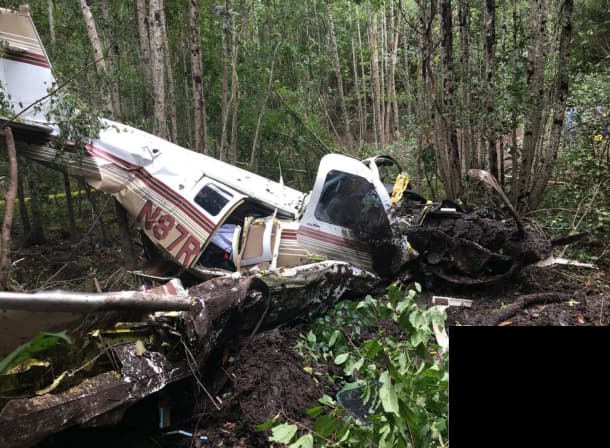
The airplane came down in a wooded, swampy area near Ellabell, Georgia—about 6 miles short of the airport it had been trying to reach.
The wreckage path told a familiar story: a steep descent angle, tree impacts, and significant structural damage. The landing gear was retracted and the flaps were up, which is consistent with a glide attempt rather than a prepared landing configuration.
There was no evidence of a loss of control. This wasn’t a stall-spin scenario. The pilot maintained control of the aircraft all the way to the ground. But without power, altitude, or a reachable landing site, the outcome was largely determined.
All three occupants on board were fatally injured.
What Happened Inside the Engine
When investigators examined the engine, they found catastrophic internal damage. A hole in the engine case revealed that a connecting rod had failed and broken free—an event that instantly destroys engine operation.
But the real story was deeper inside.
During teardown, investigators discovered that several cylinder hold-down nuts—specifically on the No. 1 and No. 2 cylinders—were loose. In fact, there was no measurable torque on some of them.
These fasteners are responsible for maintaining proper clamping force on the engine structure, including the crankshaft bearings. When they’re not torqued correctly, components can shift under load.
And that’s exactly what happened here.
The No. 1 main bearing had moved out of position, which blocked the flow of oil to critical engine components. Without lubrication, the No. 1 connecting rod bearing overheated and failed. That led to the connecting rod breaking apart, which ultimately destroyed the engine.
This wasn’t a sudden, unpredictable failure. It was the result of improper maintenance.
Tracing It Back to Maintenance
About 15 months before the accident, all six engine cylinders had been replaced. That work involved removing and reinstalling components that rely heavily on precise torque values.
Investigators concluded that during that maintenance, the cylinder hold-down bolts and through-studs were not properly torqued.
At first, the engine continued to operate normally. But over time—about 227 hours of operation—the insufficient clamping force allowed internal components to shift.
Eventually, that shift restricted oil flow, leading to progressive damage and, finally, total engine failure during the accident flight.
This is one of those cases where the failure didn’t start in the air—it started in the hangar.
The Airport That Wasn’t There
There was another critical factor in this accident, and it had nothing to do with the airplane itself.
When the pilot reported the engine failure, there was actually a closer airport available—Briggs Field (GA43), just 3.4 nautical miles away and nearly straight ahead.
That’s a huge difference. Instead of a 180-degree turn and a long glide, the pilot could have made a small heading change toward a much closer runway.
But there was a catch: the controller didn’t know it existed.
The airport was not depicted on the controller’s display map. According to the report, the facility simply wasn’t aware of the airstrip, so it wasn’t included in their system.
As a result, the pilot was vectored toward an airport that was likely beyond gliding distance, while a closer and more attainable option went unused. After the accident, the missing airport—and others in the area—were added to the system.
The Bigger Picture
This accident is a textbook example of how multiple small issues can align into a fatal outcome.
First, there was the maintenance error—improper torque during cylinder installation. That set the stage for a delayed but inevitable engine failure.
Then came the timing. The failure occurred during climb, when altitude is limited and options are few.
Finally, there was the situational awareness gap on the ground. The controller, working with incomplete information, directed the pilot toward a less favorable option.
None of these factors alone guaranteed an accident. But together, they created a situation that was extremely difficult to recover from.
Key Lessons
There are a few important takeaways here.
Maintenance matters—a lot. Improper torque isn’t just a paperwork issue. It can lead to catastrophic failures months or even years later.
Know your glide options. In an engine failure, every second counts. Pilots should constantly be thinking about where they would go if the engine quits—especially during climb.
And finally, systems matter. Air traffic control is an incredible resource, but it’s only as good as the information it has. In this case, a missing airport on a display made a real difference.
Final Thoughts
The NTSB determined the probable cause to be a total loss of engine power due to oil starvation, resulting from improperly torqued cylinder components during maintenance. Contributing to the accident was the omission of a closer airport from the controller’s display.
This wasn’t a case of reckless flying or poor decision-making in the cockpit. The pilot did what most would do—declared an emergency, worked with ATC, and tried to reach a runway.
But aviation is unforgiving when small errors stack up. And in this case, the chain started long before takeoff.