
What Happened
On November 14, 2023, a Piper PA-28-180, registration N7806W, departed Kissimmee Gateway Airport near Orlando, Florida, for what should have been a routine personal flight north. The 50-year-old private pilot had purchased the Cherokee just two weeks earlier and was flying solo that afternoon. The flight would end in tragedy near Micanopy, Florida, claiming the pilot’s life in a classic case of VFR flight into instrument conditions.
The trouble started before the wheels even left the ground. When the pilot called for taxi clearance at Kissimmee, the ground controller warned him that conditions were “IFR” with a broken ceiling at 800 feet above ground level. But then, about a minute later, the controller came back with updated observations showing few clouds at 800 feet and cleared the pilot to taxi. That small change in the weather report—from “broken” to “few” at the same altitude—made the difference between legal VFR and conditions that required an instrument clearance.
The Cherokee lifted off around 12:45 PM and initially flew a normal northbound track toward the destination. ADS-B data shows the airplane climbing to 3,500 feet and maintaining altitudes between 2,900 and 3,500 feet for the first half hour of flight. Everything appeared routine until about 1:14 PM, when the pilot descended to 2,000 feet. Eight minutes later, he was down to 800 feet. The airplane was now flying just above the cloud layer that had been forecast along his route.
Then the flight path went erratic. At 1:31 PM, about 20 miles south of his destination, the Cherokee made a brief turn east, then swung back to the north. What followed was a pilot’s worst nightmare: the airplane began flying a series of 360-degree turns mixed with wild altitude excursions. The Cherokee climbed as high as 6,900 feet and descended as low as 500 feet over the next 38 minutes. During this period, the pilot called ATC with a mayday, reporting he was “lost in weather.” He told controllers he had “mistakenly flew into weather” and that “it’s completely white”—he couldn’t see anything outside the cockpit.
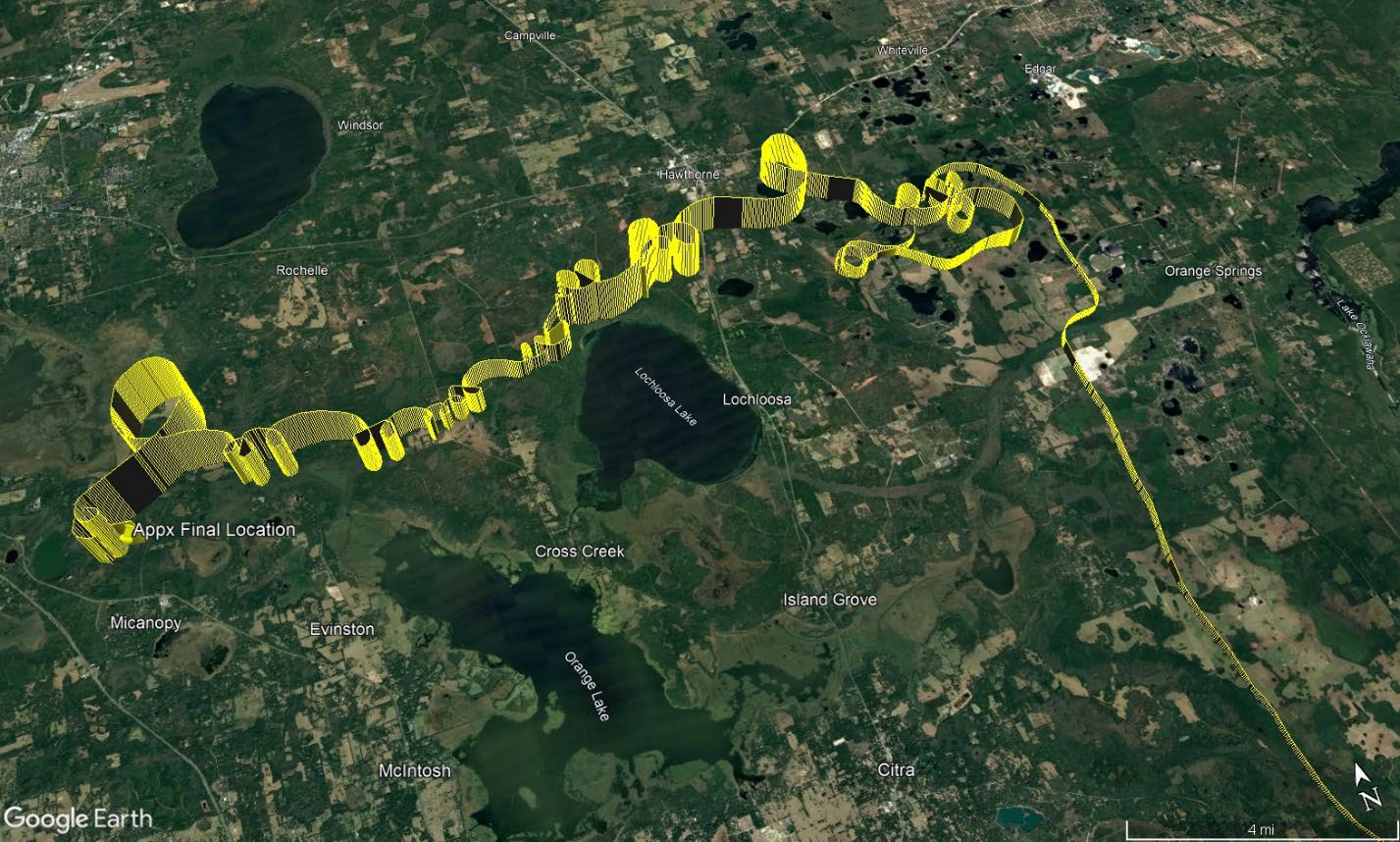
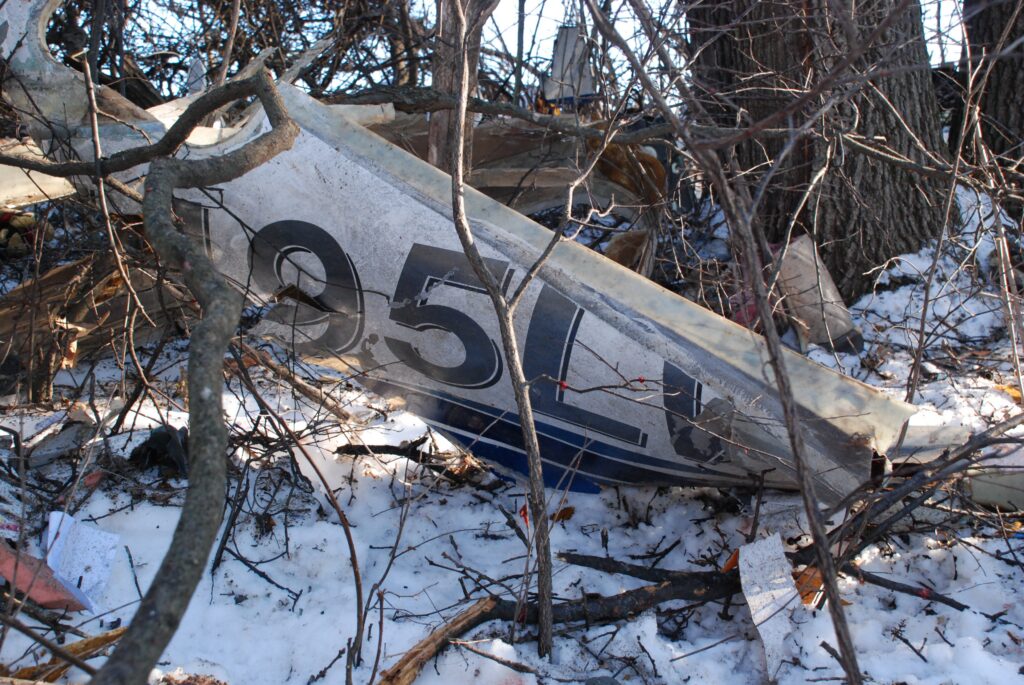
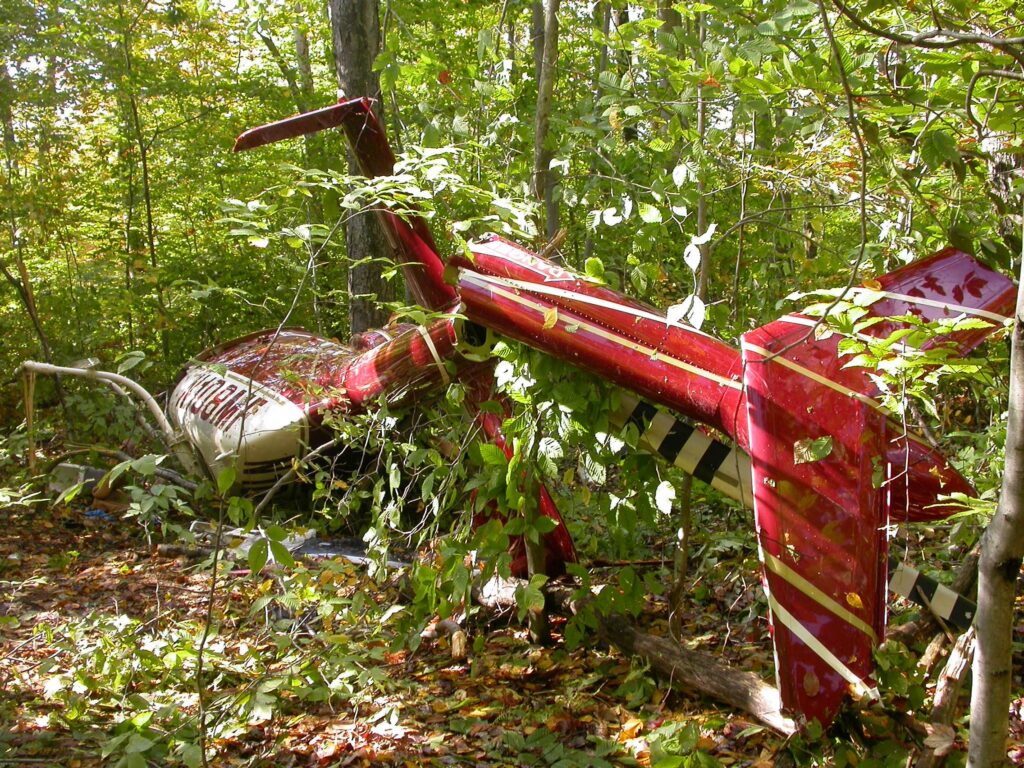
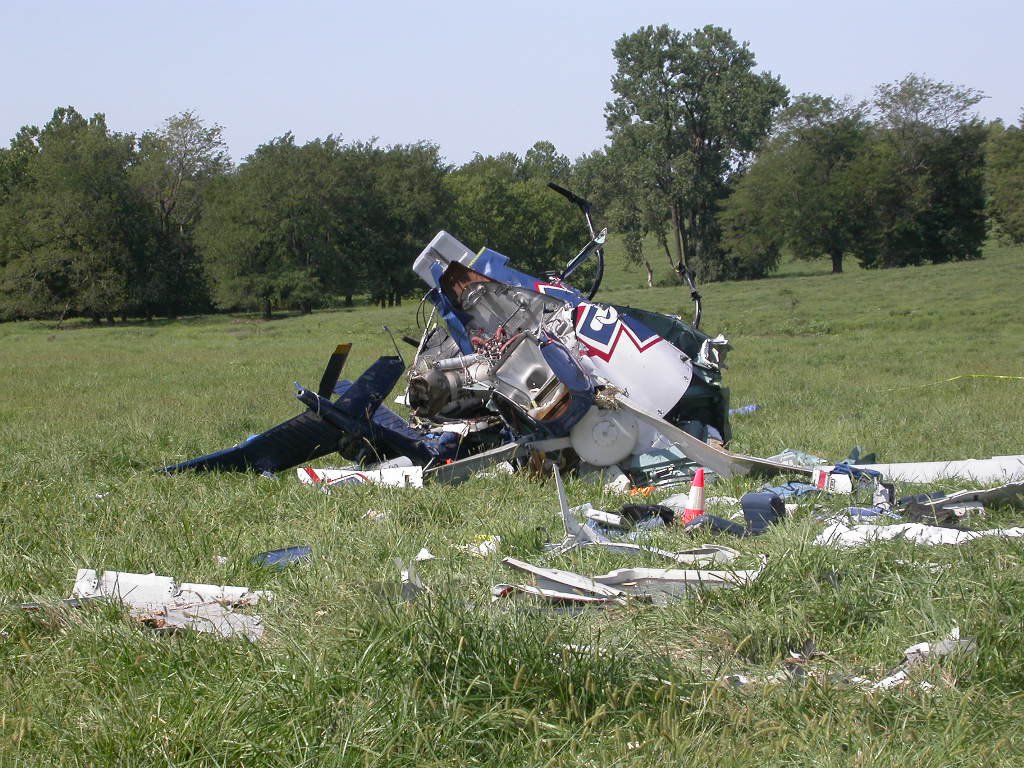
The situation deteriorated rapidly. The pilot reported that both his vacuum-driven attitude indicator and his electric turn and bank indicator had failed. Without these critical flight instruments, and unable to see outside references, he was flying essentially blind in the clouds. At one point, he told ATC he thought he was “upside down.” Controllers tried to help, providing radar vectors toward better weather and coaching him on control inputs when they saw him deviating from assigned headings or altitudes. But it wasn’t enough. The final ADS-B data points show two tight left turns in a steep descent exceeding 5,000 feet per minute. The Cherokee impacted the ground in a wooded area near Micanopy at 2:09 PM, creating a four-foot-deep crater and killing the pilot instantly.
Investigation Findings
The NTSB’s investigation revealed a cascade of factors that turned a routine flight into a fatal accident. Weather was the primary culprit. At the time of the crash, the nearest reporting station showed IFR conditions with only two miles visibility in moderate rain and mist, with a broken ceiling at 1,600 feet. Another nearby airport reported an overcast layer at just 700 feet above ground level. Neither condition met the basic VFR minimums of 1,000-foot ceilings and three miles visibility.
The pilot’s preparation for this flight was inadequate. Investigation revealed he never contacted Flight Service for a weather briefing, nor did he access weather information through his ForeFlight account, despite having the route programmed into the app. Had he checked, he would have seen graphical forecasts showing marginal VFR conditions along his route, with rain showers and broken clouds. A graphical AIRMET for IFR conditions was active for portions of his planned flight path.
The airplane itself presented additional challenges. Records showed that during a pre-purchase inspection six months earlier, a mechanic had identified the attitude indicator as inoperative. There were no maintenance entries indicating this critical instrument had been repaired or replaced before the accident. Post-crash examination confirmed both the attitude indicator and turn coordinator showed signs of rotation at impact, meaning their gyroscopes were spinning, but the nature of any malfunction in the attitude indicator couldn’t be determined. For a non-instrument-rated pilot entering clouds, a failed attitude indicator becomes a death sentence.
The pilot’s experience level was another contributing factor. His logbook showed only 2.2 hours of simulated instrument time and one hour of actual instrument conditions—all logged nearly three years before the accident in January 2021. He held no instrument rating and had no logged time in the accident aircraft. Toxicology results detected carboxy-delta-9-THC in his blood, indicating past cannabis use, but levels suggested this occurred well before the flight and was not a factor in his performance that day.
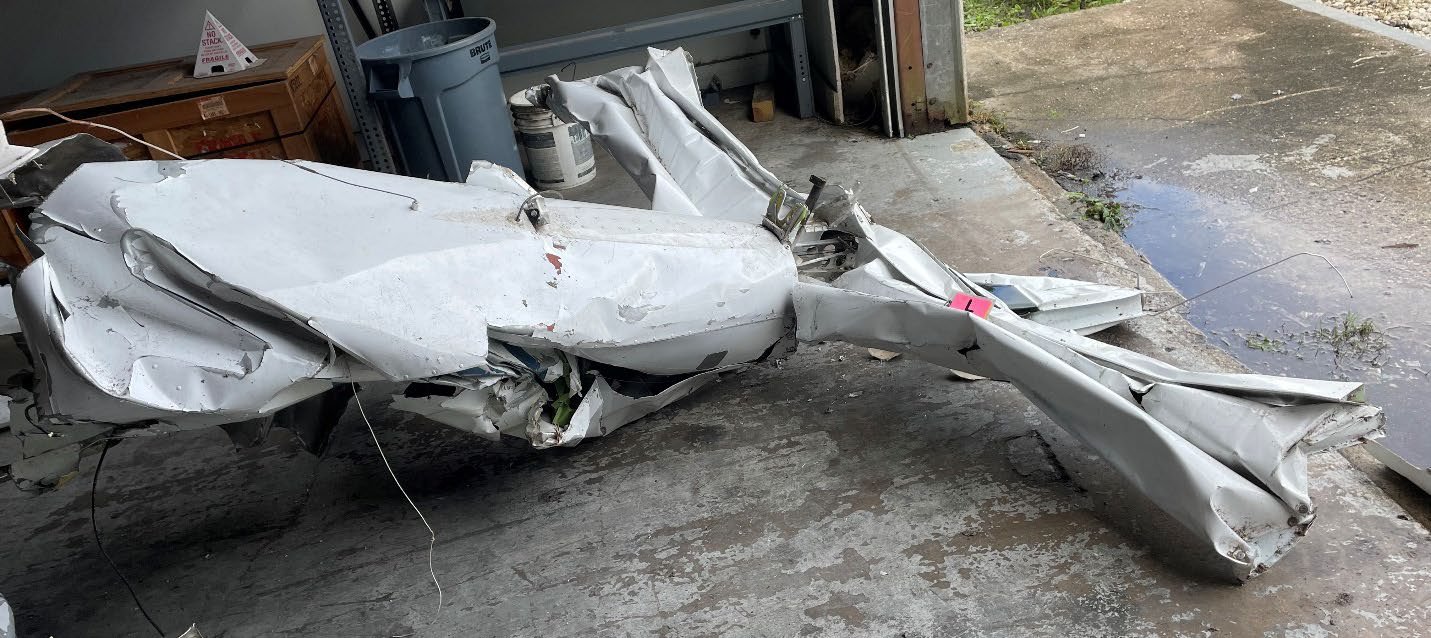
NTSB Probable Cause
The non-instrument-rated pilot’s improper inflight decision making and his flight into instrument meteorological conditions, which resulted in spatial disorientation and subsequent loss of airplane control. Contributing to the accident were the pilot’s inadequate preflight weather planning.
Safety Lessons
This accident illustrates the deadly combination of inadequate weather planning and continued VFR flight into deteriorating conditions. The pilot found himself trapped in a situation that demanded instrument flying skills he didn’t possess, with partially failed instruments, in an airplane he’d owned for just two weeks.
- Weather briefings aren’t optional. This pilot programmed his route into ForeFlight but never accessed weather information. Even a quick check would have shown marginal conditions and active AIRMETs for IFR weather. The updated surface observation at departure—showing “few” instead of “broken” clouds at 800 feet—created just enough legal wiggle room to depart VFR, but the broader picture still showed trouble ahead.
- Know your airplane’s equipment before you need it. The pilot had owned this Cherokee for exactly two weeks and apparently didn’t know his attitude indicator was inoperative. When he encountered clouds and lost outside visual references, this equipment failure became critical. A thorough pre-flight review of all systems, especially for a recently purchased aircraft, could have revealed this issue while still on the ground.
- Have an escape plan and use it early. Once this pilot began encountering clouds around 20 miles from his destination, the correct response was an immediate 180-degree turn toward better weather. Instead, he continued north and descended, likely hoping to stay below the clouds. By the time he declared an emergency, spatial disorientation had already begun. VFR pilots must treat any loss of visual reference as an immediate emergency requiring an escape maneuver, not continued flight hoping conditions will improve.
Frequently Asked Questions
Q: Why didn’t the pilot just turn around when he first encountered clouds?
A: This is a common trap in VFR-into-IMC accidents. Pilots often continue forward hoping to find a way through or under the clouds, especially when they’re close to their destination. The pilot descended from 2,000 feet to 800 feet, likely trying to stay below the cloud layer. Once he entered the clouds and lost visual reference, spatial disorientation set in quickly, making controlled flight nearly impossible without instrument training.
Q: Could ATC have done anything differently to help save this flight?
A: ATC actually provided exceptional assistance, giving radar vectors toward better weather and coaching the pilot on altitude and heading control. However, once a non-instrument pilot becomes spatially disoriented in clouds with failed instruments, the outcome is usually predetermined. The best intervention would have been preventing the flight entirely through proper weather planning or an early turn-around when conditions deteriorated.
Q: How quickly can spatial disorientation occur in clouds?
A: Spatial disorientation can begin within seconds of losing outside visual references. The inner ear’s balance system provides conflicting information to what the pilot expects, leading to false sensations of turning, climbing, or descending. Without instrument training and proper scan techniques, pilots typically lose control within 1-2 minutes of entering clouds. This pilot’s erratic flight path over 38 minutes shows the classic signs of someone fighting spatial disorientation without the skills to overcome it.
Q: What should VFR pilots do if they accidentally enter clouds?
A: The immediate response should be a level 180-degree turn to exit the way you came, maintaining wings level using the turn coordinator if available. Don’t chase the attitude indicator if it’s unreliable. Focus on small control inputs and avoid overcontrolling. Declare an emergency with ATC immediately—they can provide vectors and altitude information. The key is executing this maneuver before spatial disorientation sets in, which means treating any cloud encounter as an immediate emergency.
Q: Why was the pilot legally allowed to depart in these weather conditions?
A: The updated weather observation showing “few” clouds at 800 feet technically met VFR minimums, which require clear of clouds below 1,200 feet AGL. However, legal and safe are different standards. The broader weather picture showed marginal conditions with active AIRMETs for IFR weather. Good pilot judgment should have led to either an IFR flight plan with an instrument-rated pilot or delaying the flight until conditions improved.