What Happened
On July 31, 2011, a 1956 Beech G35 Bonanza, N156RP, departed Stuart Powell Field Airport in Danville, Kentucky at approximately 1119 eastern daylight time. The destination was Perry-Houston County Airport in Perry, Georgia, roughly 430 nautical miles to the southeast. The 44-year-old private pilot, who reported 400 total hours and 140 hours in the G35 on a January 2011 insurance application, was the sole occupant. The day was clear, visibility 10 miles, with a temperature of 33 degrees Celsius at the destination. Everything about the flight looked routine.
The pilot climbed to a cruise altitude of 9,200 feet and picked up VFR flight following with Atlanta Center. The flight proceeded without incident until sometime before 1319, when he cancelled flight following. From that point, radar data shows the airplane beginning a descent from 9,200 feet. The descent rate was 2,000 feet per minute and the ground speed was 180 knots. Those two numbers together are the beginning of the problem. The G35 flight manual lists VNE, the never-exceed speed, at 176 knots. The airplane was already past it, and still descending.
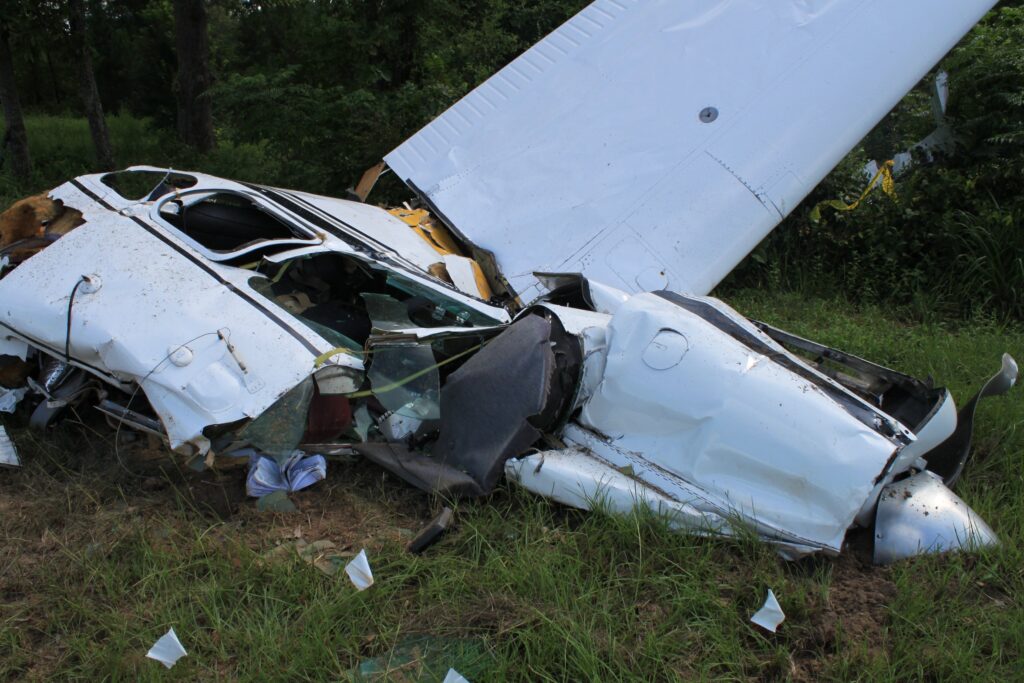
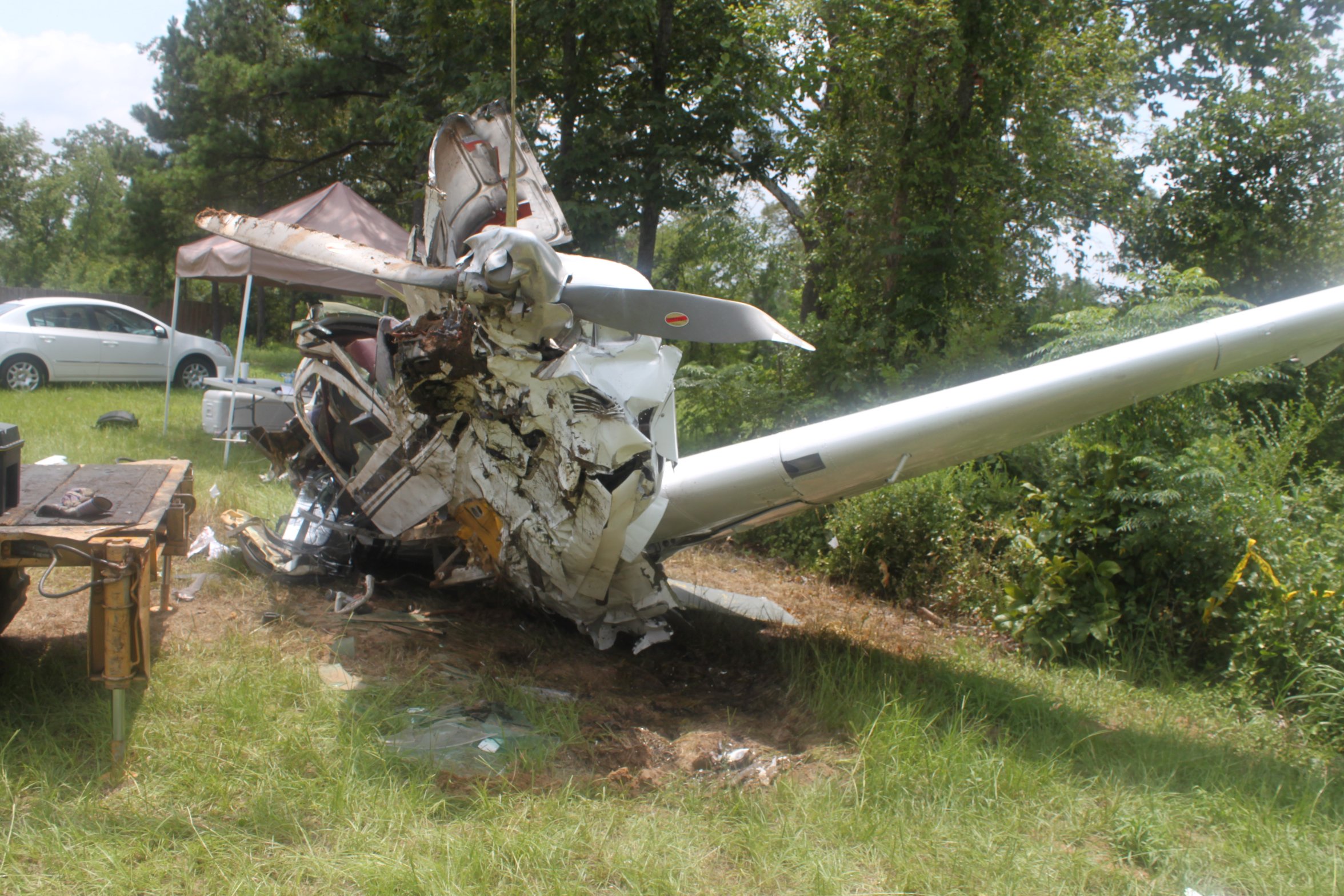
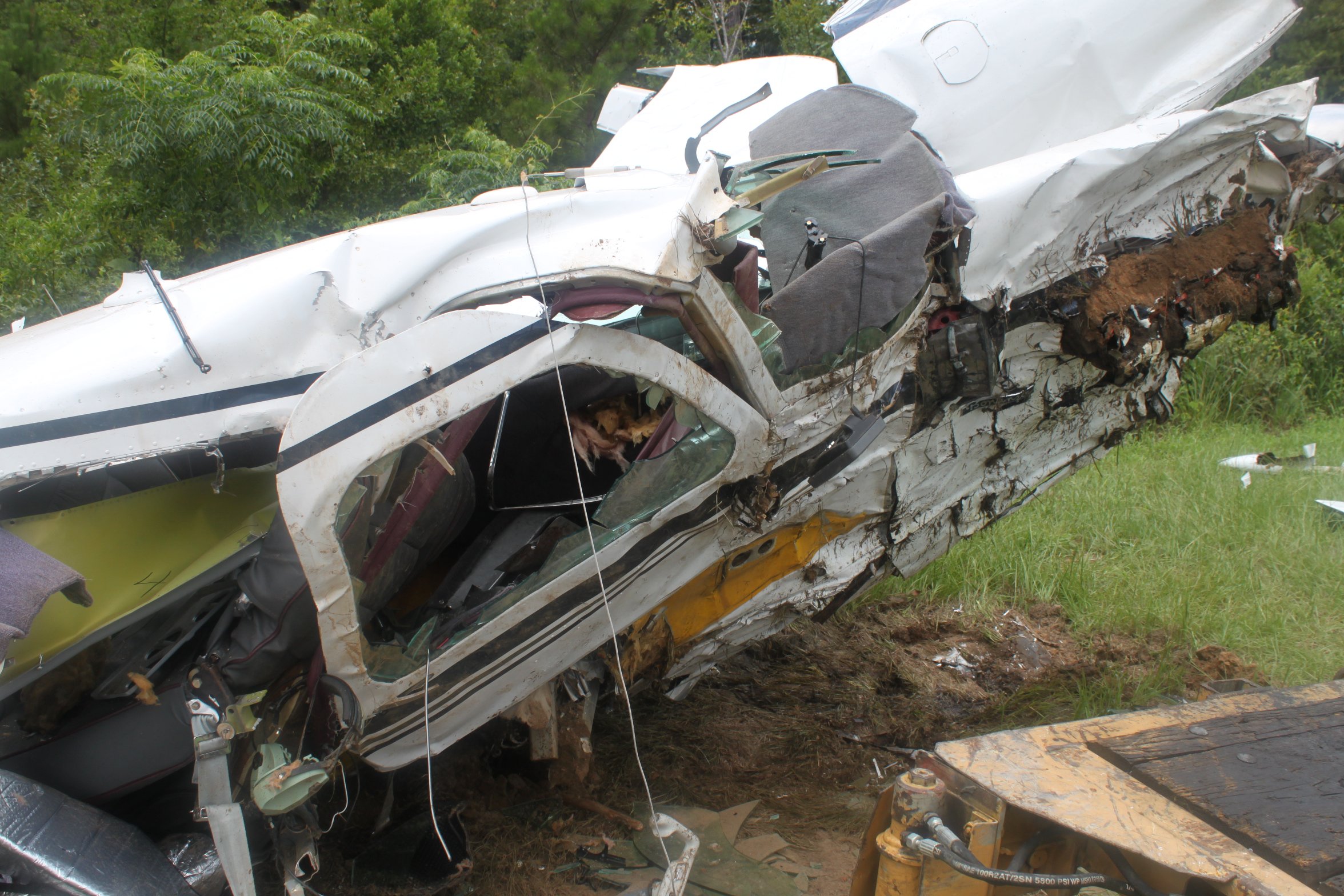
Radar tracked N156RP down through the altitudes. At approximately 3,000 feet mean sea level, the ground speed read 178 knots. Then radar contact was lost. No radio calls came from the pilot after that. A few miles south of the radar dropout, two men were working in a field near Byron, Georgia. They heard a loud popping sound and looked up. They saw an airplane. They saw what looked like a wing separating from it. The airplane began to spin. It came down into a vacant lot in a residential subdivision at approximately 1319. The pilot was fatally injured. The wreckage debris path stretched approximately 970 feet on a magnetic heading of 230 degrees.
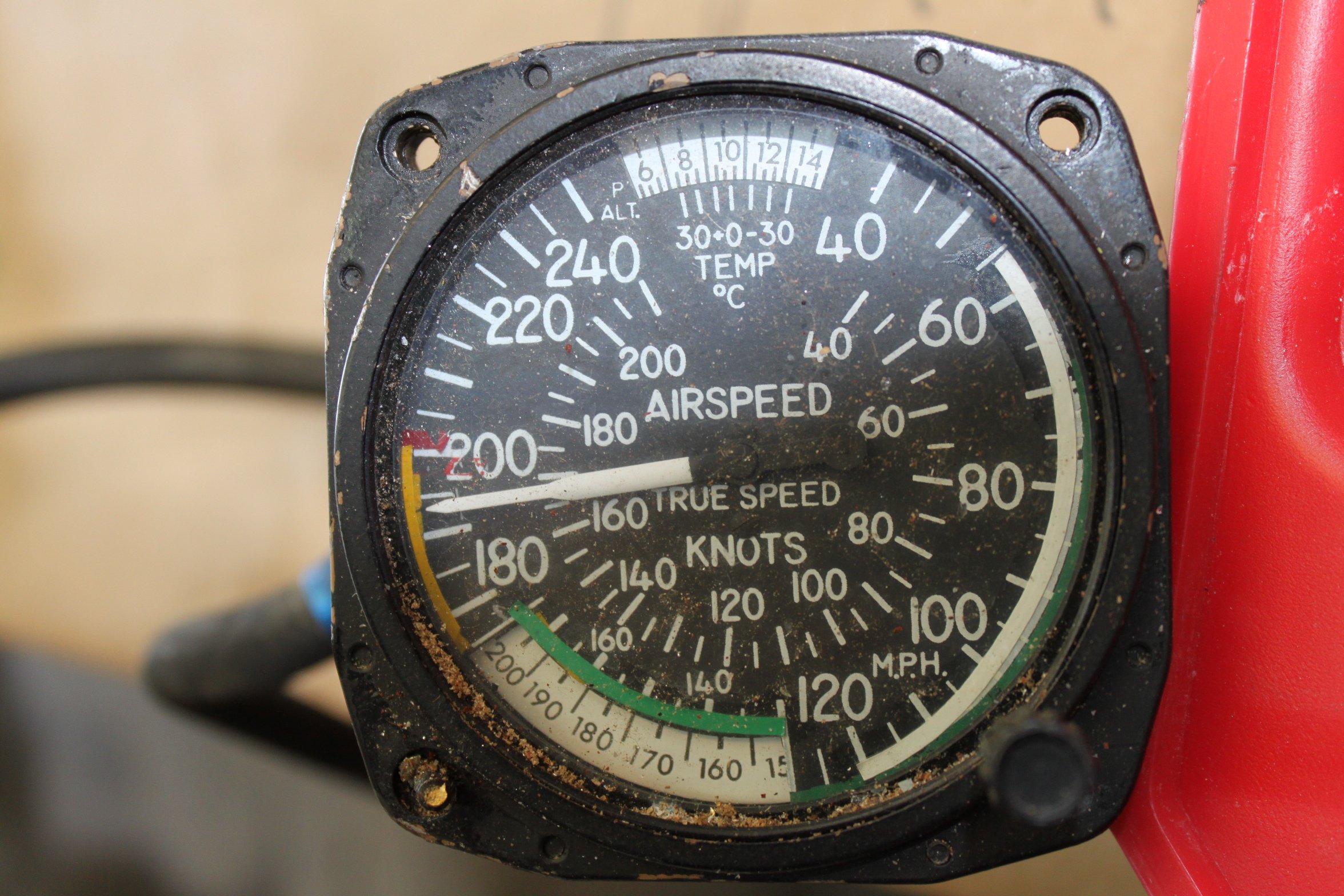
The right wing had separated completely at the wing root and was found approximately 500 yards from the main wreckage, also on the 230-degree heading. The left wing remained attached at the root but showed diagonal wrinkles along both the upper and lower wing skins and a separated wingtip. Both stabilizers had separated from the aft fuselage. The ruddervators had come apart into multiple pieces. One ruddervator horn was found at the very beginning of the debris field, meaning it departed the airplane first. When investigators found the airspeed indicator in the wreckage, the needle was frozen at 192 miles per hour.
Investigation Findings
The post-accident examination worked through the wreckage systematically. The engine told part of the story: the crankshaft rotated, compression was confirmed on all six cylinders, the spark plugs showed normal wear signatures, and borescope inspection of the combustion chambers found nothing unusual. When the propeller was examined, both blades showed rotational scoring, meaning the engine was producing power and the prop was turning at impact. There was no mechanical failure. The airplane did not come apart because something broke inside the engine. The engine was running.
The structural breakup sequence was reconstructed from the position and condition of the pieces. The stabilizers broke first, fracturing in a downward direction under high positive aerodynamic loads. The Bonanza’s V-tail design means the ruddervators carry both pitch and yaw loads simultaneously, and at speeds beyond VNE, those loads exceeded what the structure was designed to handle. Once the stabilizers went, pitch control was gone. The airplane immediately pitched nose-down, transitioning from a high positive angle of attack to a high negative one. That sudden load reversal put enormous negative air loads on the wings. The right wing broke downward at the carry-through structure. The forward spar carry-through fractured. The upper and lower wing attach fittings separated. The left wing and fuselage then rotated left-wing-down into the terminal spin the witnesses described.
Investigators specifically looked for evidence of flutter, a different failure mode where a control surface oscillates at a resonant frequency and can tear itself and the surrounding structure apart. They found no specific evidence of flutter. The breakup pattern was consistent with overstress, not resonance. The airplane was simply going faster than its structure was certified to handle, and the structure failed. The airspeed indicator needle frozen at 192 miles per hour was consistent with that picture. VNE for the G35 is 202 miles per hour on the outer MPH scale, but the knots equivalent on the inner ring is 175 knots. The needle at 192 MPH corresponds to approximately 167 knots indicated, but the groundspeed data from radar showed 178 to 180 knots across multiple radar returns during the descent. The discrepancy between indicated and actual groundspeed is not unusual in a steep descent with a tailwind component, and the radar data is the more objective of the two measures. Either way, the airplane was operating at or beyond the edge of its certified envelope, and then past it.
Toxicology found no ethanol in the liver or muscle, and no drugs were detected. The pilot’s logbook was not recovered. There was no flight plan on file. The last annual inspection had been completed 57 days before the accident, on June 4, 2011, at a tachometer time of 366.18 hours. The airframe total time at the annual was 4,172.2 hours, estimated from a 1995 logbook reconstruction after the originals were lost. Nothing in the maintenance records suggested any structural compromise prior to the flight.
NTSB Probable Cause
The pilot’s sustained flight at airspeeds in excess of the airplane’s never exceed speed during a steep descent, which resulted in a subsequent in-flight structural failure due to overstress.
Safety Lessons
A steep, uncontrolled descent in a fixed-gear airplane at cruise power is a manageable situation. The same descent in a Bonanza, or any high-performance retractable, is a different problem. The structure is lighter, VNE is closer to cruise speed, and the margin disappears faster than most pilots expect. Three things from this accident are worth sitting with.
- Know your VNE in both units. The G35 airspeed indicator in this airplane had MPH on the outside ring and knots on the inner ring. VNE was 202 MPH, which equals 175 knots. Those are not interchangeable numbers, and confusing them gives you a 27-knot error in the wrong direction. Before you fly any unfamiliar airplane, verify VNE in the units you will actually use in flight, and confirm which scale your airspeed indicator is marked in.
- A 2,000-foot-per-minute descent in cruise configuration is not a normal descent. Radar showed this airplane descending from 9,200 feet at 2,000 feet per minute with a groundspeed already above VNE. In a Bonanza at cruise power and attitude, 2,000 feet per minute requires a nose-down pitch that is nearly impossible to maintain without accelerating well past VNE. If you need to lose altitude quickly, throttle back first, extend the gear if equipped, and pitch for a speed well inside the yellow arc before you start down.
- Cancelling flight following removes a safety layer exactly when you may need it most. This pilot cancelled VFR flight following just before entering the descent that broke the airplane apart. Atlanta Center had radar contact. They would have observed the groundspeed and descent rate. They might have asked a question. That question might have interrupted the chain. Flight following costs nothing and adds a set of eyes on your track. Keep it active until you’re talking to the tower at your destination.
Frequently Asked Questions
Q: What is VNE on the Beech G35 Bonanza?
A: The never-exceed speed for the Beech G35 is 202 miles per hour indicated, which converts to 175 knots. The G35 airspeed indicator uses an outer MPH scale and an inner knots scale, so pilots must confirm which scale they are reading. Exceeding VNE, particularly in a steep descent, risks in-flight structural failure.
Q: Why did the right wing separate before the left wing on N156RP?
A: The structural breakup sequence began with the V-tail stabilizers failing under positive aerodynamic overload. Once the stabilizers departed, the airplane pitched sharply nose-down, reversing from a high positive angle of attack to a high negative one. The resulting negative air loads on the wings were concentrated on the right wing’s carry-through structure, which fractured first. The left wing and fuselage then rotated left-wing-down into a spin.
Q: Was there any mechanical failure that caused the Bonanza to break up?
A: No. The engine examination found all six cylinders producing compression, normal spark plug wear, and no pre-impact mechanical anomalies. The propeller showed rotational scoring consistent with a running engine at impact. The breakup was caused by aerodynamic overstress from exceeding VNE during a steep descent, not by any failure of the engine or its components.
Q: How fast was the Bonanza descending when it broke up?
A: Radar data recorded a groundspeed of 180 knots and a descent rate of 2,000 feet per minute from 9,200 feet. At approximately 3,000 feet, groundspeed was still 178 knots before radar contact was lost. The airspeed indicator needle was frozen at 192 miles per hour in the post-accident examination, consistent with flight at or beyond the airplane’s 202 MPH (175-knot) VNE.
Q: What does it mean when a V-tail Bonanza’s stabilizer breaks before the wings?
A: In an overspeed event, the V-tail’s ruddervators and stabilizers carry the primary pitch load. If airspeed exceeds design limits, those surfaces can fail under positive aerodynamic loading before the wings do. When the tail fails, pitch control is immediately lost and the nose drops violently, reversing the wing’s angle of attack from positive to sharply negative. That load reversal then overstresses the wings from below, causing them to separate in a downward direction.