What Happened
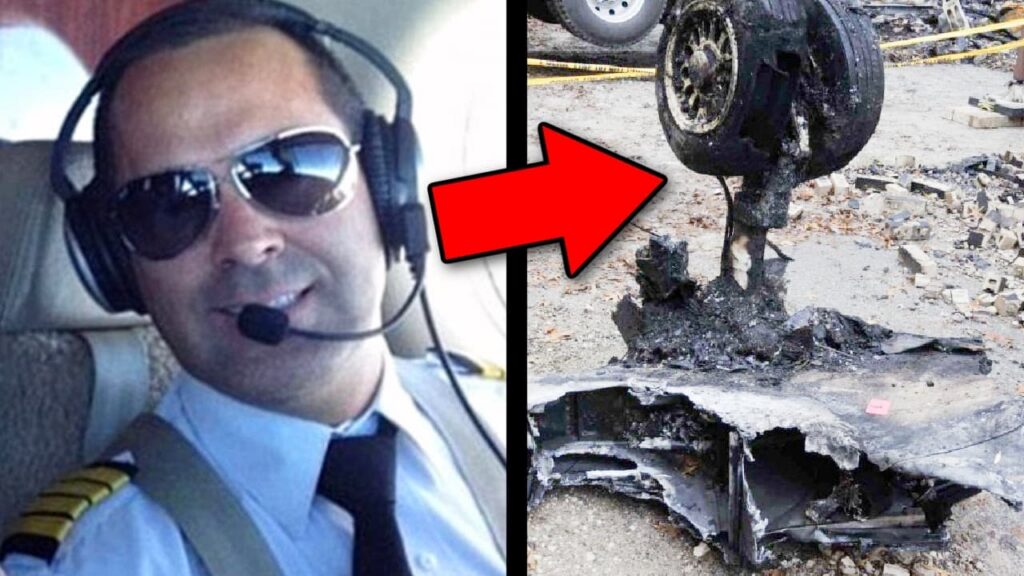
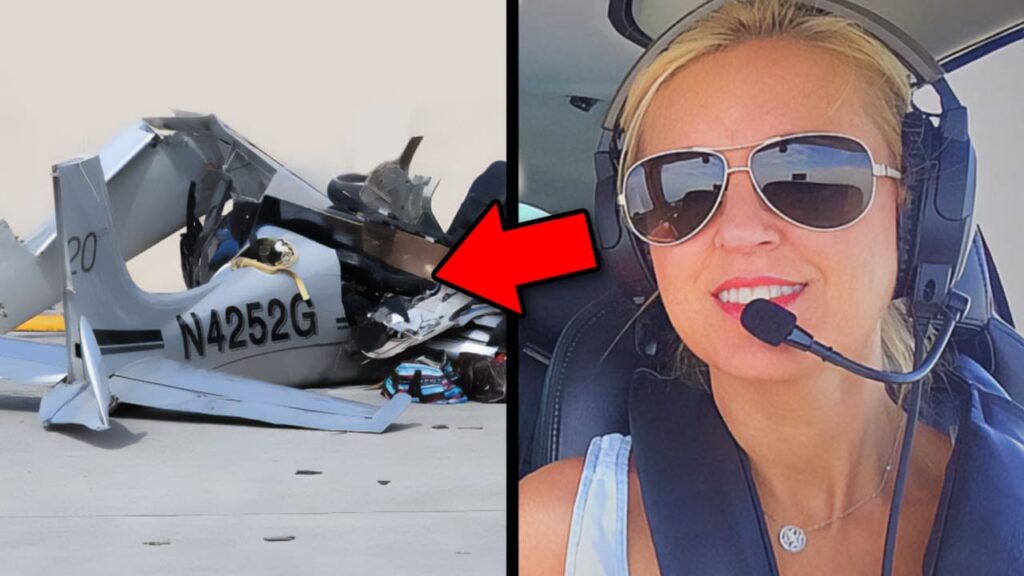
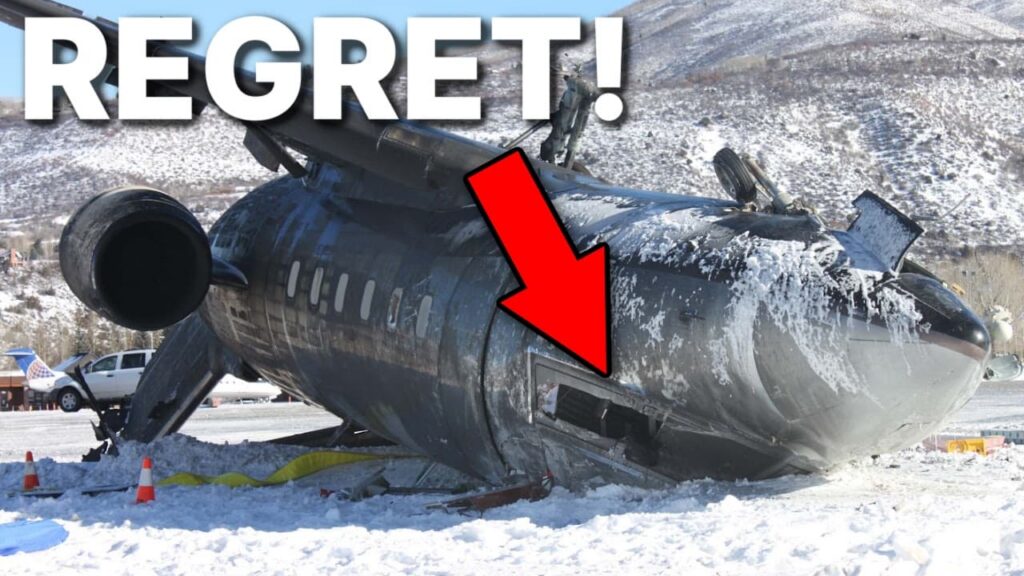
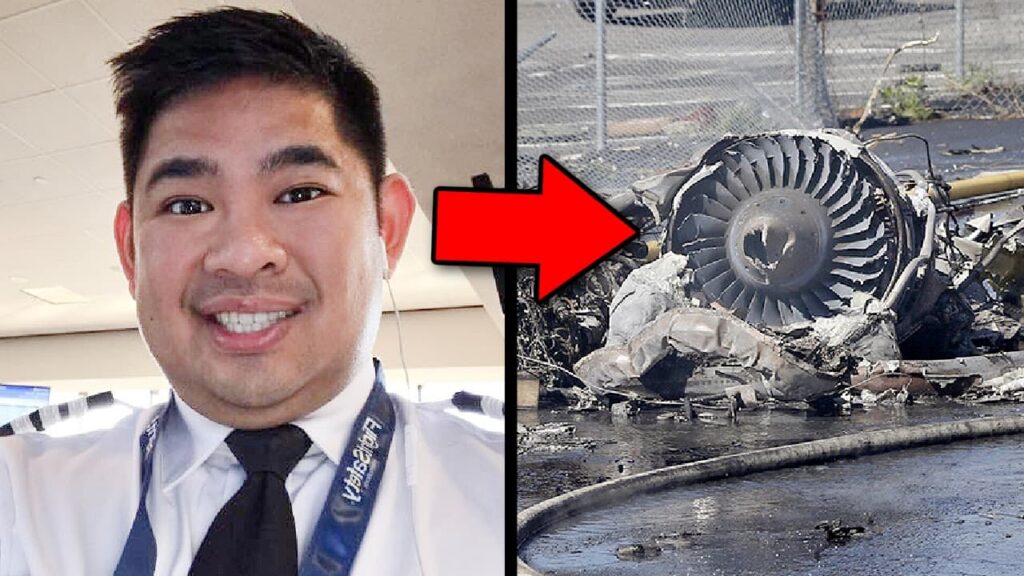
On May 15, 2017, at approximately 1529 eastern daylight time, a Learjet 35A registered N452DA departed controlled flight during a circling approach to runway 1 at Teterboro Airport in Teterboro, New Jersey. The airplane struck a commercial building and parking lot. Both the pilot-in-command and the second-in-command were killed. No one on the ground was injured. The airplane was destroyed by impact forces and the postcrash fire that followed.
The flight had originated at Philadelphia International Airport at roughly 1504, a positioning flight under Part 91 operated by Trans-Pacific Air Charter, LLC. The airplane was registered to A&C Big Sky Aviation, LLC. The distance between Philadelphia and Teterboro is about 80 nautical miles. On a calm day, that leg takes around 25 minutes in a Learjet 35A. The crew had approximately 25 minutes from wheels-up to impact.
Visual meteorological conditions prevailed. The crew had filed an IFR flight plan, and TEB was reporting good weather. So there was no weather drama, no mechanical emergency, no distress call. What was waiting for them at Teterboro was a circling approach to runway 1, a procedure that demands precise energy management and tight geometry in a high-performance aircraft at one of the busiest business aviation airports in the country.
Teterboro runway 1 sits at the north end of the field and is oriented roughly north-northeast. A circling approach means the crew flew a published instrument approach to one runway, broke out of the procedure visually, and then maneuvered the aircraft around the airport environment to land on a different runway. In a Learjet 35A, circling approaches require discipline. The airplane has a relatively high approach speed, limited low-speed handling margin, and a strong tendency to energy-bleed quickly in a tight bank. The circling maneuver essentially asks the crew to manage all of that while keeping the runway in sight, staying within protected airspace, and configuring for landing.
What the NTSB’s investigation found was that the approach was unstabilized. The airplane was not on a normal glidepath, not at a normal airspeed, not configured in a way consistent with a controlled arrival at the threshold. And when the pilot-in-command attempted to salvage that approach rather than execute a go-around, the airplane departed controlled flight. At low altitude. With no room to recover.
But the approach itself was only one part of the story. The investigation revealed that the second-in-command who was flying the aircraft that day was not approved to act as pilot flying under the company’s operating structure. The pilot-in-command had effectively handed the controls to someone who was not authorized to occupy that role, and then did not intervene when the approach deteriorated. There was no approach briefing. Preflight planning was incomplete. And the systems that should have caught all of this, both inside Trans-Pacific Air Charter and at the FAA level, had failed to identify that this pattern existed.
Investigation Findings
The NTSB investigation, which produced a full Aircraft Accident Report designated NTSB/AAR-19/02, dug into not just the mechanics of the final approach but the organizational conditions that allowed the crew to arrive at that moment unprepared. Investigators found that the second-in-command was acting as pilot flying despite not being approved for that role under the company’s structure. The pilot-in-command, who bore the legal and operational responsibility for the flight, had not ensured that the crew configuration was appropriate before departure.
Preflight planning was inadequate and incomplete. For a short positioning flight, this might seem like a minor lapse, but a circling approach at Teterboro into runway 1 is not a trivial arrival. The geometry, the speeds, and the traffic environment at TEB demand a crew that has talked through the approach, agreed on speeds and callouts, and established a clear go-around plan. None of that happened. The crew conducted no approach briefing. That meant when things started going wrong in the circling maneuver, neither pilot had a shared mental model of what the other expected, what the thresholds were, or when a go-around was mandatory.
The airplane’s performance data and the approach geometry reconstructed by investigators showed the approach was unstabilized. At the point where the pilot-in-command attempted to correct the flight path and salvage the landing, the aircraft was at low altitude with insufficient energy and excessive bank angle. The resulting aerodynamic stall was unrecoverable. In a Learjet 35A, the stall speed in a banked turn increases significantly. At 45 degrees of bank, stall speed rises roughly 19 percent over wings-level stall speed. At a low altitude with degraded energy state, the margin between flying and not flying collapsed to zero.
The investigation also turned a hard lens on Trans-Pacific Air Charter, LLC. The NTSB found that the company lacked safety programs capable of identifying and correcting patterns of poor performance and procedural noncompliance. This was not the first time that procedural standards had been overlooked within the organization. Without a functioning safety management system, there was no mechanism to catch the drift before it reached a fatal endpoint. The FAA’s own Safety Assurance System procedures, designed to provide oversight of operators like Trans-Pacific, had also failed to identify the company’s oversight deficiencies. The regulatory net had a gap large enough for this accident to fall through.
Postcrash examination of the airframe and engine found no evidence of pre-impact mechanical failure. The airplane was airworthy. The engines were producing power. The control surfaces functioned. What the investigation did not find was equally important: there was no mechanical reason this airplane had to crash.
NTSB Probable Cause
The pilot-in-command’s (PIC) attempt to salvage an unstabilized visual approach, which resulted in an aerodynamic stall at low altitude. Contributing to the accident was the PIC’s decision to allow an unapproved second-in-command to act as pilot flying, the PIC’s inadequate and incomplete preflight planning, and the flight crew’s lack of an approach briefing. Also contributing to the accident were Trans-Pacific Jets’ lack of safety programs that would have enabled the company to identify and correct patterns of poor performance and procedural noncompliance and the Federal Aviation Administration’s ineffective Safety Assurance System procedures, which failed to identify these company oversight deficiencies.
Safety Lessons
Three distinct failure chains converged on that circling approach to runway 1. Each one independently should have broken the sequence. None of them did.
- Stabilized approach criteria are a go-around trigger, not a suggestion. Every major operator publishes stabilized approach criteria for a reason. In a high-performance jet like the Learjet 35A, the margins are compressed compared to a light twin or piston single. If the aircraft is not on speed, on glidepath, and properly configured by the final approach fix or a set altitude, the only correct answer is the go-around. Not a correction. Not a salvage attempt. The go-around. The energy required to recover an unstabilized circling approach at low altitude in a swept-wing jet does not exist at pattern altitude.
- The approach briefing is not paperwork, it is shared decision-making in advance. When a crew briefs an approach, they are not reciting checklist items for the sake of compliance. They are establishing, in explicit terms, what each pilot will monitor, what calls they will make, what deviations will trigger a go-around, and who has authority to call it. Without that briefing, each pilot is flying a slightly different approach in their head. When the picture starts to fall apart, the crew has no common reference point for when to stop trying and execute the missed. The TEB crew had no briefing. They had no shared standard. And when the approach deteriorated, the pilot-in-command attempted to fix it rather than abandon it.
- Organizational safety programs exist to catch what individual crews miss. The failure at Teterboro did not begin on May 15, 2017. It accumulated over time, in a company that had no functioning mechanism to identify procedural drift and correct it before someone got hurt. If you fly for a Part 91 operator, Part 135 operator, or any organization that moves aircraft and people, the safety culture of that organization is part of your risk picture. An operator that cannot identify patterns of noncompliance cannot protect you from the consequences of those patterns. The FAA’s oversight gap in this case is documented. That is a systemic issue. But individual pilots also have the ability to assess whether the operation they are working within has real safety standards or just the appearance of them.
Frequently Asked Questions
Q: What is a circling approach and why is it more dangerous than a straight-in?
A: A circling approach means the crew flies an instrument approach aligned with one runway, breaks out visually, and then maneuvers the aircraft to land on a different runway. The danger is that it combines the energy management demands of a normal approach with the added complexity of maneuvering at low altitude while keeping the runway in sight. In a high-performance jet like the Learjet 35A, the airplane is moving fast, the stall speed in a banked turn is significantly higher than wings-level stall speed, and there is very little altitude available to recover from any deviation. Circling minimums in instrument procedures exist for a reason: they define the minimum altitude at which you can maneuver visually, and they are already very close to the ground.
Q: What does it mean for an approach to be “unstabilized” in a jet aircraft?
A: Stabilized approach criteria typically require the aircraft to be on the correct glidepath, at the correct approach speed (usually Vref or Vref plus a defined additive), in the correct landing configuration, with a stable rate of descent, by a defined point — usually 1,000 feet above the airport in IMC or 500 feet in VMC. An unstabilized approach means one or more of those parameters is outside limits at that gate. In a Learjet 35A, being fast or high on a circling approach means the crew has to make aggressive corrections at low altitude. Those corrections, particularly steep banks to turn final when already fast and low, can push the aircraft to the edge of its low-speed envelope very quickly.
Q: How does bank angle increase stall speed in a turn?
A: In a level turn, the wing has to generate more lift to maintain altitude because some of the lift vector is directed inward toward the center of the turn rather than straight up against gravity. To generate that extra lift at the same airspeed, the angle of attack increases. At 30 degrees of bank, stall speed increases by about 7 percent over wings-level. At 45 degrees, it increases by roughly 19 percent. At 60 degrees, it is 41 percent higher. In a Learjet 35A on a tight circling approach, if the crew rolls into a steep bank to turn final while already slow and low, the stall speed can jump above the airspeed being flown. That is an aerodynamic stall, at low altitude, with no altitude to recover.
Q: Why was the second-in-command’s role an issue if the pilot-in-command was present?
A: The SIC acting as pilot flying was not approved under the company’s operating structure. That matters for several reasons. First, it reflects a culture of procedural noncompliance that pervaded the operation. Second, the PIC’s legal and operational responsibility for the safety of the flight did not transfer when the controls did. The PIC remained accountable for everything that happened, including the approach that deteriorated and the decision not to go around. Third, if the SIC was not qualified or approved to act as PF, the PIC may have been operating without a clear picture of the SIC’s actual currency and proficiency in that role, which affects how much trust to place in the other pilot’s control inputs and judgment during a critical phase of flight.
Q: What is the FAA Safety Assurance System and why did it fail here?
A: The FAA’s Safety Assurance System is the regulatory oversight framework used to monitor certificated aviation operators and identify safety deficiencies before they result in accidents. In the Trans-Pacific case, the NTSB found that the FAA’s SAS procedures did not effectively identify that the company lacked functioning safety programs and had patterns of procedural noncompliance. The investigation concluded that this regulatory gap was a contributing factor to the accident, because a more effective oversight process could have flagged the organizational problems and required corrective action before May 15, 2017.