
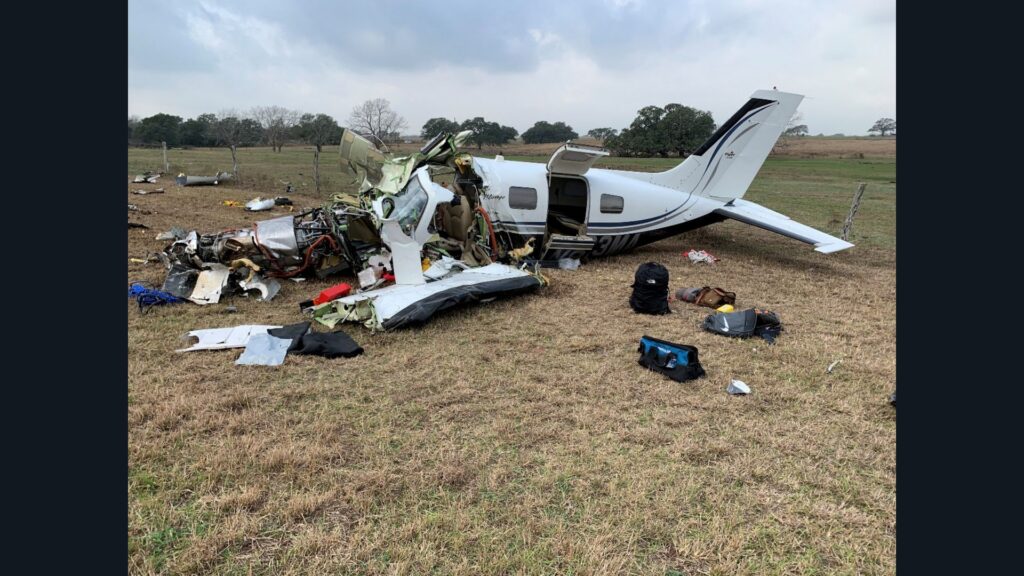
We train the approach like the runway is the finish line. Localizer alive, glideslope centered, minimums, land. But there’s a second procedure buried inside every approach, and most of us treat it as an afterthought. The missed approach.
Think about how you actually fly it. You brief the inbound course, the step-downs, the minimums. Then you glance at the missed and say some version of “climb straight ahead, then direct to the hold.” You’ve already decided you’re landing.
That’s the setup. A missed approach is a transition from descending in the soup to climbing in the soup, hand-flying, at low altitude, in weather that just told you it wasn’t good enough to land. It’s one of the most demanding maneuvers in instrument flying, and it usually happens when you’re least ready for it.
The Case File
The Pattern: Missed Approach (IFR)
The go-around is where the approach turns from a descent into a low-altitude, hand-flown climb in the weather that just refused to let you land.
The missed approach is a reversal. Everything you set up on the way down now has to be undone and rebuilt in a few seconds, low, slow, and with no outside reference. The airplane is close to the ground, close to its slow-speed regime, and you’re transitioning from a stabilized descent to a climbing, turning maneuver while your inner ear tells you things that aren’t true.
From NTSB final reports, 2008–present:
55 accidents were coded with a missed approach as the defining event.
39 of them, 70.9%, were fatal.
84 lives were lost among those 39 mishaps.
That fatal rate is the number to sit with. Most phases of flight give you a wide band of outcomes. This one doesn’t. When the missed approach goes wrong, it goes wrong in a place and a configuration that leaves very little margin, and the majority of the time nobody walks away.
Now let me show you one of those 39 fatal accidents.
One real flight
January 17, 2023. Piper PA-46. IFR cross-country to a destination airport near Yoakum, Texas.
The airplane departed under an IFR clearance. The pilot requested and was cleared for the RNAV (GPS) approach into the destination. Low IFR conditions were forecast for the area and the airport, and the National Weather Service forecasts matched what the airplane found on the approach. Clouds and fog to the ground. The surviving passenger later said he couldn’t see anything out the windows until right before impact.
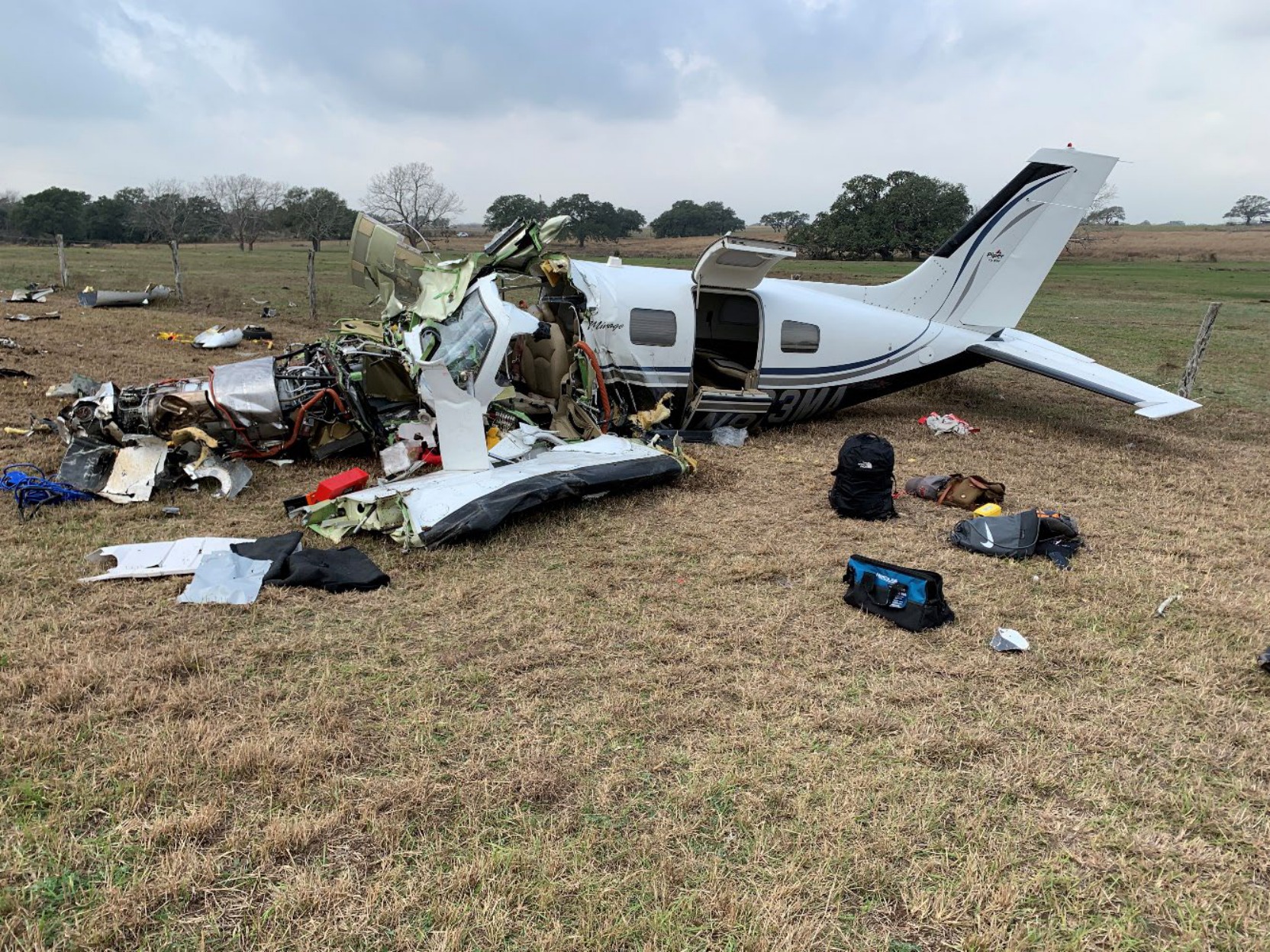
Descending through 3,500 feet MSL, the controller told the pilot to report cancelling IFR and approved a frequency change. That was the last transmission. Radar contact was lost at 2,000 feet MSL, which the facility reported was normal for the approach.
Data recovered from the airplane’s autopilot tells the rest of it. The pilot flew the approach with the autopilot engaged. About 1 mile from the runway and 500 feet above the airport elevation, he initiated a right climbing turn and disconnected the autopilot. A missed approach.
From there the numbers describe an airplane getting away from the person flying it. Pitch increased as high as +20 degrees. Roll reached +47 degrees to the right in the climbing turn. The passenger remembered the airplane “aggressively pitching up,” a warning alarm several times, then “aggressively pitching down.” He saw the pilot pulling hard on the yoke. He believed he heard the copilot calling for the pilot to get the nose up and straighten out.
The pilot then engaged the autopilot’s unusual attitude recovery mode. The autopilot began making inputs to return to level flight. But the pilot made conflicting control inputs at the same time. The airplane entered a brief descent, then a rapid climb. At the top of that climb, indicated airspeed was 16 knots, well below stall speed for any flap configuration. The airplane stalled and dropped into a rapid descent.
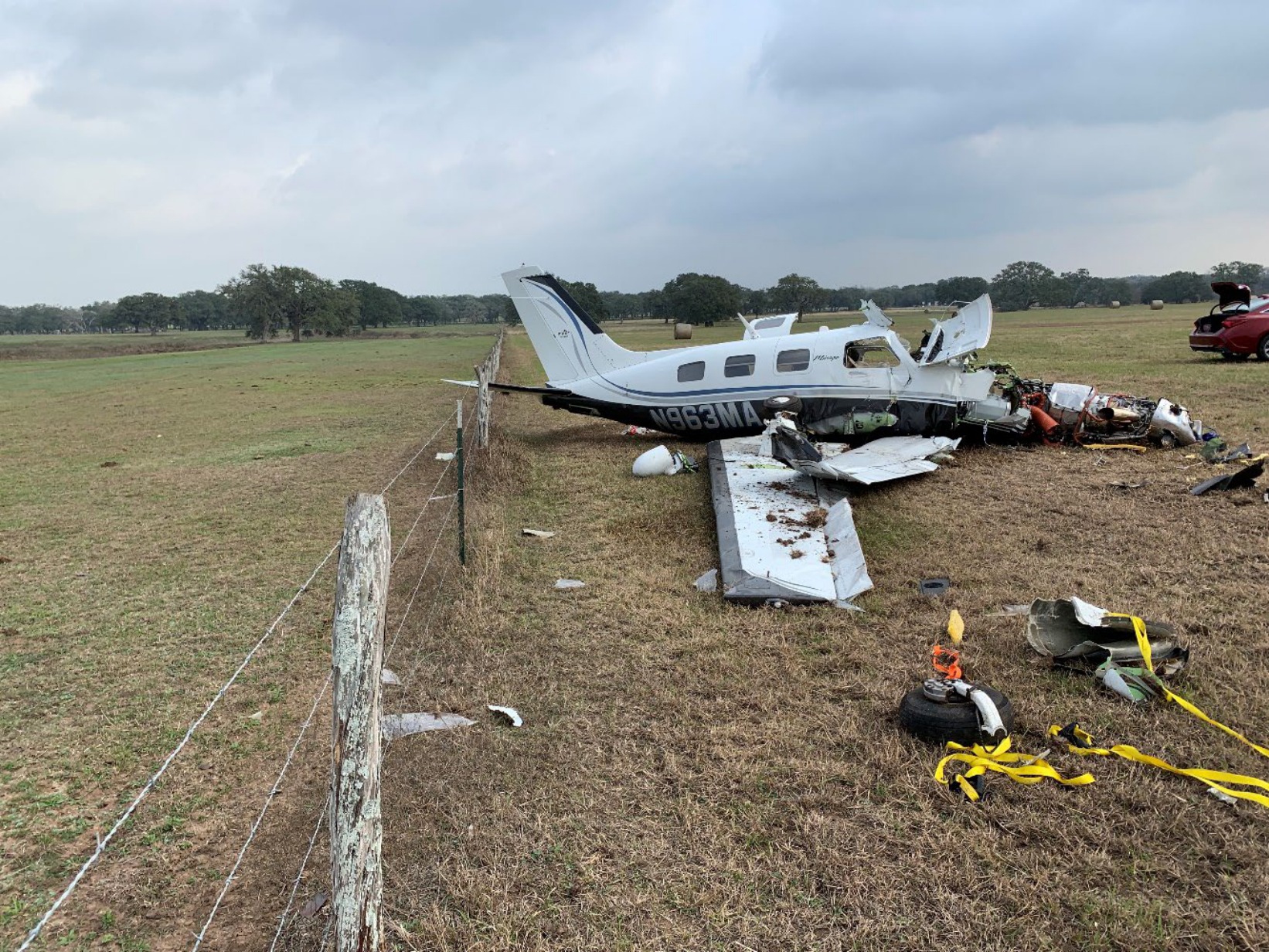
It came to rest in an open field about 1.5 miles from the destination airport. The shallow pitch angle at impact suggests a stall recovery attempt, but there wasn’t enough altitude left to finish it. Post-accident examination found no anomalies with the airframe, engine, or autopilot. Five people were on board and four of them did not survive.
Probable Cause
The pilot’s spatial disorientation during a missed approach in instrument meteorological conditions, which led to an exceedance of the airplane’s critical angle of attack and a subsequent aerodynamic stall. (NTSB CEN23FA084).
The Decision Gates
A missed approach is not one decision. It is a chain of them, each made fast, each closing an exit behind it. Here is where this flight went from an approach to a stall.
Gate 1: The missed approach began hand-flown, in low IFR, immediately after the autopilot came off at 500 feet above the airport.
The airplane flew the entire approach on the autopilot. Then, at the exact moment the workload spiked, the pilot took it off and started a climbing right turn by hand, in cloud, with no outside reference. He went from monitoring to manually flying the most demanding part of the flight in the same second.
The check: When you brief the missed, have you decided whether you fly it by hand or with the automation you already have engaged, before you ever need it?
Gate 2: The climbing turn diverged fast, pitch to +20 degrees and roll to +47 degrees, and stayed diverged.
Spatial disorientation doesn’t announce itself. The inner ear in a climbing turn tells you things the instruments contradict, and the pull of the seat feels like truth. The bank steepened and the pitch climbed while the passenger felt the airplane pitching hard in both directions. The pilot was hand-flying an unusual attitude he may not have recognized as one.
The check: In the clouds, do you trust the attitude indicator over what your body is telling you, every single time, without arguing with it?
Gate 3: The autopilot’s unusual attitude recovery was engaged, then fought.
The pilot reached for the recovery mode. The autopilot started pulling the airplane back to level. But the pilot kept making control inputs at the same time, and those inputs conflicted with the recovery. The airplane pitched down, then climbed rapidly to 16 knots indicated. If you engage automation to recover, it cannot recover while you are also flying.
The check: If you engage an autopilot recovery mode, have you decided in advance to let go of the controls and let it work?
Before your next flight
Here are a few things I want you to think about.
The missed approach deserves the same brief you give the inbound course. Decide before you start down whether you’ll hand-fly it or fly it on the automation you already have running.
In the soup, the attitude indicator is the argument-ender. Your body will lie to you in a climbing turn, and it will feel completely convincing.
If you hand a recovery to the autopilot, let go. Two pilots on the controls, one of them a computer, is not recovery. It’s a fight.
More patterns like this one
If you want to dig into more Missed Approach (IFR) cases from the archive: