What Happened
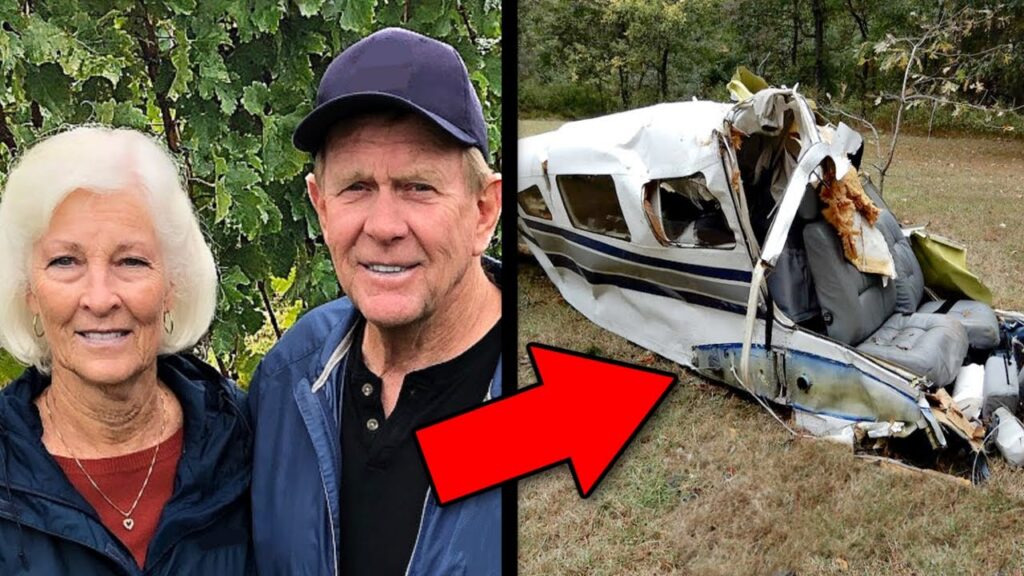
On October 13, 2018, a Piper PA-34-200T Seneca, N593MS, broke apart in flight near Westhampton Beach, New York. The instructor, a private pilot, and a passenger died. Before the breakup, the airplane had climbed far above its announced cruise altitude while the instructor reported cloud encounters and unreliable flight instruments.
The instructor had flown to Danbury, Connecticut, to collect the other occupants for a trip to Charleston, South Carolina. After departure at about 1025 eastern daylight time, he requested visual flight rules flight following and announced a planned climb to 8,500 feet mean sea level.
The airplane continued above that altitude. At 1037, the instructor checked in at 9,200 feet, and its ground track was still southeasterly rather than toward the intended destination. In separate radio calls during the climb, he said he was trying to reach visual conditions on top, reported an unreliable attitude indicator, and said the airplane was in and out of instrument conditions.
The controller did not simply leave the flight without assistance. About 20 minutes after departure, the controller declared an emergency on the pilot’s behalf and issued multiple vectors intended to return the airplane to visual weather. The instructor acknowledged instructions but did not successfully maneuver the airplane as directed.
Instead, radar showed the climb continuing to 19,400 feet mean sea level. The airplane then flew a series of figure-eight turns. A steep turning descent followed.
A witness heard changing engine sounds that reminded him of a stunt airplane maneuvering. Then he heard a pop and saw large pieces falling from the overcast. Investigators recovered wreckage distributed in a pattern consistent with an in-flight breakup.
The sequence therefore extended beyond an isolated instrument indication. The flight began as a visual operation, entered widespread clouds, continued climbing with a reported instrument problem, and remained high long enough for a second physiological hazard to become significant.
Investigation Findings
Weather soundings and satellite imagery indicated that the airplane likely encountered instrument conditions above 4,100 feet. The planned 8,500-foot cruise altitude would not have avoided that layer. The NTSB found that the instructor failed to recognize the significance of widespread ceilings along the route.
There was also a known directional-gyro problem. Another pilot who had previously flown the airplane reported that discrepancy. A directional gyro helps the pilot maintain and change heading; it was distinct from the attitude-indicator problem the instructor reported by radio. The report did not establish that both instruments failed in the same way at the same time.
The NTSB considered the instructor’s difficulty following directional instructions consistent with the directional gyro still not working. Continuing in clouds with that known anomaly increased workload. The instructor also was likely not instrument current, based on his logbook and an interview with another instructor.
The airplane was not pressurized. It operated above 16,000 feet for more than ten minutes before the upset, and investigators found no evidence of supplemental oxygen. Interviews with operators, maintenance facilities, students, and instructors did not establish that an oxygen system had been carried or used.
The Board concluded that hypoxia, inadequate oxygen available to the body, likely degraded performance and decision-making to some extent. That qualification mattered. There was no recovered measurement of the instructor’s oxygen saturation, but the altitude, duration, lack of oxygen evidence, erratic track, and inability to follow acknowledged directions supported the finding.
The turning descent was consistent with spatial disorientation. In the report’s reconstruction, the instructor lost control, and the airplane broke apart from overstress during the uncontrolled descent. Examinations of the recovered parts did not identify a separate preimpact mechanical anomaly that explained a spontaneous structural failure during otherwise controlled flight.
Toxicology required care as well. Low ethanol findings in certain specimens were not supported by the second specimens and were considered likely unrelated to ingestion. The private pilot had evidence of morphine use, but investigators concluded its effects were unlikely to have contributed because the instructor most likely made the relevant route and weather decisions.
The probable cause tied these strands together without needing a character judgment. It identified the instructor’s decision to conduct and continue a visual flight into instrument conditions with a known instrument anomaly. Lack of recent instrument experience and hypoxia-related degradation contributed. The evidence supported those specific failures; it did not require labeling the instructor’s personality.
NTSB Probable Cause
The instructor’s decision to conduct and continue a visual flight rules flight into instrument meteorological conditions with a known flight instrument anomaly, which resulted in spatial disorientation, causing a loss of airplane control and subsequent in-flight breakup. Contributing to the accident were the instructor’s lack of recent instrument flight experience and degraded airplane control and decision-making due to hypoxia.
Safety Lessons
The following takeaways apply the investigation to flight planning and training. They do not replace the aircraft flight manual or instruction in the airplane.
- Resolve known instrument problems before depending on them. An airplane acceptable for one operation may be unsuitable for another. Review a discrepancy against the planned flight and applicable requirements before departure, rather than discovering its practical consequences inside cloud.
- Make weather avoidance a route decision. A higher altitude does not automatically provide visual conditions. Compare cloud layers with terrain, aircraft capability, and an achievable escape route before committing to a climb.
- Include oxygen and human performance in altitude planning. Use the applicable oxygen requirements and a conservative personal plan. When altitude and workload rise together, a pilot may become less capable of recognizing the deterioration that is making the flight harder.
Watch the Full Analysis
Frequently Asked Questions
Q: Why did the Seneca break up over Long Island?
A: The NTSB found that spatial disorientation led to loss of control and an overstress breakup during the descent, after the instructor continued a visual flight into instrument conditions with a known instrument anomaly.
Q: How high did N593MS climb?
A: Radar showed a climb to 19,400 feet mean sea level. The airplane spent more than ten minutes above 16,000 feet before the upset.
Q: Was oxygen available on the airplane?
A: Investigators found no evidence that the nonpressurized airplane carried supplemental oxygen. The NTSB found hypoxia-related degradation contributed to the accident.
Sources and References