What Happened
On October 20, 2019, a Piper PA-32-301, N534Z, descended into trees near Raleigh-Durham International Airport in North Carolina. The private pilot and passenger were killed, and the airplane was destroyed. The final radio exchange included another low-altitude warning and the pilot’s report that he had the runway in sight.
At 6:25 p.m. eastern daylight time, the pilot checked in with approach control at 5,000 feet and requested the RNAV GPS runway 5R approach. The controller told him to expect runway 32 instead. He explained that the GPS was already set for 5R but agreed to change it. That required a new approach setup while the airplane continued toward the airport.
The pilot was cleared for the runway 32 approach at 6:39 p.m. and subsequently contacted the tower. At 6:52 p.m., he reported that the GPS approach had shut off and that he needed to climb. The tower assigned 3,000 feet and asked for his heading. When asked about the weather, the pilot confirmed that he was in instrument conditions and said he was trying to climb above them.
Controllers sent the flight back to approach control. The pilot then reported that the autopilot had shut off. Asked whether he was proceeding to an initial approach fix, he indicated that he was still working out what was happening. The controller offered a heading to let him get settled and planned radar vectors back to the airport.
The flight did not consistently follow the assigned headings and altitudes. One alert placed the airplane 400 feet high; another placed it 500 feet high and flying north. The pilot needed a fix spelled out so he could enter it, then missed that fix. A later approach clearance received no acknowledgment before being repeated.
At 7:17 p.m., the controller told the pilot he was right of the approach course. The pilot replied that he was turning back and had emerged from the clouds. Seeing lights below did not immediately establish where the runway was. The controller issued repeated visual-approach communications, while the pilot said he had trouble identifying the runway lights.
A low-altitude alert followed, along with an instruction to maintain 2,000 feet. The controller described the runway as straight ahead at nine miles. The pilot thought he saw the airport beacon. The runway lights were increased in intensity, and he then thought he saw those as well.
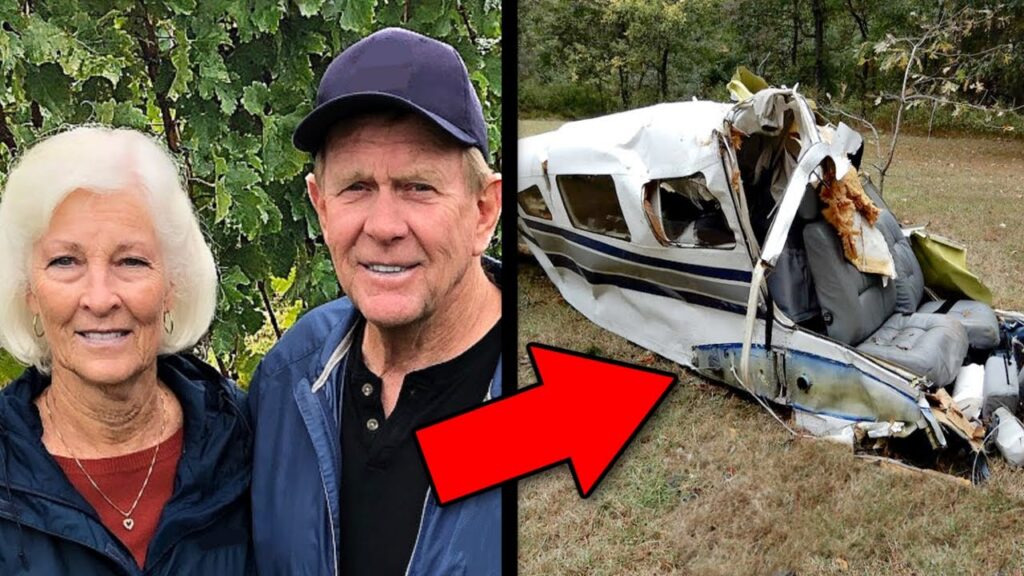
After the flight switched to the tower, another low-altitude warning was issued. The pilot reported the runway in sight. Communications and radar contact were then lost. A pilot who had just landed saw the accident airplane descend steadily into the dark tree line. The wreckage was found the next morning in William B. Umstead State Park, about 1.18 miles from the runway 32 threshold.
Investigation Findings
The wreckage path and damaged treetops showed a shallow, controlled descent into terrain. The airplane had not needed to be in a steep bank or an obvious upset to reach the trees. The NTSB found that the pilot failed to maintain a safe glidepath on final approach.
The area beneath the approach was wooded and sparsely lit. Sunset had occurred at 6:31 p.m., and evening civil twilight ended at 6:57 p.m. By the final approach, the visual environment included a runway ahead and dark terrain underneath. Having the runway in sight did not provide a reliable measure of clearance from that terrain.
The airport weather observations around the accident showed ceilings between 1,000 and 1,400 feet above the ground and visibility of 10 statute miles. Those observations explain how the flight could emerge below a cloud layer and still face a demanding night approach. The problem was not resolved simply by leaving the clouds.
Postaccident examination did not identify a mechanical malfunction that would have prevented normal operation. Flight-control continuity was established. The reported GPS and autopilot difficulties were therefore considered alongside the pilot’s recent experience rather than accepted as proof that an unavoidable equipment failure caused the crash.
His logbook did not show the recent instrument and night takeoff-and-landing experience required for this passenger flight. The most recent logged instrument experience was three approaches in November 2018. The most recent night entry was also in November 2018, for half an hour. The NTSB concluded that his difficulty interacting with the GPS and autopilot likely reflected limited recent use in actual or simulated instrument conditions.
The sequence accumulated several kinds of workload: an approach change, avionics reconfiguration, uncertain automation status, repeated heading and altitude corrections, and identification of runway lights after dark. The investigation did not need to infer a hidden mechanical fault to explain how the pilot fell behind that sequence.
The two low-altitude alerts were particularly important because they addressed the hazard that ultimately reached the airplane. The last report of a visible runway did not change the airplane’s actual height above the trees. The impact evidence showed that the descent continued below a safe path.
NTSB Probable Cause
The pilot’s failure to maintain a safe glidepath during final approach to the runway, which resulted in a collision with trees and terrain. Contributing was the pilot’s lack of recent instrument flight experience.
Safety Lessons
The general preparation lesson is to keep approach proficiency and avionics proficiency current together. Loading a new procedure, recognizing the active navigation source, and understanding what the autopilot is doing need to remain manageable when the expected runway changes. Practice should include that change with qualified instruction, not only a familiar approach already loaded before departure.
When workload exceeds the ability to keep heading and altitude stable, simplify early. Tell ATC what is difficult and request the time or assistance needed to regain a controlled, understood flightpath. Continuing to reprogram while repeated deviations develop leaves less attention for flying.
At night, retain a dependable glidepath and altitude crosscheck even after acquiring the runway. A dark area can hide rising terrain or trees between the airplane and the lights. A low-altitude warning requires attention to actual clearance, not reassurance based only on the runway remaining visible.
Watch the Full Analysis
Frequently Asked Questions
Q: What caused the Raleigh-Durham Piper crash in 2019?
A: The NTSB found that the pilot failed to maintain a safe glidepath and struck trees during final approach. Lack of recent instrument experience contributed.
Q: Did seeing the runway make the approach safe?
A: No. The pilot reported the runway in sight, but the airplane was still too low over the dark, wooded approach area. It struck trees about 1.18 miles from the runway threshold.
Q: Did investigators confirm a GPS or autopilot failure?
A: The pilot reported problems with both. The postaccident examination did not establish a mechanical problem that would have prevented normal operation, and the NTSB linked the interaction difficulties to limited recent instrument experience.
Sources and References