What Happened
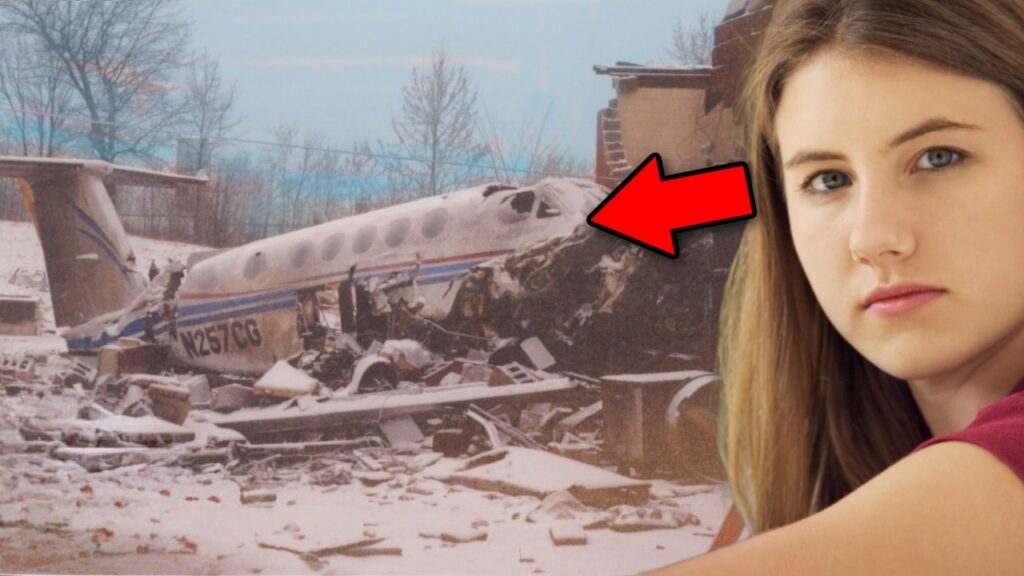
On April 4, 2003, Beechcraft B200 N257CG was approaching Fitchburg Municipal Airport when it entered steep turns at low altitude over Leominster, Massachusetts. It then descended into a building. The pilot, a pilot-rated passenger, and four other passengers died. One passenger survived with serious injuries, and a person in the building sustained minor injuries.
The airplane had first flown from Bedford, Massachusetts, to LaGuardia in New York with the pilot and pilot-rated passenger. Five passengers boarded there. The flight departed LaGuardia at about 0831 eastern standard time on an instrument flight plan initially filed for Bedford.
The destination was changed en route to Fitchburg. According to the surviving passenger, the plan was to drop off two people there, then continue to Martha’s Vineyard with the remaining passengers. The change placed the airplane on an approach in weather that included a 1,100-foot broken ceiling and three miles of visibility in mist.
During the approach, the survivor described a left turn steep enough that the airplane seemed almost upside down. It briefly leveled, then entered another left turn with a similar bank. The airplane appeared to roll level again before entering a steep dive into the building.
The passenger did not report an engine failure. She said the engines ran normally throughout the flight. She also explained that the steep turns had not initially alarmed her because she had flown with the pilot before and knew that he liked sharp turns.
That account provided information investigators could not obtain from the fatal occupants. It described the sequence of bank changes and the absence of an obvious interruption in engine operation. It did not provide a measured bank angle or a calibrated airspeed reading.
The accident occurred at about 0935. The airplane was substantially damaged, and investigators examined the airframe and engines for evidence of a failure preceding impact.
Investigation Findings
No preimpact mechanical anomaly was identified in the airplane or engines. The NTSB instead attributed the accident to a low-altitude maneuver with excessive bank and a failure to maintain airspeed, producing an inadvertent stall.
The bank-angle relationship was important because a stall could occur at a higher speed during a demanding turn than during gentle flight. The report referenced the aircraft handbook’s power-idle stall chart. With approach flaps and a 60-degree bank, the chart gave a stall speed of approximately 123 knots.
Radar data showed an average approach-course speed of about 120 knots. That was not a direct measurement of indicated airspeed at the instant the airplane stalled. The chart and the radar evidence illustrated the limited margin associated with the maneuver, but they could not be combined to claim an exact three-knot deficit at a precisely measured bank angle.
The surviving passenger’s account, the steep-turn sequence, and the absence of a mechanical explanation supported the NTSB’s finding. A familiar pilot and a familiar maneuver had not made the low-altitude airspeed margin larger.
The investigation also reviewed the pilot’s medical and pharmacy records. He had a serious neurological condition, possibly a seizure disorder, with unpredictable episodes of debilitating pain. He had also been treated for other recent illnesses. These records supplied context but did not establish a seizure during the accident flight.
Toxicology identified imipramine and carbamazepine in blood and urine and morphine in urine. The NTSB discussed the performance-impairing potential of the prescribed medications and identified impairment from prescription medication as a factor in the accident.
The morphine finding was not proof of illicit drug use. The report explained that morphine could come from several sources, and it did not identify a recent opiate prescription in the records reviewed. A detected substance and its possible sources should not be turned into an unsupported accusation.
Neither the medical condition nor the routine medications had been reported on the pilot’s airman medical application. The finding connected medical disclosure and fitness with cockpit performance, but the direct flight event remained the excessive low-altitude maneuver and loss of airspeed.
The survivor’s expectation of sharp turns also mattered to the debrief. Previous flights had made the behavior familiar to her. The report did not claim that she should have prevented the accident. Responsibility for safe maneuvering and adequate margin remained with the pilot.
NTSB Probable Cause
The pilot’s low altitude maneuver using an excessive bank angle, and his failure to maintain airspeed which resulted in an inadvertent stall and subsequent collision with a building. A factor was the pilot’s impairment from prescription medications.
Safety Lessons
The following takeaways apply the investigation to flight planning and training. They do not replace the aircraft flight manual or instruction in the airplane.
- Protect maneuvering margin near the ground. Base the approach on aircraft-appropriate speeds and bank limits, with a clear go-around plan if alignment or configuration becomes unacceptable. A turn that is controllable with altitude available can leave no recovery room near terrain.
- Keep evidence types separate. In a debrief, distinguish witness impressions, groundspeed, indicated airspeed, and handbook values. They can support a conclusion together without providing an exact reconstruction of every cockpit parameter.
- Include medical fitness in operational readiness. Disclose relevant conditions and medications through the appropriate aeromedical process. Do not use previous successful flights as proof that a potentially impairing treatment has no operational effect.
Watch the Full Analysis
Frequently Asked Questions
Q: What caused the King Air accident in Leominster?
A: The NTSB found that an excessive-bank maneuver at low altitude and failure to maintain airspeed led to a stall and collision with a building. Prescription-medication impairment was a factor.
Q: Did anyone survive?
A: One passenger survived with serious injuries. One person inside the building sustained minor injuries; six people aboard the airplane died.
Q: Did both engines fail?
A: The surviving passenger reported normal engine operation, and investigators found no preimpact mechanical anomalies in the airframe or engines.
Sources and References