What Happened
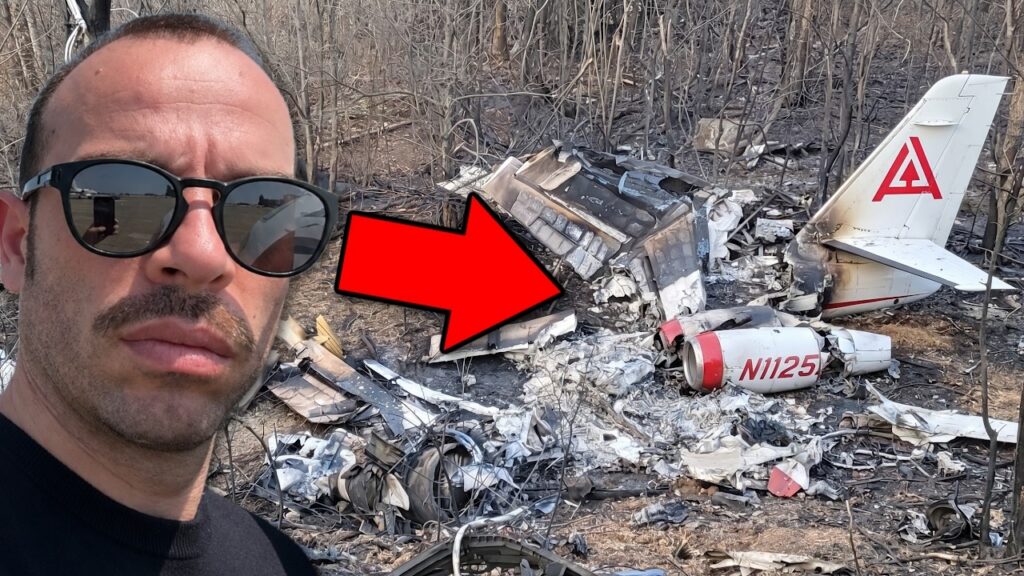
On March 10, 2024, an Israel Aircraft Industries 1125 Westwind Astra, N1125A, crashed near Hot Springs, Virginia. Five people were killed. The jet struck rising terrain about 300 feet short of a runway located on a mountain ridge after its approach became unstable.
The flight had been uneventful before the arrival. About 24 minutes before impact, air traffic control provided the local altimeter setting as the crew began descending from cruise. Roughly 12 minutes later, the crew reported having the destination weather. The controller then cleared them toward an intermediate fix on the ILS approach, with instructions to cross at or above 6,100 feet mean sea level.
The controller subsequently observed the airplane at 5,900 feet and asked about its altitude. The crew replied that they were at the assigned altitude. The cockpit recording did not capture a verification of the altimeter settings or an approach briefing. The difference between the altitude the controller saw and the altitude the crew believed it had remained unresolved.
The second-in-command, who was monitoring the flight, asked whether the pilot-in-command wanted vertical-speed mode selected. He did. In that mode, the autopilot maintained the crew’s selected descent rate toward a selected altitude; it did not automatically follow the ILS glideslope.
As the airplane approached final, the monitoring pilot reported FLOC captured on both sides. The NTSB considered that an indication of a flight-management-system-generated course rather than capture of the actual ILS localizer. The distinction mattered because the display could show an apparently useful course while the airplane lacked the radio guidance needed to follow the ILS properly.
About seven miles from the runway, the crew configured for landing and both reported the airport in sight. At the final approach fix, the pilot began descending and the gear was extended. There was no recorded discussion of changing the autopilot mode. The monitoring pilot completed the before-landing checklist and noted that the airplane was below the glideslope.
At about 1.5 nautical miles, he reported full deflection below the glideslope. He then called out an airspeed 15 knots above reference speed. Roughly 30 seconds before impact, the flying pilot disconnected the autopilot.
After the terrain-warning system’s 1,000-foot callout, the monitoring pilot suggested a go-around. The flying pilot did not respond. The monitoring pilot called for a go-around again just before the 500-foot callout. Again, there was no response. About three seconds later, the airplane struck the terrain short of the runway.
Investigation Findings
The NTSB found that the pilot-in-command continued an unstable approach in gusting winds and failed to monitor altitude. Incorrect altimeter setting and improper configuration of the avionics for the ILS contributed.
The airport elevation was about 3,792 feet. The crew had selected a final altitude of 4,100 feet in vertical-speed mode, but the incorrect pressure setting meant the airplane could descend to a true altitude of approximately 3,800 to 3,900 feet before leveling. A selected altitude that appeared to provide clearance could therefore bring the aircraft close to field elevation while it remained short of the runway.
Investigators considered it likely that the ILS frequency had not been tuned. The FLOC callout supported that conclusion. So did the absence of an aural glideslope warning despite deviations large enough to trigger one if valid ILS deviation information had reached the warning system.
The flight instruments likely displayed advisory lateral and vertical information derived from programmed waypoints and altitudes. That information was not the same as receiving and using the actual localizer and glideslope signals. Proper approach arming, navigation-source selection, and frequency verification were necessary for the intended ILS operation.
The warning system had another limitation. Its software had not been updated, and it had not been wired directly to GPS as described in an applicable FAA special airworthiness information bulletin. The NTSB concluded that completing those changes likely would have produced a terrain alert about one mile from the runway. That could have prompted corrective action, but the report did not claim a warning would certainly have prevented the crash.
The captain had received the aircraft type rating about two months earlier. Multiple instructors had identified flight-management-system use as a weakness. A previous operator had dismissed him about six months before the accident for deficiencies including procedure adherence, crew coordination, checklist use, FMS management, and aircraft control. These records helped investigators assess the difficulties seen on the accident approach.
The operator required an immediate missed approach or go-around when an approach became unstable below its specified gates. Its criteria included flightpath, speed, descent rate, configuration, and completion of briefings and checklists. The recorded approach exceeded multiple criteria, and the monitoring pilot twice called for a go-around.
Gusting conditions were conducive to updrafts and downdrafts, and the NTSB considered such conditions likely during the arrival. Snow showers were also present in the area. But the crew reported seeing the airport, and the recording did not show a subsequent loss of that visual contact. The Board concluded that the flying pilot had enough time to discontinue the approach after it became unstable.
The accident was therefore not explained simply by difficult weather or an absent warning. The crew had altitude concerns, full glideslope deflection, excess speed, and two calls to abandon the landing. The final barrier depended on acting on information already available in the cockpit.
NTSB Probable Cause
The PIC’s continuation of an unstabilized approach in gusting wind conditions and his failure to monitor the airplane’s altitude during the approach, which led to a descent into terrain short of the runway. Contributing was the flight crew’s failure to set the appropriate altimeter setting and failure to properly configure the avionics for the ILS approach.
Safety Lessons
The general avionics lesson is to verify the guidance the airplane is actually using. Loading an approach, displaying a course, and capturing the radio localizer and glideslope are distinct events. A briefing and positive mode check help expose those differences before descent near terrain.
The second lesson is to resolve altitude disagreements immediately. A controller reporting a different altitude provides a reason to crosscheck pressure settings and indications, not just repeat the cockpit number. The concern becomes especially important at a runway on elevated terrain.
The third is to make the go-around call operationally decisive. Crew coordination only protects the flight if the monitoring pilot’s safety call produces action. Operators should train and evaluate that response alongside the physical maneuver, using their approved stabilized-approach policy.
Watch the Full Analysis
Frequently Asked Questions
Q: Why did the Astra crash short of the Hot Springs runway?
A: The NTSB found continuation of an unstable approach in gusting winds and failure to monitor altitude. Incorrect altimeter setting and improper ILS avionics configuration contributed.
Q: Did the second pilot call for a go-around?
A: Yes. The monitoring pilot made two go-around calls near the end of the approach. The cockpit recording did not capture a response from the flying pilot.
Q: What was the significance of FLOC on the Astra approach?
A: The NTSB considered it evidence of an FMS-generated course rather than the actual ILS localizer. It supported the finding that the intended ILS guidance was not properly configured.
Sources and References