What Happened
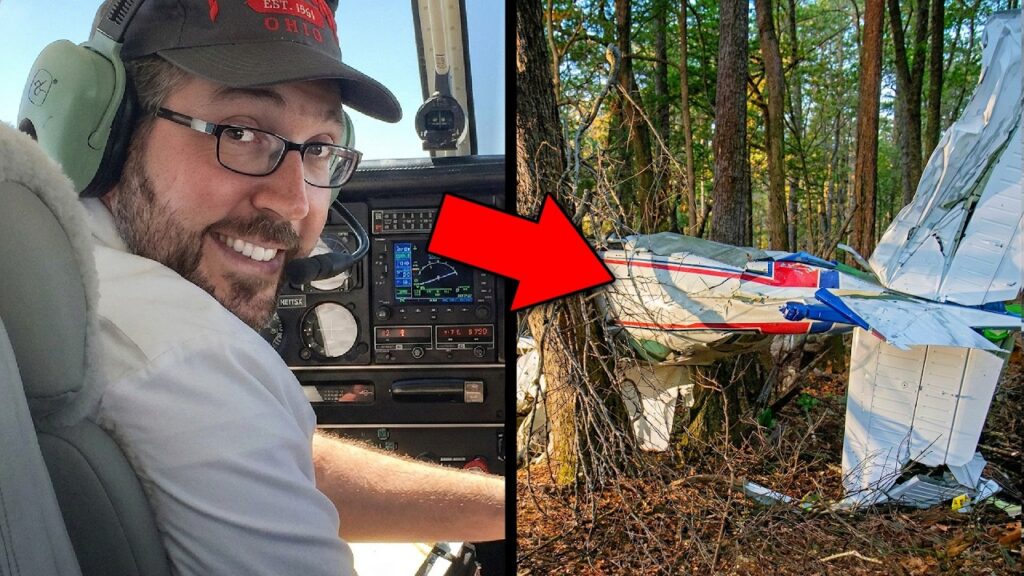
On October 1, 2023, Cessna 177RG N545PZ departed Lake Placid Airport in New York for an aerial photo flight. After a partial loss of engine power, it turned back toward the airport and stalled near the runway. Pilot Russ Francis and pilot-rated passenger Richard McSpadden died. AOPA identified McSpadden as the leader of its Air Safety Institute and Francis as the airplane’s left-seat occupant.
The photo plan involved a Beech A36 carrying a photographer and the Cessna as the subject airplane. The Beech departed runway 32 first. The Cessna followed about 700 feet behind. The owner was expected to fly the takeoff and climb, with the pilot-rated passenger taking over after joining the formation.
There had already been an unusual engine event during taxi. When the Beech pulled alongside, its pilot heard the Cessna’s engine stop and saw the propeller stop. About five seconds later, the engine restarted.
During takeoff, another witness thought the propeller sounded as though it was set for climb rather than takeoff, then heard the engine surge. During the initial climb, it did not sound to him as if it was producing full power. Those were witness impressions, not a recorded determination of the propeller-control setting.
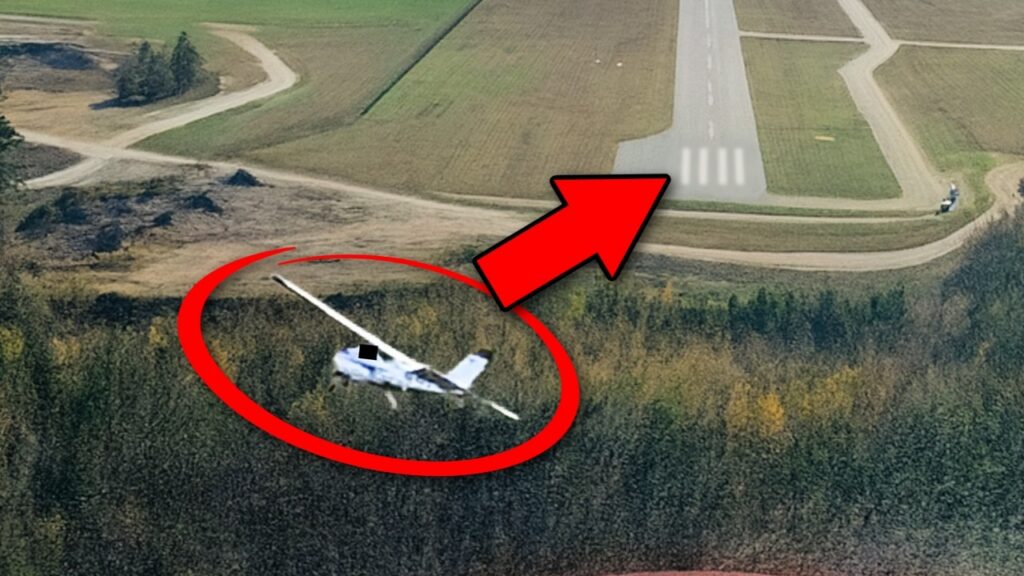
At about 300 to 400 feet above ground, the Cessna made a gentle left turn to join the Beech. After closing to roughly 1,000 feet from it, the Cessna entered a hard right turn toward the airport. The Beech pilot heard the pilot-rated passenger report a problem and an intention to return.
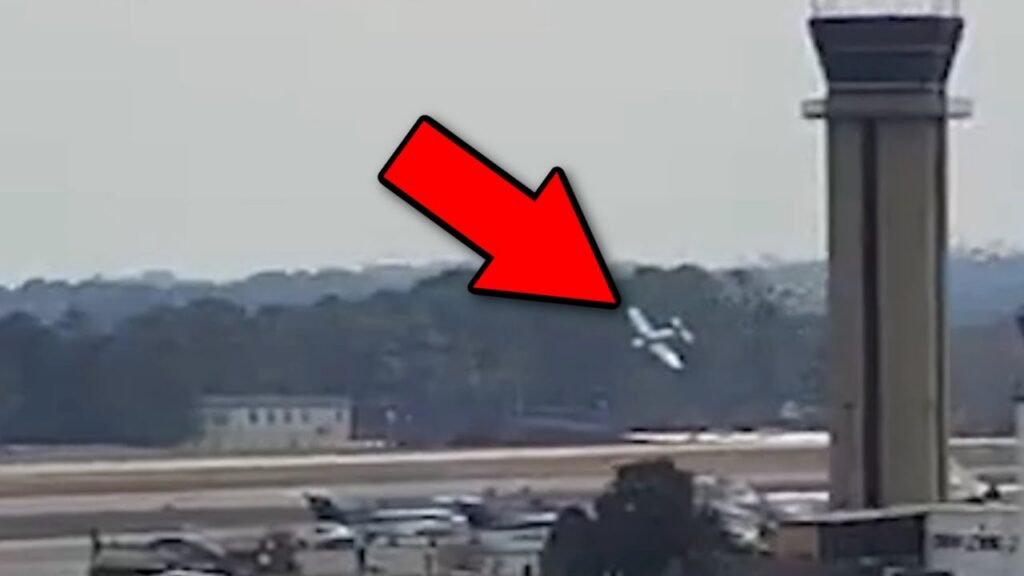
Another pilot watching from the airport described a slow initial climb, a shallow left turn, and then a continuing right turn toward the runway. He saw the nose drop while the airplane was still turning. The airplane struck an embankment about 440 feet from the approach end and about 250 feet left of the centerline, in a right-wing-low, nose-low attitude.
The accident was often discussed as a turnback or impossible-turn accident. The final investigation provided a more specific explanation: a partial power loss, an out-of-limit forward center of gravity, and an aggressive maneuver close to the ground that ended in a stall.
Investigation Findings
The NTSB found evidence of a reduction in engine power but could not determine the reason. Recovered GPS data showed that the airplane’s total energy, its combined height and speed, reached a peak shortly after takeoff and then decreased. That behavior was consistent with reduced engine power.
The engine was not necessarily stopped during the final turn. Sound analysis from a nearby video estimated about 2,125 rpm, plus or minus 45 rpm, during a seven-second interval ending two seconds before impact. Investigators concluded that the engine was likely operating then. A partial power loss was consistent with both that evidence and inadequate climb performance.
The performance study showed a sharp increase in the lift coefficient during the turn, meaning the wing was being asked to produce more lift relative to speed and wing area. It exceeded the expected maximum derived from the operating handbook, consistent with an aerodynamic stall.
The study recorded a maximum roll angle of about 39 degrees and a minimum of 52 knots calibrated airspeed. Altitude reached 1,929 feet mean sea level before a sharp descent at about 1,300 feet per minute. Those values, together with the flightpath, supported the stall finding. They were not a universal turnback altitude or a demonstrated safe maneuver template.
Loading was another contributor. With an estimated 40 gallons of fuel and the reported occupant weights, the airplane would have been about 292 pounds below maximum gross weight, but its center of gravity was approximately an inch forward of the approved limit. With full usable fuel, it would still have been below maximum weight while farther outside the forward center-of-gravity limit.
Being under maximum weight therefore did not mean the airplane was properly loaded. Weight and balance were separate checks. The NTSB named inadequate preflight weight-and-balance planning as a contributor.
Density altitude was about 2,758 feet, compared with a field elevation of 1,747 feet. The report’s performance discussion estimated about a 37 percent longer takeoff distance and a 28 percent lower climb rate under those conditions. That meant a more sluggish departure should have been anticipated even before considering the power problem.
Both occupants had thousands of flight hours, but the pilot had only about ten hours in the make and model. The pilot-rated passenger’s experience in type could not be determined from available logbooks. The report did not establish an exact transfer of control during the emergency, so the account cannot reliably assign every final control input to a named occupant.
Investigators found maintenance discrepancies, including lifters not replaced during the previous overhaul and an improperly installed fuel-reservoir drain-control extension. Examination and testing did not establish that those discrepancies caused a preimpact malfunction affecting normal operation. The final report therefore left the reason for the partial power loss undetermined rather than selecting an unproven component failure.
NTSB Probable Cause
A partial loss of engine power for undetermined reasons. Contributing to the accident was the pilot’s inadequate preflight weight and balance planning and his aggressive low altitude maneuvering, which resulted in an aerodynamic stall and loss of control.
Safety Lessons
The following takeaways apply the investigation to flight planning and training. They do not replace the aircraft flight manual or instruction in the airplane.
- Calculate balance as well as weight. A load can be below maximum gross weight and still outside the approved center-of-gravity envelope. Use the actual configuration and loading before departure, particularly when occupants and equipment concentrate weight forward.
- Brief power-loss options before a formation departure. Photography adds another airplane and a planned join-up to the workload. Agree on separation, communications, control responsibility, and emergency priorities before takeoff.
- Base a turnback decision on aircraft-specific preparation. Low-altitude maneuvering after power loss leaves little margin for a stall. Develop realistic departure options with qualified instruction and actual performance, without treating one altitude or another pilot’s experience as a guaranteed solution.
Watch the Full Analysis
Frequently Asked Questions
Q: What caused the McSpadden and Francis crash?
A: The NTSB found a partial loss of engine power for undetermined reasons. Inadequate weight-and-balance planning and aggressive low-altitude maneuvering leading to a stall contributed.
Q: Was the Cessna overweight?
A: The NTSB loading estimates placed it below maximum gross weight, but its center of gravity was forward of the approved limit. Those are separate limitations.
Q: Did the engine stop completely?
A: The final report identified partial power loss. Sound analysis indicated that the engine was likely operating shortly before impact.
Sources and References
- NTSB final report ERA24FA001
- NTSB investigation docket
- AOPA identification of Richard McSpadden and Russ Francis