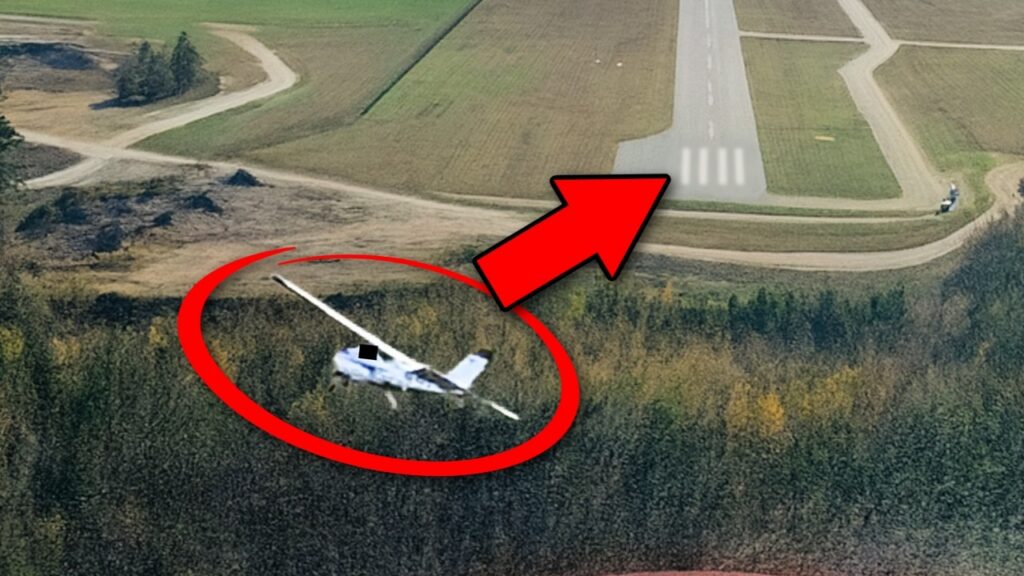

What Happened
On February 16, 2023, a Piper PA-28-181, N103AV, crashed during the initial climb from DeKalb-Peachtree Airport in Atlanta, Georgia. The flight instructor sustained serious injuries, and the student pilot sustained minor injuries. The wings and fuselage were substantially damaged.
Before takeoff, the student and instructor performed their preflight inspection, started the engine, taxied, and conducted a run-up. The student reported two checks of the carburetor-heat system. Neither pilot reported an anomaly during that preparation.
They received takeoff clearance and began the roll on runway 21R. After rotation, at about 200 feet above the ground, the engine began sputtering. The instructor took control as the engine lost all power.
The instructor initiated a left turn. He later said the purpose was to avoid structures. The airplane struck the ground on the right side of runway 3R, near the parallel runway. The accident occurred at about 2:31 p.m. eastern standard time.
The turn is the visible part of the story, and the related video discusses the familiar question of turning after a takeoff engine failure. But the investigation’s causal finding concerned the loss of power. The factual account did not establish that the instructor was attempting a complete return to the departure runway, and it would be misleading to assign that intention based only on the direction of turn.
Investigation Findings
Investigators examined the engine, ignition, and fuel system. Rotating the crankshaft established internal and valve-train continuity. Cylinder inspection showed no anomaly. The fuel inlet screen and filter were clear, the carburetor contained residual fuel, and its disassembly did not reveal a defect. The engine-driven fuel pump operated when tested by hand.
Both magnetos produced spark at all their outlets. The oil, oil filter, and pickup screen were free of debris. The examination did not identify a preimpact mechanical failure that would have prevented normal engine operation.
The engine monitor provided information unavailable from the damaged components alone. Before takeoff, carburetor temperature fell to about 40 degrees Fahrenheit and then increased twice. During takeoff, engine speed reached about 2,600 rpm, while carburetor temperature fell to 38 degrees for about a minute. Fuel-flow indications surged and then fell to zero.
The outside weather was much warmer than the carburetor temperature. The airport observation shortly after the accident reported 23 degrees Celsius with a 14-degree dew point, giving calculated relative humidity of 57 percent. The FAA icing-probability chart used in the investigation placed those conditions in the range for serious carburetor icing at low power.
The NTSB concluded that ice likely formed during taxi and run-up, when the engine would spend time at lower power, and subsequently caused the power loss during the climb. The official probable cause identified ineffective use of carburetor heat by the instructor.
There is no need to erase the reported heat checks to explain that conclusion. Checking a system establishes that a response was observed during the check. It does not necessarily establish that all accumulated ice was removed or that no more ice formed afterward. The temperature record, ambient conditions, and absence of another mechanical explanation supported the Board’s conclusion despite the reported checks.
The case also illustrates why outside temperature alone is a poor guide to carburetor-icing risk. Air moving through a carburetor and fuel evaporation can cool the induction airflow enough for ice to form even when the ambient air is well above freezing. In this accident, the recorded carburetor temperature was much colder than the weather report’s air temperature.
The available evidence did not support adding an aerodynamic stall as the official cause. The airplane struck the ground after the instructor turned following the power loss, but the probable-cause finding specifically addressed carburetor heat and the resulting engine stoppage. Keeping those distinctions clear avoids turning an accident account into proof of a broader claim that the report did not make.
NTSB Probable Cause
The flight instructor’s failure to effectively utilize carburetor heat, which resulted in a total loss of engine power during initial climb due to carburetor ice that formed during the engine run-up and taxi.
Safety Lessons
The first general lesson is to evaluate carburetor icing from the actual conditions and the aircraft’s approved procedures. A warm afternoon does not remove the possibility. A run-up check also does not make the remainder of the taxi and takeoff immune to ice accumulation.
The second is to make the departure brief specific to the runway and surroundings. At 200 feet, the crew had little time to evaluate options after thrust disappeared. Discussing reachable areas, obstacles, and the transfer of control before takeoff reduces the amount of planning that must happen during the emergency. This case does not establish a universal turnback altitude for other airplanes or airports.
The third is to preserve aircraft control while choosing a landing path. An instruction such as “always turn back” or “never turn” cannot represent every obstacle arrangement and performance condition. Training should develop recognition, pitch and speed control, and sound judgment using the aircraft’s procedures, with any practice conducted in a safe instructional environment.
Watch the Full Analysis
Frequently Asked Questions
Q: What caused the DeKalb-Peachtree Piper Archer engine failure?
A: The NTSB found that ineffective carburetor-heat use allowed ice to form during run-up and taxi, causing total power loss during the initial climb.
Q: Did the instructor attempt the impossible turn?
A: The instructor said he turned left to avoid structures. The factual report does not establish that he intended a complete return to the departure runway, so that intention should not be assumed.
Q: Can carburetor ice form when it is warm outside?
A: Yes. The reported air temperature was 23 degrees Celsius, but the carburetor temperature fell to 38 degrees Fahrenheit. The investigation found conditions conducive to serious carburetor icing at low power.
Sources and References