What Happened
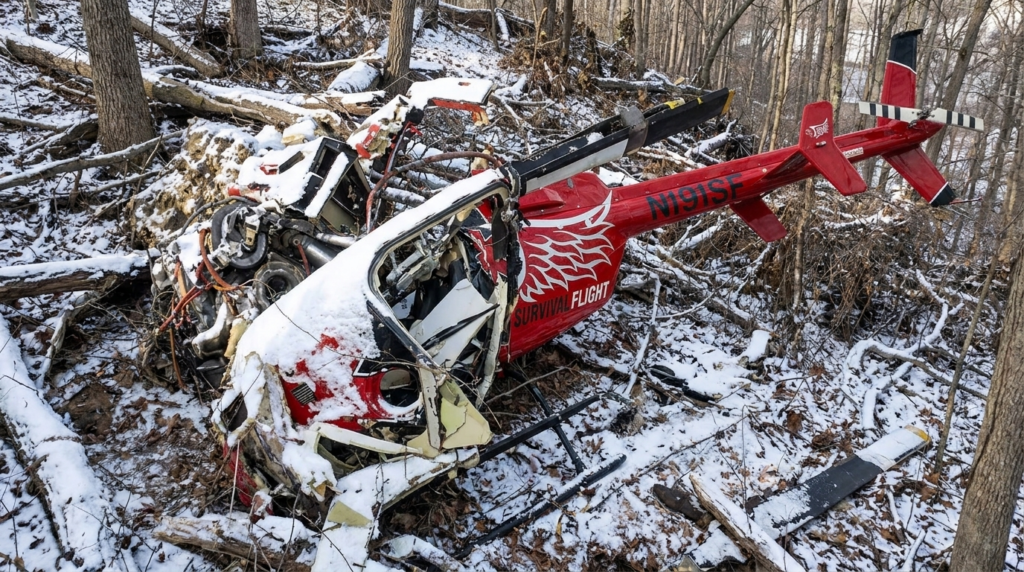
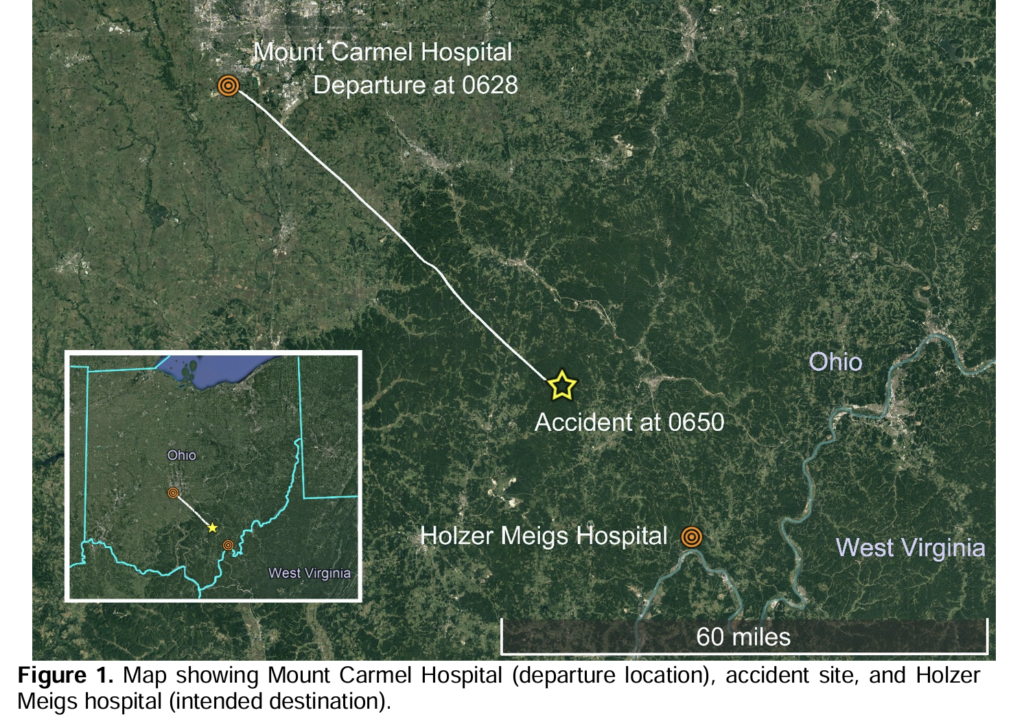
At 6:28 in the morning on January 29, 2019, a Bell 407 helicopter, N191SF, lifted off from Mount Carmel Hospital in Grove City, Ohio, and turned southeast into the winter darkness. The commercial pilot had a flight nurse and a flight paramedic on board. The mission was a patient pickup from Holzer Meigs Emergency Department in Pomeroy, Ohio, 69 nautical miles away. The helicopter never arrived. At approximately 6:50 a.m. eastern standard time, N191SF collided with forested terrain about 4 miles northeast of Zaleski, Ohio. All three people on board died, and the helicopter was destroyed.
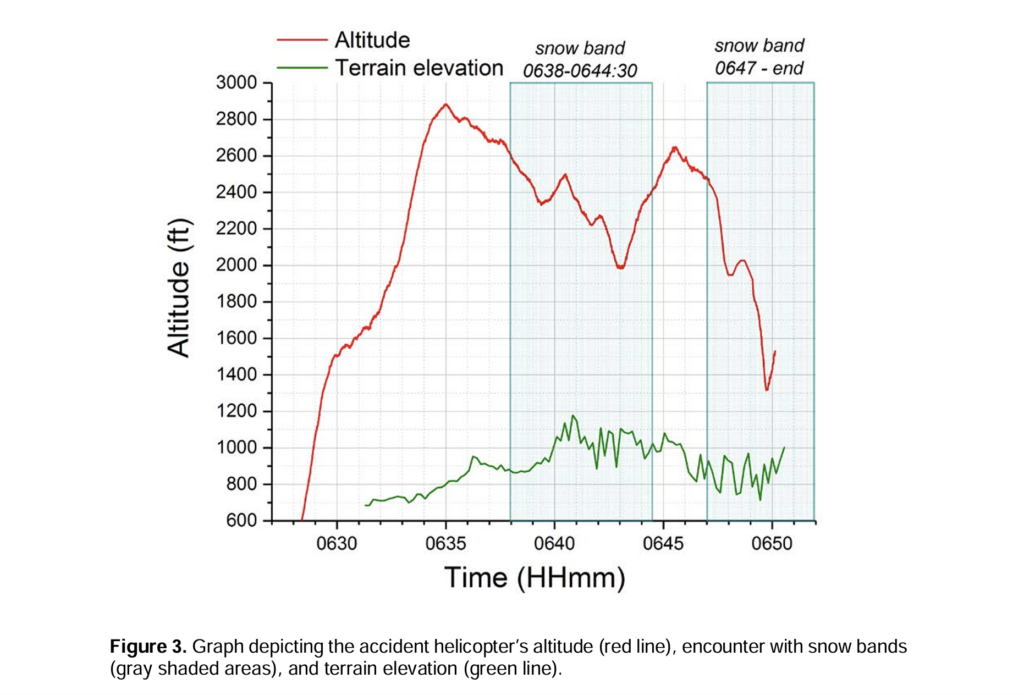
The conditions that night were not a surprise to anyone who looked. Before the flight departed, available weather information showed snow showers and areas of instrument meteorological conditions along the route of flight. At the departure point, Grove City, night VMC existed. But southeast Ohio was a different picture. The terrain between Grove City and Pomeroy is hilly, wooded Appalachian foothill country, and that morning it was wrapped in cloud and snow. Visibility along the route had dropped below VFR minimums in multiple areas. A helicopter flying VFR at low altitude in the dark, threading through the Zaleski State Forest corridor, had very little margin for error if it encountered a solid wall of IMC.
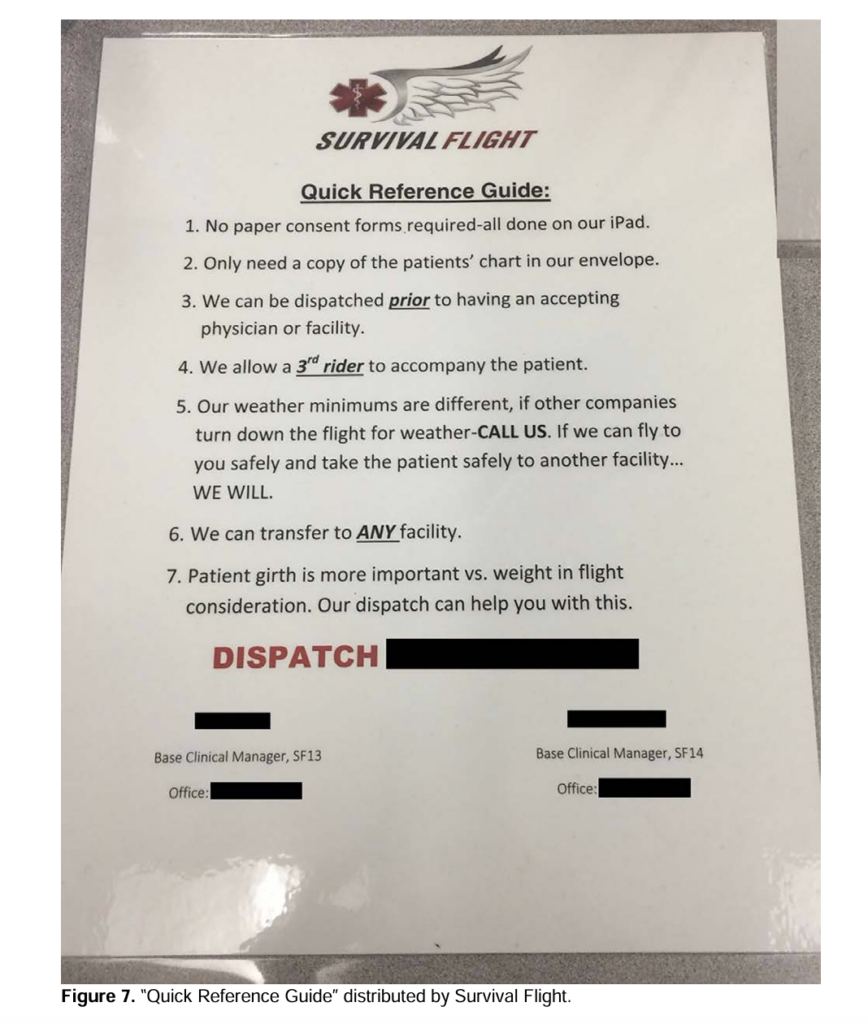
Survival Flight operated under Part 135 as a helicopter air ambulance, or HAA, carrier. The company had risk analysis procedures in place specifically to catch situations like this one, the kind of preflight go/no-go evaluation that is supposed to weigh weather along the entire route, not just at the departure point. Those procedures required the operations control specialist on duty to work through a structured risk assessment before authorizing the flight. What the investigation would later establish is that the process that night was not what those procedures described on paper. The flight was authorized and it departed into conditions that a thorough preflight weather evaluation would have flagged as IMC.
At some point during the 22-minute flight, N191SF entered instrument meteorological conditions. The pilot was not instrument rated for helicopter flight in IMC. The helicopter descended into terrain at elevation in the Zaleski area, striking the forested hillside and coming to rest in the trees. The wreckage was located about 4 miles northeast of Zaleski. There was no distress call recorded, no indication the crew had time to report what was happening before the collision.
Investigation Findings
The NTSB investigation, which produced a full Aircraft Accident Report numbered AAR-20/01, focused heavily on the organizational and systemic factors behind the accident rather than on mechanical failure, because there was none. The Bell 407 was airworthy. The engine performed. What failed was the safety system that was supposed to prevent the flight from launching in the first place.
Investigators found that Survival Flight had developed a culture in which noncompliance with risk analysis procedures had become normalized. Pilots and operations control specialists routinely did not complete a comprehensive preflight weather evaluation the way the company’s own procedures required. This was not a one-night anomaly. It was a pattern, and the organization had allowed it to persist to the point where shortcuts in the risk assessment process were simply how things were done. The operations control specialist on duty the morning of January 29 did not conduct the kind of thorough route-weather analysis the procedures called for. The flight was approved and it went.
The FAA’s role came under scrutiny as well. The agency’s oversight of Survival Flight’s risk management program was found to be inadequate. FAA inspectors had not identified or corrected the drift between what the company’s safety procedures said and how the company was actually operating. Beyond that, Part 135 operators at the time were not required to have formal Safety Management System, or SMS, programs. An SMS is a structured, proactive framework for identifying and managing risk before accidents happen. The HAA industry had been pushing toward SMS adoption, but regulatory requirements hadn’t caught up. The NTSB found that gap contributed directly to this accident.
The weather data available before the flight told a clear story. Surface observations, pilot reports, and forecast products indicated that the route through southeastern Ohio was not suitable for VFR flight that morning. The ceiling and visibility conditions along the Zaleski corridor were below VFR minimums. A complete preflight weather brief using available resources would have shown that. The investigation found no evidence that such a brief was completed in full before the flight departed.
NTSB Probable Cause
The NTSB determines that the probable cause of this accident was Survival Flight’s inadequate management of safety, which normalized pilots’ and operations control specialists’ noncompliance with risk analysis procedures and resulted in the initiation of the flight without a comprehensive preflight weather evaluation, leading to the pilot’s inadvertent encounter with instrument meteorological conditions, failure to maintain altitude, and subsequent collision with terrain. Contributing to the accident was the Federal Aviation Administration’s inadequate oversight of the operator’s risk management program and failure to require Title 14 Code of Federal Regulations Part 135 operators to establish safety management system programs.
Safety Lessons
Three people died on a mission that the organization’s own procedures, if followed, were designed to prevent. The lessons from this accident are not about stick-and-rudder skills or aircraft handling. They are about what happens when safety processes exist on paper but not in practice.
You can learn more about risk analysis, organizational safety processes, and SMS effectiveness in the article “SMS Effectiveness:
How to Build an SMS That Actually Works”.
- A safety procedure that isn’t followed is not a safety procedure. Survival Flight had a risk analysis process. The accident didn’t happen because the process was missing. It happened because the process had been quietly abandoned through repeated noncompliance, and no one in the organization caught it or corrected it. For any operator running Part 135 or Part 91 operations, the question isn’t whether a checklist exists. The question is whether people actually use it, every time, and whether leadership knows when they don’t.
- Route weather is not departure weather. Night VMC at Grove City told the crew nothing about what was waiting 40 miles southeast in the Zaleski hills. A route-based weather evaluation means checking ceilings and visibility at multiple points along the planned track, including the terrain between departure and destination. ASOS reports at the endpoints are a starting point, not a complete brief. For HAA and any low-altitude VFR operation at night, intermediate conditions along the route can be dramatically different from what’s visible at the ramp.
- Organizational normalization of deviation is invisible from inside. The NTSB’s finding that noncompliance had become normalized describes one of the most dangerous conditions in aviation safety. When a shortcut gets repeated enough times without a bad outcome, it stops feeling like a shortcut. It feels like how the job is done. Pilots new to an operation absorb these patterns from the culture around them. The only antidote is active, ongoing oversight, either internal through a functioning SMS or external through engaged regulatory surveillance, that compares actual practice against written procedures on a regular basis. If the FAA had been conducting that kind of comparison at Survival Flight, the gap between procedure and practice would have been visible before January 29, 2019.
Frequently Asked Questions
Q: Was the pilot instrument rated for helicopter flight?
A: No. The pilot held a commercial certificate but was not rated for instrument flight in helicopters. Once N191SF entered IMC in the dark over hilly terrain, the pilot had no legal or trained basis for maintaining control by reference to instruments alone.
Q: What weather was available before the flight that should have stopped it?
A: Surface observations, pilot reports, and forecast products available before departure showed snow showers and areas of IMC along the route between Grove City and Pomeroy. Conditions in the Zaleski corridor were below VFR minimums. A complete route weather evaluation using standard preflight resources would have identified these conditions before the flight launched.
Q: What is an operations control specialist in helicopter air ambulance operations?
A: Under Part 135 HAA rules, an operations control specialist, or OCS, shares responsibility with the pilot for go/no-go decisions. The OCS monitors weather, tracks flights, and is required to conduct a preflight risk analysis before authorizing a mission. On the morning of January 29, 2019, the OCS on duty did not complete that analysis in the comprehensive way Survival Flight’s own procedures required.
Q: What is a Safety Management System (SMS) and why did the NTSB say it mattered here?
A: An SMS is a formal, structured framework for proactively identifying and managing safety risk. It includes defined processes for hazard identification, risk assessment, and corrective action, along with mechanisms for tracking whether safety procedures are actually being followed. At the time of this accident, Part 135 operators were not required to have an SMS. The NTSB found that the absence of a mandatory SMS requirement contributed to the accident, because a functioning SMS would have been more likely to catch the gap between Survival Flight’s written procedures and actual operational practice.
Q: Did the FAA take action against Survival Flight after the accident?
A: The NTSB’s probable cause finding included a direct criticism of the FAA’s oversight of Survival Flight’s risk management program. The NTSB issued safety recommendations calling for the FAA to require SMS programs for Part 135 operators and to improve its surveillance methods for verifying that operators’ actual practices match their written procedures. The broader HAA industry has continued to move toward SMS adoption in the years since this accident.