What Happened
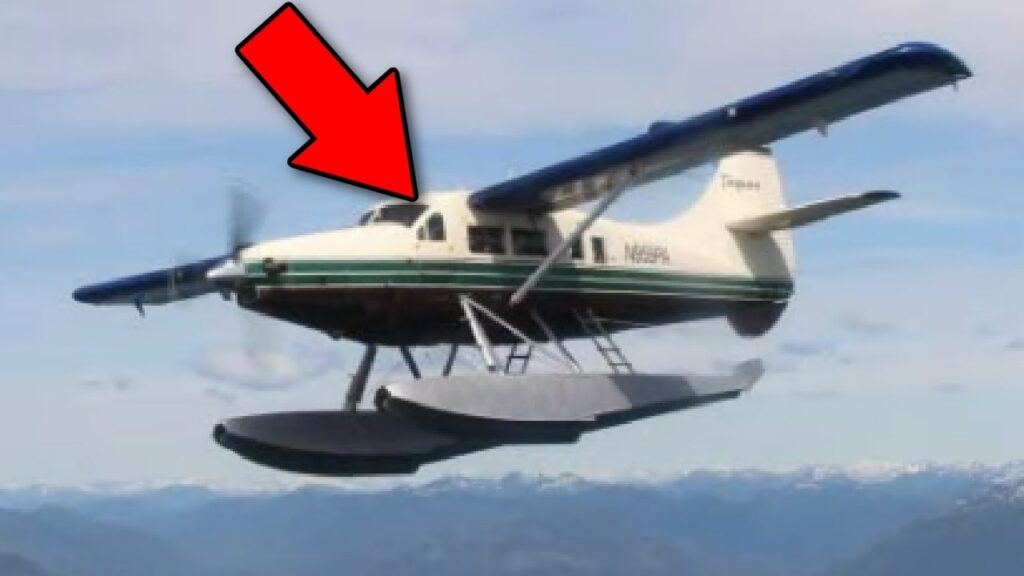
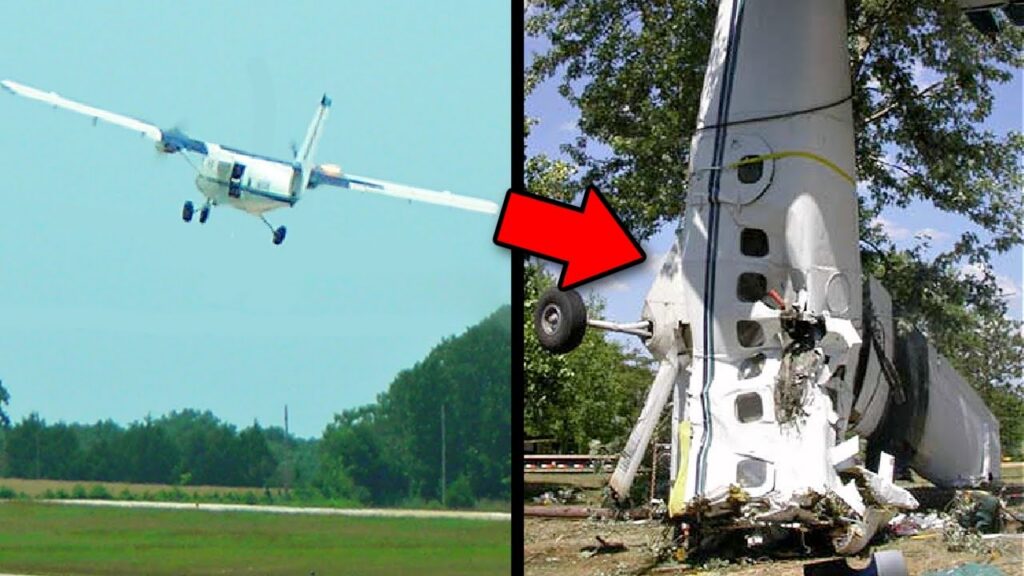
On July 29, 2006, a de Havilland DHC-6-100 Twin Otter, N203E, departed Sullivan Regional Airport in Missouri with a pilot and seven parachutists. The right engine lost power shortly after liftoff. The airplane remained low, turned toward the failed engine, and crashed into trees and terrain. The pilot and five parachutists died; two parachutists sustained serious injuries.
The flight was operated by Skydive Quantum Leap under Part 91 in visual weather. Rather than use all 4,500 feet of runway 24, the pilot entered from an intersecting taxiway that left about 1,700 feet to the west end. Photographs showed a moderate headwind during the departure.
Witnesses saw the airplane climb to approximately treetop height. Several heard a bang or a poof and saw flames and smoke from the right engine. One described the right propeller as barely turning. A photograph captured the airplane about one wingspan, approximately 65 feet, above the runway after the flames appeared. One witness estimated a climb to about 150 feet.
Those observations did not describe a normal climb interrupted at a comfortable altitude. They placed the power loss near the ground, with the airplane still in the takeoff sequence. The pilot had to maintain control while managing the failed engine and the drag associated with its propeller.
Witnesses described the airplane losing some height, recovering it, and continuing just above the trees. It then turned right and disappeared behind the treeline. A witness near a residence saw it flying very low before it descended nose first.
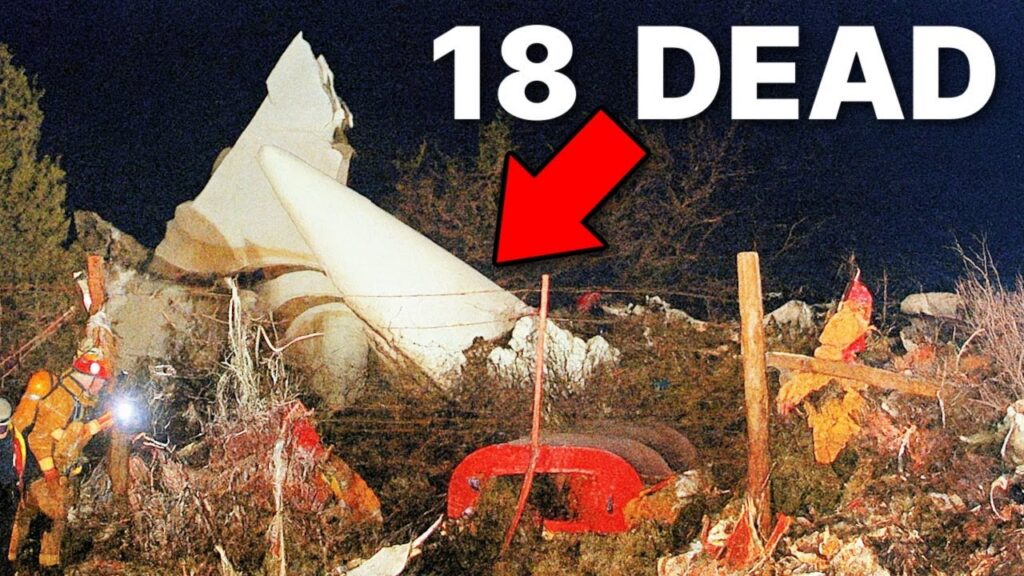
The wreckage came to rest vertically against a tree about half a mile northwest of the runway end. The abrupt nose-down impact and the witness accounts became part of the evidence investigators used to distinguish a controlled forced landing from a stall.
Investigation Findings
The right engine’s compressor turbine blades had fractured. Separated blade material caused additional damage downstream inside the engine, and that damage explained the power loss. Investigators did not identify an ingested bird or other external object as the initiating event. Several blade tips were not recovered, so the event that started the internal failure could not be determined.
That uncertainty was central to the finding. The report established the engine failure and the fractured blades, but did not establish why the first blade separation occurred. It would be inaccurate to turn that unresolved question into a definite manufacturing defect or a definite maintenance cause.
Both engines had exceeded the manufacturer’s recommended overhaul interval. The right engine had accumulated 6,493 hours since overhaul, compared with the recommended 3,600 hours. The NTSB said it was possible that an overhaul within the recommended interval could have detected and corrected the initiating condition. Possible was the report’s qualification, not a finding that an overdue overhaul had conclusively caused the failure.
The pilot’s response was a separate part of the investigation. The airplane’s emergency procedures called for maintaining heading, using rudder and bank toward the operating engine as necessary, and lowering the nose to maintain the specified airspeed. Photographic evidence did not show the corresponding rudder deflection or bank toward the operating engine. Witnesses instead described a drift toward the failed right engine.
The stall-warning light filaments were stretched, consistent with illumination at impact. Combined with the flightpath and damage, that supported an aerodynamic stall. The NTSB concluded that the pilot allowed the airspeed to decay to the point that continued controlled flight was lost.
A performance assessment estimated a positive single-engine climb of about 300 feet per minute if the airplane had been properly configured and flown at the recommended speed under the calculated accident conditions. That figure was not a guarantee. The report explicitly recognized that engine wear and technique could reduce actual performance. The practical distinction was between the performance predicted for the correct configuration and the airplane the pilot actually had to control.
The autofeather system, which could automatically reduce failed-propeller drag, had been deactivated. But investigators found the right propeller at a high blade angle consistent with a feathered or near-feathered condition at impact. They could not determine the cockpit propeller-lever positions because of damage. It would therefore overstate the evidence to say the propeller was never feathered.
The investigation also addressed the occupants’ restraints. The NTSB identified the lack of a more effective restraint system as contributing to some parachutists’ injuries. The engine failure, the loss of airspeed, and occupant protection were different parts of the accident. Fixing one did not erase the significance of the others.
NTSB Probable Cause
the pilot’s failure to maintain airspeed following a loss of power in the right engine due to the fracturing of compressor turbine blades for undetermined reasons. Contributing to some parachutists’ injuries was the lack of a more effective restraint system on the airplane.
Safety Lessons
The following takeaways apply the investigation to flight planning and training. They do not replace the aircraft flight manual or instruction in the airplane.
- Make the engine-out response aircraft specific. Practice the published directional-control, airspeed, and configuration priorities with a qualified instructor. A second engine is useful only while the airplane remains controllable and its remaining performance is understood.
- Preserve runway and options. Assess an intersection departure against the available full runway and the consequences of an early power loss. Brief the point and conditions that would change the plan, using actual performance data rather than routine familiarity with the airport.
- Include occupants in the safety system. Jump operations need suitable restraints, training, and maintenance decisions as well as flight handling. The NTSB identified injury protection as a separate contributor, so a takeoff debrief should not end at the cockpit.
Watch the Full Analysis
Frequently Asked Questions
Q: Why did the Twin Otter right engine fail?
A: Compressor turbine blades fractured and damaged the engine. The NTSB could not determine what initiated the blade failure.
Q: Could N203E have climbed on one engine?
A: An assessment estimated about 300 feet per minute with proper configuration and recommended airspeed under the calculated conditions. The report cautioned that wear and technique could reduce actual performance.
Q: Was the right propeller feathered?
A: Its blades were at high angles consistent with a feathered or near-feathered condition at impact. Damage prevented determination of the cockpit lever positions or the exact sequence.
Sources and References
- NTSB final report CHI06FA210
- NTSB investigation docket
- NTSB full accident summary report AAR-08/03/SUM