What Happened
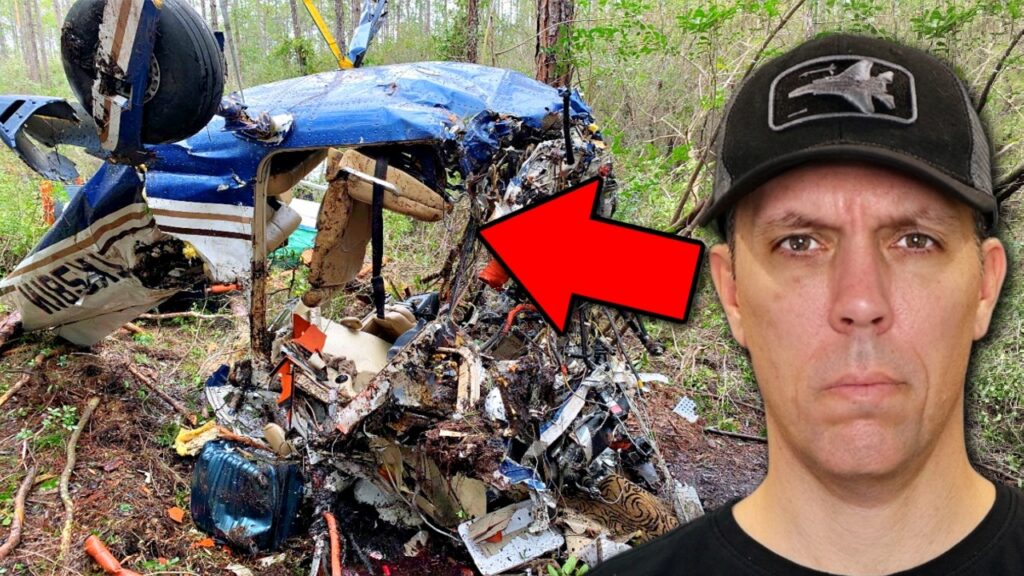
On March 8, 2022, a Cessna 182Q, N182XT, crashed near Panama City, Florida, while approaching Northwest Florida Beaches International Airport. The pilot and passenger were killed, and the airplane was destroyed. The flight ended in woods about 1.55 nautical miles from the runway threshold after repeated deviations from the instrument approach.
The day had begun with a cross-country trip and one fuel stop. During that stop, the pilot told an airport employee he was trying to arrive between two thunderstorms. By the time the airplane reached the destination area, it was dark, and the weather had deteriorated beyond the forecast conditions he had expected for the final leg.
Air traffic control cleared the airplane for a straight-in ILS approach. The controller reported a ceiling 200 feet above the ground, matching the approach’s decision height. The available margin for acquiring the runway near minimums was therefore small.
The pilot reported being established on the final approach course, but the recorded flightpath did not remain centered. The airplane crossed the initial approach fix about 500 feet below its specified altitude and was about 700 feet below the expected altitude at the final approach fix. Controllers warned the pilot about the deviations.
The lateral corrections continued during final. The airplane moved left and right of the course instead of settling into a stable path toward the runway. The controller also told the pilot that nearby airports had better weather. The pilot elected to continue the approach.
The airplane descended below decision height and struck heavily wooded terrain in a descent of about 18 to 20 degrees. Total flight time that day was 6 hours and 53 minutes, with 3 hours and 51 minutes on the final leg. The accident occurred at about 6:46 p.m. central standard time.
Investigation Findings
The NTSB found that the pilot deviated from the final approach course during a night instrument approach in low weather. Continuing after warnings and limited experience in actual instrument conditions at night contributed to the accident.
All major airplane components were found in the debris path. Investigators did not identify a preimpact mechanical failure that explained the crash, and the evidence showed the engine was producing power. The investigation therefore examined the approach control and the pilot’s available alternatives.
The airplane had a persistent autopilot altitude-hold problem. Despite recent corrective maintenance, the altitude oscillations had continued. The pilot knew the problem remained and told others before the trip that he was comfortable hand flying. The issue was part of the flight’s workload context, but it was not proof that the autopilot drove the airplane into the ground.
Impact damage prevented functional testing of the autopilot, and investigators could not determine whether it was engaged during the approach. A safety pilot who had flown with the accident pilot said he usually disengaged it and hand flew instrument approaches. The NTSB therefore considered hand flying likely, while retaining the uncertainty about the accident configuration.
The experience records helped define the task he was taking on. He had logged 11 instrument approaches in the previous six months. But his total actual instrument time was 32 hours, and only 2.5 of those hours were at night. He had logged less than two hours of night flight in the preceding year and no night flight in the preceding 90 days.
An approach count alone did not describe the combination of darkness, low ceiling, reduced visibility, and hand-flying workload. The NTSB also noted earlier instrument checkride difficulties involving distraction, situational awareness, and glideslope tracking. He ultimately passed on the third attempt, but the accident record showed the difficulty maintaining the required path under the conditions of this flight.
The alternate airport was about 25 to 30 minutes away and reporting visual flight rules conditions around the accident time. That was not a theoretical destination chosen after the fact; it was the alternate for the flight. The NTSB concluded that discontinuing the unstable approach and diverting likely would have avoided the accident.
The available choice therefore changed as the flight progressed. Before departure, the pilot had forecasts and a plan. On arrival, he had worse weather, warnings about his track, and information about better conditions nearby. Continuing required a fresh decision in light of that evidence, rather than reliance on the earlier expectation that a gap between storms would permit arrival.
NTSB Probable Cause
The pilot’s deviation from the final approach course during a night instrument approach with low instrument meterological conditions, which resulted in an impact with heavily wooded terrain. Contributing to the accident was the pilot’s decision to continue the approach after being warned of his flightpath deviations and his lack of experience in instrument conditions at night.
Safety Lessons
The first general lesson is to make instability an action trigger. Repeated localizer and altitude deviations on a low-weather approach consume the margin that should be available near the ground. Set and practice the applicable missed-approach decision before the workload of the arrival makes it harder to act.
The second is to plan for the actual combination of experience and equipment. Recent approaches do not necessarily provide recent experience at night in actual cloud. A known unreliable autopilot also changes how much of a long trip must be flown by hand. The assessment belongs before launch and needs updating as conditions change.
The third is to keep the alternate usable in the pilot’s decision process. In this accident, the better-weather option remained within a relatively short flight. A diversion should be a normal response to a deteriorating arrival, supported by fuel planning and a clear point for abandoning an unstable approach.
Watch the Full Analysis
Frequently Asked Questions
Q: Did autopilot failure cause the Panama City Cessna 182 crash?
A: The airplane had known altitude-hold problems, but damage prevented investigators from establishing its accident-flight operation. The NTSB considered it likely the pilot hand flew the approach and did not identify autopilot failure as the probable cause.
Q: What weather did the Cessna pilot face on arrival?
A: The controller reported a 200-foot ceiling, equal to the ILS decision height. The weather had deteriorated beyond the forecast conditions expected for the last leg.
Q: Was a better-weather alternate available?
A: Yes. The planned alternate was about 25 to 30 minutes away and reporting visual conditions. The NTSB concluded that a diversion after the approach became unstable likely would have prevented the accident.
Sources and References