What Happened
On May 9, 2009, at approximately 1424, an Upton Bakeng Duce, registered N86YP, lifted off from Ramona Airport in San Diego County, California. Two pilots were aboard. The man in the rear seat was 60 years old, held a private pilot certificate with a single-engine land rating, and also held an airframe and powerplant mechanic certificate. He had logged 1,450 hours as of January 2008. The man in the front seat was 50 years old, held a commercial pilot certificate with ratings for glider, single-engine land, and instrument airplane, along with a control tower operator certificate. He had logged 1,050 hours as of December 2008. The airplane was equipped with dual flight controls and could be flown from either seat. The rear seat’s instrument panel contained more instruments and circuit breakers than the front panel, but no determination was ever made regarding which occupant was handling the controls during the flight.
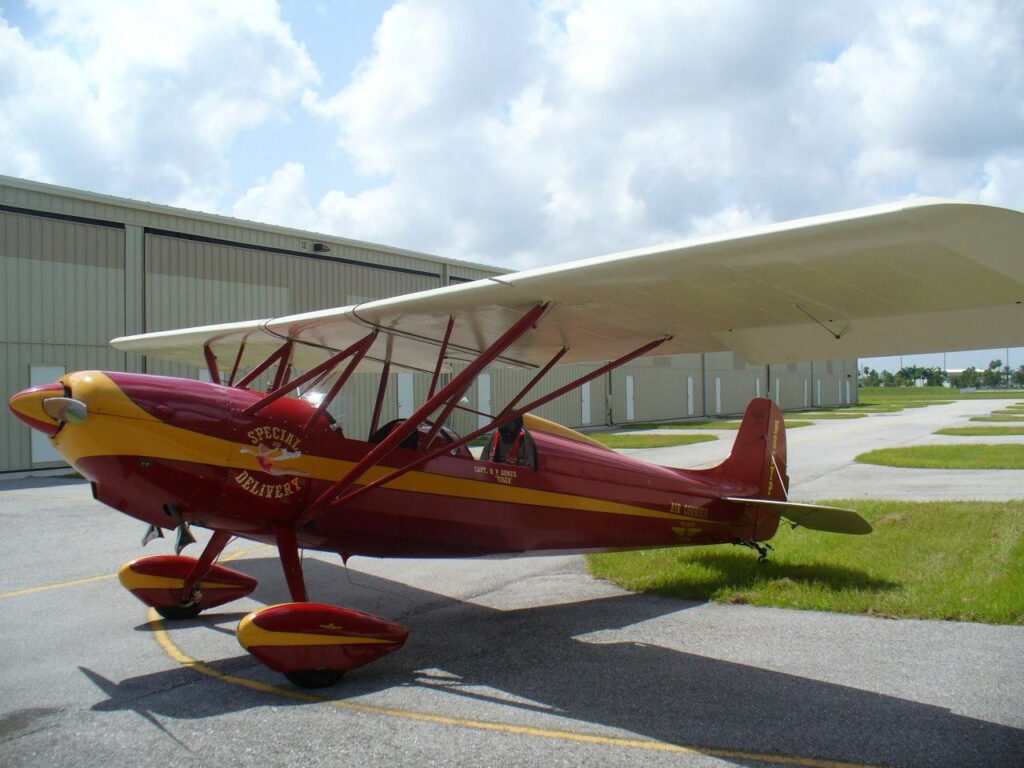
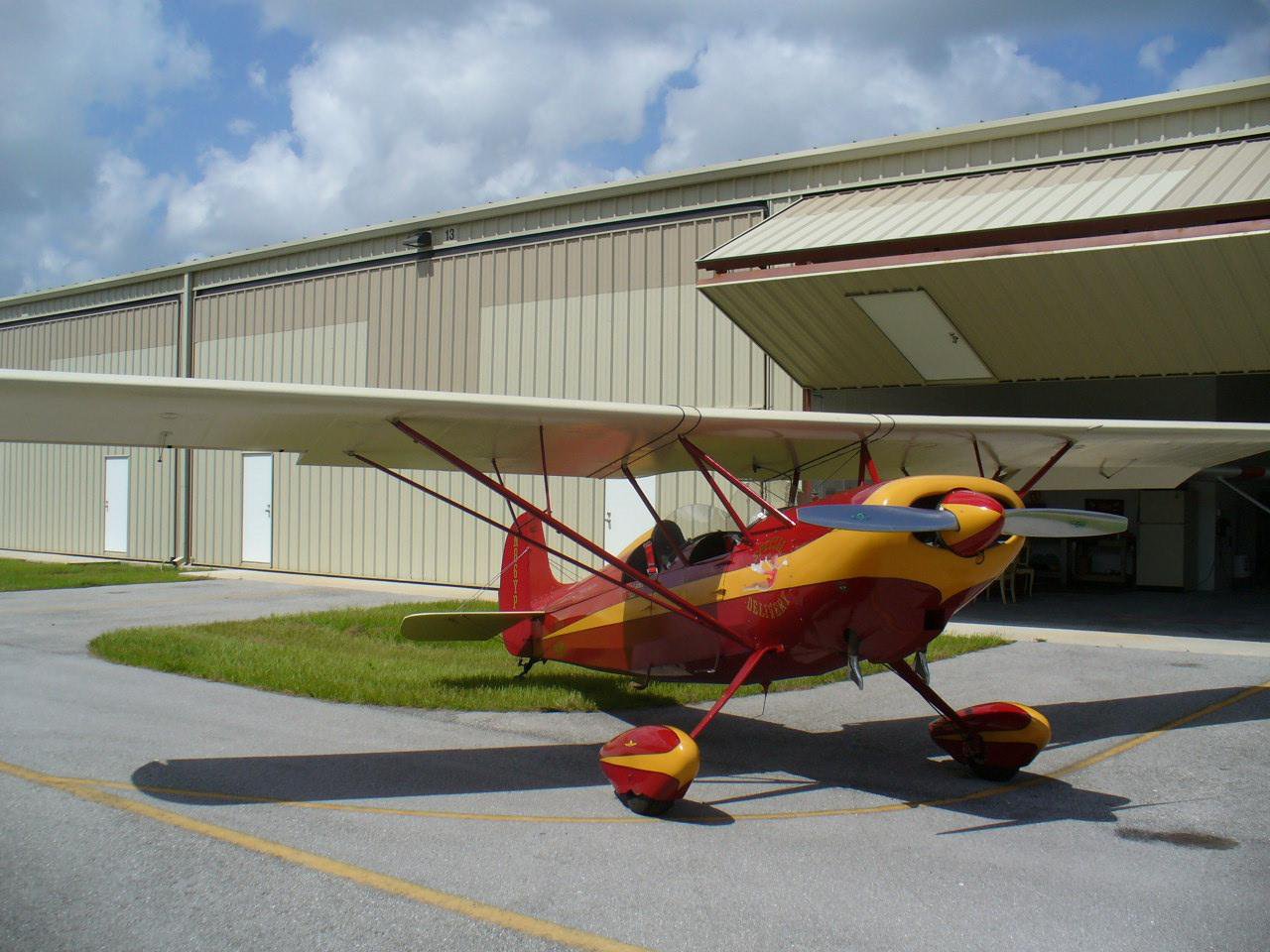
The Bakeng Duce, serial number 572, was an experimental amateur-built airplane manufactured by Samuel L. Upton. The FAA had issued its airworthiness certificate and operating limitations back in 1986. Those limitations explicitly prohibited aerobatic flight, defined as any intentional maneuver involving an abrupt change in attitude, an abnormal attitude, or abnormal acceleration not necessary for normal flight. The airplane was powered by a 140-horsepower Lycoming O-290D engine installed in a wood frame structure. It had two tandem seats and a predominantly red fuselage with white wings. The rear-seat pilot, who was an FAA-certificated mechanic, had performed the airplane’s most recent conditional inspection on May 2, 2009, just seven days before the accident flight, at a total airframe time of 480 hours. He was borrowing the airplane from its owner for this personal flight.
Eleven minutes into the flight, at approximately 1432, radar data showed the aircraft beginning a series of course changes in the area about 6.4 miles east-southeast of the Ramona Airport. One witness, positioned on elevated terrain in a hilly area, reported observing two airplanes flying in close proximity to each other for several minutes before what she described as a collision. She said the red airplane, which matches N86YP’s fuselage color, was making relatively shallow bank turns while a predominantly white airplane was maneuvering more aggressively nearby. She reported the airplanes appeared to collide, after which the red airplane rolled into a 90-degree bank, a span of wing appeared to break off, and the airplane spiraled down until it struck the ground. Eight other witnesses heard a sputtering engine, looked up, and observed the airplane in a spiraling descent. One reported seeing a wing separated from the main body of the airplane falling nearby. Another described a large piece of the airplane that looked like a parallelogram fluttering as it fell. None of those eight witnesses reported seeing a second airplane in the area.
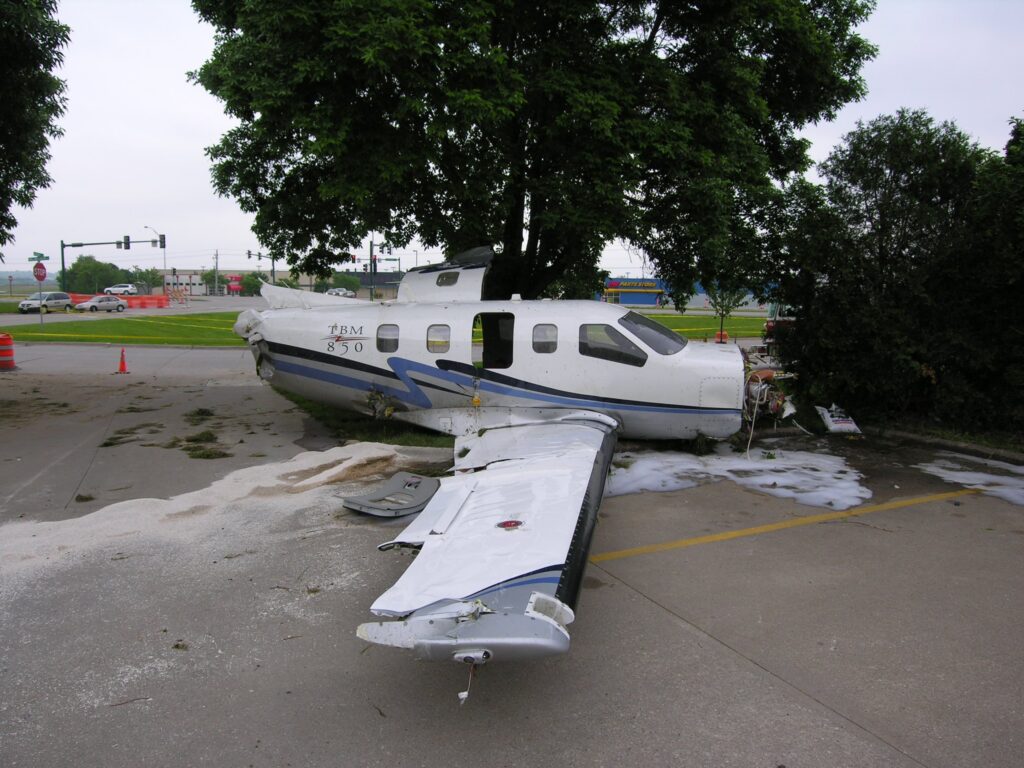
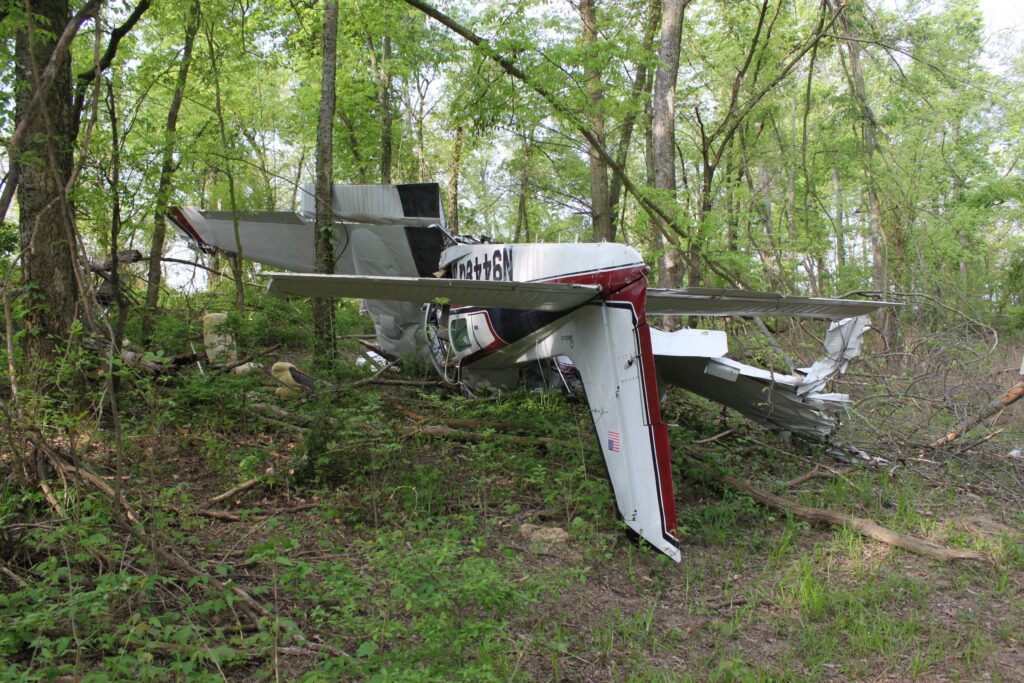
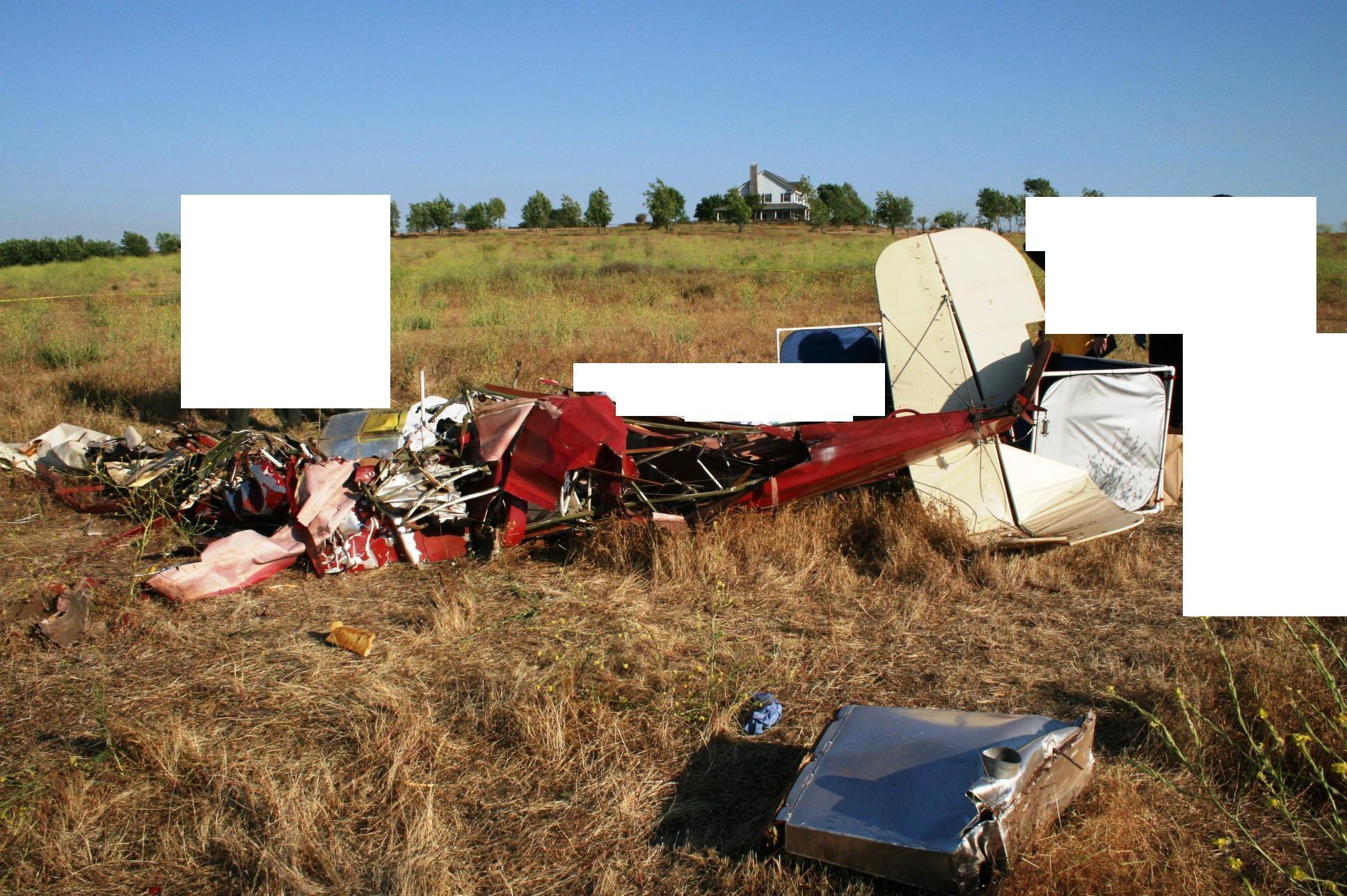
At approximately 1435, N86YP impacted an open, near-level field at an elevation of about 1,840 feet mean sea level. The last radar return had been detected roughly a quarter mile from the crash site. Both pilots were killed. The airplane sustained extensive fragmentation. There was no fire. Visual meteorological conditions prevailed throughout the flight, with a clear sky and unrestricted visibility confirmed by witnesses within a mile of the site and by the 1453 Ramona Airport weather observation reporting clear skies and 10 miles visibility.
Investigation Findings
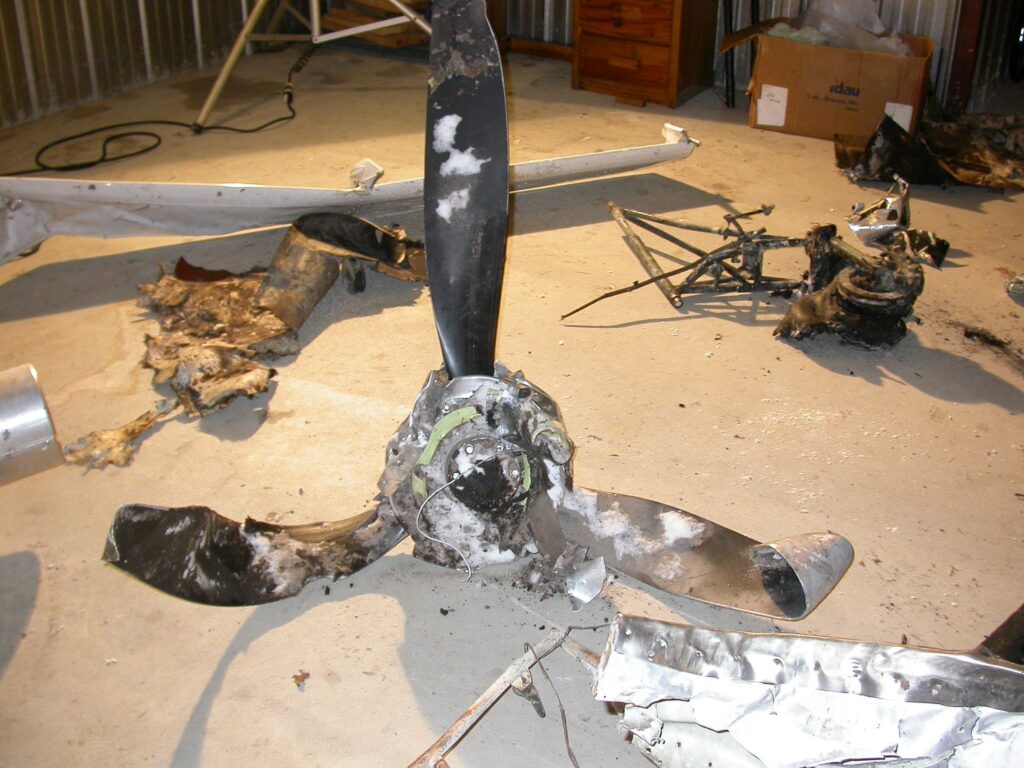
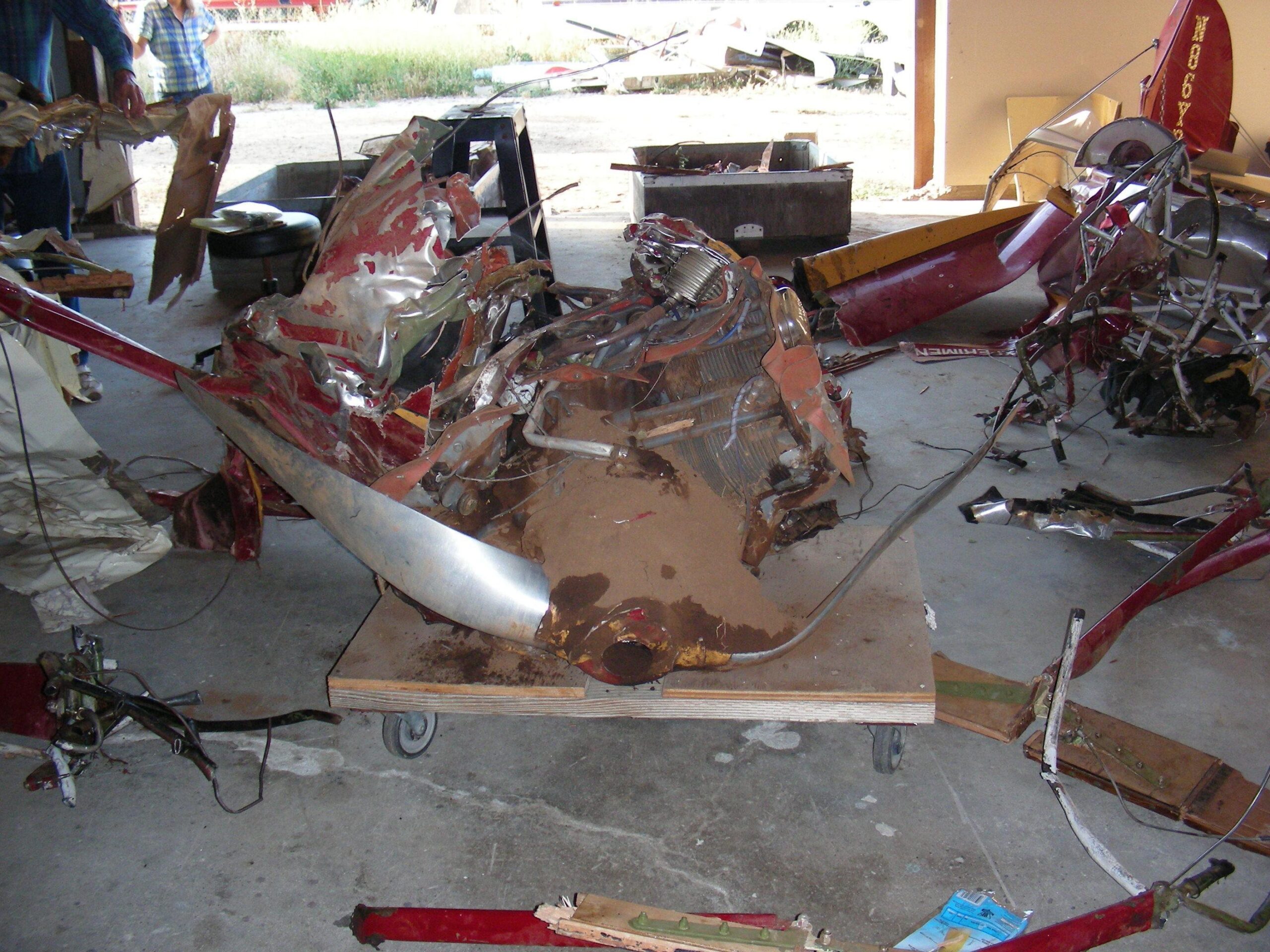
NTSB and FAA personnel examined the wreckage after recovery. The airplane had come to rest on its right side. The empennage remained attached to the fuselage. The cockpit was crushed and fragmented. The engine and propeller assembly were found together adjacent to the firewall. Flight control continuity to the rudder and elevator was confirmed from the aft fuselage to the control surfaces. The left wing spar was located in its entirety, though broken in several places, and the left aileron remained attached with confirmed cable continuity. The right wing told a different story entirely.
The right wing spar was found fragmented in numerous locations, mostly outboard of the point where the wing’s lift strut attaches to the wing. The right aileron was found separated from the wing and located approximately 0.1 mile east of the main wreckage, surrounded by numerous wood fragments. Additional fragmented airplane parts were found between 0.1 and 0.3 miles east-northeast of the main wreckage. The distribution of those fragments was consistent with an in-flight separation of the right wing, not with ground impact. An examination of the white wing skin found no colored paint transfer, which argued against a physical collision with another aircraft. The wing skin showed scratch marks and tears oriented in various directions, but no paint transfer from a second airplane.
The NTSB’s Materials Laboratory in Washington, D.C., examined several of the fractured and separated right wing spar segments from outboard of the lift strut attachment point. What they found explained everything. The fractures at both the inboard and outboard ends of one fragmented forward spar piece had occurred primarily as splits along the grain of the wood. That splitting pattern indicated that the wood grain was not running parallel to the longitudinal axis of the spar the way it needed to. The laboratory measured the average angle of deviation between the wood grain and the spar axis at approximately 12 degrees, which corresponds to a slope of more than 1 in 5. The FAA’s advisory circular AC 43.13-1B sets the maximum permissible grain deviation at 1 in 15, or 3.8 degrees. The spar in N86YP’s right wing had been built with grain running at more than three times the maximum allowable deviation. According to U.S. Department of Agriculture Forest Products Laboratory data, a 12-degree grain offset predicts that the bending strength of the spar drops to somewhere between 30 and 70 percent of what it would be with properly aligned grain. And critically, the misalignment was not visible from the front or back surfaces of the spar. Wood strips had been glued to the top and bottom edges of spar sections, completely hiding the grain orientation from any inspector who hadn’t specifically cut into the wood to examine it.
Radar data analysis found only one aircraft in the vicinity during the relevant time period. The witness report of a midair collision could not be substantiated. The most consistent reading of all available evidence pointed to a single aircraft performing a maneuver that produced aerodynamic loads exceeding what a structurally compromised spar could handle.
NTSB Probable Cause
An in-flight separation of the right wing, which resulted from the pilot’s performance of a maneuver that produced aerodynamic loads that exceeded the wing spar’s degraded strength. The wing spar strength degradation was due to the builder’s failure to comply with Federal Aviation Administration recommended guidelines to select and incorporate wood in the spar with a grain pattern aligned with the longitudinal axis of the spar.
Safety Lessons
Two experienced pilots, one of them an A&P mechanic who had literally inspected this airplane seven days earlier, climbed into an airplane whose wing spar had been structurally compromised since the day it was built. The spar had probably been that way for all 480 hours of the airframe’s life. Three lessons from this accident are worth sitting with.
- Wood grain orientation is a hidden killer in amateur-built aircraft. A 12-degree grain deviation in a wood spar reduces its bending strength to between 30 and 70 percent of specification, and that defect is invisible from the surface once spar caps or wood strips are glued over the top and bottom edges. For anyone flying, inspecting, or building an aircraft with wood structural members, AC 43.13-1B’s 1-in-15 maximum grain deviation limit exists for exactly this reason. The only way to verify compliance is to examine the grain before covering, or to carefully examine exposed end-grain sections. Once it’s built and covered, the defect hides in plain sight.
- Operating limitations on experimental aircraft are structural limits, not suggestions. The Bakeng Duce’s airworthiness certificate explicitly prohibited aerobatic flight. That prohibition wasn’t written because aerobatics are unseemly in a biplane lookalike. It was written because the airplane’s structure, even a properly built one, was not certified to withstand the loads those maneuvers generate. A spar already degraded to somewhere between 30 and 70 percent of its intended strength had even less margin. When a maneuver produces loads that exceed the structure’s actual capability rather than its design capability, the wing doesn’t bend. It separates.
- Borrowing an experimental airplane introduces unknowns that don’t come with a logbook entry. The rear-seat pilot had inspected N86YP and knew its maintenance history. But no conditional inspection of an amateur-built airplane requires destructive examination of the wood spars to verify grain alignment. The defect had been baked in since 1986. The A&P mechanic who performed the annual had no reason to suspect it, and no practical way to find it without cutting into a structure that looked intact. When the airplane you’re flying was built in someone’s garage using techniques you didn’t supervise, there are structural assumptions embedded in that airframe that no inspection will necessarily surface.
Frequently Asked Questions
Q: What is the Bakeng Duce and how common is it?
A: The Bakeng Duce is a plans-built, experimental amateur-built biplane-style aircraft. It is a relatively rare design, built by individual constructors from purchased plans rather than a kit. Because each one is built by hand, structural quality varies depending on the builder’s compliance with design specifications and FAA construction guidance. N86YP was manufactured by Samuel L. Upton and received its airworthiness certificate from the FAA in 1986.
Q: What does wood grain orientation have to do with wing spar strength?
A: Wood is not uniformly strong in all directions. Its fibers run in a specific direction, and bending strength is highest when those fibers are aligned parallel to the load-bearing axis of the structural member. When the grain deviates from that axis, the fibers split along the grain rather than resisting the load. At a 12-degree deviation, which is what the NTSB found in N86YP’s right wing spar, the bending strength drops to somewhere between 30 and 70 percent of what a properly aligned spar would provide. The FAA’s AC 43.13-1B limits grain deviation to no more than 3.8 degrees, or 1 in 15, for exactly this reason.
Q: Was there actually a midair collision involved in this accident?
A: One witness reported seeing two airplanes flying in close proximity before what appeared to be a collision, after which the red airplane shed a wing and spiraled down. However, radar analysis of all available coverage in the area showed only one aircraft in the vicinity. Additionally, examination of the wing skin found no paint transfer consistent with contact from another aircraft. The NTSB was unable to substantiate the midair collision theory, and the probable cause focused entirely on the in-flight wing separation caused by the structurally compromised spar.
Q: How did the A&P mechanic miss the wood grain defect during the annual inspection?
A: The grain misalignment was not visible from the front or back surfaces of the spar because wood strips had been glued to the top and bottom edges during construction, covering the grain. The NTSB’s materials laboratory noted that the misalignment could only be detected by examining exposed sections or performing destructive testing. A standard conditional inspection of an amateur-built aircraft does not require cutting into structural members to verify grain orientation. The defect had been present since the airplane was originally built in 1986.
Q: Which pilot was flying N86YP at the time of the wing separation?
A: The NTSB was unable to determine which of the two pilots was handling the controls at the time of the accident. The airplane had dual flight controls and could be flown from either seat. The rear seat contained a more complete instrument panel, but no evidence was found to conclusively establish who initiated the maneuver that led to the wing separation.