What Happened
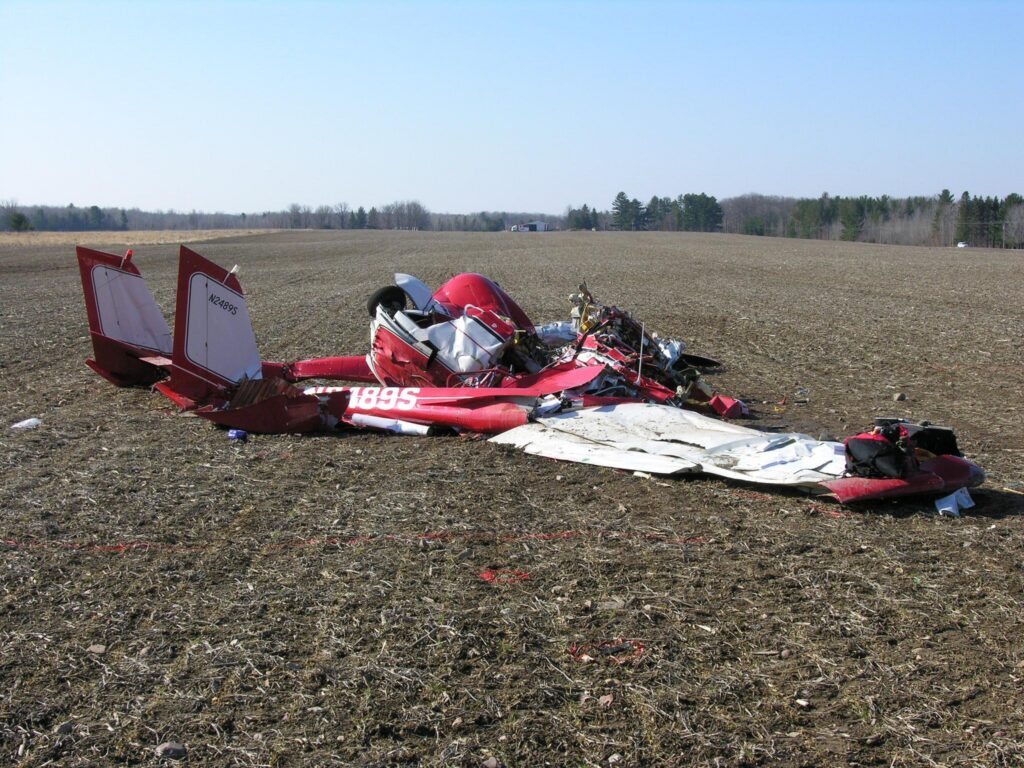
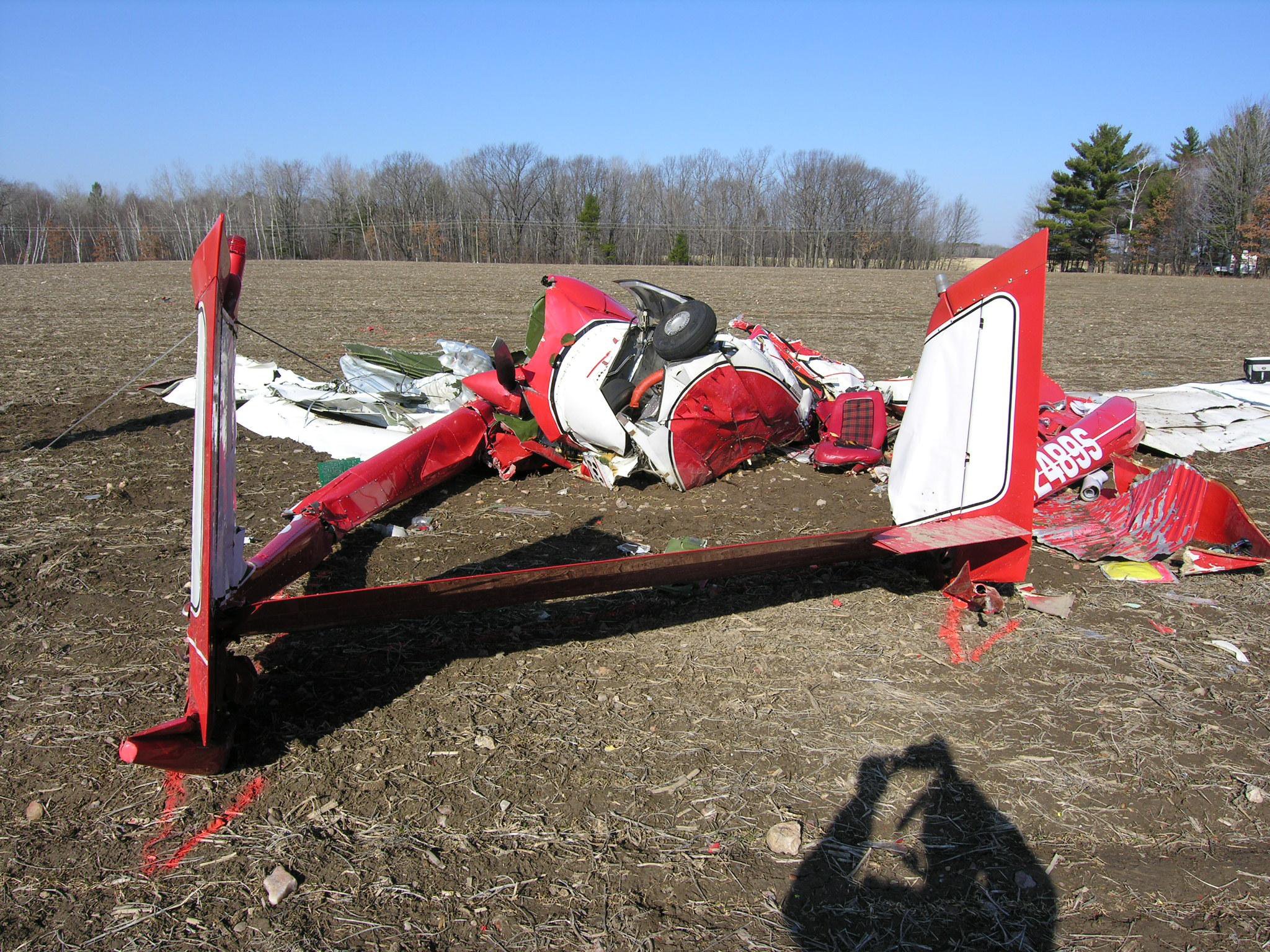
On April 8, 2009, at 1439 central daylight time, a 1967 Cessna 337C, registered N2489S and operated by the Wisconsin Department of Natural Resources, impacted an agricultural field near Pittsville, Wisconsin. The pilot, the sole occupant, was fatally injured. Visual meteorological conditions prevailed. The flight had originated from Necedah Airport at 1411, dispatched to respond to a ground fire in Rack Township.
The fire itself was unremarkable. A burn barrel at a residence had gotten away from whoever set it, and the flames spread toward an agricultural field to the south. A wooded area separated the house from the field. The Rack Township Fire Department was already on scene when the DNR Cessna showed up overhead. The Fire Department Deputy Chief later told investigators that when he first spotted N2489S, it was flying at what he described as “several thousand” feet above ground level. He watched it circle the area three times. During those first passes, he heard no reduction in engine noise. The airplane was just up there, looking, doing what a DNR fire surveillance aircraft is supposed to do.
Then something changed on the third circle. The Deputy Chief had walked through the wooded area to a position about 100 feet north of where the airplane would eventually come to rest. From there he watched the Cessna 337C fly south at an altitude he described as “seemed low” — maybe 100 feet above the treetops. The airplane continued south, then turned north, and as it came back toward the tree line it had descended further. The Deputy Chief put it at about 35 feet above the field surface. The airplane was in a shallow left bank, somewhere between 30 and 45 degrees of roll, tracking roughly north back toward the trees. Then, about 5 seconds before impact, he heard the engine noise increase. And then the left wing dropped.
The airplane struck the fallow wheat field on a heading of approximately 060 degrees magnetic. The main wreckage came to rest in an upright position. The Pittsville Fire Department Chief, who was also watching, said the airplane descended at a “sharp angle” during that third circling pass and confirmed the engine was running. Both witnesses agreed: the gear was up, no lights were visible, and the airplane was low — very low — for a fire observation pass.

Investigation Findings
The pilot held an airline transport pilot certificate with multiengine airplane and commercial single-engine land ratings, plus a flight instructor certificate covering single-engine, multiengine, and instrument categories. By April 8, 2009, he had accumulated 4,739.1 total flight hours. He was not new to DNR flying. He had previously served as a DNR pilot in Cessna 182 and 185 airplanes. But the Cessna 337C was recent. His initial flight check in the type was dated April 3, 2009 — five days before the accident — and lasted 1.0 hours. A logbook entry showed a 1.0-hour local flight from Oshkosh on March 27. Combined with two flights on April 7 and one on April 8 prior to the accident flight, he had accumulated 3.1 hours in the accident airplane since the type checkout. Total time in type at the moment of the accident: roughly 4 hours plus change.
The airplane itself had a Horton STOL kit installed under two supplemental type certificates. The kit added leading edge cuffs, stall fences, droop wingtips, and vortex generators. The STC instructions noted that the airplane could be operated per the standard Cessna handbook but encouraged pilots to familiarize themselves with the aircraft’s slower-airspeed behavior at a safe altitude before relying on it at low altitude. Critically, neither the accident airplane nor the other DNR-operated Cessna 337s had any additional placards, airspeed indicator markings, or flight manual supplements with quantitative performance data reflecting the STOL kit changes. The pilot’s familiarization questionnaire listed VS0 at 66 mph and VS1 at 75 mph. The standard Cessna 337 flight manual lists power-off stall speed with gear down and full flaps at 67 mph calibrated airspeed, and gear-up, flaps-up stall speed at 78 mph. The flap jackscrew at the accident site measured 3.1 inches of extension, corresponding to 10 degrees of flap. Gear was retracted. So the airplane was in a configuration close to its clean stall speed range.
The DNR representative who conducted the accident pilot’s type checkout told investigators that DNR aerial observation flights are conducted as single-pilot operations, with pilots flying at airspeeds near stall with an intermittent stall warning active, using visual references outside the cockpit rather than monitoring the airspeed indicator. He described the normal observation airspeed as 95 mph indicated with 10 degrees of flaps. He also noted there was no minimum altitude for DNR fire observation operations and that the Wisconsin DNR held a low-altitude waiver from the FAA’s Milwaukee FSDO covering 14 CFR 91.119(b) and (c). Wreckage examination found no mechanical anomalies. Both engines rotated normally, both magneto systems produced sparks, both fuel pumps moved fuel, both fuel systems were unobstructed. There was fuel on board. The flight controls were intact with full continuity confirmed. The left wing showed greater damage than the right, and the left stall fence was separated and found about 15 feet behind the main wreckage — consistent with the left wing striking first. The fractures in the wing spar attachment points showed deformation and surface features consistent with overload, not fatigue or pre-existing damage.

NTSB Probable Cause
The pilot’s failure to maintain adequate airspeed which resulted in an aerodynamic stall at a low altitude.
Safety Lessons
Three things converged here, and none of them alone would necessarily have been fatal. Together, they were.
- Minimum altitude is not zero altitude. A low-altitude waiver gives an operator the legal authority to fly below 500 feet. It does not give any pilot the physical ability to recover from a stall at 35 feet above the ground. The stall speed of a Cessna 337C with gear up and 10 degrees of flap is somewhere in the 75-78 mph range by the published handbook. At 35 feet AGL, there is no altitude for recovery from any departure from controlled flight. The waiver and the physics are two entirely separate conversations.
- Type familiarity is not the same as type proficiency. The pilot had approximately 4 hours in the Cessna 337C when the accident occurred. His checkout was 1.0 hours. He had extensive total time and held an ATP certificate, which means he had the skill set to build proficiency. But 4 hours in a new type, combined with a checkout that covered normal operations rather than slow-flight handling near stall at low altitude, left a gap between what the STC instructions recommended — familiarization with slow-speed behavior at a safe altitude — and what actually happened. The STOL kit’s STC documentation explicitly called out this need. There is no indication that kind of slow-speed familiarization was completed before the mission.
- Flying by feel at low altitude compresses the margin to zero. The DNR representative described the standard observation technique as flying near stall by aircraft feel rather than by reference to the airspeed indicator. That technique can work when there is altitude to recover. At 35 feet AGL in a banked turn — where stall speed increases with bank angle — flying by feel means the first indication of an impending stall may arrive at the same moment as the ground. The Deputy Chief’s account of the left wing dropping and the simultaneous engine noise increase is consistent with the pilot applying power at the onset of the stall, but by that point the field was already there.
Frequently Asked Questions
Q: What caused the Cessna 337 crash near Pittsville, Wisconsin in 2009?
A: The NTSB determined the probable cause was the pilot’s failure to maintain adequate airspeed, which resulted in an aerodynamic stall at low altitude. The pilot was conducting a fire observation pass at approximately 35 feet above the ground in a banked turn when the left wing dropped and the airplane struck the field.
Q: How does bank angle affect stall speed in a Cessna 337?
A: Stall speed increases with bank angle because the wings must generate more lift to maintain altitude while also supporting the centripetal load of the turn. At 30 degrees of bank, stall speed increases by roughly 7 percent. At 45 degrees of bank, it increases by about 19 percent. The Cessna 337C’s clean stall speed is listed at 78 mph calibrated airspeed. In a 30-45 degree banked turn, that threshold rises to somewhere between 84 and 93 mph before any power-off stall occurs — leaving a much smaller margin than a pilot flying by feel at low altitude might expect.
Q: What is a Horton STOL kit and how does it affect stall speed?
A: A Horton STOL kit is a supplemental type certificate modification that adds leading edge cuffs, stall fences, droop wingtips, and vortex generators to improve slow-speed handling. These modifications can lower stall speed and improve controllability at lower airspeeds. However, as the STC documentation for the accident airplane specifically noted, the performance improvements vary with pilot proficiency and aircraft condition, and pilots are explicitly instructed to familiarize themselves with the aircraft’s slow-speed behavior at a safe altitude before operating near stall in actual conditions. The accident airplane had no additional placards or airspeed markings reflecting STOL kit performance changes.
Q: Does a FAA low-altitude waiver allow flight at any altitude?
A: A low-altitude waiver issued under 14 CFR 91.119 gives an operator legal authority to fly below the FAA’s standard minimum altitudes, which are 500 feet over sparsely populated areas and 1,000 feet over congested areas. However, the waiver does not change aircraft performance. At 35 feet AGL, there is no altitude available for stall recovery regardless of the regulatory authority under which the flight is operating. The legal authorization to fly low and the physical ability to recover from an upset at low altitude are entirely separate considerations.
Q: How much experience did the Cessna 337 pilot have before the accident?
A: The pilot held an airline transport pilot certificate and had accumulated 4,739.1 total flight hours. He was an experienced DNR pilot in Cessna 182 and 185 airplanes. However, his initial type checkout in the Cessna 337C was completed on April 3, 2009 — five days before the accident — and lasted 1.0 hours. Including a pre-checkout local flight, he had accumulated approximately 4 hours total time in the Cessna 337C at the time of the accident.