What Happened
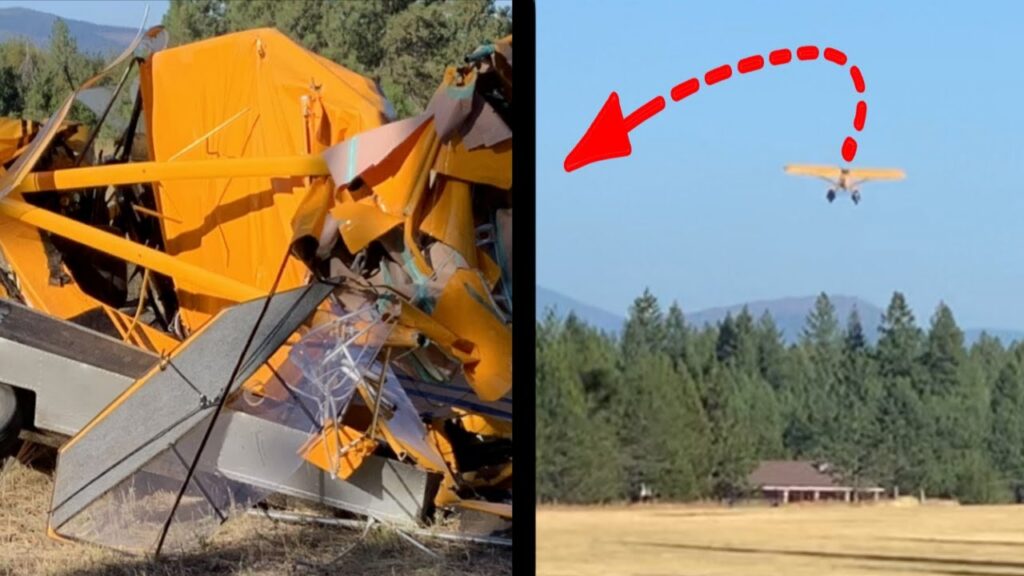
On October 6, 2020, a Rans S-7 Courier amphibious airplane, N55893, crashed after takeoff near Spirit Lake, Idaho. The pilot was killed, and the pilot-rated passenger sustained minor injuries. The airplane was substantially damaged after a low-altitude stall.
They were departing from a 3,000-foot grass runway at about 3:33 p.m. Pacific daylight time. Video showed the airplane becoming airborne about 1,100 feet along the runway. It then remained near the surface rather than climbing away promptly.
The passenger thought the pilot might land and taxi back. Instead, the pilot applied aft control stick, and the airplane climbed above the trees beyond the runway. The trees were approximately 40 feet tall.
The wings rocked as the airplane climbed. The aircraft then turned left, lost altitude, and disappeared below the tree line. It came to rest about 900 feet north of the runway centerline, having struck the ground nearly inverted.
The passenger’s estimate placed the wing drop at around 50 feet. A performance study using the video and recorded data found that the aircraft eventually reached about 75 feet above the runway before descending. Those were different observations of a short, changing sequence, not a reason to present a single eyewitness estimate as an exact measured height.
The airplane had become airborne, but the remainder of the takeoff still required enough performance to climb above the trees without exceeding the wing’s usable angle of attack. The recorded sequence showed that margin disappear while the engine continued producing power.
Investigation Findings
Investigators combined takeoff video with data from an onboard display and GPS receiver. The resulting study tracked groundspeed, height, orientation, and the relationship between the wing’s attitude and the airplane’s actual path.
After liftoff, groundspeed increased from about 47 to 60 mph, then decreased to 58 mph as the airplane climbed over the trees. These were groundspeeds, not direct airspeed readings. The distinction matters when comparing them with an aircraft’s published stall or climb speeds.
The airplane reached its maximum height about 22 seconds after becoming airborne. The study identified stall development earlier in the sequence and found that the estimated angle of attack reached 20 degrees at about 25 seconds, beyond the wing’s critical angle. The wing was being held at an angle the airflow could no longer support.
Angle of attack is the angle between the wing and the airflow reaching it. Pitch attitude alone does not define it. If an airplane’s path stops climbing while its nose remains elevated, the angle between the wing and that path can increase. The video allowed investigators to examine that relationship rather than infer a stall solely from how the airplane looked.
Sound analysis provided evidence about the engine. The estimated speed was approximately 5,446 rpm, about 94 percent of its rated 5,800 rpm. Engine and propeller sound remained consistent with normal operation while the airplane was losing altitude. The NTSB did not identify an engine-power failure as the initiating event.
The airplane carried a 100-horsepower Rotax 912-S engine and a three-blade propeller. Investigators calculated that it was below its maximum gross weight and within its center-of-gravity range using the occupant and fuel information. The passenger estimated about 11.25 gallons aboard. The findings did not support attributing the crash to an overloaded airplane.
The calculated density altitude was about 4,453 feet, based on airport elevation and a temperature of 27 degrees Celsius. That provided performance context, but the official probable cause was the pilot’s exceedance of critical angle of attack during the initial climb. It would be inaccurate to replace that finding with a claim that temperature alone caused the crash.
Investigators did not have a pilot operating handbook for this specific amphibious configuration. The report included information from the tailwheel version, but those figures should not be presented as a verified operating procedure for the accident configuration. The absence of a matching manual is a reason for caution about transferring numbers, not a reason to invent them.
The pilot had reported 10,000 total flight hours on his most recent medical application. His personal flight records were not recovered. Experience on an application did not establish recent proficiency in every operating condition, and it did not change the aerodynamic limit shown by the video.
The strongest evidence converged on the same sequence: an extended period near the surface, a climb above the trees, increasing angle of attack, wing drop, and descent despite continued engine operation. The Board therefore identified an aerodynamic stall during the initial climb.
NTSB Probable Cause
The pilot’s exceedance of the airplane’s critical angle of attack during the initial climb after takeoff, which resulted in an aerodynamic stall.
Safety Lessons
The general performance lesson is to define an acceptable takeoff result before starting the roll. If the airplane is not accelerating or climbing as expected, the remaining runway and obstacles become decision points. Lifting off does not by itself demonstrate that the takeoff can be completed safely.
The second is to guard angle of attack when trying to clear an obstacle. Pulling farther aft cannot create unlimited climb performance. Training should connect the aircraft’s approved speeds and configuration to the available power, density altitude, surface, and obstacle environment.
The third is to use performance information that matches the actual airplane. Amphibious installations can change weight and performance from a landplane version. Owners and pilots need applicable operating information rather than assume another configuration’s handbook answers every departure question.
Watch the Full Analysis
Frequently Asked Questions
Q: Did the Rans S-7 engine fail at Spirit Lake?
A: The investigation found engine and propeller sound consistent with normal operation. The NTSB attributed the crash to exceeding the wing’s critical angle of attack during the climb.
Q: Was the Rans S-7 overloaded?
A: The NTSB found that the airplane was under its maximum gross weight and within its center-of-gravity limits using the available occupant and fuel information.
Q: Why can an airplane stall while the engine is still producing power?
A: A wing stalls when its critical angle of attack is exceeded. Available engine power does not prevent that if the demanded flightpath and control input drive the wing beyond that limit.
Sources and References