What Happened
On August 28, 2008, at 2:34 PM Pacific time, a Piper PA-31-350 Chieftain, registration N212HB, crashed during an emergency return to North Las Vegas Airport after experiencing a right engine fire shortly after takeoff. The airline transport pilot, who was the sole occupant, was killed in the crash. One person at the impact site received minor injuries, while four others were unharmed.
The accident pilot had just been hired as a contract ferry pilot to fly the airplane from Las Vegas to Palo Alto, California, where ferry tank connections and avionics work would be completed before the airplane’s planned delivery to Korea. The twin-engine Chieftain took off from North Las Vegas Airport’s runway 7 at 2:22 PM and began climbing westbound. By 2:27 PM, the airplane had passed north of the airport and was climbing through 3,400 feet. Two minutes later, it reached its maximum altitude of 3,900 feet about 5 miles west of the airport.
Then something went wrong. By 2:30 PM, the airplane had started a left turn toward the southwest and was descending to 3,600 feet. A minute later, it had dropped to 3,500 feet and reached its farthest point west, about 7 miles from the departure airport. The pilot reversed course and began tracking back toward North Las Vegas. At 2:31:29 PM, he declared an emergency with approach control and requested an immediate return to the airport. The airplane was now descending through 3,100 feet.
At 2:32:05 PM, the pilot broadcast that he had an “engine failure rough engine.” The airplane continued descending as it tracked toward runway 7. Multiple witnesses on the ground observed the drama unfolding above them. A woman at her residence reported hearing “several pops” and looking out to see “the right side engine putting out black smoke.” The airplane then made a hard left turn and headed east toward the airport. Another witness described seeing puffs of smoke initially, then a continuous stream of white smoke from the right engine. As the airplane continued eastward, orange flames appeared beneath the right engine, followed by what he described as a “ball of flame.” He heard three “boom” sounds like backfire as the airplane descended. A third witness confirmed the continuous white smoke streaming from the right engine and observed fire and flames beneath it. When the flames increased in size, he heard explosions and saw a growing fireball. Notably, this witness reported hearing a continuous engine running sound throughout the ordeal and never heard any sputtering, suggesting the left engine was still producing power.
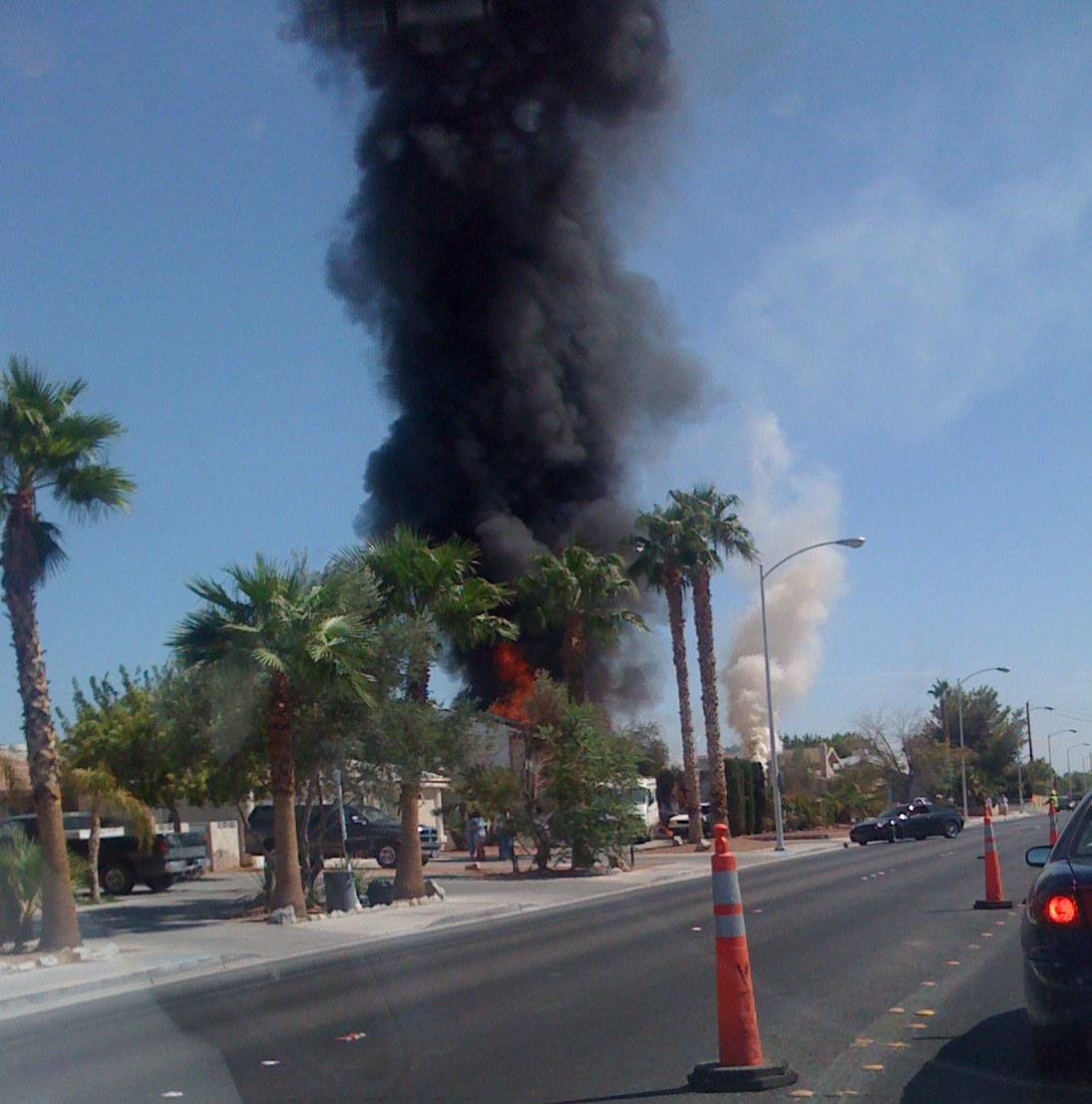
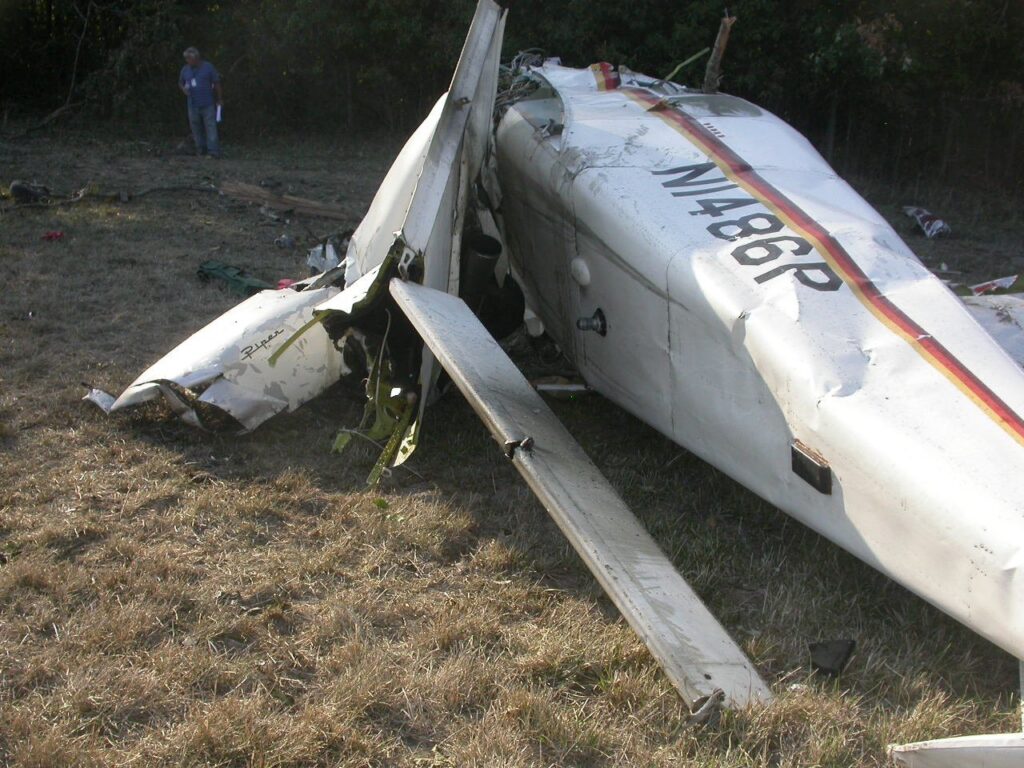
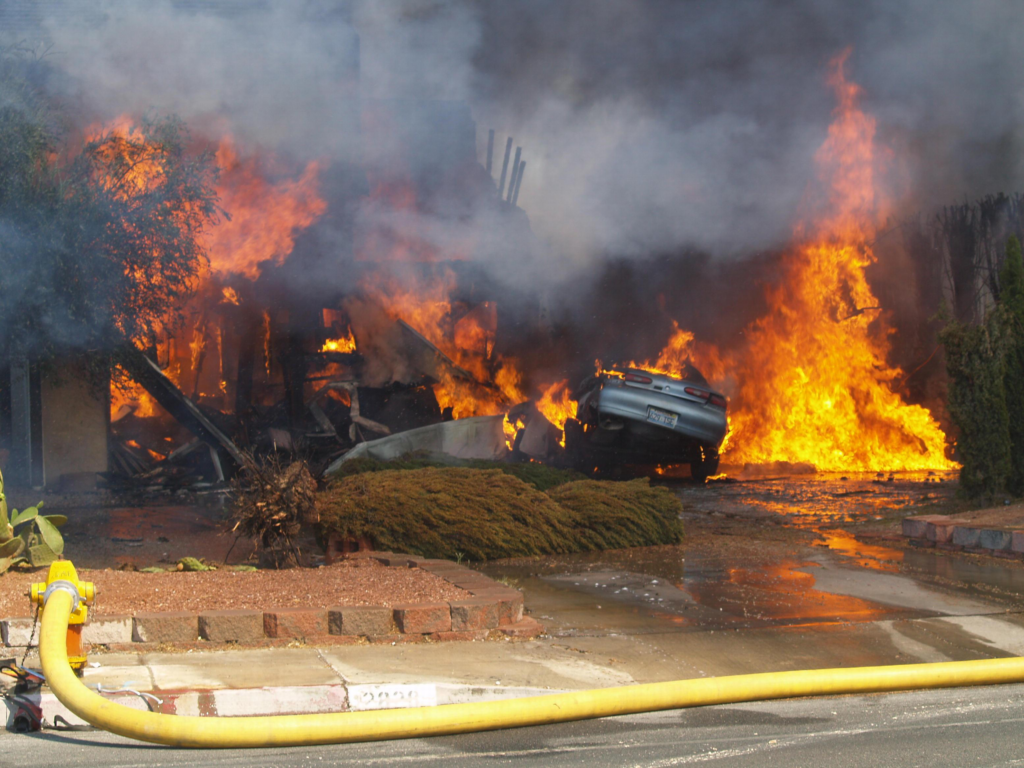
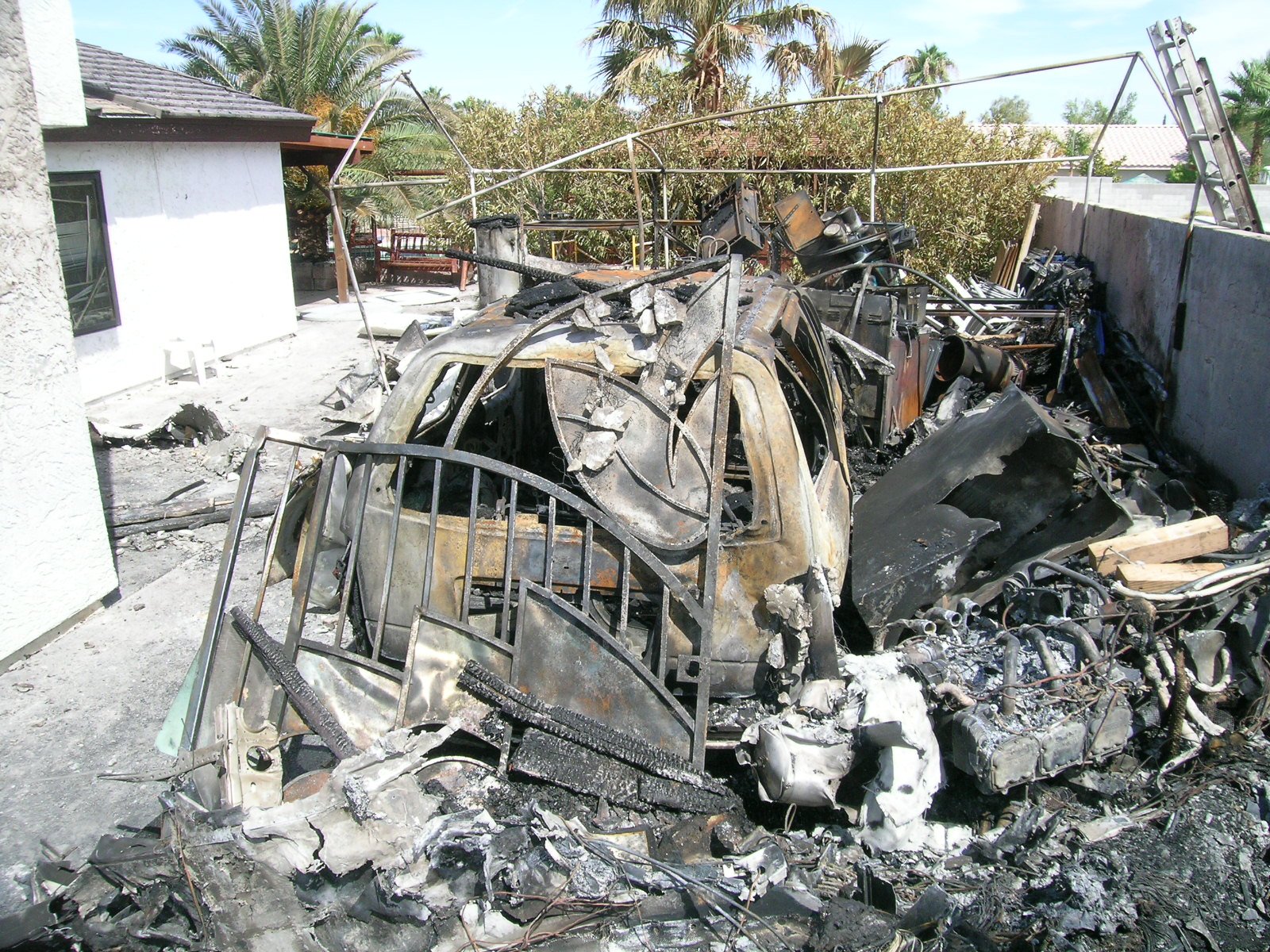
The 12-minute flight ended catastrophically about 1.25 miles west-southwest of runway 7. The airplane first struck and severed the top of a tree at an estimated height of 50 to 75 feet above ground, then collided with residential power lines. The right wing tip separated and was found in the street. The main wreckage came to rest inverted between two houses, crushing an automobile and igniting a fire that consumed both the airplane and part of a residence. First responders reported the airplane was engulfed in flames immediately upon ground impact.
Investigation Findings
The investigation revealed a complex sequence of events involving recent maintenance, fuel system modifications, and the pilot’s response to an in-flight emergency. The airplane had undergone extensive work in preparation for its planned ferry flight to Korea. In June 2008, a certified repair station in Ohio had completed an annual inspection and installed nacelle fuel tanks, overhauled engines, engine-driven fuel pumps, propellers, and turbochargers. The engines had only 26 hours total time since their major overhaul.
After the Ohio maintenance, the original ferry pilot flew the airplane to North Las Vegas, where additional work was performed on the air conditioning, gear door, vacuum pump, and idle adjustment. On July 28, 2008, the repair station test-ran the right engine for 20 to 30 minutes with the cowling removed and recorded good results. But then the original ferry pilot made significant modifications to prepare for the overseas delivery.
He installed four custom ferry fuel tanks in the passenger cabin and nose, supplementing the airplane’s existing six wing tanks. More critically, he fabricated and installed flexible fuel lines and tee fittings in the wings to connect these ferry tanks to the airplane’s certificated fuel system. These modifications were not Piper-approved designs and changed the airplane’s type certificate configuration. When the original ferry pilot applied for FAA ferry flight approval, the Las Vegas Flight Standards District Office refused to process the application, partly due to issues with the modifications. The airplane’s owner then discharged the original ferry pilot and hired the accident pilot on August 26, 2008, with instructions to fly the airplane to California where ferry approval might be more easily obtained.
The discharged ferry pilot told investigators he informed the accident pilot that the custom ferry tank fuel lines needed to be disconnected before flight to restore the airplane to its certificated configuration. Physical evidence found during the investigation, however, indicated these unauthorized fuel system modifications remained connected at the time of the accident flight. The accident pilot had no previous experience in this specific airplane and was not familiar with the ferry tank installation.
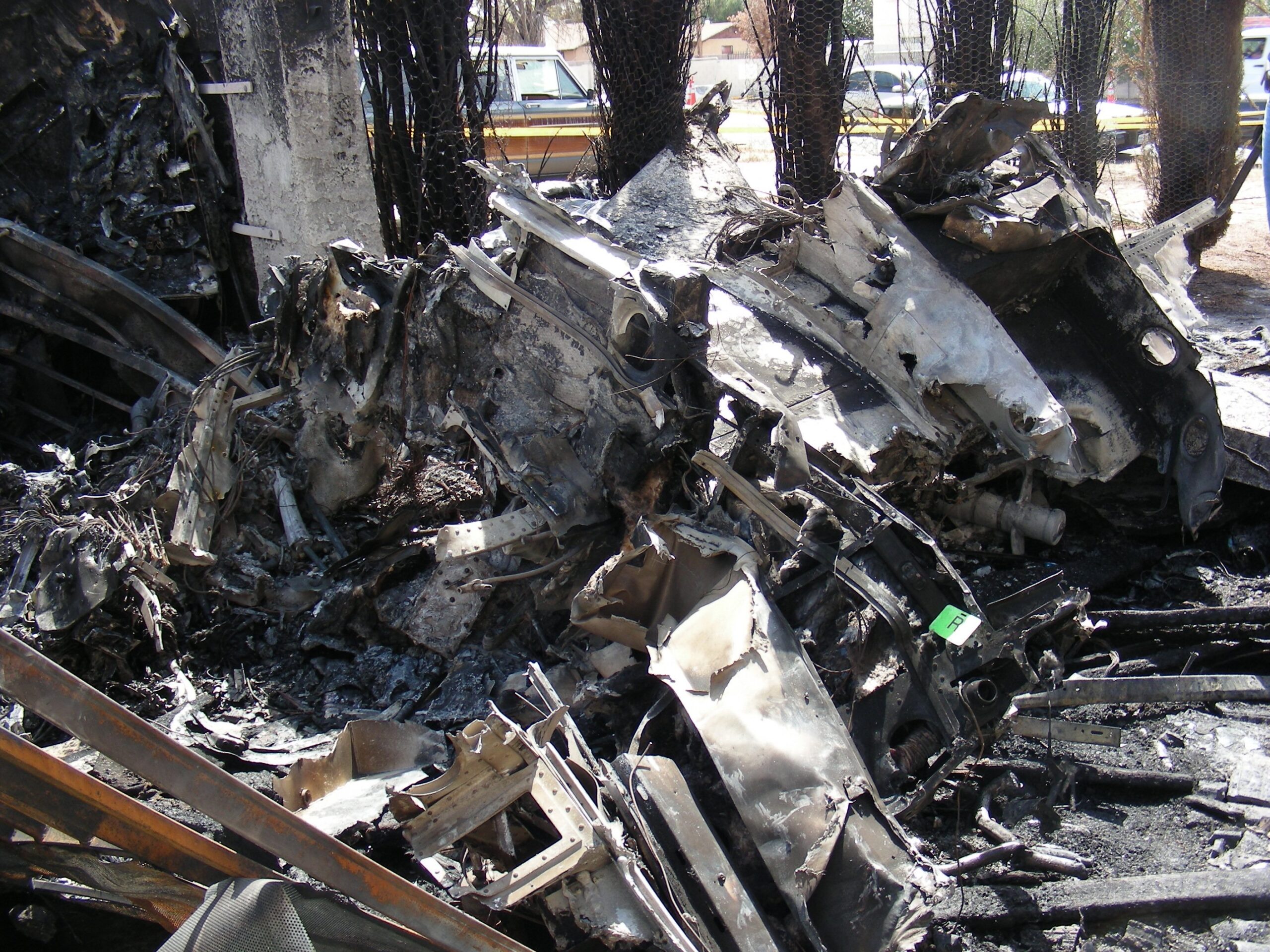
The wreckage examination revealed that both engines were capable of producing power and showed no evidence of internal mechanical failure. But the right engine’s compartment told a different story. The area around the engine-driven fuel pump and its fuel supply line showed significantly more fire damage than anywhere else on the airplane. The pump’s housing was missing material around the fuel outlet port, and localized areas showed evidence of intense burning. According to the engine manufacturer, this damage pattern was consistent with a fuel leak that could have originated from a loose fuel line fitting, a failed fuel line, or a fuel pump anomaly. The actual fuel supply line and its connecting components were destroyed in the fire and never recovered.
The fire and explosion investigator noted that the right engine sustained more thermal damage on its inboard side than its outboard side, suggesting the fire originated from within the engine compartment rather than spreading from external sources. The right wing’s nacelle fuel tank showed evidence of being over-pressurized, with aluminum structure bowed outward and split weld seams, indicating the intense heat and pressure from the nearby fire. The left engine showed uniform thermal damage, consistent with post-crash fire exposure rather than an in-flight fire source.
NTSB Probable Cause
A loss of power in the right engine due to an in-flight fuel-fed fire in the right engine compartment that, while the exact origin could not be determined, was likely related to the right engine-driven fuel pump, its fuel supply line, or fitting. Contributing to the accident was the pilot’s failure to adhere to the POH’s procedures for responding to the fire and configuring the airplane to reduce aerodynamic drag.
Safety Lessons
This accident offers several critical lessons for pilots operating twin-engine aircraft, particularly regarding emergency procedures and aircraft modifications. The investigation revealed that proper emergency response could have significantly improved the outcome.
- Master your airplane’s emergency procedures. The PA-31-350’s Pilot Operating Handbook provides specific steps for responding to an engine fire: move the firewall shutoff valve to off, feather the propeller, close cowl flaps to reduce drag, turn off magnetos, secure the emergency fuel pump, and pull the fuel boost pump circuit breaker. The accident pilot feathered the propeller but failed to follow the other critical steps. The right engine’s firewall shutoff valve remained open, continuing to feed fuel to the fire. The cowl flaps stayed open, creating unnecessary drag. The magnetos remained on, and the landing gear was extended prematurely. Each of these deviations from procedure reduced the airplane’s performance and likely contributed to the inability to maintain altitude.
- Understand single-engine performance requirements. According to the airplane’s performance data, a properly configured PA-31-350 should have been capable of climbing 100 to 200 feet per minute on one engine, or at minimum maintaining altitude. The radar data showed the airplane descended continuously after the emergency began while flying about 16 knots slower than the required 105 knots indicated airspeed for maximum single-engine performance. This speed deviation, combined with improper emergency configuration, turned a manageable single-engine situation into a fatal accident.
- Be extremely cautious with fuel system modifications. The unauthorized ferry tank installation created potential failure points in the fuel system through custom-fabricated lines and fittings. While the investigation couldn’t definitively link these modifications to the fire’s origin, they represented a departure from the airplane’s certificated design. Any fuel system modification should be approached with extreme caution and proper engineering analysis, as fuel leaks in hot engine compartments create obvious fire hazards. When told that unauthorized modifications needed to be disconnected before flight, the accident pilot should have ensured compliance rather than attempting the flight with the modified configuration.
Frequently Asked Questions
Q: How should a pilot respond to an engine fire in a twin-engine aircraft?
A: Follow the POH procedures exactly: shut off fuel to the affected engine using the firewall shutoff valve, feather the propeller, close cowl flaps to reduce drag, turn off magnetos, secure the emergency fuel pump, and pull the fuel boost pump circuit breaker. Maintain proper single-engine airspeed and configure the airplane for maximum performance before extending landing gear.
Q: What is the difference between a fuel-fed fire and an oil-fed fire?
A: A fuel-fed fire typically produces bright orange flames, while an oil-fed fire usually creates thick black smoke. In this accident, witnesses observed both white smoke and orange flames beneath the right engine, consistent with a fuel-fed fire in the engine compartment.
Q: Can unauthorized fuel system modifications cause aircraft accidents?
A: Yes, any modification to an aircraft’s fuel system creates potential failure points and should only be done with proper engineering analysis and FAA approval. Custom-fabricated fuel lines and fittings may not meet the same safety standards as certificated components and can develop leaks that lead to fires in hot engine compartments.
Q: How much altitude can a twin-engine aircraft maintain on one engine?
A: This varies by aircraft type, weight, and atmospheric conditions. The PA-31-350 in this accident should have been capable of climbing 100-200 feet per minute on one engine when properly configured and flown at the correct airspeed. However, this requires following emergency procedures precisely and maintaining optimal single-engine speed.
Q: What role did the pilot’s emergency response play in this accident?
A: The pilot’s failure to follow POH emergency procedures significantly contributed to the accident. By not shutting off fuel to the burning engine, not configuring the airplane to reduce drag, and flying slower than optimal single-engine speed, he reduced the airplane’s performance below what was needed to maintain altitude and reach the airport safely.