What Happened
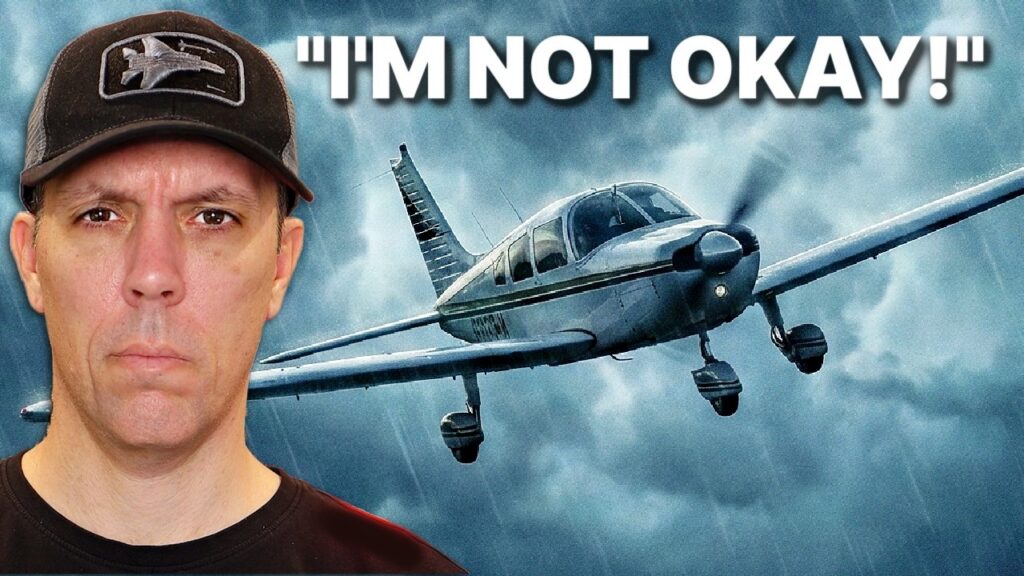
On December 16, 2012, a Piper PA-28-160, N5714W, crashed in woods near Parkton, North Carolina, while its pilot was attempting to reach Fayetteville. The private pilot, alone aboard, was killed. The airplane was substantially damaged. Before impact, he had told controllers that he had lost his gyro instruments and was not okay.
The flight had departed Summerville, South Carolina, at about 2 p.m. eastern standard time with nearly full fuel tanks. The pilot obtained an instrument flight rules clearance and continued toward Fayetteville. At the time of the accident, the destination ceiling was 500 feet, so reaching the runway required controlling the airplane without a reliable outside horizon.
Controllers vectored the pilot for an instrument landing system approach. Radar showed S-shaped turns as the airplane approached final. The pilot told the tower he had lost some gyros but thought he was managing. At about one mile from the runway, the airplane was still at 1,300 feet. The controller canceled the approach because the airplane was too high and directed a climb to 2,000 feet on runway heading.
The airplane instead turned toward the east. Controllers then assigned an easterly heading followed by 220 degrees, a southwest heading that would place it on a downwind track parallel to runway 4. The pilot continued turning beyond that heading toward the northwest. Asked whether an aircraft problem was preventing him from holding the assigned headings, he reported that he had no gyro and wanted to climb and go to his alternate.
That alternate offered a different environment: 10 miles visibility and a ceiling at 5,500 feet. The airplane carried enough fuel to reach it. The controller cleared the pilot to climb toward the alternate, but while still in cloud the airplane made large changes in heading and altitude.
The controller asked whether the pilot was okay. He said he was not. The pilot’s words, together with the erratic track, showed a developing emergency even though he had not used a formal emergency declaration.
The flight was subsequently vectored back for another ILS approach. The NTSB noted that the pilot could maintain assigned heading and altitude when operating higher in visual conditions, but his control deteriorated in instrument conditions. While being vectored, the airplane again moved between those environments.
The controller advised that the airplane was about four miles from the final approach fix and cleared the ILS. The pilot reached the final approach course, but while in cloud the airplane rolled right. It crashed inverted in woods about 7.5 nautical miles from the runway.
Investigation Findings
Investigators found no preimpact problem with the airframe or its flight controls. The engine’s power section showed no preimpact failure, and propeller evidence was consistent with power at impact. The airport’s approach systems also showed no discrepancy. The investigation instead centered on the instruments the pilot had reported losing.
The engine-driven vacuum pump supplied the attitude indicator and directional gyro. Examination of the pump and gyro instruments showed no evidence of the rotational scoring expected from operation at impact. The NTSB concluded that the pump was not operating then, consistent with the pilot’s report. It was about three years and four months beyond the suggested replacement interval.
Losing those instruments left the pilot flying partial panel, meaning he had to control attitude and direction using the remaining instruments. The Board could not determine whether he was legally instrument current. It did conclude that the observed inability to maintain control indicated he was not proficient at partial-panel flight in those conditions. A prior instrument checkride failure in 2002 had included that skill, but the accident flight itself supplied the most immediate evidence of difficulty.
The investigation also examined what the controllers understood. One controller believed the gyro problem affected heading control only and did not recognize it as an emergency. That missed the potential loss of attitude information and the difficulty of controlling the airplane in cloud without it.
The NTSB identified the pilot’s statements and the heading and altitude excursions as clear emergency indications. Controllers could recognize and respond to an emergency without waiting for the pilot to say a particular word. In this case, the information needed to tailor assistance was not obtained, and the available visual-weather alternative was not developed into a safe exit from the situation.
The Board reviewed the FAA’s computer-based recurrent training for recognizing pilot emergencies. Although training had been introduced after an earlier safety recommendation, the version reviewed did not contain vacuum-system or gyro-instrument failure scenarios. The NTSB concluded that simply delivering that existing training more consistently would not have addressed the missing subject.
The contrast between the airplane’s track in visual conditions and its track in cloud was operationally significant. When the pilot had outside references, the flight became stable. Returning him to an approach through a 500-foot ceiling removed that help. The investigation concluded that directing the flight toward visual conditions likely would have allowed an uneventful landing.
NTSB Probable Cause
The failure of the instrument-rated pilot to maintain control of the airplane while in instrument meteorological conditions after reporting a gyro malfunction. Contributing to the accident was the loss of primary gyro flight instruments due to the failure of the vacuum pump, the inadequate assistance provided by FAA ATC personnel, and the inadequate recurrent training of FAA ATC personnel in recognizing and responding to in-flight emergency situations.
Safety Lessons
For pilots, the general preparation lesson is to practice the failures the installed instrument system can actually produce. A vacuum-driven panel may lose more than one primary indication from one failure. Partial-panel practice should develop aircraft control and workload management together, using qualified instruction and the aircraft’s equipment.
Communication should describe both the failed system and the resulting limitation. A controller may not know what powers a particular airplane’s attitude indicator. Clearly stating that reliable attitude information has been lost, that control in cloud is difficult, and that assistance reaching visual conditions is needed gives ATC a more useful problem to solve.
For controllers and pilots working together, the destination need not remain the destination after the emergency changes. Here, fuel was available and the alternate had substantially better conditions. Assistance should be matched to the remaining capability of the airplane and pilot rather than continue a sequence that repeatedly demonstrates that capability has been exceeded.
Watch the Full Analysis
Frequently Asked Questions
Q: What failed in the Parkton Piper Cherokee accident?
A: The NTSB found that the engine-driven vacuum pump had failed, removing the primary gyro flight instruments. The pilot then lost control in instrument conditions.
Q: Did the pilot have an airport with better weather available?
A: Yes. The alternate had 10 miles visibility and a 5,500-foot ceiling, and the airplane carried enough fuel to reach it. The NTSB considered that visual-weather option important.
Q: Must a pilot say “emergency” before ATC can recognize one?
A: The accident investigation found that the pilot’s reported gyro loss, statement that he was not okay, and large flightpath deviations clearly indicated an emergency even without a formal declaration.
Sources and References