
What Happened
The pilot reported losing the autopilot and declared an emergency. When the controller asked where he wanted to land, he said he was trying to regain control of the airplane.
On July 26, 2024, a Pilatus PC-12/47E crashed near Recluse, Wyoming, during an instrument flight rules cross-country flight. The pilot and six passengers died. The accident, associated with the Nelons family, became the subject of Pilot Debrief's video analysis. The NTSB investigation is WPR24FA257.
The airplane was flying northwest toward a planned refueling stop in Montana and had leveled near 26,000 feet mean sea level. Satellite imagery showed clouds extending from roughly 10,000 feet to about 28,500 feet in the accident area, with rain showers. The pilot was operating in an environment where control of the airplane depended on instruments rather than a reliable outside horizon.
During the final portion of the flight, the pilot reported the autopilot problem to air traffic control. The controller asked where he would like to land and then relayed the minimum IFR altitude and local altimeter setting. No further response was received after that information.
The recorded track showed a series of changes in altitude and direction. The airplane moved right of course, climbed to about 26,525 feet, and entered a 270-degree right turn. It descended during the first portion of the turn and climbed during the latter portion. After a slight left turn, it entered another descending right turn. The last data point placed it near 21,900 feet on a southerly heading, at a groundspeed of 256 knots.
Those numbers describe the recorded track; groundspeed should not be confused with indicated airspeed. Investigators evaluated the sequence together with the weather, wreckage, and other evidence to determine what the airplane had been doing during the final minutes.
Investigation Findings
The NTSB concluded that the pilot lost control through spatial disorientation while operating in instrument meteorological conditions. The autopilot disconnect increased the manual flying demands, and the pilot's likely effort to re-engage it created a distraction that contributed to a breakdown in the instrument scan.
The investigation connected the disconnect with convective activity. Atmospheric modeling indicated the potential for a strong updraft, and investigators concluded that the autopilot likely disconnected when it could not counteract the updraft encountered by the airplane. That was a finding about the encounter and the resulting workload, not evidence that a specific autopilot component had been found broken before the accident.
The erratic track during the final two minutes was consistent with the known effects of spatial disorientation. The pilot had to maintain control manually in clouds while dealing with the unexpected loss of automation. The investigation considered his likely focus on restoring the autopilot to be an operational distraction, reducing the attention available for the instrument scan.
The report also evaluated icing. The weather model indicated trace to light icing and a low probability of supercooled large droplets along the final portion of the route. The airplane was equipped for flight into known icing conditions. The NTSB considered significant structural icing from those conditions unlikely and did not identify icing as the probable cause.
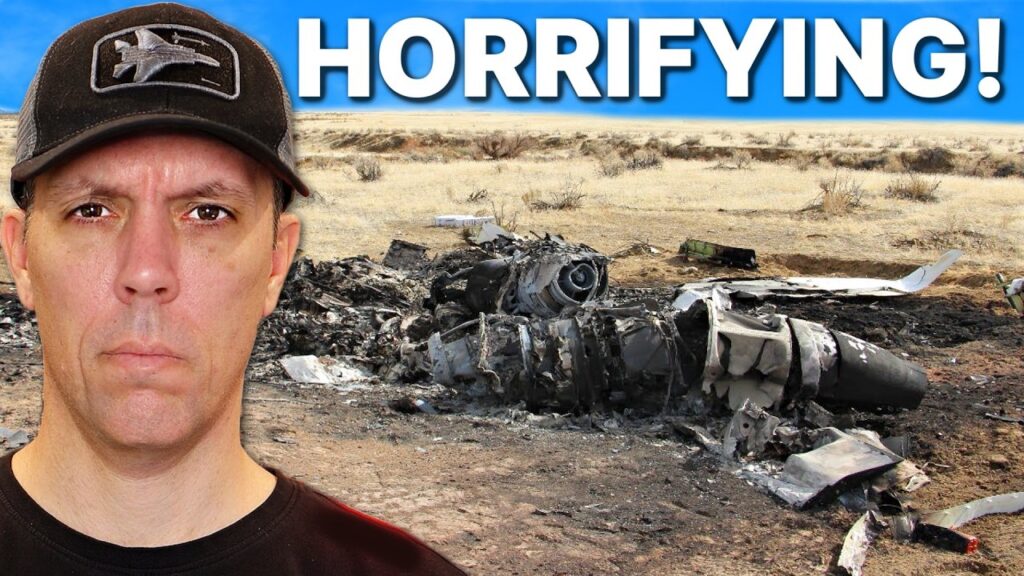
Wreckage evidence showed that portions of the left wing had separated. Some pieces were found as far as 0.82 miles from the main wreckage and displayed overload signatures. The NTSB concluded that the airplane likely partially broke up at low altitude during the rapid descent, consistent with exceeding its maximum operating speed.
The direction of that sequence matters. The investigation connected the breakup to the loss of control and descent. It did not identify a preexisting wing failure as the event that first caused the pilot to lose control.
Examination of the wreckage found no evidence of preimpact failures or malfunctions that would have prevented normal operation. Although impact damage limited the examination, the portions of the flight-control system that could be examined showed no evidence of preimpact disconnection or failure. The investigators preserved those examination limits rather than treating the damaged wreckage as a complete record of every system's condition.
The report uses qualified language for several parts of the reconstruction, including the updraft encounter, the pilot's focus on re-engagement, and the altitude at which the partial breakup occurred. Those distinctions are retained here. The final probable cause is a formal conclusion; some intermediate steps remain the investigators' most likely explanation of the available evidence.
NTSB Probable Cause
The pilot’s loss of control due to spatial disorientation while operating in instrument meteorological conditions, which resulted in an in-flight breakup. Contributing to the accident was the pilot’s distraction from the autopilot disconnecting due to an updraft from convective activity.
Safety Lessons
Automation loss can change the task faster than the airplane's location suggests. A flight established at cruise altitude can become a demanding manual-control problem when the autopilot disconnects in instrument conditions. Proficiency needs to include recognizing the transition and maintaining a reliable instrument scan while other tasks are deferred.
Troubleshooting should not displace aircraft control. The NTSB identified the pilot's likely focus on re-engaging the autopilot as a distraction. The general lesson is to keep the control task separate from restoring convenience or capability. The aircraft's own procedures and training determine the appropriate response; repeated attempts to restore automation cannot be allowed to consume the attention needed to fly.
Weather capability and weather exposure are different questions. An airplane's approval for flight in known icing does not make every cloud encounter benign. The report considered icing unlikely to be causal while still identifying convective activity and an updraft as important to the sequence. Evaluating one weather hazard does not resolve the others.
Wreckage distribution needs to be interpreted in sequence. Finding separated structure is not enough to conclude that a structural defect initiated an accident. In this case, the NTSB connected the overload damage with the rapid uncontrolled descent. The lesson for accident analysis is to follow the evidence through the event, rather than assigning the first cause from the most striking piece of wreckage.
Watch the Full Analysis
Frequently Asked Questions
What did the NTSB determine caused the Nelons plane crash?
The NTSB found that the pilot lost control due to spatial disorientation in instrument meteorological conditions, resulting in an in-flight breakup. Distraction from an autopilot disconnect associated with convective activity contributed.
Did the NTSB find that icing caused the crash?
No. The analysis considered significant structural icing unlikely in the modeled conditions. Icing was not included in the probable cause.
Did a wing failure start the accident?
The NTSB concluded that the airplane likely partially broke up during the rapid descent, consistent with exceeding its maximum operating speed. It did not identify a preexisting wing failure as the initiating event.
Which NTSB investigation covers this accident?
The correct investigation is WPR24FA257, involving the Pilatus PC-12/47E near Recluse, Wyoming, on July 26, 2024.
Sources and References
- NTSB final report: WPR24FA257
- NTSB preliminary report: WPR24FA257
- NTSB investigation docket: WPR24FA257