What Happened
On February 7, 2024, a Hawker 900XP, N900VA, crashed near Westwater, Utah, during a post-maintenance stall test. Both pilots were killed. The airplane entered a rapid descent consistent with a flat spin and did not recover.
Maintenance had included removal, inspection, and reinstallation of the wing leading edges and de-ice panels. The crew planned to check the stall warning and identification system afterward. The flight therefore involved deliberately approaching a part of the flight envelope where changes to the wing could become consequential.
The departure itself was normal. The airplane entered a climbing right turn toward the northeast and leveled at about 20,000 feet mean sea level. During the climb, it passed through an environment in which icing was possible.
The crew knew that sleet and storm conditions were present before departure. Two icing advisories had been issued about two and a half hours earlier for altitudes covering the climb and test area. Video also showed obscuration and precipitation around the departure airport.
At altitude, the crew slowed the airplane with the flaps retracted for the first system check. Pitch attitude increased as speed decreased. Performance calculations placed stick-shaker activation at about 117.5 knots and stick-pusher activation at about 113.5 knots.
The expected sequence was warning from the shaker, intervention from the pusher, and only then a stall if recovery was not made. Instead, the airplane stalled at the same time the shaker activated. The warning therefore did not provide the intended margin before the wing lost lift.
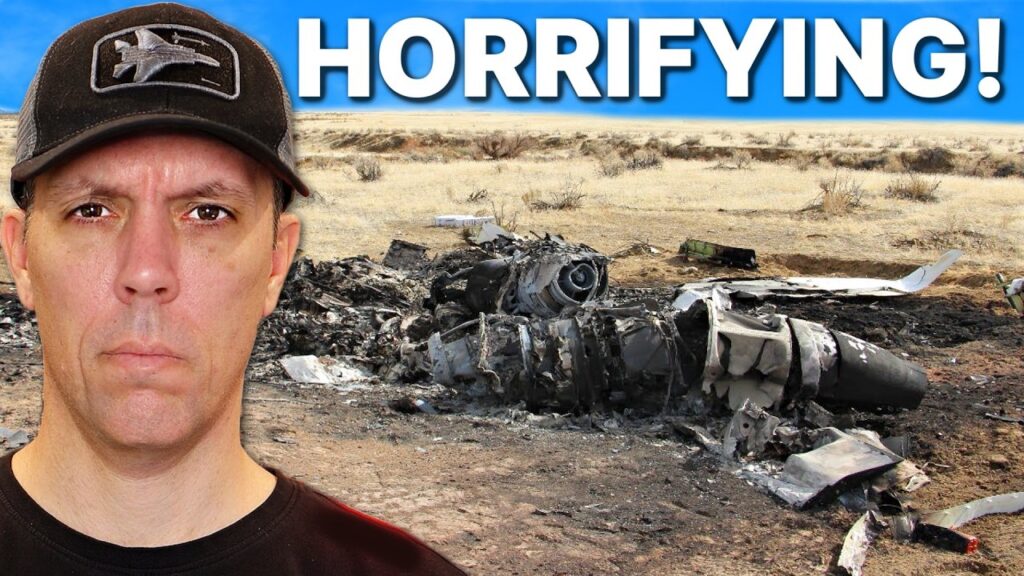
The airplane abruptly banked right. The crew applied full left aileron, full power, and full aft control column. The NTSB found that this response aggravated the stall and spin. During the final minute, the airplane descended rapidly with no recovery before impact and postcrash fire.
Investigation Findings
The investigation found no recorded anomaly in flight-control response or engine performance. The surfaces moved consistently with the control inputs, and engine response matched power-lever movement. Extensive fire and fragmentation limited the physical examination, but the available flight data did not support a control-system failure as the explanation for the upset.
The shaker and pusher activation speeds were appropriate for the airplane’s weight and load factor. The problem was that the wing stalled at an angle of attack lower than expected, so the normal warning sequence no longer provided its intended separation from the stall itself.
The NTSB attributed that degraded wing behavior to contamination, with icing central to the probable-cause finding. Weather analysis indicated that the airplane was in instrument conditions during some or all of its climb from 5,000 through 16,700 feet and could have accumulated up to one millimeter of ice. An icing study showed that even a two-minute encounter could substantially reduce maximum lift and lower the stall angle of attack.
Those figures were analysis results, not a measured ice thickness recovered from the wreckage. The postcrash fire prevented a definitive examination of wing-surface contamination. The investigation also considered whether the recent maintenance could have introduced an aerodynamic defect. Multiple inspections after reassembly reduced that likelihood, but physical evidence could not exclude every possibility.
The stall-test procedure required visual conditions and no icing. The pilots complied with some test conditions, including an empty ventral tank, an operative stall-identification system, and autopilot off. They did not comply with the specified cloud-clearance and altitude limits and performed the check roughly 2,000 feet above the prescribed maximum altitude.
The record contained no evidence that they verified the exterior surfaces were free of ice after the climb. The airplane had an ice-detection spotlight system that could illuminate the wing fairings, along with an ice detector that required manual activation. The existence of those systems did not establish that they had been used to confirm a clean wing.
The crew intentionally departed without engine ice protection and likely without airframe ice protection. Investigators could not establish why. One possibility was concern that de-icing fluid might affect wing airflow during the test. That remained a possible explanation, not a proven cockpit decision.
Training and qualification requirements were another central finding. The manufacturer’s repair guidance required familiarity with the stall system and characteristics, but the NTSB found that the requirements did not ensure the preparation needed for this test. The operating manual warned of unacceptable stall behavior without providing sufficiently clear instruction about the consequences or recovery.
The pilots had attended simulator training covering stall warning and avoidance. Those courses were not designed to teach full stalls or prepare them for an uncommanded roll during a maintenance test. The captain had participated in a stall-test flight four years earlier, apparently with limited involvement as second-in-command. The accident second-in-command had no previous stall-test participation.
The distinction between recognizing a warning in routine operations and deliberately testing the airplane near a full stall was therefore material. A crew can complete recurrent warning-system training without being prepared for the abnormal stall characteristics that a post-maintenance test is intended to reveal.
The NTSB identified the crew’s decision to perform the test in icing conditions and the manufacturer’s insufficient training and experience requirements as causal. It also identified failure to follow the test’s weather, altitude, cloud-clearance, and clean-surface conditions as contributing factors.
NTSB Probable Cause
The flight crew’s decision to conduct a post-maintenance stall test in an area of icing conditions, which resulted in wing contamination that significantly decreased the airplane’s critical angle of attack. Also causal was the airplane manufacturer’s lack of training and experience requirements for the flight crew to safely conduct the stall test, which resulted in an attempted remedial action that aggravated the aerodynamic stall and led to a loss of control from which they were unable to recover. Contributing to the accident was the flight crew’s failure to follow the test conditions regarding cloud clearance, altitude limit, visual meteorological conditions, and ensuring all external surfaces were free from ice.
Safety Lessons
The first general lesson is to treat maintenance flight tests as specialized operations with their own qualification and risk requirements. A normal pilot qualification or recurrent simulator course does not automatically establish readiness to explore a full-stall condition after work on the wing.
The second is to make the test prerequisites actual go-or-no-go conditions. Required weather, altitude, configuration, and clean surfaces define the environment in which the procedure is intended to work. Completing some of them does not compensate for violating the others.
The third is to prepare for the abnormal behavior the test could uncover. Crews need applicable training and clear manufacturer guidance on recognizing and recovering from an unexpected stall response. This accident account does not provide a substitute maneuver procedure; it shows why that preparation has to exist before the flight is launched.
Watch the Full Analysis
Frequently Asked Questions
Q: Why did the Hawker stall as the stick shaker activated?
A: The NTSB found that wing contamination significantly lowered the critical angle of attack. The airplane reached the stall at the same time as the warning, eliminating the intended warning margin.
Q: Did the Hawker’s stall-warning system activate at the wrong speeds?
A: The NTSB found shaker and pusher activation appropriate for the weight and load factor. The degraded wing characteristics caused the stall to occur earlier than expected in the warning sequence.
Q: Was routine simulator training enough for this stall test?
A: The NTSB found the crew’s warning-and-avoidance training and prior experience insufficient to prepare them for the full-stall test and possible unacceptable stall behavior.
Sources and References