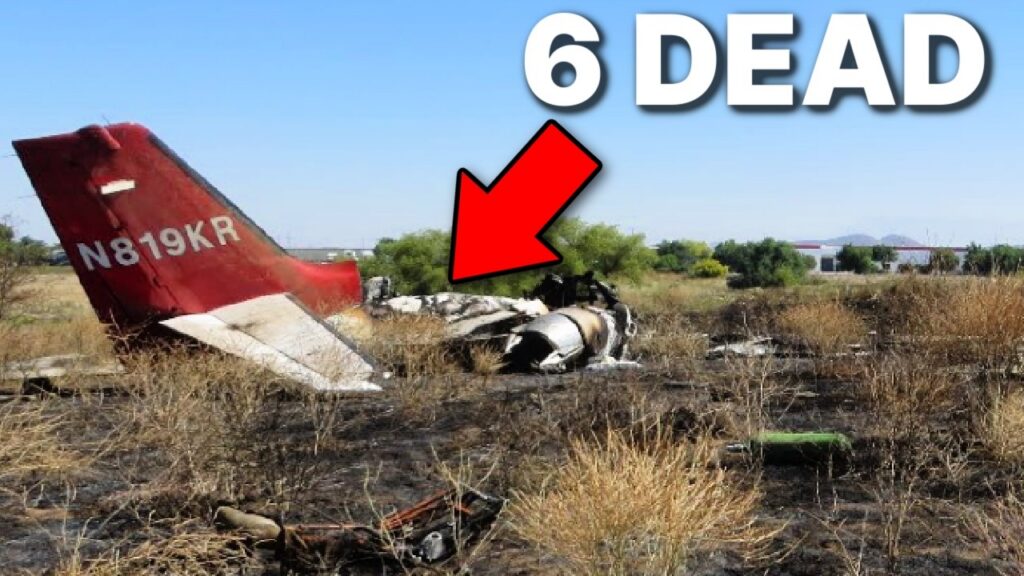

What Happened
On November 15, 2023, about 9:20 p.m. Pacific standard time, Cessna P210N N1400 crashed near San Diego, California. The pilot was killed, and the airplane sustained substantial damage. The flight had continued through two destination changes, a missed instrument approach, and a final report that the fuel was gone.
The airline transport pilot departed Buchanan Field in Concord about 5:34 p.m. on an instrument flight plan to French Valley Airport near Murrieta. The filed alternate was McClellan-Palomar Airport in Carlsbad. The planned cruise altitude was 9,000 feet mean sea level.
Around 8:30 p.m., the airplane arrived near French Valley. Poor weather led the pilot to plan a diversion to Palomar. But the ILS at the filed alternate was out of service, as published by NOTAM. The pilot then chose Montgomery-Gibbs Executive Airport in San Diego to use its ILS.
Southern California approach control cleared N1400 for the ILS to runway 28R and switched the pilot to the airport advisory frequency. The airplane drifted away from the localizer course. The approach controller tried to contact the pilot without receiving a response.
As the airplane crossed the airport at about 600 feet mean sea level, the pilot called approach control and reported a missed approach. The controller issued a low-altitude alert and asked for his intentions. The pilot requested another approach and said he had about 10 minutes of fuel remaining.
The airplane then made erratic turns and changed altitude between approximately 1,000 and 3,000 feet. The pilot requested an emergency landing. Shortly afterward, he reported being completely out of fuel.
The controller attempted to vector the airplane toward a runway, but communications and tracking were lost northwest of the airport. Searchers found the wreckage early the next morning on a hillside in a residential area about 3 miles west of the field.
Investigation Findings
The intact fuel tanks were empty after the accident. Investigators found no pre-impact mechanical failure that would have prevented normal operation. The aircraft’s specified cruise endurance with full fuel was 4.2 hours, and the flight had been airborne nearly four hours by the final approach sequence.
The NTSB considered the pilot’s fuel reports, aircraft endurance, and empty intact tanks consistent with a total loss of power from fuel exhaustion. The specified endurance was not a statement that the flight had begun with a verified full load or that all of that time was available for planned travel and approaches. It was one part of the evidence supporting the conclusion.
The alternate plan had also failed to provide the expected approach. Palomar’s ILS outage had been published by NOTAM. A filed alternate is useful only if its actual weather and available procedures support the flight when it is needed. Here, the unavailable ILS prompted another diversion after the airplane had already traveled most of its planned route.
Investigators found no record of a preflight weather briefing. They also examined recent instrument experience. During the previous six months, the pilot’s logbooks did not show the tasks required to act as pilot in command under IFR. His most recent actual or simulated instrument flying had been approximately 19 months before the accident.
The NTSB found that this lack of recent instrument experience likely contributed to his difficulty completing the approach. His airline transport certificate did not establish current proficiency on that night, in that aircraft, after a lengthy gap in instrument flying.
A witness described near-zero visibility, a ceiling of about 200 to 300 feet, light rain, and wind. Another pilot flying behind N1400 nevertheless completed the ILS and landed. That successful landing did not mean conditions were easy or that N1400 had enough fuel for another attempt. It established that the approach itself could be completed by another aircraft at the time.
The probable cause identified fuel exhaustion, with inadequate flight and fuel planning and the decision to fly in night instrument conditions without recent instrument experience contributing. The chain began before the low-fuel call and reached the final approach with little remaining margin for error or another diversion.
NTSB Probable Cause
A total loss of engine power due to fuel exhaustion. Contributing to the accident were the pilot’s inadequate flight and fuel planning and his decision to fly in night instrument meteorological conditions despite his lack of recent instrument flight.
Safety Lessons
The following takeaways apply the investigation findings to flight planning and cockpit decisions.
- Verify the alternate as an operational plan. Check the available approaches, outages, weather, and fuel required to reach a usable alternate before departure. A named airport on the flight plan is not enough if the approach on which the plan depends is unavailable.
- Make fuel decisions before the emergency point. Track actual time and consumption as routing and approaches change. Preserve options early; a report of 10 minutes remaining during a missed approach leaves little room to solve an additional navigation or weather problem.
- Match night instrument flying to recent proficiency. Review recent instrument experience and obtain the appropriate training or checks before a demanding trip. Certificate level and past experience do not eliminate the effect of a long gap in instrument flying.
Watch the Full Analysis
Frequently Asked Questions
Q: Why did the Cessna P210 crash near San Diego?
A: The NTSB identified a total loss of engine power from fuel exhaustion. Inadequate planning and a night instrument flight without recent instrument experience contributed.
Q: Why did the pilot divert twice?
A: Poor weather prevented use of the intended destination, French Valley. The ILS at his filed alternate, Palomar, was out of service, so he continued to Montgomery-Gibbs for its ILS.
Q: Was the pilot current for instrument flight?
A: The logbooks did not show the required instrument tasks in the preceding six months. His most recent logged actual or simulated instrument flight was approximately 19 months earlier.
Sources and References