What Happened
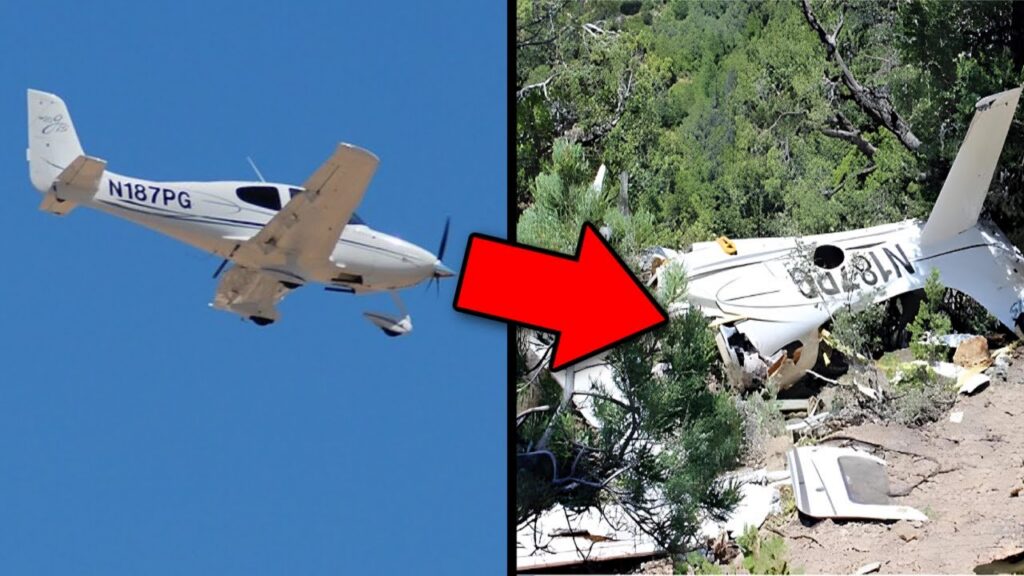
On May 29, 2012, Cirrus SR20 N187PG approached rising terrain near Duck Creek Village, Utah, while carrying a pilot and three passengers toward Bryce Canyon. The airplane remained below the ridge ahead, with its stall warning active for much of the final three minutes. It rolled left, pitched down, and struck the mountainside inverted. All four occupants died.
The rented airplane had departed North Las Vegas earlier in the day. Investigators estimated it was about 210 pounds above its maximum takeoff weight at that departure. It landed at Mesquite, where approximately ten gallons of fuel were added before the next leg toward Bryce Canyon.
Recovered data indicated that 7.6 gallons had been used on the first leg. Adding more fuel than had been consumed increased the load again. At departure from Mesquite, the NTSB estimated the airplane was about 225 pounds above maximum takeoff weight.
The flight was in daylight visual weather. Approximately 30 minutes into the second leg, it was climbing through 6,600 feet mean sea level. Five minutes later, it was passing 7,100 feet. At 1254:28 mountain daylight time, it reached the highest recorded altitude, 7,847 feet.
About four miles directly ahead stood a ridge whose lowest point was 8,470 feet. Terrain on either side rose above 9,000 feet. The airplane was still climbing toward ground higher than its achieved altitude, with little benefit available from simply aiming slightly left or right along that ridge.
At 1255:10, the stall warning activated. It remained active for most of the remaining 188 seconds of recorded data. The warning was therefore not just a momentary sound immediately before impact; it was present through much of the final attempt to maneuver near the terrain.
At 1257:57, the airplane rolled left to about 54 degrees of bank, then briefly recovered to about eight degrees left bank. Another left roll followed. The nose, which had been held about ten to 15 degrees above the horizon, dropped sharply as the airplane approached a nearly inverted attitude.
The final recorded pitch was approximately 67 degrees nose down. The wreckage was found on the west face of the ridge, about 100 feet below its crest.
Investigation Findings
The NTSB found that the pilot failed to maintain sufficient airspeed and control while maneuvering a heavily loaded airplane in high mountainous terrain and high density altitude. The airplane was likely being flown near its stall speed when control was lost.
The calculated density altitude was 9,287 feet. Density altitude described the reduced air density relevant to performance, not the airplane’s height above the terrain. In those conditions, the heavily loaded SR20 had less climb capability than a pilot might expect from operations nearer sea level.
The investigation did not identify an engine or airframe malfunction that would have prevented normal operation. Instead, the evidence pointed to a combination of loading, environment, and flightpath. A normally operating airplane could still be unable to climb over the terrain being approached.
The loading estimates were supported by fuel, occupant, and baggage information. They were estimates reconstructed after the accident, not a recovered calculation made by the pilot before takeoff. The report used that evidence to conclude that overloading likely contributed to degraded climb performance.
Personnel at the rental company described an earlier occasion when they had warned the pilot that his baggage load was excessive. On the accident morning, he loaded passengers and baggage at a location about a quarter mile away from the rental facility, outside its view. Those observations were part of the investigation, but they did not establish every private conversation or intention during loading.
The pilot had extensive helicopter experience but only about 160 total hours in fixed-wing airplanes and approximately 17 hours in the SR20. His previous flight in the same make and model had been about 18 months earlier. The NTSB identified lack of experience operating fixed-wing airplanes in that environment as a contributor.
Experience was therefore specific to the aircraft and task. Skill in a helicopter did not automatically supply current familiarity with a loaded SR20’s climb performance, stall behavior, and route options among mountain ridges.
The recorded stall warning and roll sequence explained the final event more precisely than saying the airplane simply could not clear a mountain. The pilot continued to ask for lift while airspeed and control margins were limited. The wing eventually exceeded its usable margin, and the resulting roll and descent removed the remaining terrain clearance.
This was a visual-weather accident in which visibility alone did not provide safety. The terrain could be seen, yet the airplane’s achieved climb and loading did not support the route ahead. The decision needed to be made while there was still room to choose a different path.
NTSB Probable Cause
The pilot’s failure to maintain sufficient airspeed and airplane control while maneuvering a heavily loaded airplane over high mountainous terrain in a high density altitude environment. Contributing to the accident was the pilot’s lack of experience operating fixed wing airplanes in such an environment.
Safety Lessons
The following takeaways apply the investigation to flight planning and training. They do not replace the aircraft flight manual or instruction in the airplane.
- Calculate the load before evaluating the climb. Use actual occupant, fuel, and baggage weights. Then use the aircraft performance data for the expected density altitude. An overweight departure invalidates the assumption that normal published performance remains available.
- Keep an escape route while approaching rising terrain. Compare demonstrated climb with the terrain ahead early enough to turn away or choose a different route. Do not wait for a stall warning to decide whether the ridge is reachable.
- Match proficiency to the mission. A return to a fixed-wing type after a long gap warrants appropriate refresher instruction, especially before a heavily loaded mountain trip. Total aviation experience does not replace recent experience in that airplane and environment.
Watch the Full Analysis
Frequently Asked Questions
Q: Why did the Cirrus SR20 crash near Duck Creek Village?
A: The NTSB found insufficient airspeed and loss of control while maneuvering a heavily loaded airplane over mountainous terrain at high density altitude. Limited fixed-wing experience in that environment contributed.
Q: Was the airplane overloaded?
A: Postaccident estimates placed it about 210 pounds over maximum takeoff weight from North Las Vegas and about 225 pounds over the limit after refueling at Mesquite.
Q: Was the pilot inexperienced in aviation?
A: He had extensive helicopter experience, but only about 160 hours in fixed-wing airplanes and about 17 hours in the SR20, with an approximately 18-month gap since his previous flight in type.
Sources and References