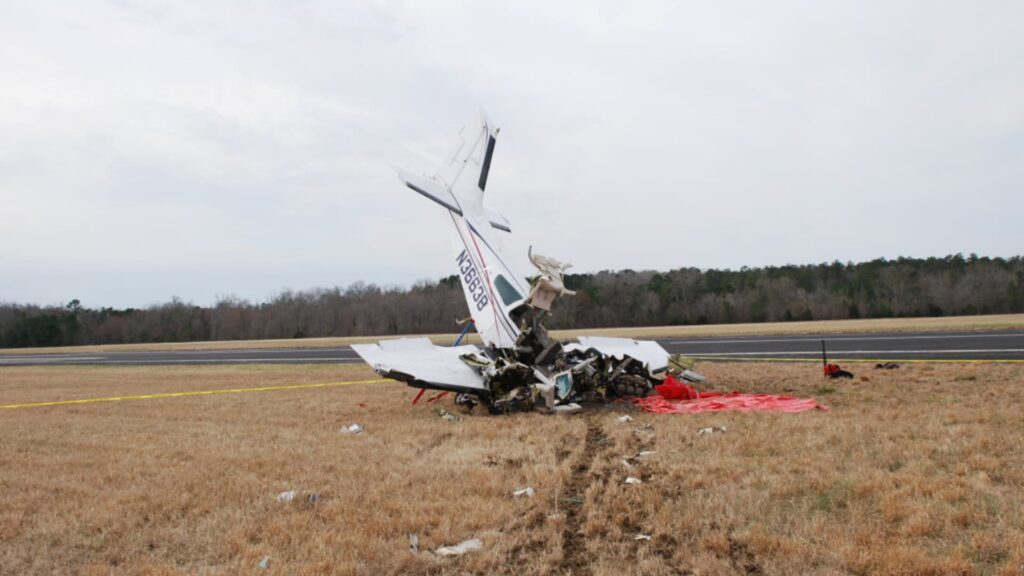
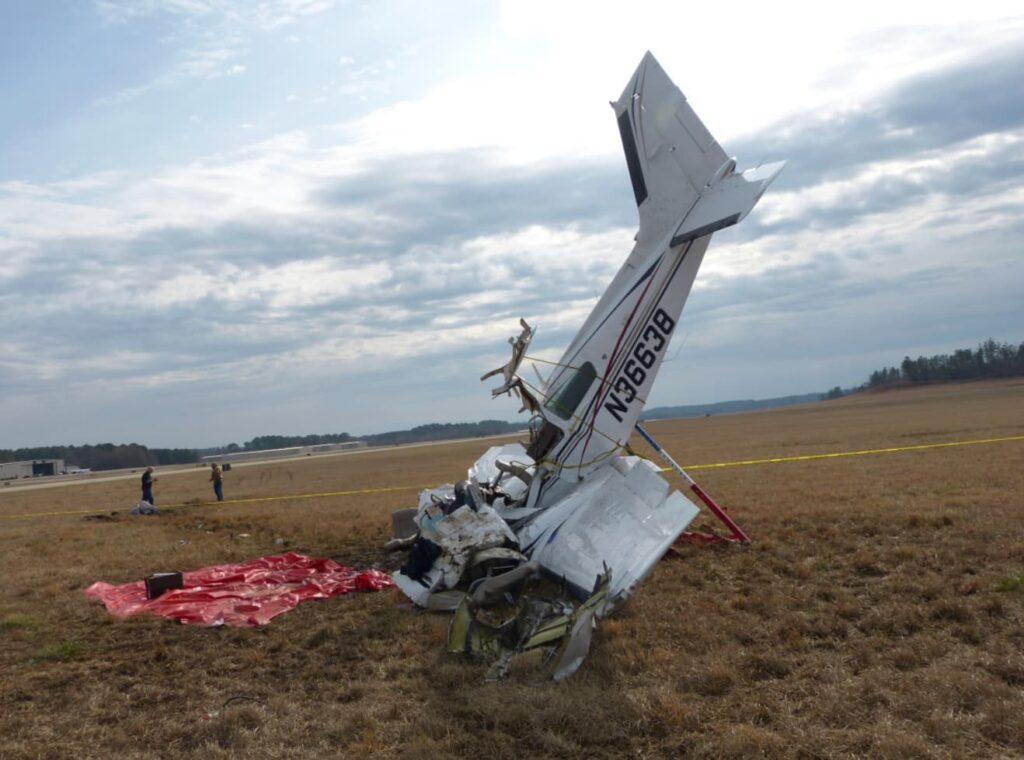
On February 22, 2014, a Beechcraft 95-B55 Baron, registration N36638, was involved in a fatal accident during an attempted landing at LaGrange–Callaway Airport in LaGrange, Georgia. The flight was being conducted under Part 91 as an instructional flight intended to complete instrument proficiency work.
The pilot flying held a commercial pilot certificate with ratings for single-engine land, multi-engine land, and instrument airplane. According to available records, he had logged about 1,706 total flight hours, including roughly 1,124 hours in multiengine airplanes and approximately 73 hours in the accident aircraft. Sitting in the right seat was a highly experienced flight instructor who held an airline transport pilot certificate along with flight instructor ratings. The instructor had reported more than 12,000 hours of total flight experience. A third pilot-rated passenger was seated in the back.
The purpose of the flight was straightforward. Each pilot planned to complete an instrument proficiency flight with the instructor. Earlier in the day, the airplane had flown to LaGrange–Callaway Airport, refueled, and then departed again for the instructional portion of the flight. Weather conditions were excellent, with clear skies, calm winds, and 10 miles of visibility. From the outside, it looked like a routine training day.
Traffic at a Busy Non-Towered Airport
LaGrange–Callaway Airport is a non-towered airport with intersecting runways: Runway 13/31 and Runway 03/21. On the day of the accident, powered aircraft were using Runway 31 while Civil Air Patrol glider operations were being conducted from Runway 03.
Witnesses described the airport environment as busy that afternoon. Glider tow operations had been underway throughout the morning, and radio traffic on the common traffic advisory frequency was described as constant. Several people remembered hearing the Baron announce it was inbound on the ILS approach to Runway 31. Even though the aircraft was flying an instrument approach, the weather was clear and visibility was excellent.
As the airplane approached the runway, several observers noticed something that would later become important. The Baron appeared to be flying faster than normal on final approach.
An Unstable Approach
Witnesses watching from the ground said the Baron crossed the runway threshold at a higher-than-normal speed and continued floating down the runway without touching down. One observer described the airplane as still airborne roughly 2,000 feet past the threshold, saying it appeared to be “searching for the ground.”
Excess airspeed during landing often leads to a long float as the airplane struggles to dissipate the extra energy before settling onto the runway. In this case, the Baron continued down the runway still airborne, gradually using up valuable pavement.
Runway 31 at LaGrange is 5,599 feet long. Based on the aircraft’s performance data and the weather conditions that day, the airplane should have easily been able to land and stop within the available distance if the approach had been stabilized. But the airplane never touched down.
A Sudden Surprise
While the Baron floated down Runway 31, something else was happening at the intersecting runway. A tow plane had begun accelerating down Runway 03 with a glider attached behind it.
As the Baron continued down the runway in the flare, the tow pilot apparently noticed the potential conflict. Over the radio came a short and urgent call: “Abort! Abort! Abort!”
Witnesses then saw the glider release from the tow plane and land safely before reaching the runway intersection. The tow plane itself continued across the intersection and eventually taxied clear of the runway. From the perspective of observers on the ground, the aircraft were not in immediate danger of colliding. Several witnesses later said the Baron could have safely continued its landing.
From the cockpit, however, the situation may have looked very different.
The Go-Around
Just as the tow plane and glider became visible, the Baron’s engines suddenly surged to full power. Witnesses reported hearing the engines accelerate rapidly as the airplane abruptly pitched up into a steep climb.
Instead of climbing straight ahead, the airplane immediately banked sharply to the left. The bank angle continued increasing until the aircraft rolled inverted. Within seconds, the airplane began descending almost straight down.
Witnesses estimated the nose-down attitude at impact was between 80 and 90 degrees. The entire sequence—from the application of power to ground impact—happened extremely quickly. All three occupants were fatally injured, and the aircraft was destroyed.
What Investigators Found
Investigators examined the wreckage and found no evidence of mechanical failure or pre-impact anomalies. Flight control continuity was confirmed, and both engines showed signs of producing significant power at impact.
The landing gear was down and locked, and the flaps were extended to 30 degrees, consistent with a landing configuration. Investigators concluded the airplane had entered an aerodynamic stall during the attempted go-around maneuver.
Go-arounds in multiengine airplanes can be particularly challenging. They are often initiated at very low altitude and airspeed with the aircraft configured for landing. When full power is applied suddenly, the airplane can pitch up aggressively. If the pilot increases the angle of attack too much, the aircraft can stall.
At very low altitude, there may be little time—or altitude—available to recover.
Glider Operations and Airport Procedures
Investigators also examined the glider operations taking place at the airport that day. According to airport rules, several safety measures were supposed to be in place whenever glider operations occurred. These included filing a local NOTAM announcing the activity and placing a qualified spotter on the ground who could watch for potential traffic conflicts.
Neither requirement had been followed that day. No NOTAM had been filed, and no spotter was present to monitor the intersecting runway.
Interviews revealed that some of the glider operators were unaware of these local procedures. Airport management knew the rules existed but had no effective system in place to ensure compliance.
Although the tow plane and glider were not in immediate conflict with the Baron, their presence likely contributed to the pilot’s perception that an urgent maneuver was required.
Human Factors in the Cockpit
The NTSB determined that the pilot likely overreacted to what he perceived as an imminent collision with the glider tow operation. Instead of continuing the landing or executing a stabilized go-around earlier in the approach, the pilot abruptly applied full power and initiated an aggressive maneuver.
That reaction resulted in excessive pitch and bank angles, which exceeded the aircraft’s aerodynamic limits and led to a stall.
Situations like this highlight how quickly perception and startle response can influence pilot decision-making. Even experienced pilots can misjudge a situation when confronted with unexpected visual cues during a critical phase of flight.
In this case, the Baron’s crew had already been aware of glider operations earlier in the day. But when the tow plane and glider suddenly appeared in their field of view during the landing flare, the sudden visual conflict may have triggered an instinctive response that proved unrecoverable.
Safety Lessons
This accident reinforces several important lessons for pilots. Unstable approaches should be corrected early, and excessive airspeed on final often leads to long landings and reduced safety margins.
Go-arounds should also be initiated before the situation becomes critical. Waiting until the airplane is deep into the flare leaves very little room for error. Abrupt control inputs during a go-around—especially in multiengine airplanes—can quickly lead to a stall if the pitch attitude increases too aggressively.
Finally, airport operational procedures exist for a reason. The absence of a NOTAM and a required spotter during glider operations removed an important layer of risk mitigation at a busy non-towered airport.
While the aircraft itself was functioning normally, the combination of a fast approach, a perceived traffic conflict, and an aggressive go-around ultimately resulted in a loss of control.
Probable Cause
The National Transportation Safety Board determined the probable cause of the accident was the pilot’s overreaction to a perceived conflict with a tow plane and glider on an intersecting runway, which resulted in a loss of control during an attempted aborted landing. Contributing to the accident was the failure of the glider tow operator to follow, and the airport operator to ensure compliance with, published airport rules and regulations for glider tow operations.