What Happened
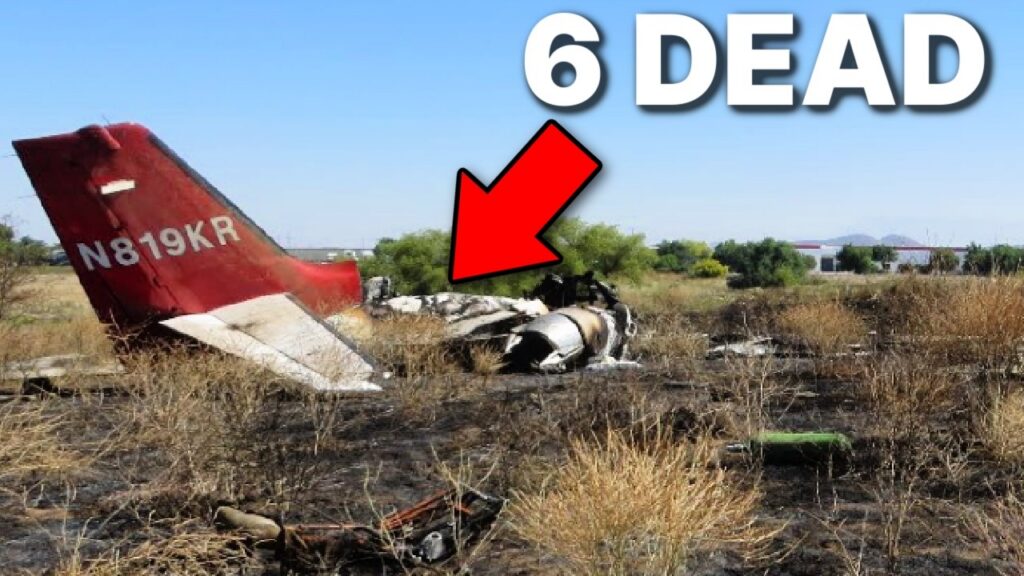
On July 8, 2023, Cessna 550 N819KR returned from Las Vegas to French Valley Airport near Murrieta, California, in the early morning darkness. Fog rapidly reduced visibility as the flight arrived. After a missed approach, the crew tried again and descended below decision altitude without the required runway references. The airplane struck terrain about 810 feet short of the runway, killing both pilots and four passengers.
The airplane had left French Valley for Las Vegas about 2118 the previous evening. The return departure was roughly six hours later. It climbed to about 19,000 feet mean sea level before descending toward French Valley.
At about 0344 Pacific daylight time, the pilot contacted the Pomona radar controller and asked to cancel the instrument clearance. The controller acknowledged the cancellation, supplied the altimeter setting, and said weather and landing information for French Valley were not available from that position.
The destination conditions were changing quickly. A few minutes before arrival, clear skies and ten miles of visibility gave way to a 300-foot overcast and three-quarters of a mile visibility. Over the following 20 minutes, visibility decreased to approximately half a mile in fog.
The airplane subsequently received a clearance for the RNAV GPS runway 18 instrument approach. The lowest visibility requirement published for the approach was seven-eighths of a mile. The reported conditions were below that value.
The pilot flew a missed approach on the first attempt and requested another instrument approach. On the second final approach, the airplane’s descent rate and airspeed were excessive. The NTSB found that it was not a stabilized approach.
The crew then continued below decision altitude without appropriately identifying the runway references required for that descent. The airplane remained on a flightpath toward the airport but met the terrain before the runway. The crash occurred at about 0414.
The sequence illustrated a changing destination rather than a fixed weather problem. A report of ten-mile visibility was no longer representative by the time the airplane needed a usable view for landing.
Investigation Findings
The NTSB classified the circumstances as controlled flight into terrain. That meant the airplane struck terrain without the investigation identifying a preceding loss of aerodynamic control as the primary event. The postaccident examinations found no mechanical failure or malfunction in the airplane or engines that would have prevented normal operation.
The probable cause focused on the crew’s decision to descend below the approach’s decision altitude without the required visual references, while visibility was below the published minimum. The report did not attribute the accident to a demonstrated engine failure or a verified flight-control malfunction.
The first missed approach was evidence that the initial attempt had not produced a landing. The second attempt did not take place in improved weather. Instead, fog had continued reducing visibility. The crew therefore needed to reassess the approach against the current conditions rather than the destination picture they had expected earlier.
Airspeed and descent rate added another problem on the second final. Even if a runway reference had become visible briefly, the NTSB found the airplane was not on a stabilized approach. The visual-reference requirement and the ability to make a controlled landing were separate issues to manage.
Toxicology was examined because of the overnight travel and the substances found after the crash. The findings did not support a simple claim that both pilots were drunk or that alcohol definitively caused the accident.
The pilot had very low ethanol levels in the tested specimens. Some or all could have come from sources other than drinking. The NTSB concluded it was unlikely that ethanol significantly affected the pilot’s performance.
The copilot’s levels were higher, and investigators considered it likely that he had consumed alcohol. However, severe injuries, signs of microbial decomposition, and differences between specimen results also indicated that some of the ethanol likely originated after death. His blood alcohol level at the time of the crash could not be reliably determined.
The Board stated that alcohol-related impairment may have limited the copilot’s contribution, such as monitoring the approach. Whether it actually contributed to the outcome could not be determined. That was an unresolved possibility, not part of the final probable cause presented as an established fact.
The accident could be explained by the documented approach decisions without overstating the toxicology. The crew continued an unstable approach below the decision point in visibility below the approach minimum and without the required view. The terrain was reached before the runway.
NTSB Probable Cause
The flight crew’s decision to descend below the decision altitude of an instrument approach without having the appropriate runway visual reference(s) distinctively identified and with the visibility below the minimum that was prescribed for the approach, which resulted in controlled flight into terrain.
Safety Lessons
The following takeaways apply the investigation to flight planning and training. They do not replace the aircraft flight manual or instruction in the airplane.
- Update the destination decision when fog develops. Treat a rapid reduction in visibility as new information requiring a new plan. Review the latest weather and alternate options before another approach consumes more time and fuel.
- Separate a second attempt from evidence of improvement. After a missed approach, identify what will be different on the next try. If the limiting conditions are unchanged or worsening, repeating the approach does not create additional visual margin.
- Use explicit approach gates and monitoring. Brief the applicable decision altitude, visual references, and stabilized-approach criteria. The monitoring pilot needs a clear role in calling deviations and supporting the missed approach before the airplane goes below the protected path.
Watch the Full Analysis
Frequently Asked Questions
Q: What caused the French Valley Citation crash?
A: The NTSB found that the crew descended below decision altitude without the appropriate runway references and with visibility below the approach minimum, resulting in controlled flight into terrain.
Q: Was the weather below the approach visibility minimum?
A: Yes. The approach required at least seven-eighths of a mile, while visibility deteriorated from three-quarters to about half a mile in fog.
Q: Did alcohol cause the accident?
A: The NTSB did not establish alcohol as a contributing cause. It considered significant ethanol impairment of the pilot unlikely and could not determine whether the copilot’s likely alcohol use affected the outcome.
Sources and References