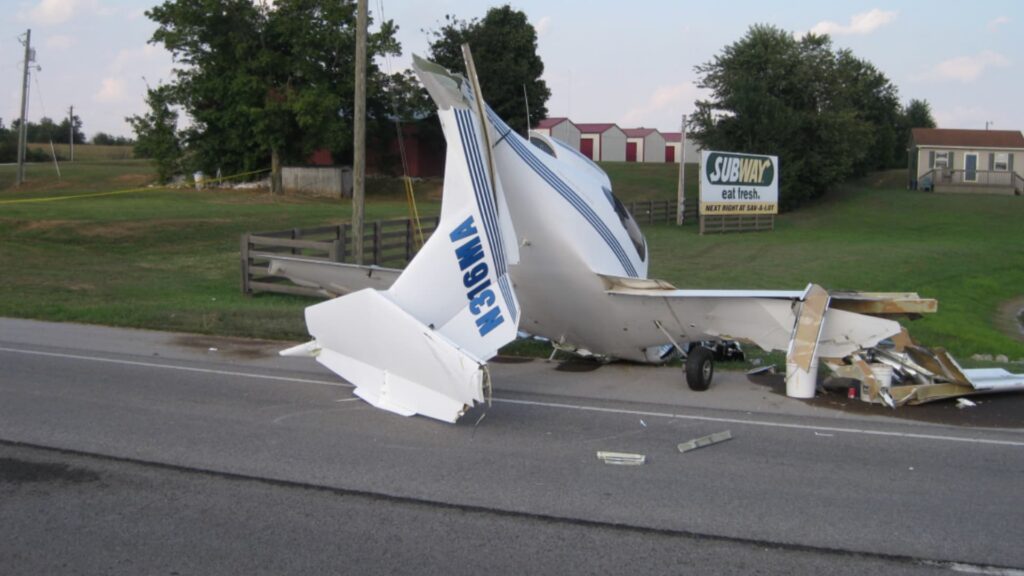
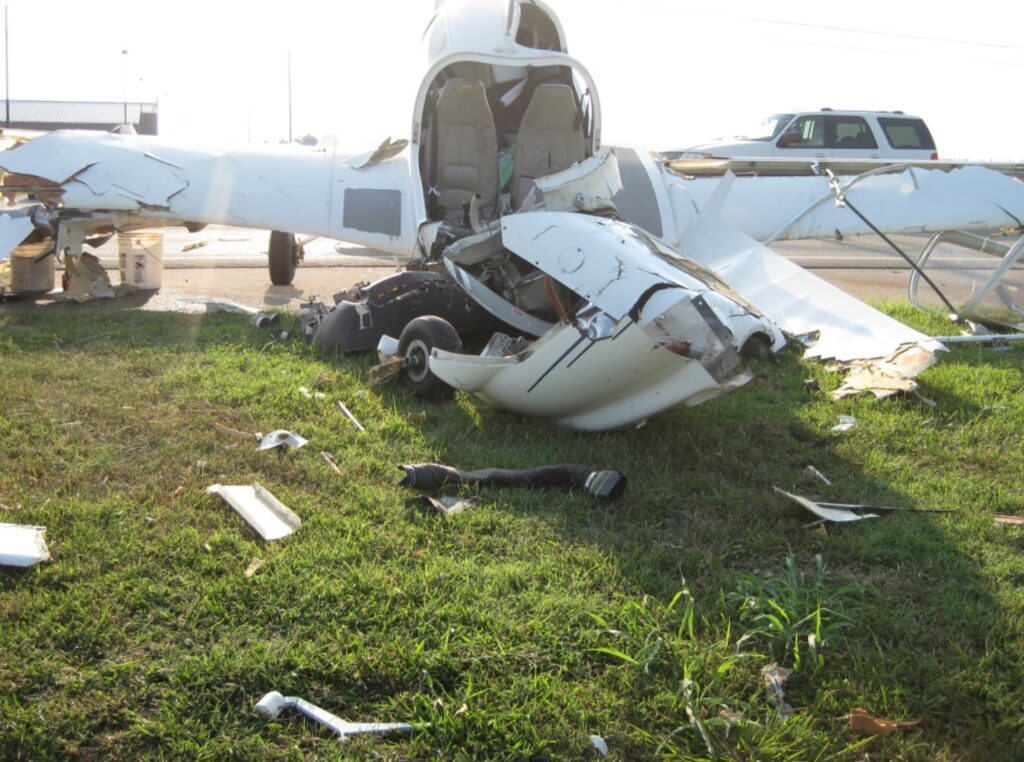
On August 15, 2011, a Diamond DA40, registration N316MA, attempted to depart from a private grass strip near Hodgenville, Kentucky. The flight was a personal trip to Cambridge, Ohio, filed on an IFR flight plan, and weather conditions that afternoon were visual meteorological conditions. What should have been a routine departure quickly turned into a serious accident when the airplane struck trees, hit powerlines, and impacted the ground shortly after takeoff. All three occupants—the airline transport pilot and two passengers—survived, but they sustained serious injuries. The airplane was substantially damaged.
The Pilot and His Experience
The pilot was a 31-year-old Airline Transport Pilot with multiengine land privileges. He also held a commercial certificate for single-engine land and was a certificated flight instructor for single-engine, multiengine, and instrument airplanes. He held a first-class medical certificate issued in May 2011. According to the report, he had accumulated approximately 4,355 total flight hours, including about 3,454 hours as pilot in command. Of those hours, roughly 405 were in single-engine airplanes. This was not a low-time aviator, and on paper, he had the credentials and experience many would associate with strong aeronautical decision-making.
The Airplane
The aircraft was a 2003 Diamond DA40 equipped with a 180-horsepower Lycoming IO-360-M1A engine and a Hartzell propeller. The airplane had undergone an annual inspection on July 1, 2011, and had over 3,400 hours total time on the airframe at the time of the accident. There were no indications prior to departure that the airplane was anything but airworthy, and postaccident examination would later confirm that the engine and systems were functioning normally.
The Runway Environment
The departure point deserves close attention. The flight originated from a private grass strip that was 1,133 feet long and 60 feet wide. The runway was oriented east-west and had an approximate 2 percent uphill slope in the direction of departure. The surface was dry grass. At the departure end of the strip were approximately 40-foot-tall trees located about 40 feet beyond the runway. Additionally, three powerlines of similar height stood roughly 150 feet beyond the runway end. This was not simply a short runway; it was a short runway with significant obstacles immediately off the departure end, leaving little room for error.
Weather recorded at Godman Army Airfield, about 23 nautical miles away, showed winds from 260 degrees at 6 knots, visibility of 10 miles, scattered clouds at 3,700 feet, and a temperature of 26 degrees Celsius. With the runway oriented east-west, the wind likely provided a modest headwind component. There were no adverse weather factors that would explain degraded performance.
Performance Calculations
Fuel records indicated that 31.2 gallons of fuel were added earlier that day. Investigators calculated the airplane’s weight at approximately 2,360 pounds, below the maximum gross weight of 2,645 pounds. Weight alone was not the limiting factor in this departure.
According to performance calculations derived from the airplane’s flight manual and the conditions at the time, the required ground roll was approximately 1,065 feet. That figure alone left very little margin on a 1,133-foot runway. More critically, the total distance required to clear a 50-foot obstacle was calculated to be approximately 1,570 feet. That exceeded the available runway length by more than 400 feet.
The Diamond DA40 flight manual specifically notes that dry, short-cut grass up to two inches long increases takeoff roll by approximately 10 percent. It also states that an uphill slope of 2 percent results in an increase of approximately 10 percent in takeoff distance, and cautions that the effect on takeoff roll can be even greater. The manual clearly reminds pilots that they must account for runway condition to ensure a safe takeoff. In this case, grass and slope combined to reduce performance margin even further.
The Impact Sequence
The airplane became airborne but failed to achieve sufficient climb performance to clear the obstacles ahead. The left wing struck a tree branch approximately 1,150 feet from the start of the takeoff roll, very near the end of the runway. About three feet of the left wing was later found lodged in a tree. The airplane then struck powerlines. Witnesses reported that after contacting a powerline, the airplane turned approximately 90 degrees and descended nose-down into the ground. The wreckage ultimately came to rest approximately 1,386 feet from where the takeoff roll began, facing opposite the original direction of travel.
Despite the severity of the impact, there was no post-impact fire. Both fuel tanks were breached, and aviation fuel was present at the scene.
Mechanical Examination
Investigators conducted a detailed examination of the engine and airframe approximately one month later. Flight control continuity was confirmed to all surfaces, and the flaps were found in the takeoff position. Both magnetos produced spark, the spark plugs appeared in good condition aside from impact damage to one lead, and fuel consistent with 100LL aviation gasoline was found in the system. The fuel servo screen was free of debris. There were no anomalies that would have precluded normal engine operation, indicating that the engine was producing power at the time of the accident.
The Human Factors
With no mechanical failures and no adverse weather, the focus returned to performance planning. The numbers showed that clearing a 50-foot obstacle required significantly more runway than was available. While the airplane may have been capable of lifting off within the available distance, obstacle clearance performance is what ultimately determines whether a departure is safe. In this case, the required obstacle clearance distance exceeded what the runway environment could provide.
This accident highlights how quickly margins disappear on short, unimproved runways. Grass increases rolling resistance. An uphill slope lengthens the acceleration distance. Warm temperatures reduce engine and aerodynamic performance. Obstacles eliminate any buffer beyond the runway. Even when each factor appears manageable on its own, together they can create a situation where the math simply does not work.
Probable Cause
The National Transportation Safety Board determined that the probable cause of the accident was the pilot’s inadequate takeoff performance planning, which resulted in a collision with an obstacle during takeoff from a turf runway that was not long enough for the given conditions. The findings specifically cited performance calculations and the airplane’s takeoff capability being exceeded.
Final Thoughts
This accident serves as a reminder that experience does not override physics. Performance charts provide baseline numbers under controlled conditions, and real-world factors require additional margin. A runway that appears usable for liftoff may still be insufficient for safe obstacle clearance. Short-field operations demand conservative planning and disciplined go/no-go decisions.
In this case, the airplane did not suffer a power loss, and the weather was cooperative. The limiting factor was runway length relative to required performance. The available distance simply did not support a safe departure over the trees and powerlines ahead, and the outcome reflected that reality.