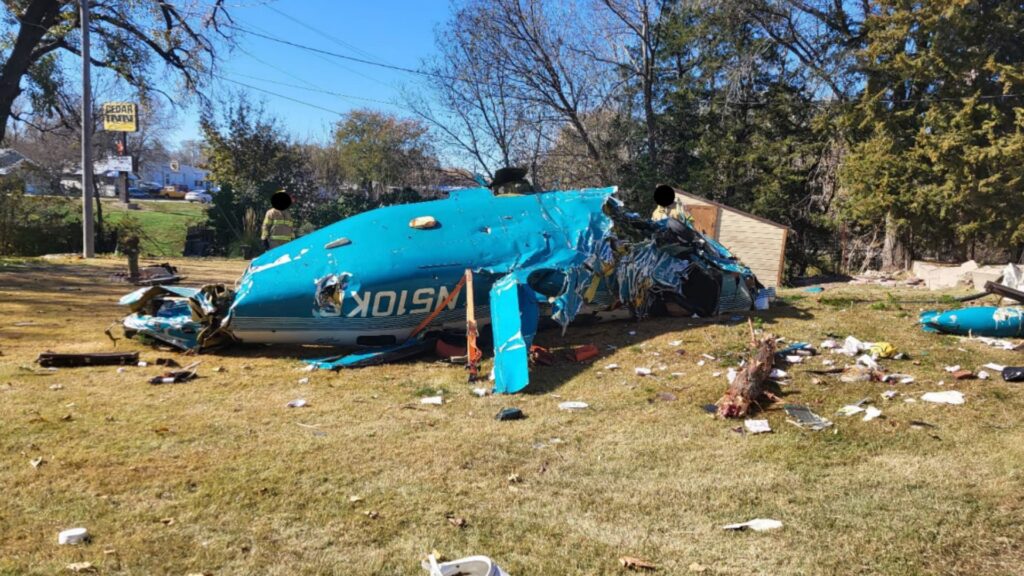
On October 30, 2023, a Piper PA-46-350P, registration N510KC, lifted off from McCook, Nebraska, just after noon local time. The flight was a Part 91 personal operation, intended to return the pilot and passenger home to Louisiana following a hunting trip. Weather was not a factor. Conditions were clear, visibility was good, and winds were light. From the outside, it looked like a routine departure on a calm fall day.
What followed, however, would unfold in a matter of seconds and end with the airplane impacting trees shortly after takeoff. The pilot was fatally injured, and the passenger received serious injuries.
The Pilot and the Airplane
The pilot was a 79-year-old private pilot with airplane single-engine and multi-engine land ratings, as well as an instrument rating. He had accumulated approximately 4,500 total flight hours, with nearly 677 hours in the PA-46 make and model. In the 90 days leading up to the accident, he had flown about 53 hours, including 15 hours in the last 30 days. His most recent flight review had been completed just eight days earlier, in the accident airplane.
Friends and fellow pilots described him as careful and methodical. They noted that he consistently used checklists, paid attention to loading procedures, and generally avoided pushing limits. One habit that came up more than once was his tendency to “ease into the power” on takeoff rather than aggressively advancing the throttle to full torque.
The airplane itself was a 1993 Piper PA-46 that had been converted to a JetProp configuration using a Pratt & Whitney PT6A-21 engine under a supplemental type certificate. That conversion increased the airplane’s maximum takeoff weight to 4,300 pounds. At the time of the accident, the airframe had just over 4,950 total hours.
Loading for the Trip Home
The occupants were returning from a hunting trip, and the cabin was heavily loaded. In addition to the pilot and passenger, there were multiple dogs on board and a significant amount of hunting gear. The passenger was seated in an aft-facing seat, with dogs occupying other seats and one dog on the floor.
Post-accident weight and balance calculations showed that the airplane departed at an estimated weight of 4,854 pounds. That put it about 550 pounds over the maximum allowable gross weight. Even more critical, the center of gravity was calculated to be approximately half an inch beyond the aft limit.
An aft CG condition reduces longitudinal stability and increases the likelihood of an aerodynamic stall, particularly during high-angle-of-attack phases like takeoff and initial climb. When combined with excess weight, performance margins shrink rapidly.
The Takeoff Roll and Initial Climb
Data from the airplane’s Electronics International MVP-50T engine monitoring system provided a detailed look at what happened during the takeoff. As the airplane taxied onto runway 22, engine parameters increased normally. Torque, NG, propeller speed, and fuel flow all rose as power was applied.
However, the data showed that maximum torque reached was about 1,070 foot-pounds, short of the approximately 1,200 foot-pounds specified in the Pilot’s Operating Handbook for a normal takeoff. Almost immediately after reaching that peak, torque and NG began to decrease, even as the airplane continued accelerating down the runway.
At about 1,995 feet down the runway, the airplane rotated. Airspeed was approximately 87 knots. At that point, torque had already dropped to around 710 foot-pounds. After liftoff, engine power continued to decay. The last recorded data point showed torque at just 290 foot-pounds and NG below 80 percent.
Why the power came back remains unknown. The throttle quadrant friction lock was found disengaged, and investigators noted that the pilot’s known habit of easing power could have played a role. Still, no definitive mechanical or procedural cause for the reduction in power could be identified.
Witness Accounts and Loss of Control
Multiple witnesses observed the airplane shortly after liftoff. They described it flying in a nose-high attitude while simultaneously losing altitude. One witness saw the nose suddenly pitch downward, followed by a sharp roll to the left.
The passenger later recalled that around 100 feet above the ground, the airplane made a “hard dip to the left.” He did not hear any unusual engine sounds, and the pilot did not make any verbal comments before the loss of control.
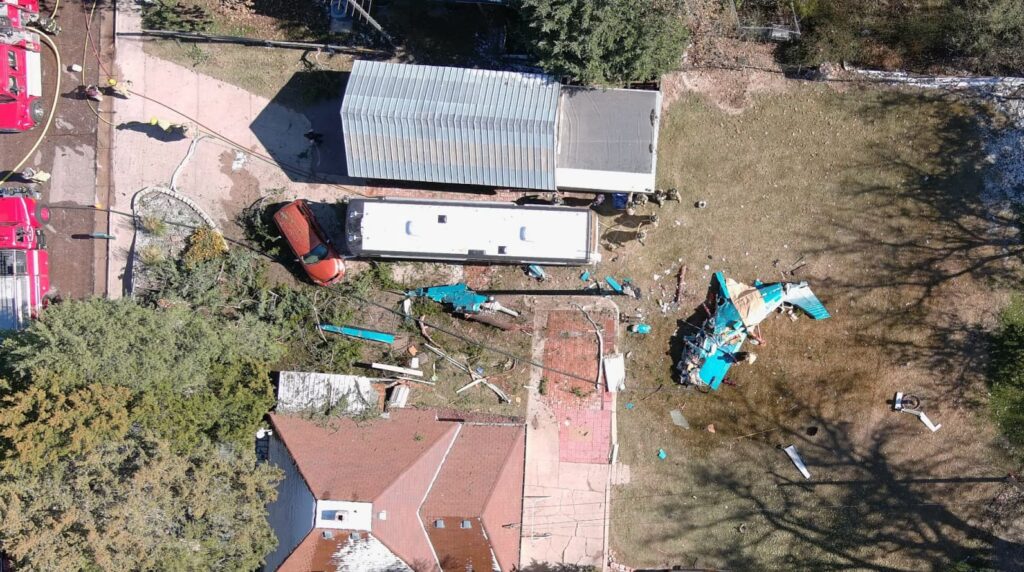
The airplane struck trees on a roughly southwest heading and came to rest in the backyard of a nearby residence. There was no post-impact fire.
What the Wreckage Revealed
Examination of the airframe and engine found no pre-impact mechanical failures. Flight control continuity was confirmed, fuel was present in the header tank, and the engine showed signs consistent with rotation at impact. The landing gear and flaps were both found in the up position.
Investigators concluded that the airplane entered an aerodynamic stall during the initial climb. With the airplane already heavy, aft of CG, and producing decreasing power, controllability would have been severely degraded. Once the critical angle of attack was exceeded, recovery at that low altitude was not possible.
Medical Considerations
Toxicology testing detected zolpidem, a prescription sleep medication, in the pilot’s system. Zolpidem is known to cause sedation and impair cognitive and motor function, sometimes without obvious subjective symptoms. FAA guidance allows limited use of the medication but requires a waiting period of 24 to 48 hours before flying.
Investigators could not determine when the pilot last took zolpidem, what dosage was used, or whether it had any direct effect on his performance during the flight. As a result, impairment from the medication could not be confirmed or ruled out.
Probable Cause
The NTSB determined that the probable cause of the accident was the pilot exceeding the airplane’s critical angle of attack during the initial climb, resulting in an aerodynamic stall. Contributing factors included operating the airplane well above maximum gross weight, beyond the aft CG limit, and a gradual reduction in engine power for reasons that could not be determined.
Safety Takeaways
This accident highlights how multiple small degradations can align into a narrow margin situation. Excess weight alone might have been manageable. An aft CG alone might have been survivable. A less-than-optimal power setting might not have been fatal by itself. But combined, they left no room for error.
Weight and balance calculations are not paperwork exercises. They directly affect stability and controllability, especially in high-performance airplanes. Takeoff power settings matter, particularly when operating near performance limits. And when margins are thin, the airplane will not forgive even brief excursions beyond the critical angle of attack.
The lesson here is not about judgment in hindsight, but about respecting how quickly performance margins can disappear. Once airborne, physics takes over, and there is no negotiating with it.