
An empty tank, and a full one you cannot reach, end the same way: a quiet engine and a forced landing. The fix for each is in a completely different place.
Fuel accidents split cleanly into two kinds. Fuel exhaustion is the simple one: the airplane runs out, because the fuel that was planned, bought, or boarded wasn’t enough for the flight that was actually flown. Fuel starvation is the other one: there is fuel on board, sometimes plenty of it, but it isn’t reaching the engine, because of a valve, a pump, a selector, or a pilot reading the fuel system wrong.
From NTSB final reports, 2008–present*
- 1,464 fuel-management accidents
- 13.3% involved at least one fatality
- 294 people killed
- 3.6% of aircraft destroyed on impact
Split those accidents by cause and you get a near-even draw: a little under half are exhaustion, a little under half are starvation. And the two halves kill at almost the same rate, somewhere around 12-13% each. Running the tanks dry and never touching the fuel you have are opposite mistakes, and they are about equally likely to be the last one you make. So this isn’t a story about which one is worse. It’s a story about two different doors into the same dark room.
Now let me show you both.
One real flight
November 21, 2010. A single-engine Beechcraft Musketeer. Personal flight, returning from Mexico to the Los Angeles area.
A private pilot and two passengers were flying home at night after a few days in Mexico. The leg before the accident had taken them to a small airport of entry on the California border, where the pilot had fuel put in. He asked for twenty gallons, into one tank. The airplane held nearly sixty usable; the line attendant noted that twenty didn’t fill even the single tank he put it in, and nobody measured what was in the other. From there it was about a hundred and fifty miles home, in the dark.
He almost made it. About eight minutes out, established toward his destination, the engine went quiet. He radioed the controller twice, saying that he had just run out of fuel, and that he would try to glide in and see how close he could get. He came up about two and a half miles short.
The airplane settled into a shallow tidal estuary and flipped inverted in three feet of water. The pilot and both passengers did not get out. The landing itself barely damaged the airplane. The engine was mechanically fine. It had simply been handed nothing to burn.
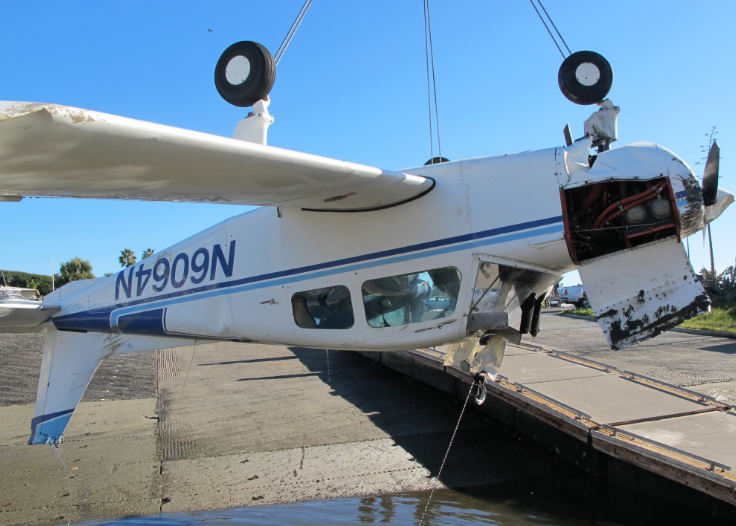
View of recovered wreckage – NTSB
NTSB probable cause: “The pilot’s inadequate fuel planning, which resulted in a total loss of engine power due to fuel exhaustion.” (NTSB WPR11FA054).
Running out at least makes sense. The tank is empty, the cause is obvious, and the fix is the most boring discipline in aviation: do the fuel math honestly before you go. Now let me show you the other door, the one that frightens pilots more, because here the tanks weren’t empty.
One more flight
January 2, 2015. A twin-engine Piper Seneca. Personal flight, Tallahassee, Florida toward southern Illinois.
This airplane was full. The pilot, who held a commercial certificate and was a flight instructor, had topped the tanks before departure, and more than sixty usable gallons were still on board when the trouble began, nearly three hours later, on an instrument flight at night.
One detail mattered more than the fuel quantity: this wasn’t his airplane. He normally flew a larger twin; this one was a fill-in he had flown only a handful of times, and its fuel system hadn’t become automatic for him. Each engine had a selector with three positions, and the handbook carried a line in bold: do not take off with a selector in crossfeed. Unfortunately, he took off with the left engine’s selector in crossfeed.
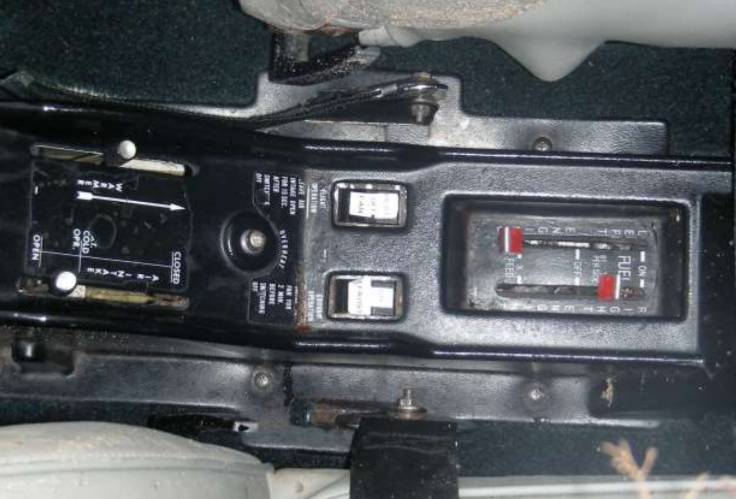
View of fuel selectos as found – NTSB
In that position, both engines were effectively drinking from one side of the airplane. For most of three hours, the fuel on that side drained while the other side stayed full. Then one engine starved, and about a minute later so did the other, with sixty-some gallons still in the tanks. He told the controller he had fuel and couldn’t understand why the engines were failing. The airplane came down in the trees in the dark. The pilot and three of his passengers were killed; one passenger survived.
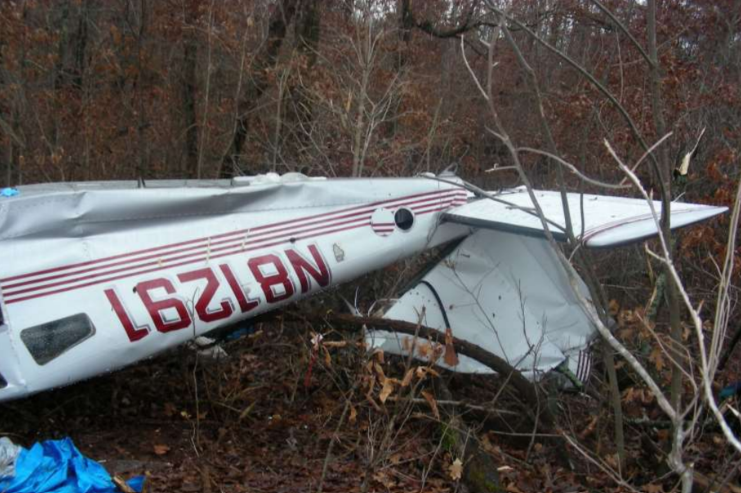
View of wreckage – NTSB
NTSB probable cause: “The pilot’s failure to properly set the left engine fuel selector before takeoff and to recognize the incorrect setting during the flight, which resulted in fuel starvation and a loss of engine power on both engines.” (NTSB ERA15FA088)
Put the two side by side. One airplane was empty and the pilot understood it too late. The other was more than half full and the engines quit anyway. One pilot needed to do arithmetic on the ground; the other needed to know one switch in an airplane he barely flew. Different mistake, different defense, two different doors. Both opened onto the same dark forced landing, and the numbers say both are about equally likely to kill you.
The Decision Gates
Because the two mistakes live in different places, so do the defenses. Here is where each one is won.
Gate 1: The fuel decision is made on the ground, in gallons.
The exhaustion accident was lost before the airplane left the border airport, when twenty gallons went into one tank and nobody added the total up against the miles ahead. Fuel planning is not a sense that you have “probably enough.” It is a number, in gallons, that you can say out loud, minus a reserve you would defend to another pilot.
The check: Before you start the engine, can you state your usable fuel in gallons, your burn rate, the fuel the leg will take, and the reserve left over? If any one of those four is a guess, you aren’t finished planning.
Gate 2: In an unfamiliar airplane, the fuel system is the first thing you learn, not the last.
The starvation pilot was experienced, just not in that airplane. A selector position that should have been muscle memory was not, and a bold-print warning in the handbook couldn’t save him because it wasn’t in his hands. Every airplane’s fuel system has its own traps: which tank feeds which engine, what crossfeed actually does, which positions are forbidden for takeoff.
The check: Before you fly an airplane you do not fly often, can you draw its fuel system and name every selector position from memory? If not, that is a briefing to do before this flight, not someday.
Gate 3: The fuel selector is a recurring check, not a set-and-forget.
The wrong setting was there at takeoff and survived almost three hours, because nothing in the flight prompted a second look until the engine did. The reason fuel sits on every climb, cruise, and approach checklist, the reason GUMPS has a G in it, is that a selector quietly in the wrong place is one of the most recoverable problems in flying, right up until it isn’t.
The check: When did you last confirm your fuel selectors in flight, not from memory but with your eyes? If the honest answer is “at takeoff,” build a habit that looks again, long before you would ever need it.
Before your next flight
Here are a few things I want you to think about.
- Do the fuel math in gallons, every flight, with a reserve you would say out loud to another pilot. “Probably enough” is how the tanks run dry.
- If you are flying an airplane you do not fly often, learn its fuel system before you fly it, not while something is going wrong. Know what every selector position does, and which ones are forbidden for takeoff.
- Check your fuel selectors in flight, with your eyes, on a schedule. A selector in the wrong place is easy to fix and easy to miss.
More patterns like this one
If you want to see both halves of this pattern again, here is one of each from the archive:
Cessna 152 Instructor’s Preflight Fuel Planning Came Up Short