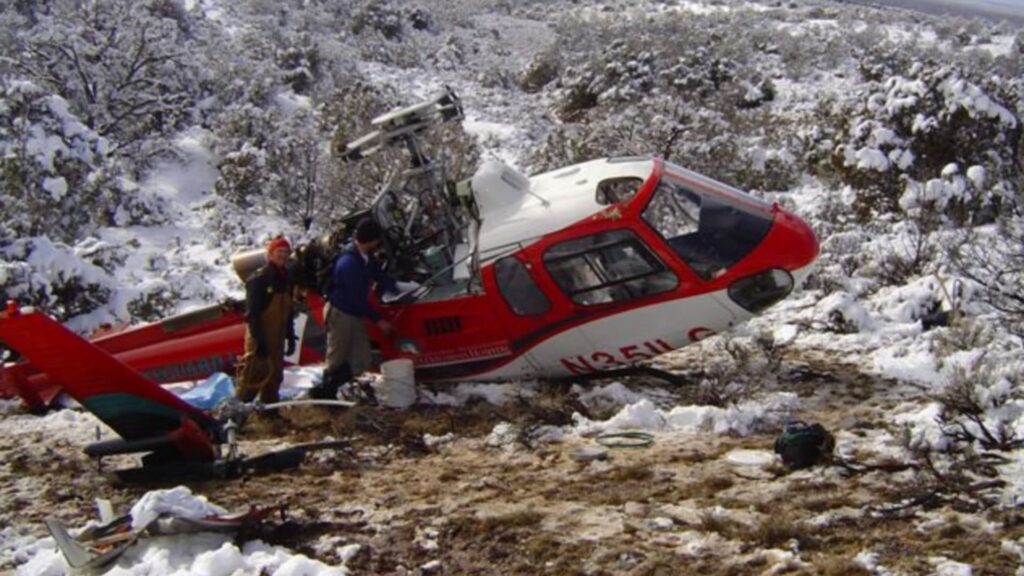
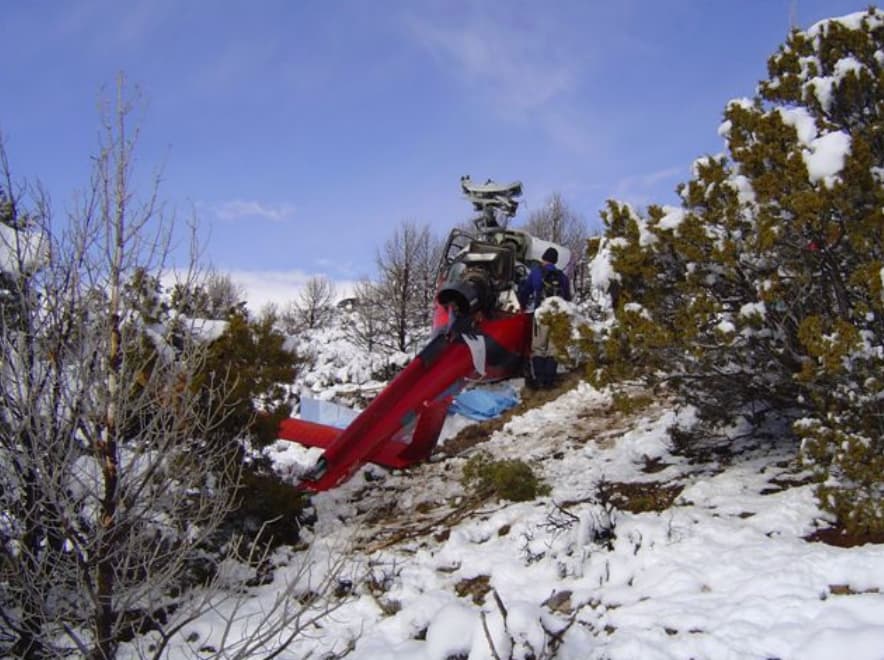
On January 29, 2005, a Eurocopter AS350 B3, registration N351LG, crashed near Pilar, New Mexico during a night positioning flight. The helicopter was substantially damaged and consumed by a postimpact fire. Remarkably, the pilot survived without injury. What unfolded that night was not a mechanical failure or a sudden weather encounter, but a classic and dangerous combination of spatial disorientation, night vision goggle limitations, and self-induced pressure.
This is one of those accidents that reminds us how quickly control can be lost when visual cues and body sensations stop matching what the instruments are saying.
The Pilot and His Experience
The 37-year-old pilot held a commercial certificate with airplane single- and multiengine ratings, along with a helicopter rating. He was instrument rated in both airplanes and helicopters. He held a second-class medical certificate and was flying professionally.
According to the report, he had accumulated 6,109 total flight hours, with 5,545 hours as pilot in command. He had 258 hours in the AS350 B3 make and model. On paper, he was an experienced aviator.
However, his night vision goggle experience was limited. He had completed 8 hours of NVG training and had logged a total of 47 NVG hours. While that may sound like a decent amount, NVG operations introduce a unique set of human factors challenges, especially in marginal lighting conditions.
Why the Flight Happened
Earlier that day, the helicopter had been returning from an EMS flight when deteriorating weather south of Taos forced the crew to divert to Espanola Hospital. The original EMS pilot did not have night vision goggles and expressed concern about the worsening weather. Darkness was approaching, and conditions were described as “marginal VFR,” with what one pilot called a “wall of weather” south of Taos.
The company’s lead pilot drove to Espanola to ferry the helicopter back to Taos. The EMS pilot strongly recommended leaving the helicopter overnight. The lead pilot, however, was concerned about forecasted poor weather for the next three days and wanted the helicopter back at base so a scheduled 1,000-hour inspection could be completed during the downtime.
That decision introduced one of the most subtle risk factors in aviation: self-induced pressure. There was no emergency. There was no patient onboard. But there was a schedule, maintenance planning, and a desire to avoid operational disruption.
At 1915, the Taos weather was reported as 6,500-foot overcast and 10 miles visibility. The pilot departed Espanola at 1941 in light drizzle, which soon dissipated.
The Night Environment
This was a dark night with overcast skies and snow-covered terrain. According to weather information near the accident site, conditions later included an overcast ceiling at 200 feet AGL and visibility as low as three-quarters of a mile. Whether the pilot encountered that exact ceiling at the time of the crash is unclear, but the lighting environment was unquestionably degraded.
The pilot elected to follow State Highway 68 instead of flying direct to Taos, reasoning that the road would provide visual reference and emergency landing options. He was wearing NVGs. The landing and taxi lights were on. The helicopter’s high-intensity “nite sun” searchlight was aimed toward the mountains to the right, and the nose searchlight was pointed at the road below.
Importantly, the pilot later stated he had never flown NVGs in lighting conditions like these before but felt it would be beneficial given the proximity to mountains and terrain.
Night vision goggles amplify available light, but they reduce depth perception, narrow the field of view, and can create visual illusions—especially over snow-covered terrain and under overcast skies where natural contrast is minimal. Add exterior lights reflecting off snow and moisture, and the visual scene can quickly become misleading.
The Onset of Disorientation
About 15 minutes into the flight, the pilot began to feel that something was wrong. He described a strange sense of confusion and disorientation. The attitude indicator showed the helicopter in a 60- to 70-degree left descending turn. The airspeed indicator showed increasing airspeed, and both the radar and barometric altimeters indicated decreasing altitude.
He attempted to correct by applying right aft cyclic and increasing collective.
Then something more concerning happened. He said he felt as if the instrument panel was getting farther away from him. He described a sensation of seeing himself from above and behind, as though he were detached from the cockpit. He didn’t feel panic, only urgency. Despite making control inputs, he felt nothing was working.
He raised the NVGs and looked outside for 15 to 30 seconds, then lowered them and returned to the instruments. He felt the attitude indicator was not responding properly. He slowed to between 40 and 60 knots, and it felt as though the helicopter was going backward and spinning.
These are classic descriptions of spatial disorientation. When vestibular cues conflict with instrument indications, and outside visual references are unreliable, the brain can generate powerful false sensations. Even experienced instrument-rated pilots are vulnerable.
Impact and Aftermath
The helicopter struck the ground and rolled onto its right side. The pilot secured the engine and transmitted an emergency message at 1956, which was received by Albuquerque ARTCC. After exiting, he saw that the engine was on fire. He discharged the onboard fire extinguisher and began walking. About an hour later, he reached Highway 68 and was picked up by a New Mexico State Police officer.
The helicopter was destroyed by postimpact fire. The pilot survived without injury.
Probable Cause
The NTSB determined the probable cause was the pilot’s failure to maintain control of the helicopter and his improper use of night vision goggles. Contributing factors included spatial disorientation, self-induced pressure to return the helicopter to base, lack of total experience in NVG operations, the use of exterior lights on a dark night under overcast skies, and snow-covered terrain.
In other words, this was not just about losing control. It was about how multiple small risk factors stacked up and created the perfect environment for spatial disorientation.
Lessons From This Accident
This accident highlights how night operations, even in reported VMC, can become effectively instrument conditions. Snow-covered terrain under overcast skies can erase natural horizon cues. NVGs can enhance some visual references while degrading others. Exterior lighting can create reflections and illusions. The human vestibular system remains vulnerable regardless of total flight time.
It also underscores the subtle power of self-induced pressure. The desire to reposition an aircraft for maintenance during forecasted bad weather is understandable from an operational standpoint. But operational convenience should never override conservative aeronautical decision-making, especially at night, in mountainous terrain, with limited NVG experience.
Most importantly, this accident reinforces that when your senses and your instruments disagree, the instruments must win. But that only works if you are disciplined enough to transition fully to instrument flight and ignore misleading external cues.
That night in New Mexico, the combination of darkness, terrain, lighting conditions, NVG limitations, and pressure converged. An experienced pilot became disoriented, lost control, and the helicopter impacted terrain.
He survived. The helicopter did not.