What Happened
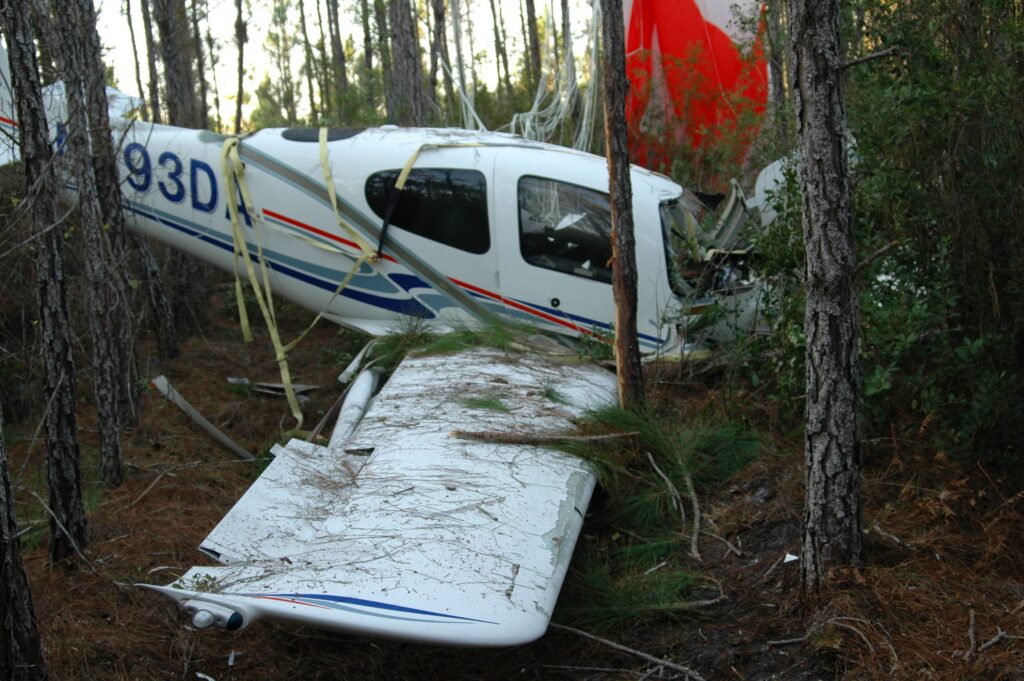
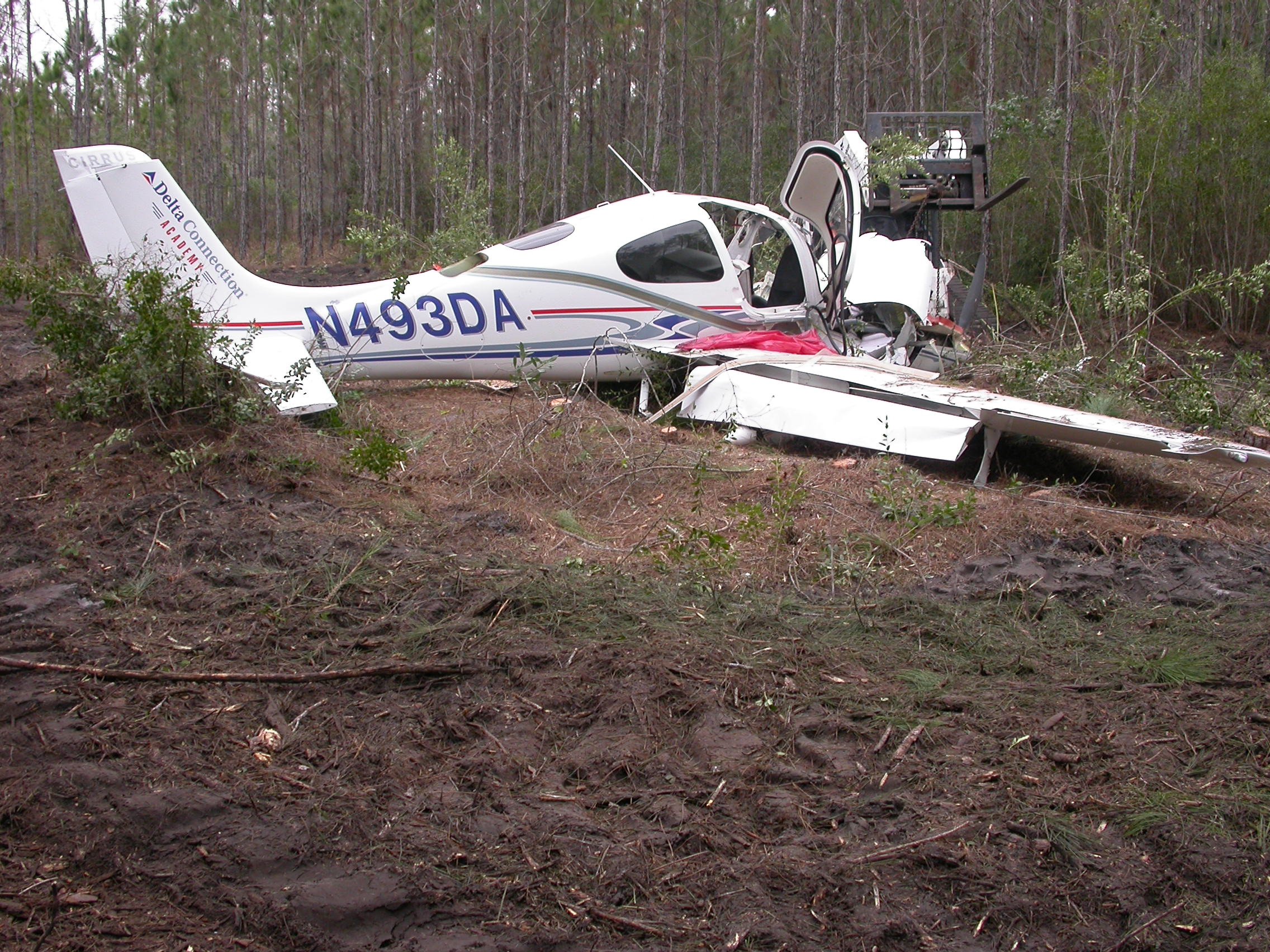
On February 17, 2009, a Cirrus SR20, N493DA, departed Orlando Sanford International Airport at 1408 with a 23-year-old commercial pilot flight instructor and a 30-year-old commercial pilot receiving instruction. The flight was a Delta Connection Academy training mission scheduled to practice traffic pattern operations, slow flight, stalls, and emergency procedures. What started as a routine instructional flight would end in tragedy 10 minutes later, claiming both lives when the airplane entered a spin at low altitude and crashed into trees near Deltona, Florida.
The flight data tells a precise story of the final moments. At 1413:30, the airplane was cruising at 115 knots indicated airspeed with the engine turning 2,440 rpm. Four seconds later, the instructor pulled the power back to 1,840 rpm. They were practicing slow flight maneuvers between 3,131 and 3,257 feet, working through the training syllabus that included upper air work and emergency procedures.
At 1417:10, the airplane was at 3,257 feet on a heading of 078 degrees. The airspeed had dropped to 60 knots indicated. Nine seconds later, they had descended to 3,138 feet with 75 knots showing on the airspeed indicator. But then the energy management got away from them. At 1417:28, the engine rpm dropped to just 1,050 rpm and the airspeed bled off to 50 knots. The airplane began oscillating in roll, first 13 degrees left wing down, then reversing to 28 degrees right wing down.
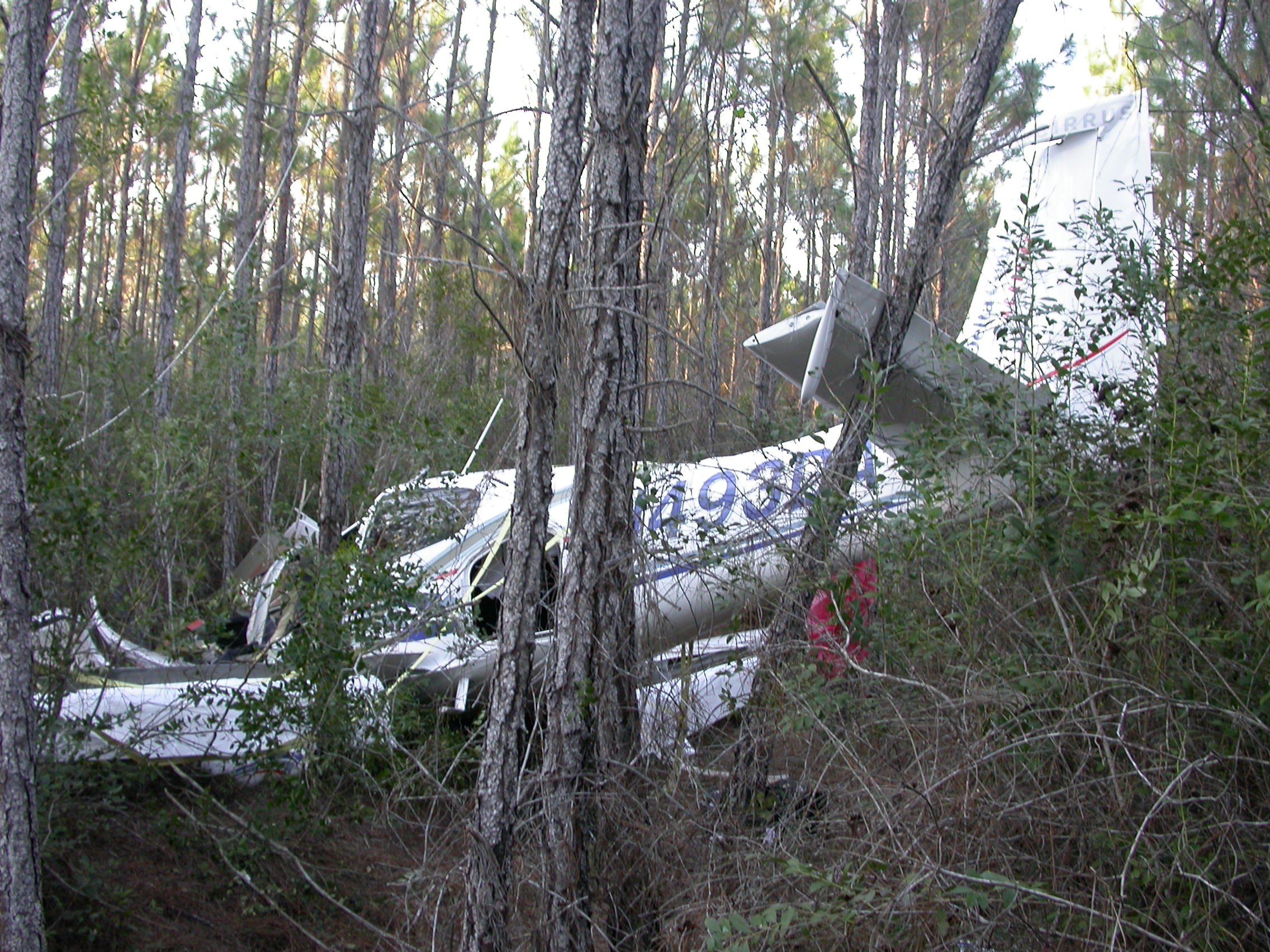
At 1417:34, someone in the cockpit recognized the developing emergency. The engine rpm jumped to 2,500 rpm as power was added, but it was too late. The airspeed indicator showed just 54 knots, and with the flaps at 50 percent, the SR20 needed 61 knots to stay flying. The airplane entered a left-hand spin one second later. Two witnesses on the ground heard the engine quit and watched the airplane make a sharp turn to the right before the nose pitched down vertically and it started spinning. Just before impact, they saw an orange parachute deploy, but it never inflated. The Cirrus Airframe Parachute System had been activated, but from too low an altitude to be effective.
Investigation Findings
The NTSB’s investigation revealed a series of cascading failures in energy management during what should have been a controlled training maneuver. The flight data downloaded from the SR20’s displays showed the airplane maneuvering at altitudes between 3,131 and 3,257 feet with engine power varying from 1,050 to 2,500 rpm and indicated airspeeds between 50 and 75 knots.
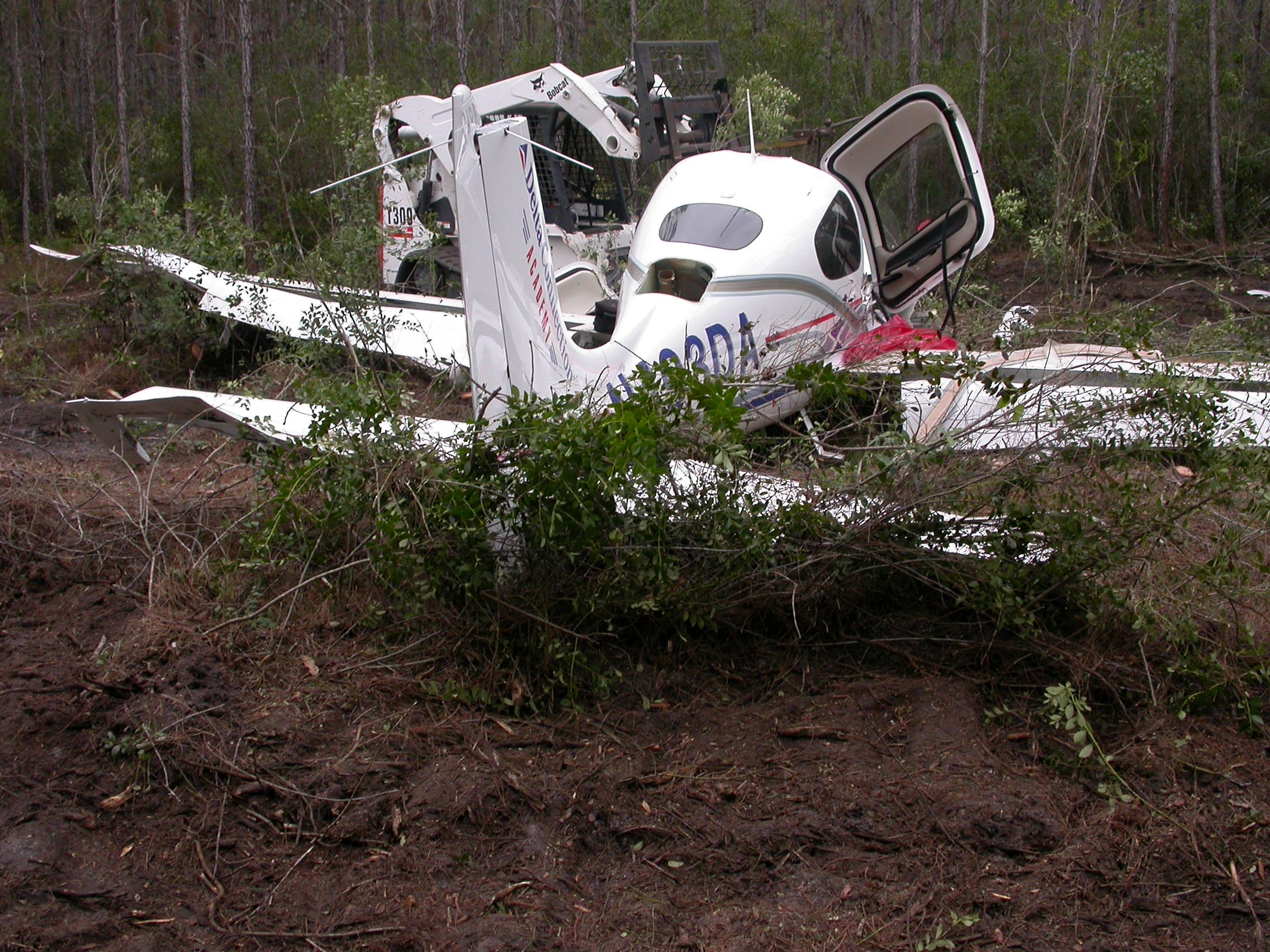
The aircraft examination found no mechanical issues. The engine ran normally when tested by Continental Motors under NTSB supervision. All flight control continuity was confirmed, and no anomalies were discovered in the airframe, engine, or CAPS system. The propeller showed minimal rotation damage, consistent with little or no power at impact. Most telling, the mixture control was found at idle cutoff, suggesting the engine had been shut down either during the emergency sequence or on impact.
Both pilots were properly certificated for the flight. The instructor had 1,625 total hours with 482 hours in the SR20, while the student had 175 total hours with 132 hours in type. The student was working toward his commercial single-engine land add-on rating and was on his second dual flight with this instructor. Weather was clear with light winds, eliminating environmental factors as contributors to the accident.
The investigation also revealed gaps in operational procedures. Delta Connection Academy had no written flight following procedures, and the airplane wasn’t reported overdue until 1930 that evening, more than four hours after the scheduled return time. The aircraft wasn’t located until 0315 the following morning. More critically, the DCA Flight Standards Manual required aircraft to operate no lower than 3,000 feet AGL during training maneuvers, specifically to provide altitude for recovery from inadvertent spins or CAPS deployment.
NTSB Probable Cause
The pilot receiving instruction’s failure to maintain adequate airspeed while maneuvering, which resulted in an aerodynamic stall and subsequent loss of control. Contributing to the accident was the flight instructor’s inadequate supervision and both pilots’ failure to deploy the ballistic parachute at a higher altitude.
Safety Lessons
This accident underscores fundamental principles that apply to every pilot, from students to airline captains. The physics of flight don’t care about experience levels or good intentions.
- Airspeed is life, especially at low altitude. The SR20 stalls at 61 knots with flaps at 50 percent. At 54 knots indicated, the airplane was 7 knots below stall speed with no altitude to recover. During slow flight training, maintain a buffer above stall speed and enough altitude to recover if things go wrong. The 3,000-foot AGL minimum in DCA’s manual existed for exactly this scenario.
- Instructors must maintain situational awareness during student practice. While the student was the manipulating pilot, the instructor’s job was to intervene before the situation became unrecoverable. With power at idle and airspeed decaying through 60 knots at 3,100 feet, immediate action was required, not when the airplane reached 54 knots and began to spin.
- CAPS deployment requires altitude and decisive action. Cirrus data shows 920 feet of altitude loss from a one-turn spin until stabilization under the parachute. At 3,100 feet, deployment might have been successful, but hesitation cost precious altitude. The manufacturer suggests keeping 2,000 feet AGL in mind as a decision altitude, and this accident validates that guidance.
Frequently Asked Questions
Q: Why didn’t the Cirrus parachute save them if it deployed?
A: The CAPS system did activate, but too late. Witnesses saw the parachute deploy but noted it didn’t inflate. Cirrus data shows that successful parachute deployment from a spin requires approximately 920 feet of altitude loss. Deploying at or below 920 feet AGL doesn’t provide enough time for the system to fully inflate and slow the aircraft before ground impact.
Q: What is the stall speed of a Cirrus SR20 in this configuration?
A: According to the Pilot’s Operating Handbook, the SR20 stalls at 61 knots indicated airspeed with flaps at 50 percent and wings level. In a 45-degree bank, the stall speed increases to 72 knots indicated. The accident aircraft was indicating just 54 knots when it entered the spin, well below the clean stall speed.
Q: Should flight instructors allow students to practice stalls at such low altitudes?
A: No. Delta Connection Academy’s own manual required training maneuvers to be conducted no lower than 3,000 feet AGL. This provides adequate altitude for recovery from inadvertent spins or emergency procedures like CAPS deployment. The accident occurred around 3,100 feet AGL, barely above this minimum, with insufficient margin for error.
Q: How can pilots recognize an impending stall during slow flight practice?
A: Watch for decreasing airspeed below safe margins, increasing control forces, reduced control effectiveness, and activation of stall warning systems. In this case, airspeed had dropped from 75 knots to 54 knots with the aircraft oscillating in roll. These are classic indications that immediate recovery action is needed: lower the nose, add power, and reduce angle of attack.
Q: What should have been the instructor’s response when airspeed dropped below 60 knots?
A: Immediate intervention. The instructor should have taken control, lowered the nose to reduce angle of attack, and added power. At 3,100 feet AGL with airspeed approaching stall, there was no margin for allowing the student to work through the recovery. The instructor’s primary job is to prevent situations from becoming unrecoverable.