What Happened
On April 11, 2009, at approximately 1435 central daylight time, a 1946 Engineering and Research 415C Ercoupe, registration N87384, departed Woodlake Airport (IS65) near Sandwich, Illinois, on what was supposed to be a short local flight. By 1450, the airplane was gone. Both the 53-year-old sport pilot and his passenger were dead. The Ercoupe was destroyed by a post-crash fire in a field roughly one mile north of the airport. What happened in those fifteen minutes, and what the pilot did — and didn’t do — during them, is what this case study is about.
It was actually the second flight of the day. Earlier that afternoon, the pilot had taken a different passenger up for about an hour. That flight was unremarkable. The airplane flew normally, the engine behaved, and nobody noticed anything wrong. Soon after landing from that first flight, the pilot loaded up a second passenger and departed again. Witnesses on the ground watched the Ercoupe climb out to the northwest. The engine sounded normal. The airplane looked fine. There was nothing about the departure that suggested what was coming.
About fifteen minutes after takeoff, the picture changed completely. A witness living roughly two miles northwest of IS65 spotted the airplane in a descending turn, losing altitude and heading east. He watched it fly directly over his house and then continue east over the middle of Buck Lake. The engine was no longer producing normal power. He described it as “spitting and sputtering.” The airplane was flying extremely low. Moments later, a group of golfers at the Edgebrook Golf Club, located just east of Buck Lake, looked up from the course and saw the Ercoupe pass overhead just above treetop level. The engine was sputtering. One witness said the wings were rocking up and down. The airplane was not climbing. It was not holding altitude. It was running out of sky.
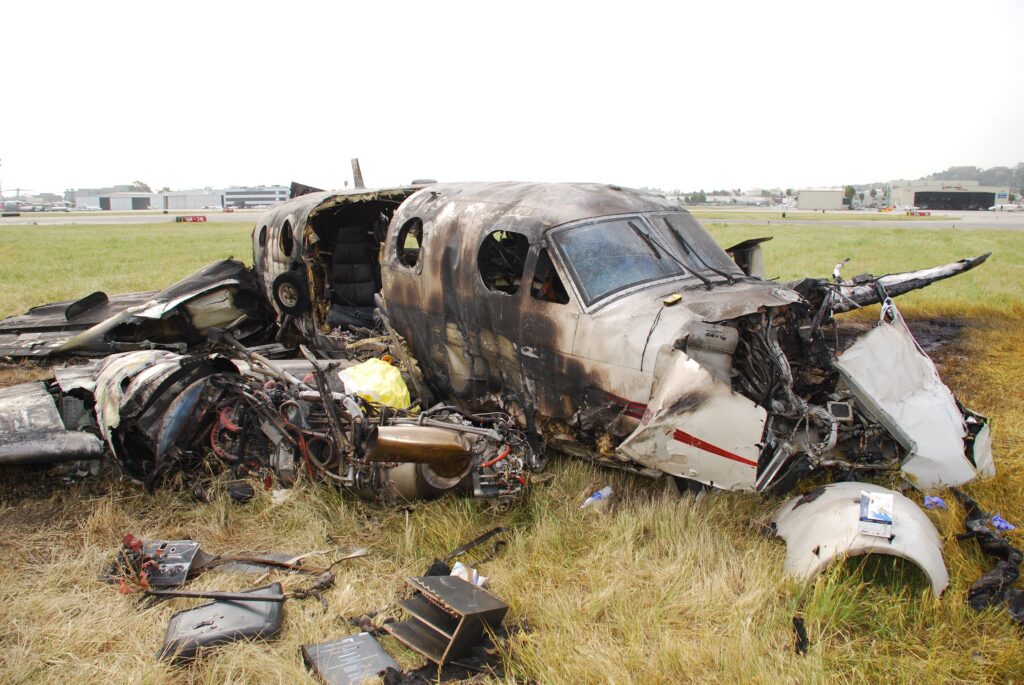
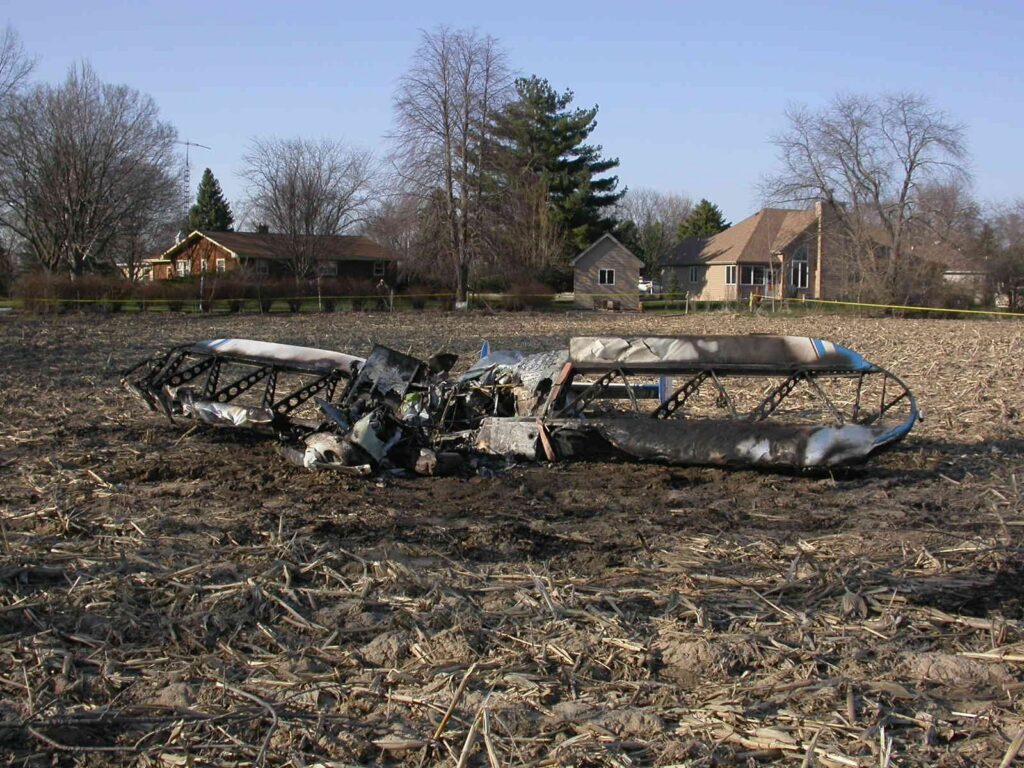
The treeline at the eastern edge of the golf course ended that flight. The Ercoupe clipped the tops of hardwood trees at the edge of the woods, roughly 90 feet from where it would come to rest. The impact with the trees pitched the nose up, and then the airplane rotated forward into a steep nose-down attitude and drove into the field below. The fuselage came to rest oriented on a 210-degree magnetic heading, nose pointing south. A homeowner about 200 yards away heard the popping engine sounds, then the impact with the trees, then watched the airplane hit the ground. He reported that it started on fire immediately. The fabric covering the wings burned first. Eventually the tail, no longer attached to anything burning, fell back to the ground. Both occupants died of carbon monoxide intoxication and thermal injuries sustained in the post-crash fire. The airplane was destroyed.
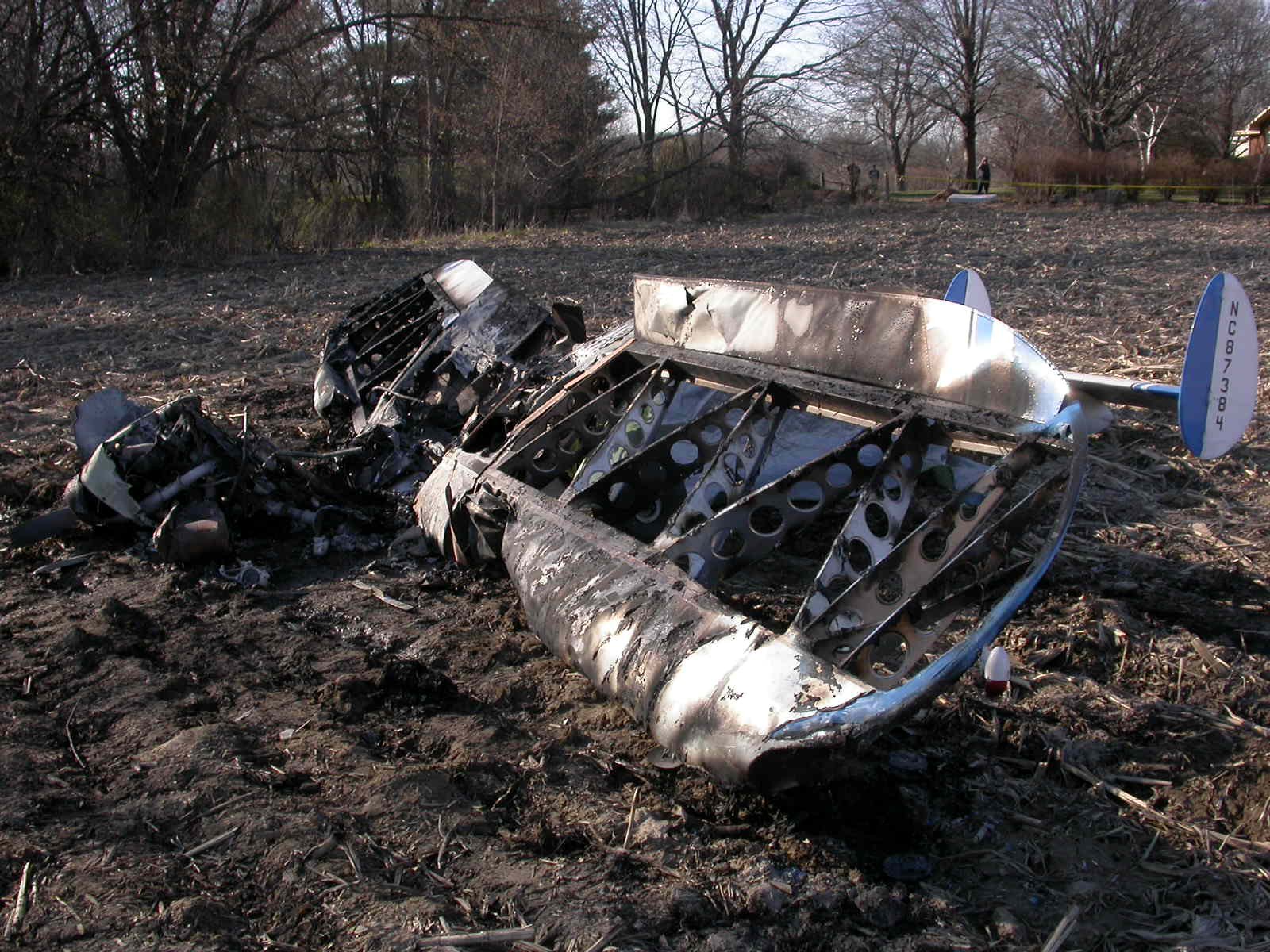
The field where the Ercoupe finally stopped was about three-quarters of a mile long and ran east to west. It was, technically, a suitable forced landing site. But a map study of the terrain along the airplane’s observed flight path revealed that there were open fields to the north, south, and west as well, all of them reachable before the airplane reached the golf course and the treeline. Those fields were closer to where the partial power loss apparently began. The Ercoupe passed them all and kept flying east.
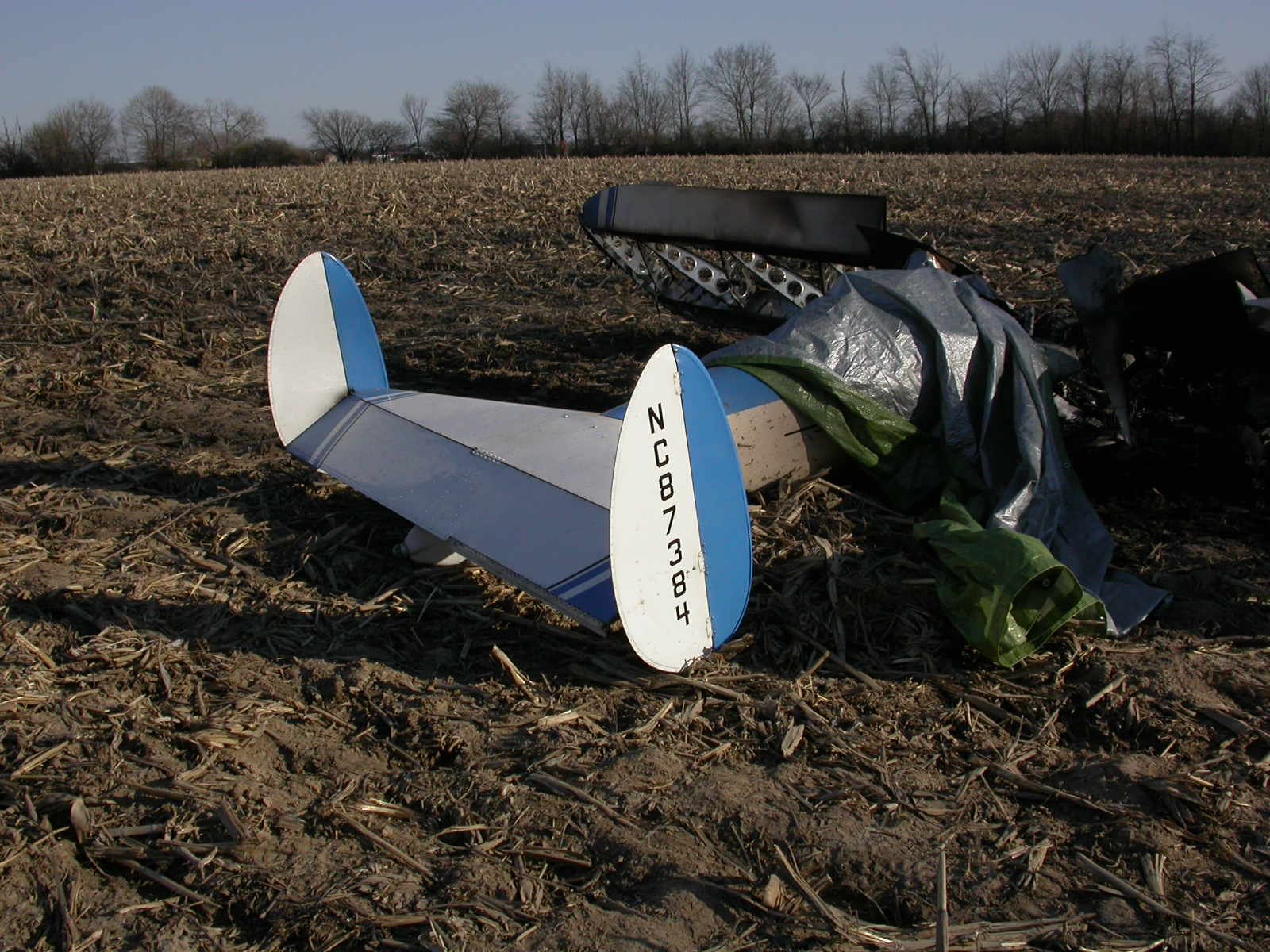
Investigation Findings
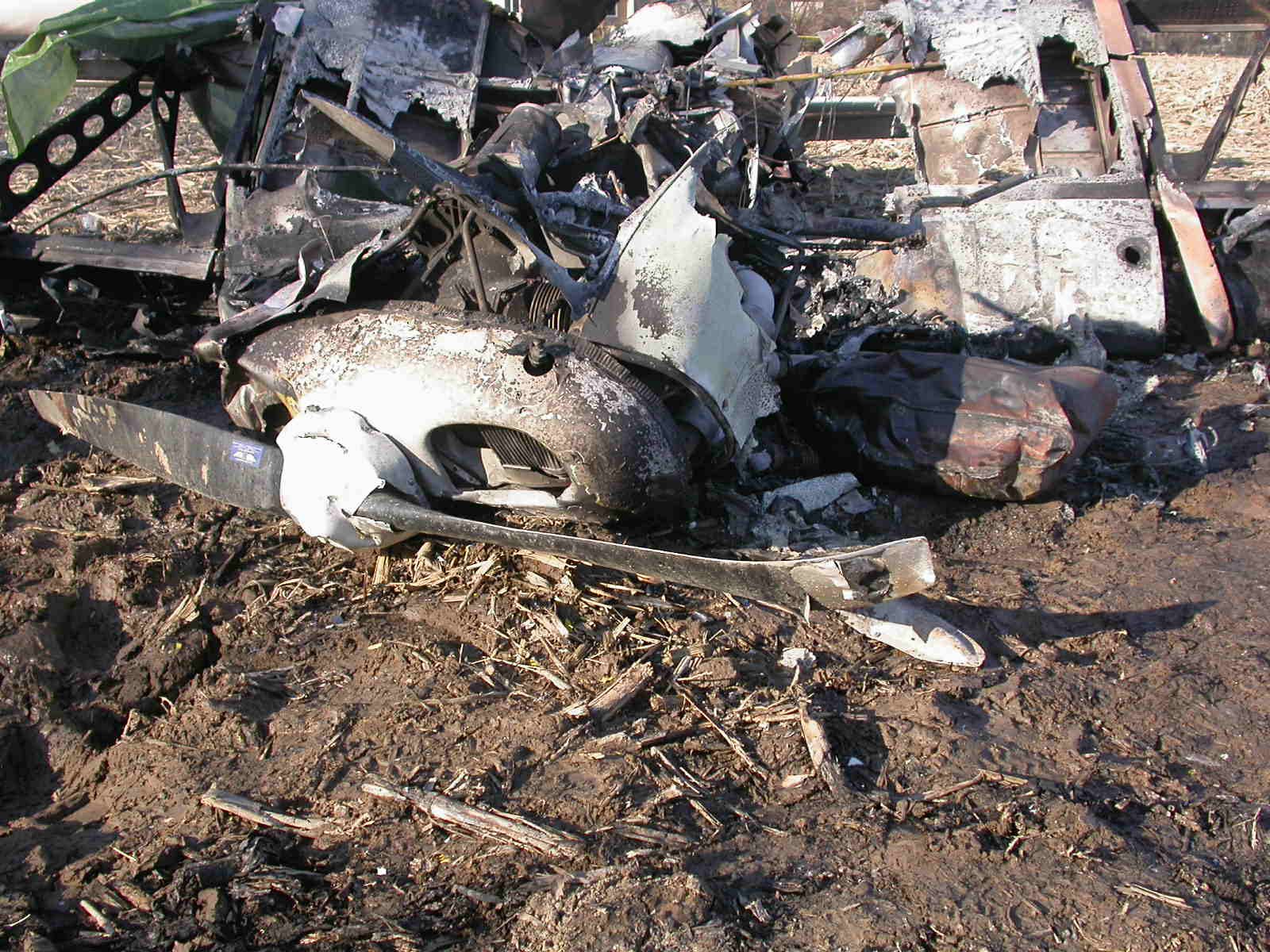
The post-crash fire made the investigation significantly harder. Much of the engine compartment, the cockpit, and the wing fabric were consumed. The pilot’s logbook was on board and partially burned, but the last three surviving pages showed approximately 163 total flight hours. The most recent annual inspection had been completed on June 5, 2008, at which point the airframe had accumulated 1,951 hours total time. The Continental C-85-12F engine showed 1,824 total hours with 193 hours since a major overhaul completed in June 2006. The number of hours flown between that June 2008 inspection and the accident could not be determined.
The engine itself told an incomplete story. When investigators turned the propeller by hand, the engine rotated freely. All four cylinders showed compression and suction. Drive train continuity was confirmed. The top spark plugs were removed and examined with no anomalies noted. But the right magneto had been completely melted by the fire. The spark plug wires were gone. The carburetor was shattered by impact forces and could not be tested. So while the engine showed no obvious mechanical damage that survived the fire, none of the accessories that could have caused a partial power loss — the magnetos, the carburetor — could be tested or ruled out. The reason the engine started sputtering over Buck Lake remains undetermined.
The airframe inspection confirmed flight control continuity on both ailerons and flaps. The right wing leading edge showed aft crushing along the full span, consistent with the impact attitude. The left wing had a large dent approximately 50 inches from the outboard edge of the left fuel tank, measuring 23 inches long and 12 inches deep. A fuel sample recovered from one of the wing tanks during wreckage recovery showed fuel consistent with 100 low lead aviation fuel, with minimal sediment and no significant water contamination. Fuel starvation was not indicated. One notable finding: the right rudder control tube was fractured. That piece was sent to the NTSB Materials Laboratory, which found the fracture surface had a faceted appearance consistent with intergranular fracture along grain boundaries. There were no features consistent with fatigue cracking, meaning the tube broke as a result of the impact rather than failing in flight. Hardwood tree branches approximately 1.5 inches in diameter were found scattered at the impact site, several of them charred by the post-crash fire. Broken limbs were identified at the tops of the trees at the treeline edge, 90 feet from the final resting point.
Toxicology results from the pilot’s autopsy, conducted April 13, 2009, in Sycamore, Illinois, detected Bupropion and its metabolite in the blood and liver. Bupropion is a prescription antidepressant also used for smoking cessation. The NTSB analysis noted that Bupropion does not impair flying performance, and while the medication carries an increased seizure risk, the circumstances of the accident were not consistent with a seizure event. The witnesses described a coherent, sustained flight path over several miles, not a sudden incapacitation. Weather at 1452 from Aurora Municipal Airport (ARR), 11 miles northeast of the accident site, was clear skies, 10-mile visibility, winds 200 degrees at 7 knots, temperature 11 degrees Celsius, dew point minus 6 degrees Celsius, altimeter 30.31 inches. There was nothing in the weather that contributed to this accident.
NTSB Probable Cause
The pilot’s failure to execute an immediate forced landing to a suitable field and the engine’s partial loss of power for an undetermined reason.
Safety Lessons
Two people died in a field that was not the closest suitable landing site. The engine did not fail completely. The airplane was still flying, still under some degree of control, for several miles after the power loss began. That is the window that matters. Here is what this accident asks every pilot to think about.
- Partial power is still an emergency. A sputtering engine over unfamiliar terrain at low altitude is not a situation to manage by continuing the flight. The Ercoupe had several open fields available along its flight path — fields to the north, south, and west that were reachable before the airplane reached the golf course. The pilot flew past them. Once the airplane was over the trees at treetop height with a rough engine, there was no good outcome left. The moment power degrades and altitude is low, the decision to land is already overdue.
- Know your out before you need it. The Ercoupe departed IS65 on a local flight with no flight plan and apparently no specific route. Fifteen minutes in, the airplane was a couple of miles northwest of the airport at an unknown altitude with a failing engine. The witnesses described the airplane descending and in a turn before it started heading east. Where that turn came from, and why east rather than back toward IS65 or toward one of the open fields to the west, is unknown. But the pattern of continuing away from the airport rather than toward it or toward an obvious off-airport landing area is a recognizable one. The habit of mentally noting available landing areas throughout a flight, even a short local one, is the habit that creates options when options matter.
- Low and slow with a rough engine has almost no margin for error. At treetop height, the math on forced landings changes dramatically. There is no altitude to convert to distance. There is no room to evaluate options. The Ercoupe hit the trees before it hit the field, which tells you how close to zero the margins were. The transition from “I have a rough engine” to “I need to be on the ground now” has to happen while there is still altitude to work with, not after the airplane is already at the level of the canopy.
Frequently Asked Questions
Q: What caused the Ercoupe engine to lose power in this accident?
A: The exact cause of the partial power loss was never determined. The post-crash fire destroyed the carburetor, melted the right magneto, and burned the spark plug wires, making it impossible to test the accessories that most commonly cause partial power loss events. The engine itself showed compression on all cylinders and drive train continuity when examined after the accident. Fuel contamination was ruled out by a sample taken from the wing tank during recovery.
Q: Why did the NTSB cite the pilot’s failure to execute a forced landing as part of the probable cause?
A: A map study of the terrain along the observed flight path identified multiple open fields to the north, south, and west of the route the airplane flew in its final minutes. Those fields were suitable for an emergency forced landing and were closer to where the partial power loss apparently began than the field where the airplane ultimately came down. The airplane flew past those fields and continued east over Buck Lake and the golf course, eventually striking the treeline at the edge of the woods. The NTSB concluded that the pilot had viable options he did not take.
Q: Was the pilot legally qualified to fly this Ercoupe as a sport pilot?
A: Yes. The Engineering and Research 415C Ercoupe qualifies as a light sport aircraft, and the pilot held a sport pilot certificate with a single-engine land rating. Sport pilots are not required to hold an FAA medical certificate, and the NTSB confirmed the pilot was operating within the rules applicable to his certificate. The Bupropion detected in toxicology was noted in the investigation but the NTSB analysis stated the medication does not impair flying performance and that the accident circumstances were not consistent with a seizure event.
Q: Was there anything unusual about the Ercoupe’s design that affected this accident?
A: The 415C Ercoupe was manufactured without rudder pedals, which is a design characteristic of the type. The airplane uses a linked aileron-rudder system controlled by the yoke. The fractured right rudder control tube found in the wreckage was examined by the NTSB Materials Laboratory and determined to have failed due to impact forces rather than an in-flight structural failure, so it did not contribute to the accident sequence.
Q: How does carburetor icing factor into accidents like this one?
A: Carburetor icing is one of the undetermined possibilities in this accident. The Continental C-85-12F is a carbureted engine, and conditions that day — temperature 11 degrees Celsius with a dew point of minus 6 degrees Celsius — place the spread well outside the typical carburetor icing range. However, because the carburetor was destroyed by impact forces, no definitive examination was possible. The sputtering, intermittent power loss described by witnesses is consistent with several carburetor-related issues, but none could be confirmed or ruled out.